Explore our certified intermodal solutions, temperature-controlled containers, and structural freight modules engineered for harsh maritime and terrestrial environments.
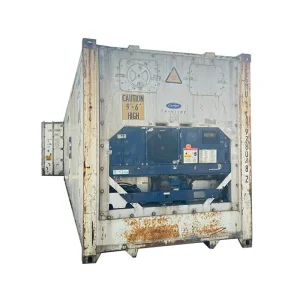
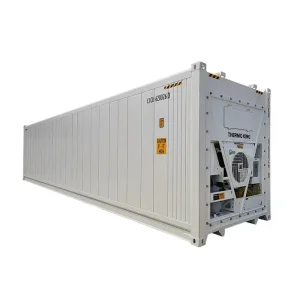
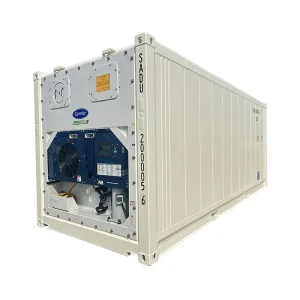

Analyzing structural supply chain shifts: Why micro-intermodal enclosures are experiencing a compound annual growth rate of 7.4% across global logistics networks.
While the post-war intermodal shipping framework has historically championed 20-foot and 40-foot ISO standard enclosures, the modern multi-modal logistics ecosystem is undergoing a dramatic structural transformation. The global push for compact, agile, and decentralized cargo containment has positioned the 8 ft shipping container as a foundational operational unit across industrialized and developing economies alike. Industrial logistics directors, mining procurement officers, and offshore project managers increasingly face spatial limitations, high repositioning fees, and low-volume, high-value freight requirements that render 40ft units economically inefficient.
In major metropolitan consolidation nodes throughout Europe, North America, and East Asia, urban logistics operators are deploying 8-foot mini containers within Urban Consolidation Centers (UCCs). These 8 ft units bridge the gap between heavy intermodal freight and congested last-mile micro-hubs. Capable of being handled by standard 3-ton to 5-ton forklifts, transported via light flatbed commercial vehicles without specialized prime movers, and nested inside standard ISO 20ft or 40ft containers for empty return legs, 8 ft units dramatically lower the total cost of ownership (TCO) across distributed supply chains.
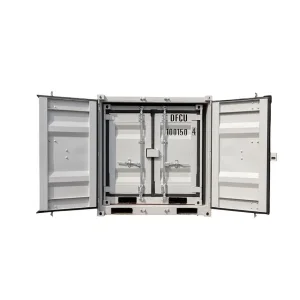
8ft containers solve urban access restrictions, permitting secure, weather-tight freight drops on construction sites, city centers, and facilities where 20ft tractor-trailers cannot physically navigate or park legally.
Engineered from SPA-H Corten atmospheric corrosion-resistant steel, our 8ft enclosures withstand marine salt spray (C5-M environment), Arctic tundra down to -40°C, and prolonged high-UV desert exposure.
Expanding beyond static warehousing: 8ft units act as standardized structural envelopes for modular battery energy storage systems (BESS), solar water purification skids, and decentralized data nodes.
A deep engineering review of raw metallurgy, automated robotic welding, and high-performance industrial coatings applied to CIMIC 8ft enclosures.
At CIMIC Group (Tianjin Cimic Imp&Exp Co., Ltd.), container fabrication adheres strictly to structural performance criteria derived from ISO 1496-1 and maritime cargo handling guidelines. Unlike lightweight commercial sheds constructed from mild commercial-grade cold-rolled sheet, an authentic industrial 8ft container must withstand severe dynamic racking, longitudinal torsional stresses, and high payload concentration.
The fabrication process commences with computerized CNC plasma cutting and brake-press corrugated panel forming. The side walls, front end wall, and roof panels are stamped into optimized trapezoidal corrugated profiles that optimize structural rigidity while keeping tare weight low. Corner posts are formed from high-tensile low-alloy steel with a minimum yield point of 345 N/mm² (50,000 psi), welded seamlessly into ISO 1161 corner casting blocks. These casting nodes allow the 8ft container to be lifted via spreader bars, corner slings, or twistlock-coupled into unified freight pairs.
SPA-H atmospheric weathering alloy containing Cu, Cr, and Ni. Offers exceptional yield strength and forms a dense oxide barrier against corrosive saltwater exposure.
Automated gas metal arc welding (GMAW/MIG) under mixed argon/CO2 shielding guarantees porosity-free, structurally uniform joints across all perimeter rails and corrugations.
Full abrasive blast cleaning to Sa 2.5 standard, followed by zinc-rich epoxy primer (30µm), high-build polyamide epoxy intermediate (40µm), and acrylic polyurethane topcoat (40µm).
28mm heavy-duty marine-grade keruing or treated bamboo composite flooring, vacuum-impregnated against insect infestation and verified for heavy wheel-load point stresses.
| Technical Specification Metric | 8 Ft Standard Dry Cargo Unit | 8 Ft High-Cube Modular Unit | Offshore Grade (DNV 2.7-1 Equivalent) |
|---|---|---|---|
| External Dimensions (L × W × H) | 2,438 mm × 2,200 mm × 2,260 mm | 2,438 mm × 2,200 mm × 2,591 mm | 2,438 mm × 2,200 mm × 2,591 mm |
| Internal Dimensions (L × W × H) | 2,287 mm × 2,112 mm × 2,059 mm | 2,287 mm × 2,112 mm × 2,390 mm | 2,250 mm × 2,070 mm × 2,340 mm |
| Door Opening Dimensions (W × H) | 2,100 mm × 1,950 mm | 2,100 mm × 2,280 mm | 2,050 mm × 2,230 mm (Double Seal) |
| Internal Volume Capacity | 9.95 m³ (351 cu ft) | 11.55 m³ (408 cu ft) | 10.90 m³ (385 cu ft) |
| Tare Weight (Empty Mass) | 950 kg (2,094 lbs) | 1,080 kg (2,380 lbs) | 1,420 kg (3,130 lbs) |
| Maximum Gross Weight (M.G.W.) | 6,000 kg (13,227 lbs) | 7,500 kg (16,534 lbs) | 10,000 kg (22,046 lbs) |
| Maximum Payload Capacity | 5,050 kg (11,133 lbs) | 6,420 kg (14,154 lbs) | 8,580 kg (18,916 lbs) |
| Forklift Pocket Configuration | Center distance: 950 mm; 300×100 mm | Center distance: 950 mm; 300×100 mm | Reinforced 4-way entry / Heavy Pad-eyes |
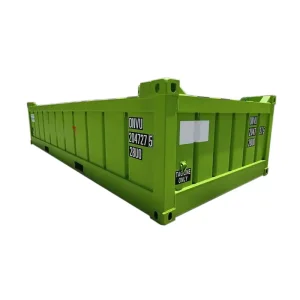
| Classification & Certification | ISO 9001 / BV Quality | ISO / Factory Inspected | DNV 2.7-1 / EN 12079 Standard |
Custom-engineered application paradigms demonstrating how international EPC contractors and logistics providers implement CIMIC 8ft containers.
On fast-track infrastructure projects, secure on-site equipment management is crucial. The 8ft container provides a compact footprint that fits inside parking bays or elevator shafts while preventing tool theft via high-tensile Corten locking cowls.
Fabricated with specialized overhead lifting pad-eyes and dynamic sling load calculation certifications, 8ft offshore modules transport lubricants, precision drill bits, and hazardous reagents safely between mainland supply ports and offshore platforms.
As decentralized micro-grids expand in mining and remote communities, the 8ft high-cube shell serves as an optimized shelter for 100kWh–250kWh lithium-ion battery banks, battery management systems (BMS), and solar string inverters.
One of the historical cost impediments to purchasing mini shipping containers internationally has been ocean freight pricing: ocean carriers typically calculate container slot tariffs based on standard 20ft or 40ft footprint equivalents. CIMIC eliminates this financial penalty through our proprietary Nested Intermodal Architecture.
By engineering precise dimensional clearance offsets, our production team manufactures nested sets: a 6ft container fits inside an 8ft unit, which in turn nests smoothly inside a 10ft container, and the combined assembly fits directly inside a standard 20ft or 40ft high-cube ISO shipping container. Alternatively, three units of 8ft containers can be linked together using certified structural bridge fittings, creating the exact external envelope of a standard 24-foot intermodal platform or shipped nested as cargo inside a standard 40ft container. This engineering strategy slashes international sea freight freight costs per unit by up to 68%.
Transparent costing models: Understanding how raw steel indexes, certified hardware, and customization dictate factory quotes from Tianjin port.
CIMIC quotes base container prices transparently against published Corten-A (SPA-H) coil pricing. This index-linked framework shields institutional buyers from arbitrary commercial markups during market fluctuations.
Every quote itemizes hardware selections: marine-grade 3-point cam locking bars, forged stainless-steel hinges with greasable zerk fittings, custom lockbox enclosures, and certified CSC safety plates.
Located roughly 100 km from Tianjin Xingang port—one of the largest deep-water trade terminals in Northern China—CIMIC eliminates heavy inland drayage expenses, providing verified FOB, CIF, or DDP quotation packages.
Whether procurement teams require a trial quantity of bespoke 8ft mobile workshops or high-volume recurring shipments of standard mini-storage units, CIMIC's engineering office provides comprehensive Technical Specification Sheets (TSS), structural calculation drawings, and preliminary 3D CAD renders prior to production commencement.
Authoritative technical answers direct from CIMIC structural engineers to assist procurement managers and freight forwarders.
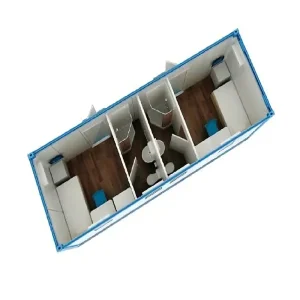
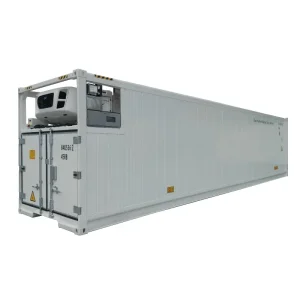
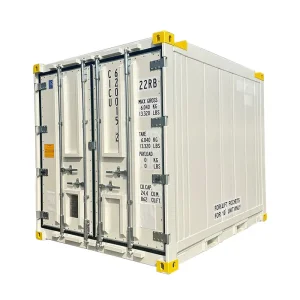
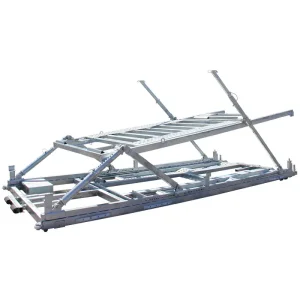
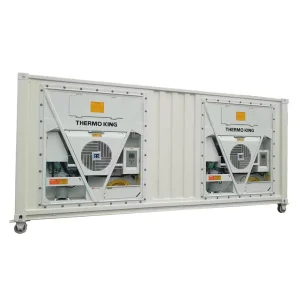
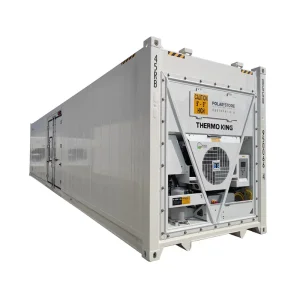
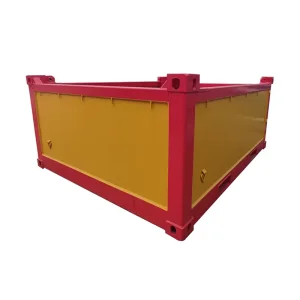
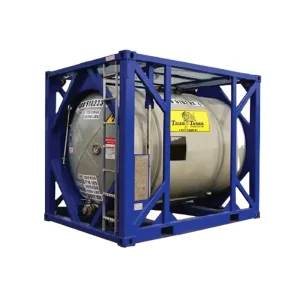
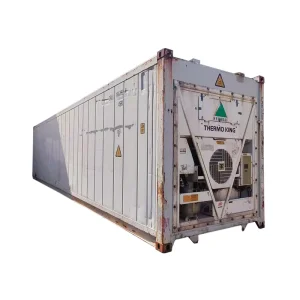
Review our specialized industrial catalog including DNV offshore certified units, nested mini containers, and custom refrigeration platforms.
Connect directly with CIMIC Group's engineering desk in Tianjin. We provide structural drawings, custom Corten fabrication quotes, nesting freight schemes, and complete port-side inspection dossiers.
