Direct factory configurations manufactured under Bureau Veritas, ISO 9001, and CSC homologation for intermodal sea, road, rail, and specialized offshore transport.

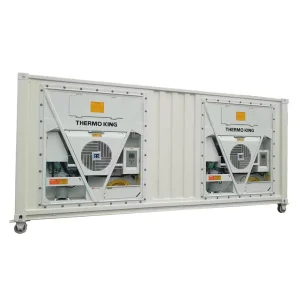


In the globalized logistics matrix, the standard sea container has evolved from a passive steel box into a highly specialized, mission-critical asset. Original Design Manufacturing (ODM) in the ISO freight container space allows global logistics operators, energy conglomerates, agricultural exporters, and industrial equipment manufacturers to bypass generic off-the-shelf limitations. Through bespoke ODM engineering, structures are calibrated to specific dynamic stress profiles, internal cubage demands, extreme thermal envelopes, and intermodal lifting cycles.
As an industry pioneer founded in 1983, CIMIC Group (Tianjin Cimic Imp&Exp Co., Ltd.) leverages four decades of metallurgical mastery and precision tooling across dual coastal bases in Tianjin and Suzhou. Building strictly to ISO 668 (series 1 freight container dimensions and ratings), ISO 1496 (specification and testing of series 1 freight containers), and international CSC (International Convention for Safe Containers) requirements, our ODM processes seamlessly integrate client-specific operational parameters into high-volume robotic production lines.
| ISO Container Classification | Standard Dimensions (L x W x H) | Max Gross Mass (MGM) | Tare Weight Variance | Structural Metallurgy & Compliance |
|---|---|---|---|---|
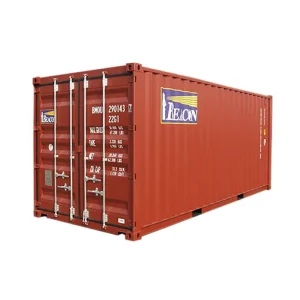
| 20ft Standard Dry Cargo (ISO 1CC) | 6,058 x 2,438 x 2,591 mm (20' x 8' x 8'6") | 30,480 kg (67,200 lbs) | 2,180 - 2,240 kg | Corten-A (SPA-H) High Tensile Steel; CSC Plate Certified |
| 40ft High Cube Dry (ISO 1AAA) | 12,192 x 2,438 x 2,896 mm (40' x 8' x 9'6") | 32,500 kg (71,650 lbs) | 3,700 - 3,920 kg | Corrugated 1.6mm-2.0mm Corten Panels; ISO 1496/1 Racking Tested |
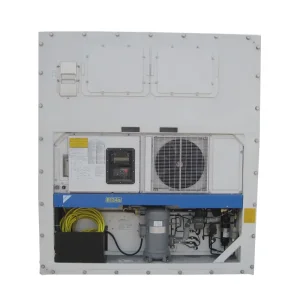
| 40ft High Cube Reefer (ISO 1AAA) | 12,192 x 2,438 x 2,896 mm (40' x 8' x 9'6") | 34,000 kg (74,950 lbs) | 4,480 - 4,720 kg | Outer Corten/Muffler SS; Inner Food-Grade 304 SS; Cyclopentane PUF |
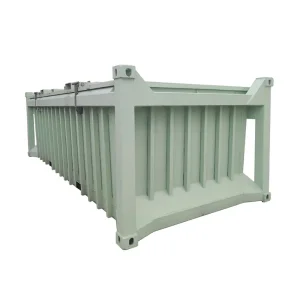
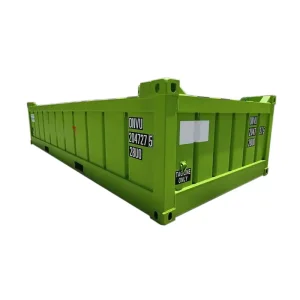
| Offshore DNV 2.7-1 Half-Height | 6,058 x 2,438 x 1,280 mm (20' x 8' x 4'2") | 20,000 - 25,000 kg | 2,600 - 3,100 kg | DNV 2.7-1 / EN 12079 Standards; Charpy V-Notch Impact Tested Steel |
| 20ft Multi-Car / Platform Carrier | 6,058 x 2,438 x 2,591 mm (Customized Deck) | 30,480 kg (67,200 lbs) | 2,450 - 2,850 kg | Reinforced Gooseneck Tunnel, Heavy-duty Lashing Rings (5-Ton rating) |
An integrated metallurgical supply chain, advanced automated robotic assembly, and low-friction coastal transit deliver unyielding technical performance and economies of scale.
The foundation of all heavy-duty freight containers manufactured by our factories is Corten-A (SPA-H JIS G3125) atmospheric corrosion-resistant steel. China's domestic raw steel integration ensures direct mill access to pristine primary coils.
Our Tianjin automated lines deploy 6-axis robotic welding cells operating under argon-CO2 shielding gas mixtures, guaranteeing complete root penetration across critical structural joints.
Maritime exposure demands multi-stage surface protection. Our facilities employ steel-grit blast chambers achieving Sa 2.5 cleanliness, followed by automated waterborne coating systems.
The confluence of smart telematics, green decarbonization mandates, and renewable energy deployment is fundamentally revolutionizing intermodal freight architecture.
Next-gen ODM dry and reefer containers integrate solar-assisted IoT sensor nodes directly into corner posts and corrugations, streaming real-time G-shock, temperature, humidity, door events, and geographic telemetry via satellite and cellular 5G networks.
Battery Energy Storage Systems (BESS) represent the fastest growing segment in modified ISO containers. Custom ODM enclosures feature thermal management ducting, NFPA 69 explosion relief venting, gas suppression systems, and heavy floor loadings exceeding 40 tons.
Cold-chain containers are transitioning aggressively to ultra-low Global Warming Potential (GWP) refrigerants, such as R-1234yf and natural CO2 (R-744), backed by variable-speed inverter compressors that slash operational diesel generator electrical draw by up to 35%.
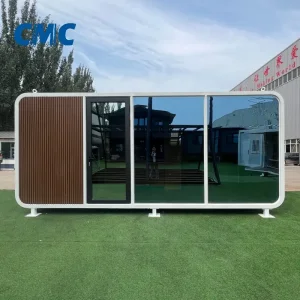
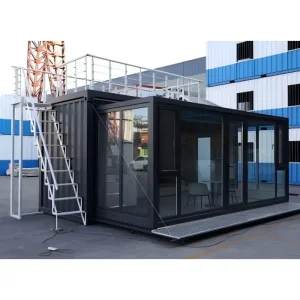
Factory-built modularity allows shipping containers to serve dual lifecycles: intermodal cargo carriers initially, transitioning seamlessly into pre-engineered off-grid accommodation pods, hospital surgical wards, or secure edge-computing data pods.
Engineered to withstand the mechanical shocks of intermodal rail shunting, violent open-ocean pitching, and corrosive offshore oilfield platform lifting.
Maritime line haulage subjects containers to 9-high corner post stacking loads (over 192,000 kg). Our dry cargo and high-cube units feature cold-formed 6.0mm Corten corner columns, tested under hydraulic presses up to 86,400 kg per post, meeting ISO 1496/1.
Harsh marine environments like the North Sea or Gulf of Mexico require extreme impact resistance. Our offshore half-height and open-top containers feature high-grade structural hollow sections (SHS) tested for dynamic lifting offshore.
Transporting zinc, copper concentrates, and heavy iron ore destroys standard containers. Our half-height ore carrier containers utilize abrasion-resistant NM400/NM450 steel liners and low centers of gravity for stable tipping and rotater discharge.
Procuring industrial container fleets demands rigorous verification across international safety codes, metallurgical certifications, and classification society approvals.
International container transactions face serious commercial, operational, and safety risks if documentation is incomplete. A standard CSC (International Convention for Safe Containers) safety approval plate is legally mandatory for ocean shipping. Every CIMIC ODM unit undergoes rigorous type testing witnessed and stamped by class surveyors (Bureau Veritas, ABS, Lloyd’s Register, or DNV).
Corporate buyers must demand Factory Acceptance Testing (FAT) dossiers that include:
Simulating 9-high laden ocean stacking by applying vertical downward test loads of 97,200 kg per corner post (total 388,800 kg per 40ft container) for a dwell duration of 5 minutes without permanent plastic deformation.
Applying lateral hydraulic forces (150 kN transverse; 75 kN longitudinal) across end frames to prove structural integrity when vessels endure severe torsional wave action.
Subjecting completed containers to continuous water deluge nozzles at 1.0 bar pressure over all seams, gaskets, and roof junctions, ensuring 100% weather-tight and air-sealed transit.
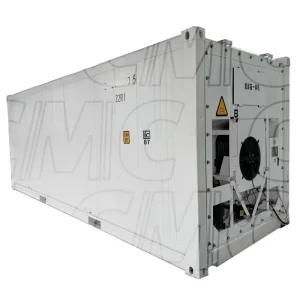
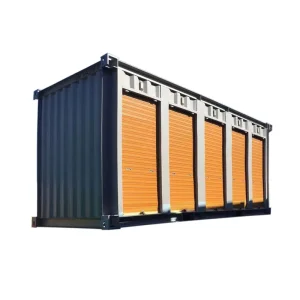
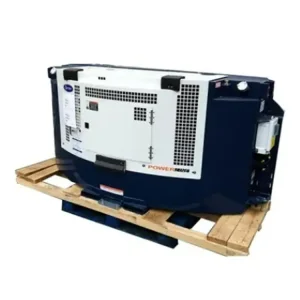
Engineered cold-storage machinery, solar-integrated reefer architectures, roll-up dry boxes, and DNV certified energy containers.
Direct, highly specific engineering insights for fleet managers, shipping directors, and project engineers.
Standard ISO dry boxes are engineered strictly for general cargo pallet weights and conventional rear-loading. ODM (Original Design Manufacturing) enables custom structural reinforcement: thickened SPA-H Corten corrugated panels (up to 2.0mm or 3.0mm), dual-end or full-length bi-folding side doors, integrated internal recessed tie-downs (5,000 kg shear capacity each), reinforced gooseneck tunnels for chassis transit, and tailored corner fittings engineered for non-standard lifting spreaders.
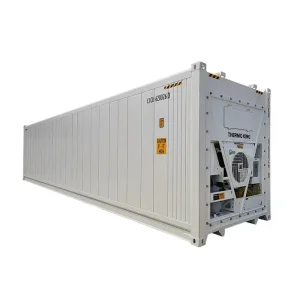
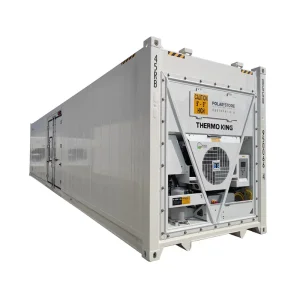
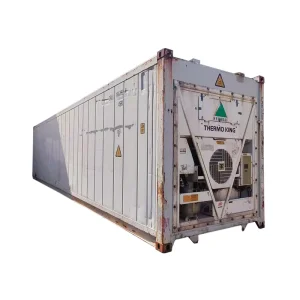
Our reefer production lines conduct computerized thermal heat-leak testing in accordance with ISO 1496/2. Thermal insulation uses high-pressure injected cyclopentane-blown polyurethane foam (PUF) with a core density of 40-45 kg/m³ and thermal conductivity below 0.020 W/(m·K). Before classification sign-off, units undergo a vacuum decay pressure test ensuring interior leakage remains below 5 m³/h at 250 Pa internal pressure differential.
All CIMIC offshore cargo containers (CCUs) are certified under DNV 2.7-1 (Standard for Certification No. 2.7-1: Offshore Containers) and BS EN 12079. We provide a complete Class Book containing raw steel mill 3.1 certificates, Charpy V-Notch impact testing down to -20°C, weld procedure specifications (WPS/PQR), magnetic particle inspection (MPI), and proof load test reports (2.5x Max Gross Mass).
For standard 20ft and 40ft modifications (such as roll-up doors, electrical pass-throughs, or specific paint liveries), MOQs start at 2 to 5 units, with delivery within 20 to 30 calendar days. For complex structural ground-up ODM tooling (such as platform car-carriers, battery energy BESS shelters, or DNV offshore half-heights), prototype fabrication and classification witness testing typically require 35 to 45 days, followed by batch production at 100+ TEU per week.
Inland freight in China can add hundreds of dollars per container. Our Tianjin manufacturing base is located within ~100 km of Tianjin Xingang Port (the primary maritime gateway for North China), and Suzhou is adjacent to Shanghai Port. This enables immediate "One-Way Use" (cargo cabotage) repositioning, drastically lowering empty repositioning costs or enabling immediate FOB vessel loading.
Yes. We integrate industry-leading cooling units from Carrier (Transicold PrimeLINE), Thermo King (Magnum Plus), and Daikin (Zestia), with dual-voltage 380V/460V 3-phase 50/60Hz configurations. For off-grid remote operations, our solar refrigerated containers and clip-on diesel generator sets (gensets) provide autonomous, uninterrupted power for up to 5 days without grid connection.
Contact our senior structural engineers at CIMIC Group today for comprehensive CAD/FEA design reviews, classification society homologation schedules, and volume-tiered factory direct quotations.
