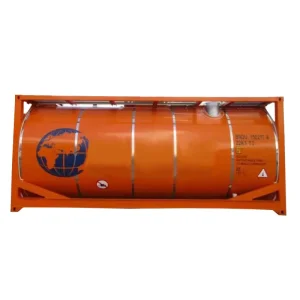
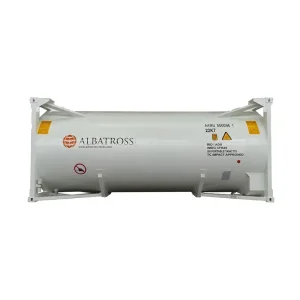
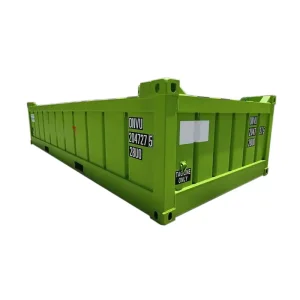
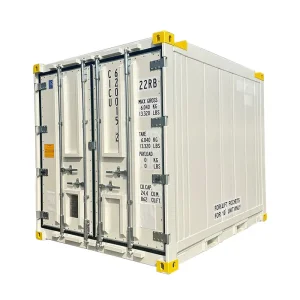
Explore our certified ISO liquid tanks, offshore half-height modules, and custom length refrigerated boxes engineered for complex intermodal transit routes and specialized industrial projects.
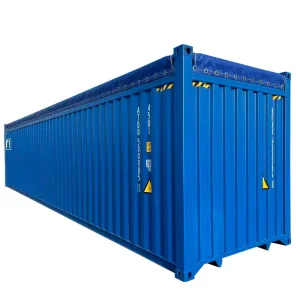
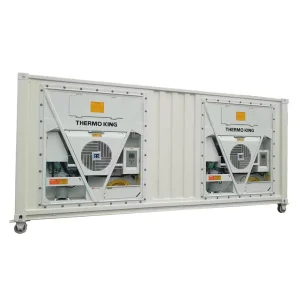
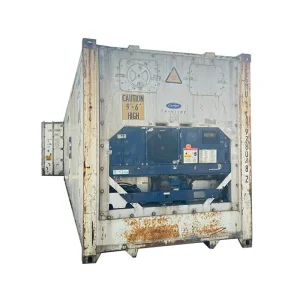
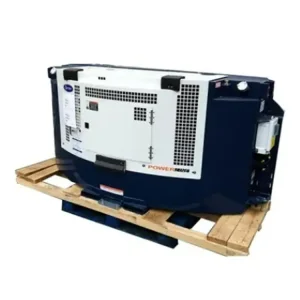
In contemporary intermodal freight, container length is not merely a geometric boundary; it is the fundamental variable governing structural load distribution, torsional rigidity, hydrodynamic vessel stowage cells, and highway axle loading regulations across worldwide supply corridors. While the International Organization for Standardization established standard dimensions under ISO 668 (Series 1 freight containers — Classification, dimensions and ratings), the rise of specialized global projects—including battery energy storage systems (BESS), mobile hyperscale data centers, offshore drill-string modules, and specialized pharmaceutical cold chains—has accelerated the demand for customized Original Design Manufacturing (ODM).
At CIMIC (Tianjin Cimic Imp&Exp Co., Ltd.), container manufacturing spans over four decades of rigorous metallurgical and fabrication development. The structural mechanics governing longitudinal frame deflection dictate that any alteration in container length exponentially influences the required bending moment of inertia within the bottom side rails (BSR), top side rails (TSR), and crossmembers. Fabricating an ODM container length—whether a miniaturized 10ft offshore unit, an extended 45ft high-cube pallet-wide container, or a bespoke 30ft hazardous cargo enclosure—requires complete structural recalculation, Finite Element Analysis (FEA), and strict compliance with the International Convention for Safe Containers (CSC 1972) and classification societies including Bureau Veritas (BV), DNV, ABS, and Lloyd's Register.
In standard ISO dry and reefer containers, structural deflection along the longitudinal axis is mathematically proportional to the fourth power of the unassisted length ($L^4$) under uniformly distributed dynamic payloads. When extending standard length boundaries or integrating high-density equipment like blast-freezer compressors or 25,000L gas tanks, standard rail profiles must be upgraded to bespoke hot-rolled high-tensile channels or reinforced box sections to suppress sag and prevent door frame distortion during marine transit.
Engineering breakdown of international standard ISO container lengths alongside specialized ODM lengths manufactured for industrial integration, cold-chain transport, and offshore harsh environments.
| ISO / ODM Nominal Length | External Length (mm / ft-in) | Internal Clear Length (mm) | Max Gross Mass (Rating) | Typical Tare Weight (kg) | Primary Structural Application |
|---|---|---|---|---|---|
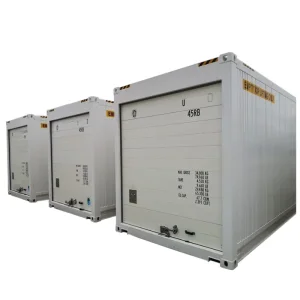
| 10ft Standard / DNV Compact | 2,991 mm (9' 9.75") | 2,840 mm (9' 3.8") | 10,000 – 14,000 kg | 1,300 – 1,850 kg | Offshore platform supply, sub-zero blast freezer, small site genset |
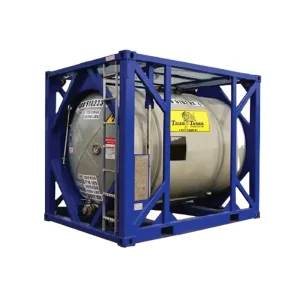
| 20ft Standard (1CC) ISO Base | 6,058 mm (19' 10.5") | 5,898 mm (19' 4.2") | 30,480 – 32,500 kg | 2,150 – 2,350 kg | Liquid ISO tank frames, heavy dry freight, mineral bulk, dangerous goods |
| 20ft High Cube (1CCC) High Volume | 6,058 mm (19' 10.5") | 5,898 mm (19' 4.2") | 32,500 kg | 2,320 – 2,550 kg | Battery storage systems (BESS), mobile transformers, side-door cargo |
| 30ft Bespoke ODM Custom Rail | 9,125 mm (29' 11.25") | 8,960 mm (29' 4.8") | 34,000 kg | 3,100 – 3,450 kg | European bulk powders, intermediate waste transport, mobile workshops |
| 40ft Standard (1AA) Maritime Standard | 12,192 mm (40' 0.0") | 12,032 mm (39' 5.7") | 30,480 – 32,500 kg | 3,700 – 3,950 kg | Global container liner maritime freight, industrial equipment enclosures |
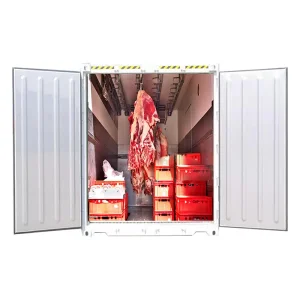
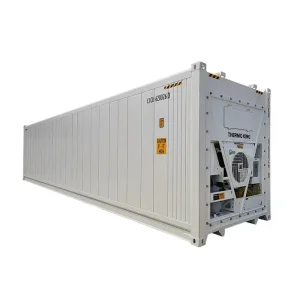
| 40ft High Cube (1AAA) Global Benchmark | 12,192 mm (40' 0.0") | 12,032 mm (39' 5.7") | 32,500 – 35,000 kg | 3,900 – 4,200 kg | Reefer cold rooms, soft open-tops, hanging meat carriers, roll-up reefers |
| 45ft High Cube (1EEE) Intermodal | 13,716 mm (45' 0.0") | 13,556 mm (44' 5.7") | 34,000 kg | 4,600 – 4,950 kg | Pallet-wide European logistics (33 Euro-pallets), cross-border express |
| 53ft Domestic Intermodal North America | 16,154 mm (53' 0.0") | 15,980 mm (52' 5.1") | 36,000 kg | 5,400 – 5,800 kg | US/Canada road-rail double-stack logistics, lightweight high-cube volume |
Engineered for high payload-to-footprint ratios. Essential for offshore rig platforms, extreme Arctic/desert outposts, and localized mobile cold storage. Fitted with dedicated single-point or 4-leg sling lifting lugs compliant with DNV 2.7-1 / EN 12079.
The backbone of global trade. Optimized for 100% cellular ship compatibility, international railway spine cars, and standardized trailer chassis. Manufactured with automated robotic welding lines delivering millimeter longitudinal precision.
Engineered specifically to maximize volumetric efficiency across road-rail landbridges. Pallet-wide modifications accommodate two 1,200mm Euro-pallets side by side, virtually eliminating void space without exceeding standard tunnel clearance gauges.
How bespoke length engineering resolves physical limitations in cold storage, offshore infrastructure, battery energy storage systems, and bulk chemical conveyance.
Thermal efficiency in reefer containers depends heavily on the ratio of internal volume to external surface area. In 40ft High Cube reefer units, length-optimized T-floor airflow channels ensure uniform static pressure and sub-ventilation, preventing heat pockets across 30 metric tons of frozen food or biopharmaceuticals.
Grid-scale Battery Energy Storage Systems (BESS) require rigid 20ft and 40ft enclosures engineered with zero longitudinal twist. Deflection-resistant base structures with augmented crossmembers support concentrated battery rack loads up to 35 metric tons while isolating seismic vibrations.
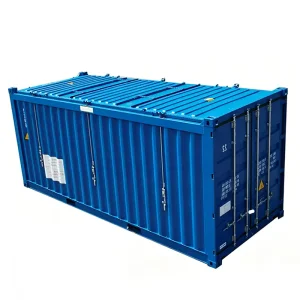
Dynamic impact forces during crane lifts from rolling supply vessels to offshore platforms demand non-standard compact lengths (10ft, half-height 20ft ore baskets). Certified to DNVGL-ST-E271 and BS EN 12079, structures employ fully traced impact-tested low-temperature carbon steels.
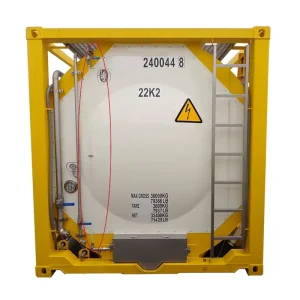
In 20ft ISO liquid and compressed gas tank containers, the 6,058 mm perimeter frame absorbs deceleration shocks up to 2g longitudinal force. Finite element design prevents inertial surge forces of 25,000L cryogenic liquids or hazardous alcohols from buckling the supporting cradle.
The durability of an ODM shipping container across its 20+ year design lifespan rests upon metallurgy and weldment design. CIMIC utilizes premium JIS G3125 SPA-H (equivalent to Corten-A) weathering atmospheric corrosion-resistant steel across all primary longitudinal members: the bottom side rails, top side rails, crossmembers, and corner posts. When exposed to maritime atmospheric electrolytes, SPA-H develops an adherent, dense amorphous patination layer composed of $\alpha\text{-FeOOH}$, arresting inward oxidation progression at rates five to eight times slower than standard structural carbon steel (Q235/SS400).
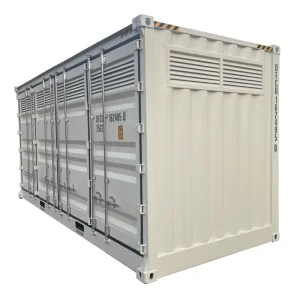
When configuring an ODM container length—for instance, an elongated 45ft platform or a heavy-payload 20ft dangerous goods container with side-access openings—the absence of continuous corrugated steel sidewalls reduces the overall box truss effect. In standard containers, corrugations act as a deep structural web absorbing vertical shear loads. To counteract this loss in full-side-open or non-standard length builds, our engineers implement reinforced composite tubular rails:
| Container Member | Standard ISO Profile | CIMIC ODM Reinforced Profile | Yield Strength ($R_e$) | Tensile Strength ($R_m$) |
|---|---|---|---|---|
| Bottom Side Rail (BSR) | 155 × 50 × 4.5 mm Open Channel | 200 × 75 × 6.0 mm Pressed Box Section | ≥ 345 MPa | 490 – 620 MPa |
| Top Side Rail (TSR) | 60 × 60 × 3.0 mm Square Hollow | 100 × 50 × 4.0 mm Rectangular Tube | ≥ 345 MPa | 490 – 620 MPa |
| Corner Posts (Front/Rear) | 6.0 mm Cold Formed SPA-H | 8.0 mm High-Tensile Welded Flange | ≥ 355 MPa | ≥ 510 MPa |
| Floor Crossmembers | 4.0 mm Pressed C-Sections @ 300mm | 4.5 mm Fabricated I-Beams @ 250mm | ≥ 345 MPa | 490 – 620 MPa |
Prior to line release, our engineering team executes 3D finite element stress simulations in SolidWorks Simulation and ANSYS FEA. Static vertical load combinations evaluate 1.8g acceleration surges experienced in heavy sea states, ensuring that von Mises stresses remain safely below 75% of material yield across the entire chassis length.
No shipping container can enter international multimodal transport without meeting rigorous statutory benchmarks. Every series manufactured at CIMIC undergoes full type approval and factory production inspections witnessed by third-party classification societies, specifically Bureau Veritas (BV), DNV, and China Classification Society (CCS).
Verification includes stacking tests with test loads up to 192,000 kg applied to four corner posts, longitudinal restraint tests (2g acceleration simulating rail shunting), trans-racking stiffness tests to 150 kN, and concentrated floor load testing conforming to 7,260 kg axle loads.
Operating industrial hubs in Tianjin and Suzhou located approximately 100 kilometers from China's primary deepwater terminals (Tianjin Xingang, Shanghai, Ningbo), CIMIC shortens overland drayage costs and eliminates supply chain friction for overseas buyers.
Prior to shipping, every single unit is documented via comprehensive photographic dossiers covering floor deflection checks, paint dry film thickness (DFT 120-140μm zinc-rich epoxy), weld non-destructive testing (NDT), and reefer compressor setpoint stability logs.
The future of intermodal equipment is converging with structural intelligence, carbon-neutral materials, and dynamic length flexibility. Four major engineering transitions currently define CIMIC’s research pipeline:
Integration of thermo-mechanically controlled processed (TMCP) steels and carbon-composite sandwich panels reduces tare weight by 14% without compromising 9-high stacking strength.
Sensors integrated directly into the top side rails transmit real-time length tension data, torsional strain, cargo temperature, and door tampering via low-orbit satellite constellations.
Transitioning reefer machinery to natural refrigerants like R-744 ($CO_2$, GWP=1) with specialized internal microchannel coils optimized for 10ft, 20ft, and 40ft lengths.
Engineered inter-locking connection mechanisms allow two 10ft modules to mechanically couple into a CSC-certified 20ft equivalent cell for maritime transit without secondary flatracks.
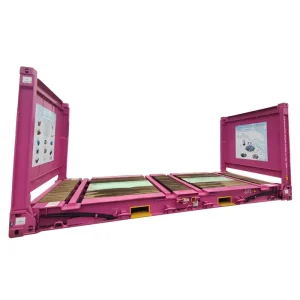
From heavy machinery platform frames to hazardous chemical units and roll-up reefer boxes, explore our fully custom length ODM engineering builds ready for procurement.
Essential operational, regulatory, and engineering guidance for logistics directors, project contractors, and fleet managers specifying non-standard container lengths.
Non-standard lengths (such as 10ft, 14ft, or 30ft units) cannot be slotted directly into 20ft or 40ft cellular guide rails on container ships without adaptation. For 10ft units, CIMIC manufactures dual-interlocking connector brackets or builds them into coupled pairs matching standard 20ft ISO corner-casting centers, allowing them to ship as a single 20ft unit. Alternatively, non-standard units are stowed on breakbulk beds, flatracks, or open deck spaces certified for project cargo.
Our manufacturing facilities can fabricate custom monocoque containers and industrial chassis up to 53 feet (16,154 mm) in length, matching North American domestic intermodal road-rail regulations. For static or offshore modular structures not restricted by highway transit, length extensions can reach up to 60 feet, provided specialized heavy-duty dual-beam longitudinal frames are engineered to control center deflection under maximum allowable payload.
ISO 1161 establishes precise dimensional relationships for corner casting apertures. In extended lengths such as 45ft containers, intermediate corner castings are integrated into the top and bottom side rails exactly at the 40ft position (11,985 mm center-to-center). This enables standard container spreaders on port gantry cranes and conventional twistlocks on 40ft skeletal trailer chassis to secure the container securely.
For standardized catalogue ISO lengths (20ft, 40ft High Cube dry and reefer boxes), inventory units can be dispatched in single-unit quantities. For bespoke length ODM orders requiring dedicated tooling, robotic jig reconfiguration, and specific FEA stress calculations, production typically starts at 2 to 4 units for prototyping and testing, scaling efficiently to volume batches of 50 to 500+ units.
A refrigerated (reefer) container integrates an active electro-mechanical refrigeration machine (such as Carrier Transicold, Daikin, or Thermo King) that continually cools or heats cargo to a precise target temperature (e.g., -30°C to +30°C), requiring continuous three-phase power or a clip-on diesel generator. An insulated container features thick polyurethane insulation throughout walls, roof, and floor but lacks mechanical refrigeration, relying on thermal inertia to passively minimize temperature fluctuation on short journeys.
Yes. Conversion or clean-sheet engineering to DNV 2.7-1 / EN 12079 demands specialized metallurgical selection (impact-tested structural steel meeting Charpy V-notch energy standards down to -20°C or -40°C), continuous non-destructive weld inspection (MPI and ultrasonic testing), certified lifting pad-eyes welded directly to the primary frame members, and comprehensive drop and lift testing witnessed by DNV surveyors prior to offshore certification.
