Manufactured to rigorous marine classification benchmarks, offering unmatched structural integrity, payload capacity, and automated thermal preservation.
Analyzing structural metallurgy, intermodal design paradigms, and the technical governance driving contemporary global shipping fleets.
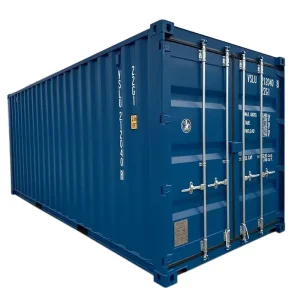
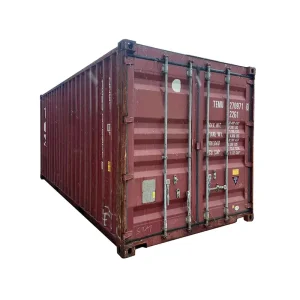
In the high-stakes domain of intermodal maritime and terrestrial transit, standardized shipping containers represent the frontline of cargo protection against extreme dynamic loads and highly aggressive ambient atmospheres. To ensure mechanical survivability across decade-long deployment lifecycles, precision manufacturers reject standard structural mild steels in favor of specialized atmospheric corrosion-resistant alloys, universally recognized as Corten Steel (JIS G3125 SPA-H). Corten steel develops a stabilized, impervious copper-phosphorus oxide layer upon contact with cyclical atmospheric moisture. This protective passivation barrier arrests deeper ferric oxidation, providing an intrinsic corrosion resistance profile quadruple that of conventional carbon steel structural framing.
Our Tianjin and Suzhou manufacturing facilities utilize continuous automated submerged arc welding (SAW) and multi-axis robotic CO2 metal active gas (MAG) systems to join high-tensile corrugated side wall panels, structural roof bows, and heavyweight bottom sills. Every container must withstand racking stresses induced by modern 24,000+ TEU mega-vessels navigating severe sea states. The corner posts, fabricated from cast steel grade SCW480, are subjected to finite element analysis (FEA) to ensure individual stack capacities exceeding 192,000 kg (equivalent to nine fully laden high-cube containers stacked vertically in deep-hold configurations).
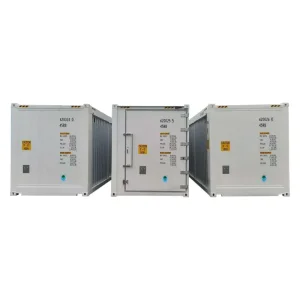
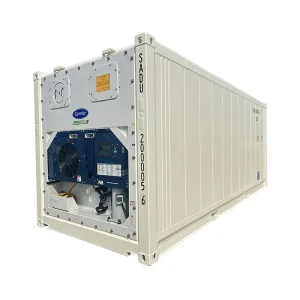
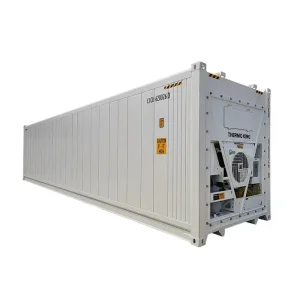
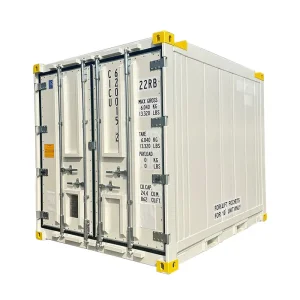
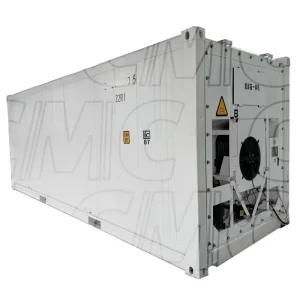
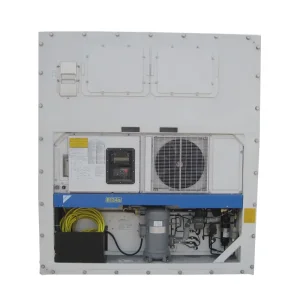
Standardized reefer containers represent an intricate convergence of fluid mechanical refrigeration, thermodynamic barrier insulation, and digital sensor telemetry. When maintaining stringent pharmaceutical payloads or volatile perishables across equatorial shipping corridors, temperature variance must not exceed ±0.25°C. To achieve this, our ODM production processes combine robotic high-pressure polyurethane foam injection (utilizing zero-ODP, non-fluorinated blowing agents) with dual-layer food-grade stainless steel interior lining (grade SUS 304). This monolithic insulation envelope prevents thermal bridging and guarantees a thermal transmittance (K-factor) beneath 0.38 W/(m²·K).
Engineered cold-air floor distribution utilizes high-profile extruded aluminum T-bar subfloors designed to deliver uniform ascending airflow under static system backpressures. CIMIC integrates industry-standard Carrier Transicold, Daikin, and Thermo King digital scroll and reciprocating inverter compressor units capable of modulating cooling loads from deep-freeze cryogenic storage (-35°C) to fresh agricultural ventilating environments (+30°C), all verifiable through onboard automated data logger readouts and telematics arrays.
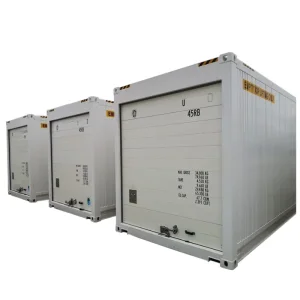
Deploying equipment and bulk cargo to offshore floating production storage and offloading (FPSO) units or deep-sea drilling platforms removes the forgiving structural margins of land-based logistics. Offshore containers operate under violent offshore sea swells, requiring adherence to DNV GL 2.7-1 / EN 12079 dynamic lifting certifications. Unlike standard ISO 1496 shipping units engineered solely for dockside gantry spreaders, DNV offshore modules must withstand 4-point dynamic sling impact forces, catastrophic angular drops, and lateral wave-slamming loads.
Our heavy-duty offshore product line utilizes certified micro-alloyed normalized structural steel sections exhibiting high Charpy V-notch impact toughness values at -20°C or -40°C sub-zero conditions. Every primary structural weld undergo Non-Destructive Examination (NDE)—including magnetic particle inspection (MPI) and 100% ultrasonic testing (UT)—followed by calibrated prototype proof tests at 2.5 times the maximum gross weight. Integral padeyes, flame-cut directly from certified thick steel plates without lamellar tearing, provide direct load paths to heavy-duty four-leg wire rope slings, eliminating failure vectors during crane transfers in heavy seas.
How four decades of clustered supply chain integration across Tianjin and Suzhou empower tier-1 manufacturing economies of scale.
Situated within China's primary industrial metallurgy basin, our factories maintain real-time strategic allocations of genuine hot-rolled SPA-H Corten coils directly from state-owned blast furnaces, insulating clients from raw material market shocks.
Key component ecosystems—including EPDM rubber dual-lip weather gaskets, marine zinc-rich primers, marine plywood flooring treated with apitong/keruing resins, and cast-steel corner castings—are situated within a 50km radius for just-in-time fabrication.
Our plants in Tianjin and Suzhou are strategically positioned ~100 km from major container terminals (Tianjin Port and Shanghai/Taicang ports). Finished units are staged, custom-cleared, and vessel-loaded without heavy domestic drayage expenses.
Addressing the complex technical and commercial mandates of global container leasing companies, defense ministries, and cold-chain operators.
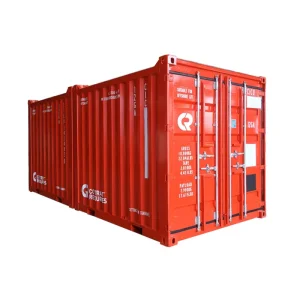
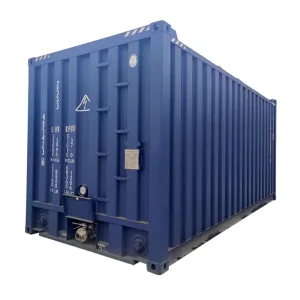
High-volume standard ISO 20ft and 40ft High-Cube dry boxes manufactured with uniform paint chemistry, standardized decal mapping, and low lifecycle maintenance costs for long-term multi-party chartering.
Modified thermal containers re-engineered for battery energy storage systems (BESS), solar inverter hubs, and mobile data centers, incorporating internal structural reinforcements, HVAC cutouts, and fire suppression raceways.
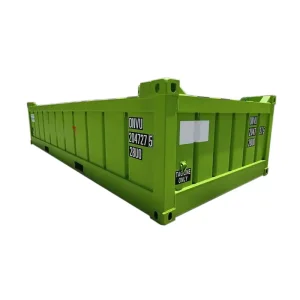
Half-height open-top bins and side-tipping containers tailored for dense mineral concentrates, aggregates, and heavy scrap, engineered with hardened floor wear-plates and quick-release tarpaulin systems.
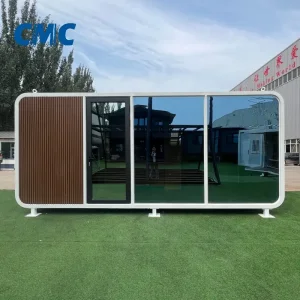
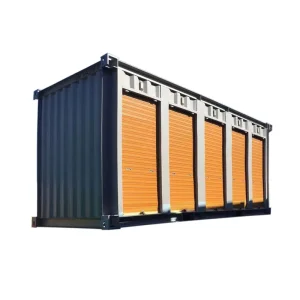
Intermodal flat-pack and modular tiny homes, Apple Cabins, and relocatable tactical office units featuring fully certified electrical wiring, structural thermal breaks, double-glazed architectural fenestration, and plug-and-play plumbing.
Ensuring frictionless border clearance, maritime insurance validity, and continuous operational safety across all global jurisdictions.
Every seaworthy container is inspected and stamped under the oversight of classification societies including Bureau Veritas (BV), ABS, Lloyd's Register, or CCS. Valid International Convention for Safe Containers (CSC) plates certify stacking, racking, and floor load capacities.
Units intended for international transit comply with the Customs Convention on Containers (CCC/TIR) to guarantee seal security. Marine plywood floors are treated with Australian Department of Agriculture (AQIS) approved immunizing preservatives to satisfy biosecurity regulations.
Our global clients benefit from factory-backed spare parts provisioning—including door locking bars, cam keeps, EPDM seals, and reefer mechanical sub-assemblies—shipped to primary transshipment hubs in Europe, Africa, Australia, and the Americas.
The transformation of standard steel conex boxes into connected, thermally optimal, and carbon-minimized logistics nodes.
Next-generation ODM shipping containers integrate low-power satellite and 5G cellular communication modules, delivering live positional data, door-opening alerts, shock telemetry, and internal atmosphere readings directly to enterprise logistics dashboards.
Accelerating towards Net-Zero initiatives, factory finishing shifts from solvent-based paints to advanced waterborne epoxy and zinc systems. Reefer insulation lines use next-generation hydrofluoroolefin (HFO) blowing agents with an ultra-low Global Warming Potential (GWP < 1).
Addressing erratic grid connections in remote developing ports and long desert railway hauls, hybrid reefer containers integrate roof-mounted thin-film solar PV arrays and lithium battery buffer packs, maintaining critical chilling parameters autonomously.
Engineered to deliver structural performance and thermal preservation across demanding oceanic, terrestrial, and remote industrial conditions.
Navigating sub-zero Northern Sea routes or baking mid-Atlantic journeys, our high-grade Corten steel boxes and sealed reefer units withstand ambient swings from -40°C to +50°C without metal embrittlement, seal failure, or cargo spoilage.
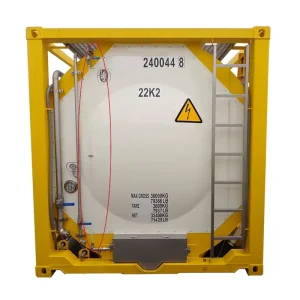
Certified ISO tank containers and ventilated side-door hazardous dry boxes provide dedicated spill containment sumps, flame-arresting mesh louvers, and corrosion-resistant linings to transport bulk solvents, fuels, and chemical compounds safely.
Quick-deployment flat-pack hospital clinics, command cabins, water filtration modules, and refrigerated storage units can be unloaded by standard forklift or mobile crane to deliver functional operational facilities in emergency zones within hours.
Targeted solutions for liquid chemicals, dry automotive cargo, decentralized power hubs, and value-oriented second-hand fleets.
In-depth responses compiled by senior CIMIC container structural engineers, quality auditors, and international export managers.
