Pre-engineered, tested, and seaworthy sea cans ready for immediate OEM customization and global intermodal assignment.

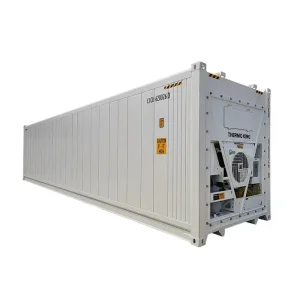
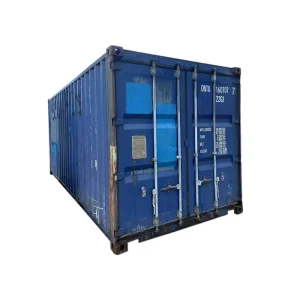
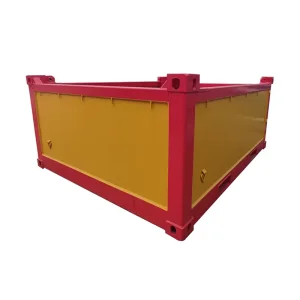
Critical structural variances, volumetric advantages, and metallurgic parameters differentiating High Cube units from standard ISO containers.
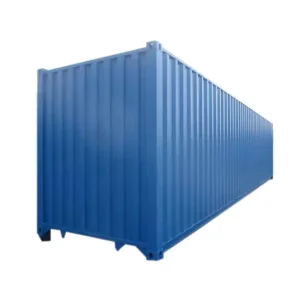
In modern global trade, standard 8'6" (2,591 mm) dry vans frequently encounter volumetric cubic-out limitations prior to reaching statutory gross weight thresholds. An OEM High Cube Sea Can increases total external height to 9'6" (2,896 mm). This additional foot of vertical headroom expands internal capacity from ~2,385 cu.ft to over 2,694 cu.ft in 40ft frames, yielding a direct 13% volumetric increment.
This volumetric expansion is instrumental for light-density manufactured components, high-stack palletization, automotive interior racks, and equipment packaging. Furthermore, the structural framework accommodates heavy industrial adaptations—including battery energy storage systems (BESS), mobile water treatment plants, and offshore command stations—where ceiling equipment suspension demands high clearances without violating intermodal ISO envelope parameters.
| Engineering Parameter | 20ft / 40ft Standard (8'6") | 20ft / 40ft High Cube (9'6") |
|---|---|---|
| Exterior Height | 2,591 mm (8 ft 6.0 in) | 2,896 mm (9 ft 6.0 in) |
| Interior Clear Height | 2,393 mm (7 ft 10.2 in) | 2,698 mm (8 ft 10.2 in) |
| Door Aperture Height | 2,280 mm (7 ft 5.7 in) | 2,585 mm (8 ft 5.7 in) |
| Internal Volume (40ft) | 67.7 m³ (2,390 cu.ft) | 76.4 m³ (2,698 cu.ft) |
| Tare Weight Range (40ft) | 3,700 – 3,850 kg | 3,900 – 4,150 kg |
| Payload Capacity | Up to 26,780 kg | Up to 26,580 kg |
| Applicable Regulations | ISO 668, ISO 1496-1, CSC | ISO 668, ISO 1496-1, CSC, TIR |
How our Tianjin manufacturing ecosystem executes compressed delivery schedules, rigid metallurgical audits, and global logistics staging.
Situated within 100 kilometers of Tianjin Xingang Port, our facilities eliminate trans-provincial rail and barge transshipment bottlenecks, guaranteeing low drayage costs and predictable vessel loading cycles.
Multi-axis automated submerged arc and laser welding lines maintain millimeter tolerances across container corner castings, sill channels, and corrugations, minimizing thermal deformation and weld porosity.
Direct supply partnerships with tier-1 Chinese steel mills guarantee instant procurement of certified SPA-H Corten coils, ensuring fixed production prices regardless of global commodity spot fluctuations.
Every sea can undergoes continuous shot-blasting to ISO 8501-1 Sa 2.5 standards followed by high-build zinc-rich epoxy primers and polyurethane topcoats engineered for 15+ years of C5-M marine exposure.
Adapting intermodal platforms for high-stress offshore sectors, rail corridors, cold supply chains, and distributed power grids.
In the North Sea, Gulf of Guinea, and Western Australia, offshore platforms deploy customized High Cube containers as tool workshops, diver decompression shelters, and hazardous waste stores. Built with certified pad-eyes, heavy lifting slings, and Charpy impact-tested steels operating safely at -20°C to -40°C in compliance with EN 12079 / DNVGL-ST-E271.
The global renewable transition requires ruggedized enclosures for Lithium Iron Phosphate (LiFePO4) Battery Energy Storage Systems. High Cube envelopes supply the interior volume essential for overhead HVAC cooling ducts, aerosol fire suppression, and walk-in cable trays while fitting on standard container-handling trailers.
Trans-Eurasian freight trains subject rolling stock to severe longitudinal buffing forces. Reinforced High Cube structures absorb the 2G dynamic shockloads generated in hump yard classification while maximizing box stowage for consumer electronics shipped between China and European central distribution hubs.
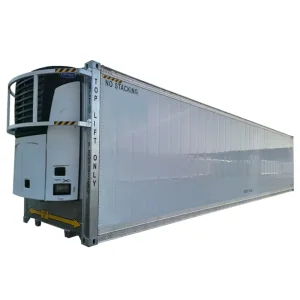
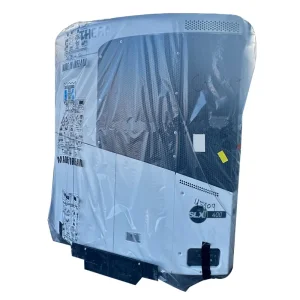
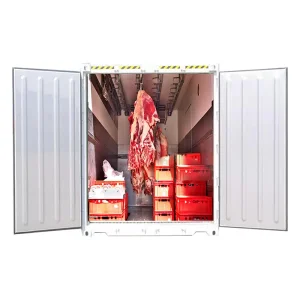
Equipped with Carrier Transicold, Thermo King, or Daikin machinery, 40ft High Cube reefers maintain temperatures from -30°C to +30°C. Extra interior height facilitates deep T-bar floor profiles, promoting uninterrupted airflow under pallets containing fresh citrus, pharmaceuticals, or deep-frozen seafood.
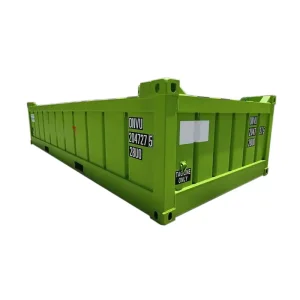
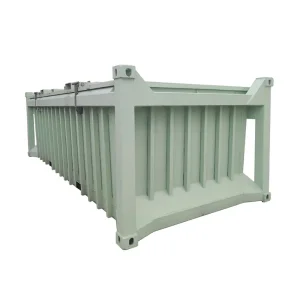
When transporting iron ore, lithium concentrates, and heavy drill machinery, specialized half-height and open-top sea can designs redistribute high point-loads, providing crane top-loading access and rapid tipper discharge capabilities for mining operations across Africa and South America.
Civil engineering firms utilize high cube shells for remote worker accommodations and military field hospitals. The 2.7-meter ceiling height accommodates insulation, drop-ceilings, electrical raceways, and ducted ventilation without compromising internal ergonomic standards.
Anticipating regulatory updates, smart container tracking demands, circular metallurgy, and automated port connectivity.
Standardized integration of solar-harvesting edge sensors directly into container roof recesses. Real-time telemetry monitoring door intrusions, cargo shock vectors (3-axis accelerometers), internal humidity, and atmospheric oxygen levels via low-orbit satellite constellations.
Deployment of third-generation waterborne acrylic-epoxy coatings reducing volatile organic compound (VOC) emissions by over 80%. Introduction of nano-alloyed lightweight high-strength steels that trim tare weight by 350 kg per 40ft HC unit, immediately augmenting payload efficiency.
Commercialization of dry sea cans integrating vacuum insulation panels (VIP) and phase-change materials (PCM) within the corrugated side-wall envelopes. Preserves temperature stability for dry pharmaceutical goods without demanding active refrigeration power lines.
Every structural member tracked via blockchain-linked QR metadata containing chemical heat-lot certificates, factory QA logs, and carbon footprint audits, assuring 100% recycling lineage at scrap end-of-life according to emerging European circular economy mandates.
Eliminate demurrage risks, customs rejections, and structural safety liabilities across world terminals.
International maritime and rail operations demand valid statutory documentation stamped on each unit's Safety Approval Plate. Our facility operates audited production lines authorized by major global classification societies—including Bureau Veritas (BV), Det Norske Veritas (DNV), Lloyd’s Register (LR), and the American Bureau of Shipping (ABS).
Before departing our staging yards, each container undergoes rigorous physical testing: weatherproof spray booth trials applying 200 kPa water jets across all gasket seals, floor deflecting load simulations, lifting tests with proof loads equal to 2 × MGM, and end-wall strength verification.
| Standard / Code | Regulatory Body | Application Domain |
|---|---|---|
| ISO 668 / 1496-1 | ISO / TC 104 | Standard Freight Dimensions & Structural Ratings |
| CSC 1972 | IMO (International Maritime Org.) | International Vessel & Terminal Safety Handling |
| DNVGL-ST-E271 | DNV Classification | Offshore Open-Sea Dynamic Rigging & Lifting |
| EN 12079 | European Committee (CEN) | Offshore Cargo Containers Design & Testing |
| UIC 592 | International Union of Railways | European Railway Flatcar Clearances & Securement |
| IMDG Code | IMO Maritime Safety Comm. | Dangerous Goods Stowage & Ventilation Provisions |
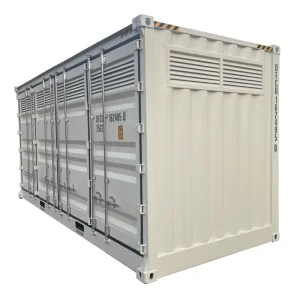
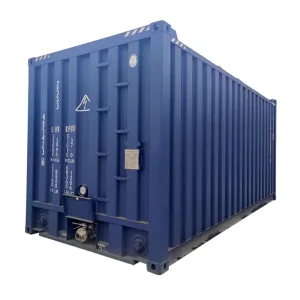
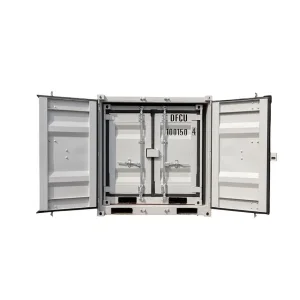
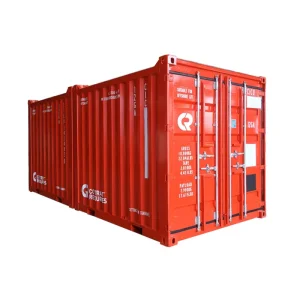
High-cube dangerous goods modules, offshore units, liquid storage, and modular nested transport enclosures.
Clear, direct answers regarding production lead times, steel formulations, reefer machinery selection, and custom OEM engineering.
