
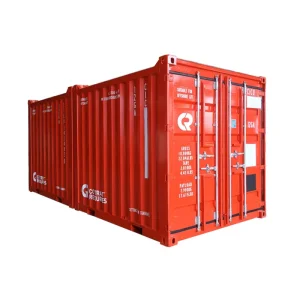
DNV 2.7-1 Offshore
Direct factory supply with Bureau Veritas, DNV GL, and ISO type-certification engineered for extreme subsea logistics, hazardous cargo handling, and remote Australian mining conditions.
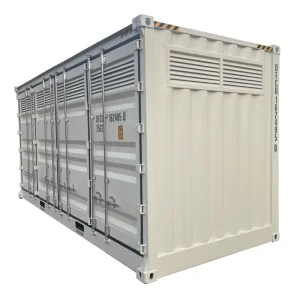
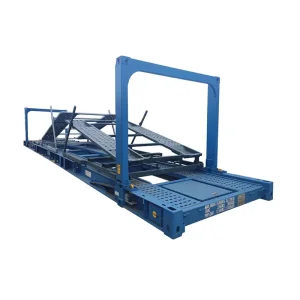
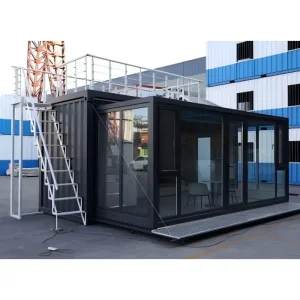
Examining deepwater gas extraction, remote resource corridors, and strict National Offshore Petroleum Safety and Environmental Management Authority (NOPSEMA) compliance requirements.
Australia’s oceanic energy strongholds, including the Pilbara offshore basin, Gorgon, Wheatstone, and Ichthys, operate under volatile sea states. Conventional ISO freight containers undergo catastrophic weld and structural failure when subject to dynamic snatch loads during platform-to-supply-vessel crane operations. Offshore Cargo Carrying Units (CCUs) deployed here require full DNV 2.7-1 / ISO 10855 type-approval, integrated four-point lifting sling bridles, and Charpy V-notch impact-tested high-yield structural steels.
Southern maritime operations face severe swell, extreme wind shear, and sub-zero wind-chill variables. Australian standards demand that offshore mud-skips, waste baskets, and pressurized laboratory modules maintain design temperature ratings of TD = -20°C. Standard commercial shipping steels turn brittle under these cryogenic conditions, mandating grade EN 10025 S355NL or S355ML steel with verified sub-zero impact energy ratings (minimum 27 Joules at -20°C).
The hyper-saline Australian maritime climate corrodes standard industrial coatings in months. Engineering offshore units for long life requires automated zinc silicate pre-treatment, multi-coat epoxy intermediate barriers, and aliphatic polyurethane topcoats yielding a dry film thickness (DFT) exceeding 300 microns. This preserves the structural chassis against pitting corrosion, reducing maintenance turnaround times at Darwin and Dampier supply bases.
How direct Chinese manufacturing and engineering bridge the pricing gap without sacrificing Lloyd's Register, DNV, or DLI Australia compliance.
Every structural column, gusset, and pad eye is forged from 100% batch-tested structural steel with 3.1 Mill Inspection Certificates (EN 10204). Complete raw material traceability is archived for the entire lifecycle of the container.
Chassis assemblies leverage submerged arc welding and high-precision robotic rigs. Critical joint penetration and pad eye attachments undergo Non-Destructive Testing (NDT), including Magnetic Particle Inspection (MPI) and Ultrasonic Testing (UT).
Factory Acceptance Testing (FAT) includes 2-point dynamic lifting, 4-point all-angles drop testing, and internal floor deflection validation witnessed directly by classification society surveyors before export release.
From internal custom shelving and explosion-proof Ex-d electrical fit-outs to cryogenic tank valve controls, our in-house engineering team translates your project drawings into AS/NZS compliant offshore hardware.
| Engineering Parameter | Standard ISO Shipping Container | Australian Land DG Storage (AS 1940) | DNV 2.7-1 / ISO 10855 Offshore CCU |
|---|---|---|---|
| Primary Design Target | Quayside-to-quayside cellular vessel stack | Chemical, fuel & lubricant bunded storage | Dynamic open-sea platform crane lifting |
| Dynamic Load Factor (Ψ) | Static safety margin (approx. 1.2 – 1.4) | Static structural containment rating | Dynamic design factor: 2.0 to 3.7+ |
| Steel Grade & Impact Toughness | Standard Corten / Q235B (No sub-zero Charpy test) | Structural Carbon Steel (Mild weather spec) | Fine-grain EN 10025 S355NL / Charpy 27J @ -20°C |
| Lifting Point Configuration | Corner castings only (Twistlocks / Spreader bars) | Corner castings or reinforced base pockets | Integrated Pad Eyes, NDT MPI tested + DNV slings |
| Corrosion Protection Specs | Standard marine paint (~120 μm DFT) | Industrial enamel / Polyurethane (~180 μm DFT) | ISO 12944 C5-M Extreme Marine (>300 μm DFT) |
| Mandatory Regulatory Plates | CSC Safety Approval Plate | AS 1940 Compliance Decals & Hazchem Plates | DNV 2.7-1 / EN 12079 Inspection Data Plate |
Engineered to withstand the relentless mechanical punishment of deep-sea exploration, desert dust, and corrosive port logistics.
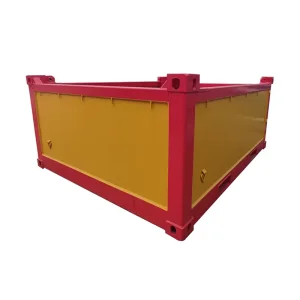
Handling heavy drill pipe collars, subsea blowout preventer (BOP) spare components, and downhole electronic instruments. Utilizing open-top half-height units and cargo baskets with integral tie-down points certified under DNVGL-ST-E271 to guarantee zero cargo movement during supply boat transit through heavy swell.
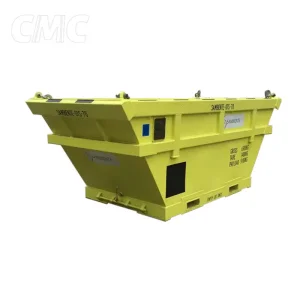
Australian environmental laws prohibit offshore liquid effluent spillage. Our DNV certification silt baskets and cuttings boxes feature continuous seal welding, pressure-tested drainage valves, heavy-duty marine seals, and anti-slosh baffles to ensure zero containment breach between sea-rigs and onshore processing facilities in Karratha or Henderson.
In addition to ocean work, our dangerous goods side-opening units and heavy machinery carrier modules serve inland lithium, iron ore, and metallurgical coal projects. With reinforced forklift pockets, integrated internal spill bunds, and certified fire ventilation, units adhere strictly to WorkSafe Australia regulations.
Our direct manufacturing engineering team reviews your dynamic load calculations, slings, pad eye geometries, and internal custom layouts within 24 hours.
Decarbonization, smart IoT telematics, and electrification across global offshore and heavy-haul sectors.
Global fleet asset managers require continuous visibility of CCU location, internal temperature, door opening events, and G-force impact acceleration. We integrate ATEX-certified, intrinsically safe GPS and IoT sensor systems directly into container chassis designs for real-time fleet intelligence.
Australia’s accelerating offshore wind developments require specialized containerized battery energy storage systems (BESS), offshore substation tool-vaults, and cable-laying crew quarters built to DNV 2.7-1 and IMO SOLAS A60 fire-barrier specifications.
Energy supermajors are moving away from restrictive short-term rental leases toward direct-procurement Capex strategies. Sourcing certified offshore modules directly from audited Chinese manufacturers lowers lifetime equipment costs by up to 45% compared to multi-year rental agreements.
Authoritative clarification on standards, testing methodologies, logistics, and Australian customs clearance.
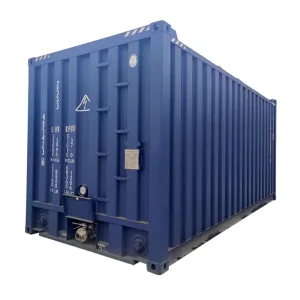
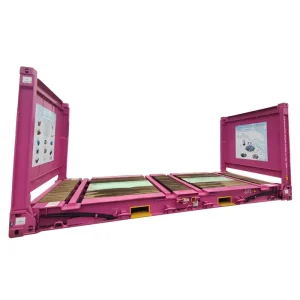
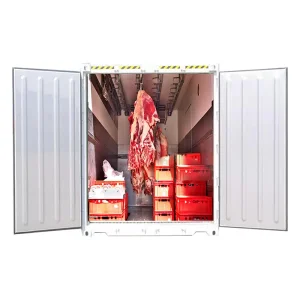
Explore our complete range of certified transport equipment engineered for offshore, cold-chain, and bulk material applications across Australia and international trade routes.
Direct communication with certified container structural engineers. Bulk fleet procurement pricing, custom DNV designs, and scheduled shipping to all Australian and global ports.