
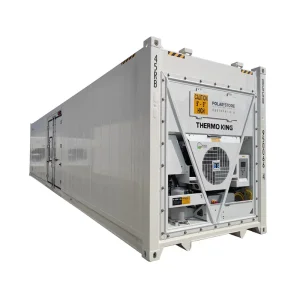
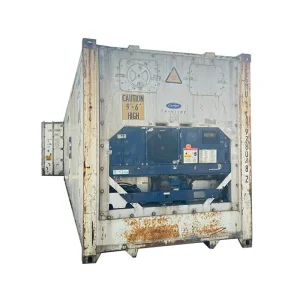
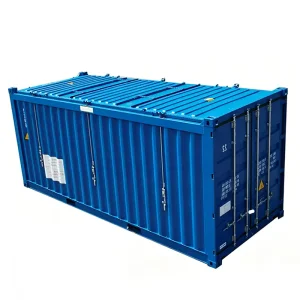
ODM 40ft High-Cube Side Open Door Reefer Container (Costa Rica Agrilogistics Edition)
View Specifications & Quotes
Engineered for high-throughput cargo transfer, oversized mechanical packaging, and rigorous marine standards across Pacific and Caribbean shipping channels.

Evaluating trade corridors, free trade zones (Zonas Francas), and high-value cargo handling challenges across Moín, Caldera, and the Greater Metropolitan Area (GAM).
Costa Rica’s Free Zone regime (Coyol, El Barreal, Cartago) centers heavily on high-precision medical device manufacturing and advanced electronics. Standard end-loading containers restrict cross-docking velocity. Full side-opening containers empower seamless side-loading of specialized cleanroom materials, robotic equipment, and sensitive modular clean-booths directly via counterbalance forklifts without structural interference.
As one of the world's leading exporters of premium pineapples, Cavendish bananas, and specialty coffees, Costa Rican producers operate within intense humidity and temperature profiles. Side open door reefer containers enable rapid partial unloading along inter-modal hubs without exposing the entire cargo volume to ambient tropical heat, ensuring uninterrupted thermal preservation.
Navigating the mountainous central topography between Puerto Limón (APM Terminals Moín) on the Atlantic and Puerto Caldera on the Pacific involves steep gradients and tight logistical staging yards. Side-access units minimize tractor repositioning needs, allowing rapid warehouse turnaround in space-constrained industrial zones across Alajuela and Heredia.
Eliminating full side-wall corrugations removes the classic structural shear plane. Discover our Corten steel box-beam reinforcements and weather-barrier sealing mechanisms.
By engineering high-yield SPA-H Corten steel top headers and perimeter box sections, our designs resist deflection even during stacking operations loaded to 30,480 kg gross mass. Double-cantilever corner-post tie-ins guarantee compliance with ISO 1496-1 racking and shear stress mandates.
Costa Rica’s tropical Pacific and Caribbean environments inflict rapid UV and salt-mist degradation. Our multi-lip perimeter EPDM gasket profiles are formulated with marine anti-aging compounds, tested under ASTM B117 salt spray criteria for over 1,000 continuous hours to prevent moisture penetration.
Every side-door chassis incorporates dedicated recessed channels and pre-wired provisions for IoT asset monitors, intrusion sensors, ambient humidity detectors, and GPS telematics. Remote logistics operators monitor door open cycles across rural Costa Rican roads directly via central dashboard APIs.
Review our specialized container lineup delivering certified structural integrity for Central American agricultural distribution, project construction, and maritime forwarding.
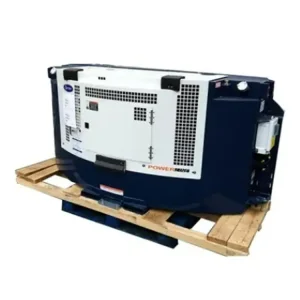
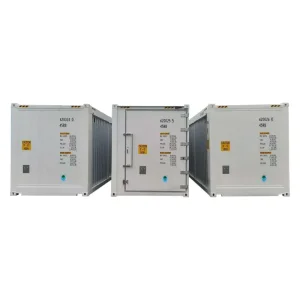
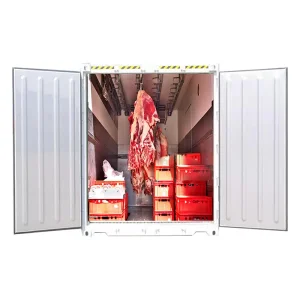
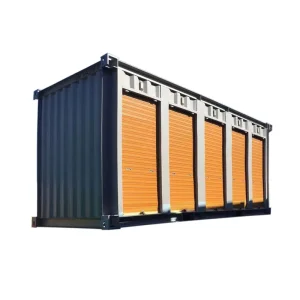
How side open door ISO modules solve long-standing bottlenecks across Central American trade terminals.
Companies operating within Coyol Free Zone import sensitive automated cleanroom robots from Asia. Standard containers require awkward winching that risks accelerometer trips. Side-opening containers allow overhead crane or dual-forklift precision ingress without uncrating delicate assemblies under unfavorable atmospheric conditions.
Costa Rica generates roughly 99% of its electricity from renewable sources (ICE projects). Transporting turbine rotors, heavy penstock valves, and control gear through narrow Cordillera mountain tracks requires modular side-accessible enclosures that can act as on-site lockable weatherized power substations once offloaded.
In regions such as San Carlos and Limón, multiple mid-sized cooperatives pool premium produce (organic ginger, cassava, tropical fruits). Side door layouts permit fast localized sorting and sequential pallet loading directly at packhouses, minimizing ambient heat absorption prior to port gate-in at APM Moín.
The convergence of carbon neutrality targets, automated straddle carriers, and micro-distribution infrastructure.
Next-generation side door manufacturing integrates high-strength thermomechanically rolled steels. This reduces tare weight by roughly 12% without sacrificing ISO stacking rigidity, allowing Central American motor carriers to transport more payload while remaining within strict highway axle-load regulations.
The integration of variable-speed scroll compressors and low-GWP refrigerants (R-1234yf / R-513A) matches Costa Rica’s national decarbonization plan (Plan Nacional de Descarbonización). Solar-assisted battery buffering modules mounted on high-cube roofs provide auxiliary power for critical sensor suites.
As automated guided vehicles (AGVs) spread across international maritime hubs, mechanical cam-locks are evolving into pneumatic-assisted latching mechanisms. This minimizes manual dockside handling times and lowers workplace injury frequencies in busy distribution centers.
Engineering verification, CSC marine safety certifications, import logistics, and operational parameters.
Consult with our structural engineering team today to review load calculations, CSC certs, and tailored quotes for container shipping to Costa Rica.