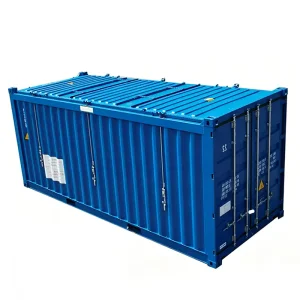
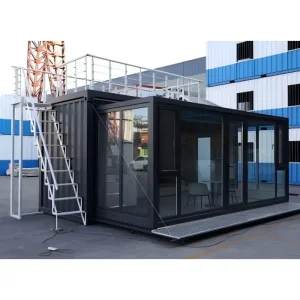
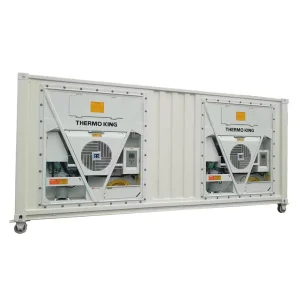
Procure classification society-certified intermodal units engineered for top-loading flexibility, oversized industrial equipment, and extreme structural durability across multimodal corridors.
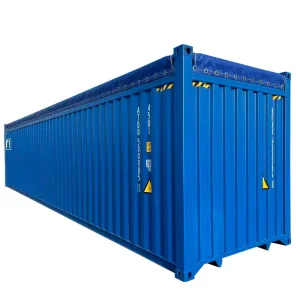
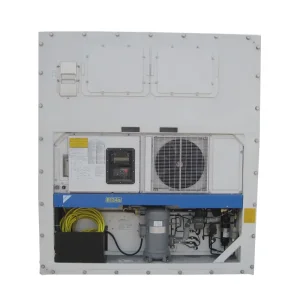

How removable overhead header beams, high-tensile SPA-H Corten alloy reinforcement, and dynamic roof-bow matrices resolve out-of-gauge (OOG) and heavy-lift logistics challenges.
Unlike rigid box dry freight containers whose rear header is continuously welded to the top corner castings, soft-top open-top units integrate a removable or swing-out rear header. This structural mechanism allows overhead gantry cranes, overhead shop hoists, and heavy reach-stackers to trolley ultra-dense industrial equipment—such as multi-axis CNC machine centers, heavy turbine rotors, and cast iron engine blocks—directly through the top or end threshold without structural interference, cutting handling turnarounds by up to 68%.
Equipped with galvanized or powder-coated tubular steel roof bows that slot into perimeter upper rail stirrups, the structural canopy prevents ponding of rainwater, snow accumulation, and aerodynamic buffeting during high-speed rail and transoceanic transit. When over-height machinery demands additional clearance, these bows can be incrementally adjusted, detached, and nested inside the interior lashing pockets, transforming the unit into an open cargo bay while sustaining sidewall lateral rigidity under dynamic rolling forces.
The protective soft roof consists of a multi-ply, tear-resistant PVC/PU-coated polyester tarpaulin engineered between 650 g/m² and 900 g/m². Rated for tensile stresses up to 3000 N / 50 mm, UV-radiation stabilized, and fire retardant, it seals securely to the container perimeter via high-durability eyelets and a continuous steel-core TIR lashing cord. This setup satisfies international customs sealing agreements (TIR Convention) while keeping out salt air, dust storms, and heavy seas.
A granular analysis of capital expenditure requirements, raw material inputs (SPA-H Corten, PVC fabric, zinc coatings), and seasonal freight cycles influencing landed quotes.
Open-top intermodal equipment operates at the crossroads of specialized engineering and standard dry box cost structures. Because soft-top units feature heavy reinforced top side rails, removable rear headers, customized roof bow matrices, and high-tenacity vinyl tarpaulins, their baseline fabrication costs carry a premium over standard closed-top GP dry vans. However, they remain considerably more cost-effective and lighter than mechanical hard-top units equipped with hydraulic-assisted steel roof panels. Below is the indicative factory-gate export pricing baseline (FOB China / Major Seaports) and technical specification matrix:
| Equipment Model | Dimensions (L × W × H) | Tare Weight (KG) | Max Payload (KG) | Roof Opening Dimensions | Baseline Quote Range (USD) | Standard Certifications |
|---|---|---|---|---|---|---|
| 20ft Standard Soft Open-Top | 6,058 × 2,438 × 2,591 mm | 2,350 – 2,480 kg | 28,100 kg | 5,400 × 2,230 mm | $2,650 – $3,450 | ISO 1496-1, CSC, BV, ABS, TIR |
| 20ft High-Cube Soft Open-Top | 6,058 × 2,438 × 2,896 mm | 2,520 – 2,650 kg | 27,960 kg | 5,400 × 2,230 mm | $2,950 – $3,850 | ISO 1496-1, CSC, CCS, GL-DNV |
| 40ft Standard Soft Open-Top | 12,192 × 2,438 × 2,591 mm | 3,850 – 4,050 kg | 26,430 kg | 11,540 × 2,230 mm | $4,450 – $5,600 | ISO 1496-1, CSC, BV, Lloyds Register |
| 40ft High-Cube Soft Open-Top | 12,192 × 2,438 × 2,896 mm | 4,100 – 4,350 kg | 26,380 kg | 11,540 × 2,230 mm | $4,850 – $6,200 | ISO 1496-1, CSC, UIC, TIR, ABS |
| Customized Heavy-Duty Mining Grade | Tailored Lengths (Half-Height / HC) | Project Specific | Up to 34,000 kg | Reinforced Perimeter | Custom Engineering | DNV 2.7-1, EN 12079, ISO |
Corten-A and SPA-H corrosion-resistant structural steel comprise over 72% of the unladen tare weight. Dynamic fluctuation in global hot-rolled coil (HRC) indices directly affects raw factory price calculations, which are tied to global iron ore and coking coal benchmarks.
Quotes vary depending on whether the buyer specifies standard 650 g/m² PVC sheeting or heavy 900 g/m² cross-weave vinyl featuring thermal resistance from -40°C to +70°C, custom anti-wick yarns, flame retardance ratings, and dual-layer localized wear pads over the roof bow arches.
Because soft-top containers are specialized logistics assets, empty container repositioning surcharges (deadhead empty leg repositioning) can heavily influence one-way lease rates and CIF delivered quotes when routing equipment to inland mining or manufacturing zones.
Complete structural validation, classification society survey stamps, and rigorous sealing compliance for high-value transcontinental transit.
Every soft-top container manufactured undergoes formal transverse/longitudinal racking, floor deflection (7,260 kg axle loads under ISO 1496-1), wall strength, and top corner casting lifting tests witnessed by Bureau Veritas (BV), ABS, or CCS inspectors. Data plates are permanently stamped with max gross weight, tare weight, allowable stacking weight (typically 216,000 kg for 9-high container vessel cell guides), and racking test force values.
Cross-border overland transit (under the TIR Convention) mandates that containers remain tamper-evident. Soft-top open-top units feature custom-stamped perimeter eyelets, a continuous galvanized steel wire cable with a transparent plastic sheath, and zinc-alloy terminal end pieces that secure with a single customs seal. This ensures border inspectors can verify that cargo was not accessed without seal breakage.
We maintain an international supply chain for consumable replacement parts, including replacement PVC tarpaulins with pre-formed corners, modular roof bow sets, TIR cords, stainless-steel roof bow locking pins, and EPDM door seal gaskets. This network supports terminals across Rotterdam, Houston, Singapore, Tianjin, and Durban, minimizing terminal dwell times for our fleet operators.
From mineral processing sites to automotive staging lines, soft-top open-top containers simplify top-loading logistics for awkwardly sized loads.
Precision manufacturing units—including multi-axis CNC lathes, plastic injection molding machinery, industrial printing presses, and stamping tooling—cannot easily be maneuvered through narrow end doors. Soft-top open tops permit an overhead shop gantry crane to lower the equipment directly onto internal 28mm hardwood floors, where rated floor and corner lashing rings (1,500 kg to 4,000 kg working load limits) keep it anchored against maritime pitching and rolling.
Transporting monolithic stone blocks from mountain quarries in Carrara, India, or Brazil to architectural processing factories in East Asia requires high structural floor strength and open overhead clearance. Soft-top containers allow heavy yard excavators and crane spreaders to place heavy stone directly over main cross-member beams, avoiding the floor shear and forklift collisions common with enclosed dry vans.
Steel fabrication lines move massive cold-rolled and hot-rolled coils that weigh 10 to 25 metric tons each. With specialized coil cradles positioned inside a 20ft soft open top, heavy industrial C-hooks or electromagnets can lower the coil directly into the center of balance. Lashing chains then tie down to reinforced bottom side rail rings, keeping axle weights balanced for highway and railway transport regulations.
How IoT-connected cargo monitoring, carbon-fiber roof bow arrays, and recyclable thermoplastic tarpaulins are shaping the next generation of open-top containers.
Next-generation fleets are testing smart digital sensors built into corner castings and perimeter roof rails. These low-power NB-IoT and satellite transmitters monitor real-time cable tension along the TIR cord, tracking internal cargo balance and reporting any cargo shifting, structural shocks, or unauthorized tarpaulin tampering directly to logistics control towers in real time.
To reduce container tare weights and ease crew handling during bow adjustments, field trials are replacing traditional galvanized steel tubes with high-strength carbon-fiber/polymer hybrid roof bows. This switch yields a 55% weight reduction per bow assembly, improves flexural recovery from impact shocks, and lowers long-term handling injuries on port loading docks.
Environmental standards in the EU and North America are driving the phase-out of chlorinated PVC coatings. Next-generation tarpaulins employ fully recyclable, solvent-free Thermoplastic Polyurethane (TPU) paired with bio-derived polymer matrices. These materials improve low-temperature crack resistance down to -50°C and can be thermally recycled into industrial flooring at end of life.
Clear answers to structural, commercial, and operational questions from logistics engineers, project cargo forwarders, and procurement directors.
Expand your logistics fleet with DNV offshore baskets, solar cold-chain units, dangerous goods containers, and heavy open-top solutions ready for export.