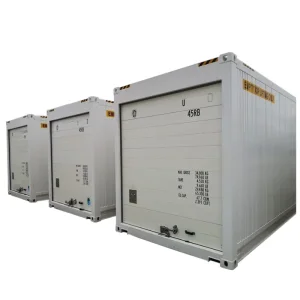
Reefer Container
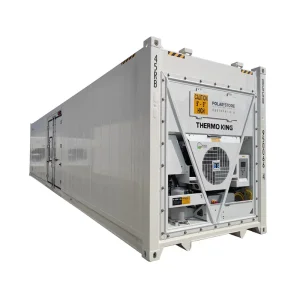
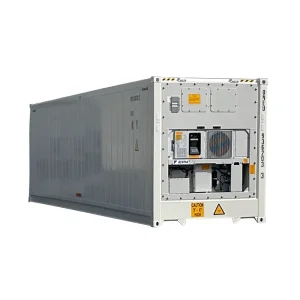
ODM 40ft High-Cube Roll Up Reefer Container Customized Shipping Containers Exporter, Factories
View Product Specs
Verified marine, offshore, and intermodal transport containers engineered under ISO 9001, BV, and DNV maritime standards.
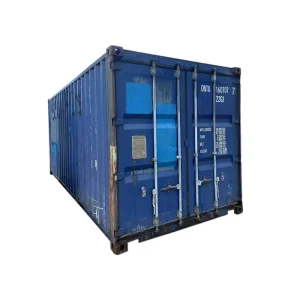
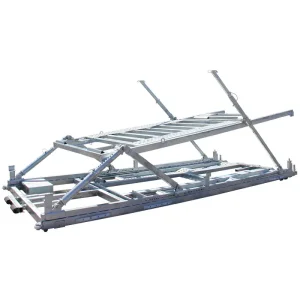
China produces over 90% of global marine and intermodal freight containers. Understanding how domestic integration drives lead-time security and fiscal predictability is essential for strategic global procurement directors.
Direct upstream alignment with metallurgical giants provides Chinese fabrication complexes uninterrupted access to certified SPA-H atmospheric corrosion-resistant Corten steel. This vertical coupling buffers overseas buyers against international commodity volatility, guaranteeing certified mechanical tensile thresholds (up to 490 MPa) and extended container lifespans exceeding 15 to 20 years in severe maritime environments.
Centering operations around major maritime hubs—such as our manufacturing facilities in Tianjin and Suzhou situated roughly 100 km from primary seaports—substantially eliminates internal haulage friction. New units transition straight from the paint curing and final QA line onto deep-water terminal berths or dry-port railway flatcars without demurrage lag.
Certified production runs are not merely fabricated to commercial specifications; they are subjected to mandatory structural type-testing overseen by international classification societies including Bureau Veritas (BV), DNV GL, and Lloyd's Register. All marine series feature valid International Convention for Safe Containers (CSC) plates, ISO 1496 compliance, and strict food-grade interior washdowns.
The container manufacturing sector is undergoing an operational pivot toward digitized tracking, non-fluorinated low-GWP refrigerants, and modular infrastructural utility.
Modern reefers and dry boxes incorporate embedded sensor packages tracking temperature, humidity, door events, and geolocation via satellite and 5G cellular arrays, giving logistics executives live visibility across intermodal waypoints.
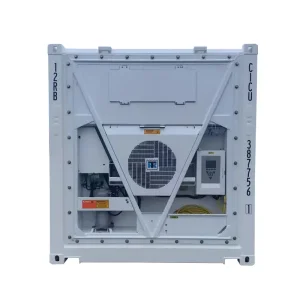
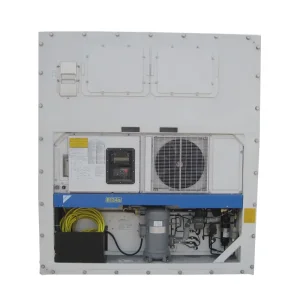
In alignment with the Kigali Amendment, contemporary reefer platforms engineered in collaboration with Carrier, Daikin, and Thermo King utilize refrigerants like R-513A and R-1234yf, significantly cutting direct global warming emissions without reducing thermal recovery margins.
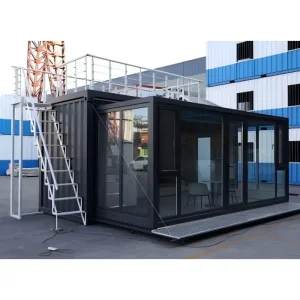
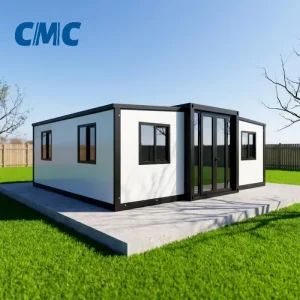
ISO intermodal frames provide load-bearing structural skeletons for expandable site accommodations, off-grid telecom hubs, and modular field data centers. This shifts standard containers from passive haulage units into engineered building blocks.
The global market is formalizing grading scales for retired shipping line containers. Certified "one-trip" and cargo-worthy inspected used boxes are repurposed for secure municipal and retail storage, cutting embodied carbon across industrial supply chains.
Different cargo types require tailored mechanical designs. Here is how specialized container variants address real-world operational demands.
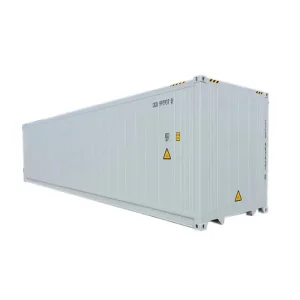
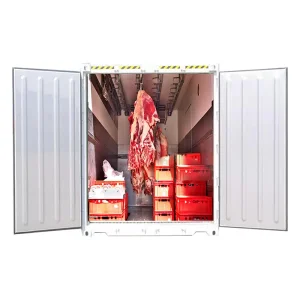
Transporting fresh produce, frozen poultry, and beef across long maritime routes requires continuous thermal precision. Specialized hanging meat containers and dual-zone reefers run Daikin or Thermo King variable-frequency compressors to keep temperatures within a tight ±0.25°C band. T-bar extruded aluminum floors provide consistent airflow under high-density pallet loading.
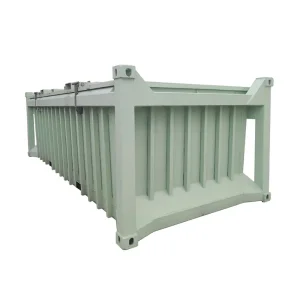
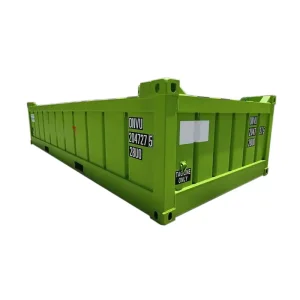
Open-ocean platform logistics demand equipment engineered beyond standard ISO parameters. Units built to DNV 2.7-1 / EN 12079 criteria, including half-height ore boxes and offshore reefers, undergo rigorous dynamic side-impact assessments, drop testing, and Charpy V-notch impact evaluations at -20°C to guarantee safe lifting in rough sea states.
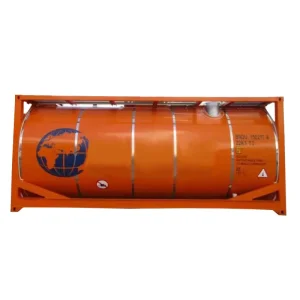
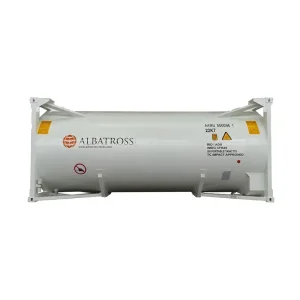
Moving bulk liquids demands absolute structural integrity. Engineered 20ft ISO liquid tank containers built with 316L stainless steel vessels, heavy-duty baffling, and certified discharge valves safely transport both potable water and regulated chemicals across road, rail, and maritime networks.
| Container Classification | Structural Metallurgy | Primary Regulatory Filings | Typical Payload Capacity | Recommended Industrial Applications |
|---|---|---|---|---|
| 40ft High-Cube Marine Reefer | SPA-H Corten frame + MGSS / AL cladding | ISO 1496-2, CSC, TIR, ATP, BV certified | 29,400 kg (Gross: 34,000 kg) | Export agriculture, seafood, pharmaceuticals, field cold storage |
| 20ft DNV Offshore Specialized | Low-alloy high-tensile steel (Charpy tested) | DNV 2.7-1, EN 12079, ISO 10855, LR | 12,500 kg to 15,000 kg | Subsea drilling tools, platform perishables, offshore consumables |
| 20ft ISO Liquid Tank Container | SS316L Vessel + Carbon steel protective cage | IMDG, ASME Section VIII, ADR/RID, US DOT | Up to 26,000 Liters (Gross: ~36,000 kg) | Food-grade liquids, industrial solvents, potable emergency supply |
| 40ft High-Cube Thickened Insulated | Corten steel exterior + Polyurethane core | ISO 1496-1, CSC approval, Food-grade liner | 28,200 kg | Passive temperature-sensitive freight, wine, non-freezer logistics |
Procuring container fleets from Chinese manufacturing plants requires clear verification frameworks across raw materials, weld inspection, and documentation.
Procurement orders should mandate full Mill Test Certificates (MTC) for all structural frame components (corner castings, header plates, and bottom rails). Structural welds must undergo non-destructive examination (NDE) and dye-penetrant checks to guard against micro-fractures under dynamic sea swells.
Marine environments demand rigorous paint and coating performance. Standard specifications require automated steel shot-blasting to Sa 2.5 purity, followed by a multi-tier epoxy zinc-rich primer and polyurethane topcoat with a dry film thickness (DFT) of at least 120-140 microns to withstand continuous salt fog exposure.
To minimize repositioning costs when ordering new equipment from China, international buyers often deploy units as "one-way lease boxes" loaded with compatible export cargo. This offsets maritime transit expenses and delivers equipment directly into target distribution hubs without deadhead costs.
Technical specifications, certification details, and operational guidance from our engineering and export departments.
Explore specialized engineering designs, including ISO tank containers, expandable living quarters, and heavy bulk open-top units.