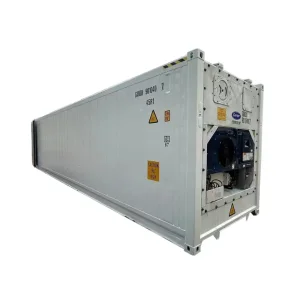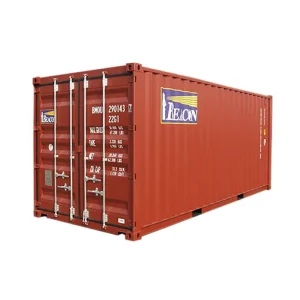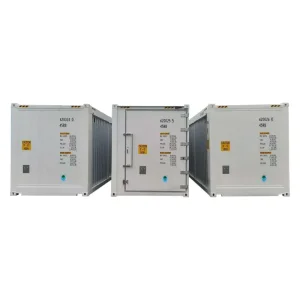
Refrigerated Logistics
Explore certified industrial and special-purpose container products direct from the factory line, engineered to rigid CSC and BV testing protocols.
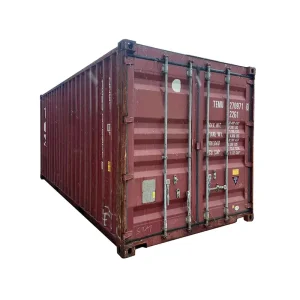
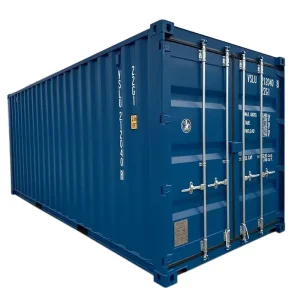
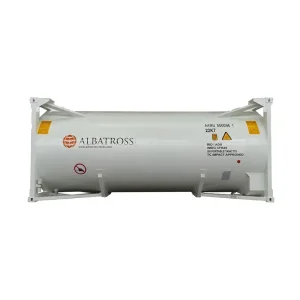
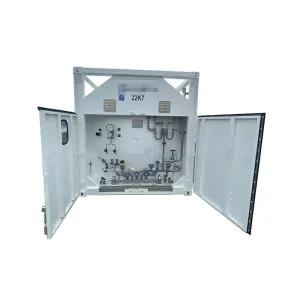
Analyzing structural dynamics, intermodal rail logistics, and why top multinational EPCs are turning to Chinese production facilities for intermediate container architectures.
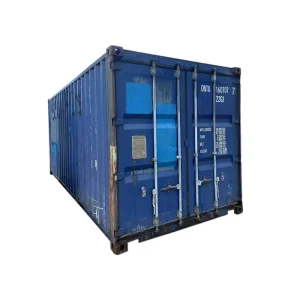
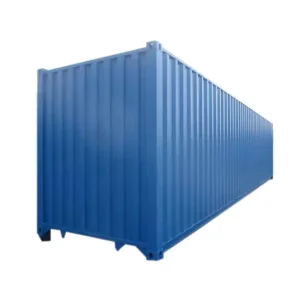
Standard 20-foot units max out payload capacity prematurely on dense cargo, while 40-foot containers induce severe cubic waste on road axle limitations. The 30ft form factor provides a nominal 50.8 m³ (1,794 cu. ft.) capacity—the optimal thermodynamic and volumetric sweet spot for mining bulk, heavy equipment transport, and mobile power generation units.
Across Eurasian transcontinental rail corridors and North American double-stack operations, 30ft containers provide maximum payload distribution without incurring road weight penalties during final drayage. Chinese manufacturing clusters integrate automated laser-guided assembly lines to meet ISO 1496/1 and EN 284 standards seamlessly.
China-based tier-one fabrication lines utilize vacuum-degassed SPA-H Corten steel formulations with a minimal tensile strength of 490 MPa. Treated with robotic zinc-rich epoxy multi-stage primers and marine polyurethane coatings, these shells resist salt spray corrosion for over 3,000 hours in C5-M extreme marine environments.
| Dimensional Metric | 20ft ISO Standard | 30ft Intermediate (Factory Spec) | 40ft High-Cube Standard |
|---|---|---|---|
| External Length (mm / ft) | 6,058 mm (20' 0") | 9,125 mm (29' 11.25") | 12,192 mm (40' 0") |
| Internal Volume (m³ / cu.ft) | 33.2 m³ (1,172 cu.ft) | 50.8 m³ (1,794 cu.ft) | 76.4 m³ (2,698 cu.ft) |
| Max Gross Weight (kg) | 30,480 kg | 34,000 kg (Reinforced) | 32,500 kg |
| Tare Weight (Approx. kg) | 2,200 kg | 2,880 kg | 3,900 kg |
| Primary Industrial Intent | High-density commodities | BESS, Specialized Machinery, Bulk | Consumer general freight |
Combining end-to-end industrial steel supply chains with advanced robotic welding, portside dispatching, and rapid OEM/ODM design engineering cycles.
Located in strategic coastal clusters such as Tianjin and Suzhou, Chinese container plants benefit from immediate mill access to hot-rolled Corten coils, specialized corner casting foundries, and certified bamboo-composite flooring mills, eliminating international supply bottleneck risks.
Every non-standard 30ft model produced passes automated laser metrology, corner post static load tests up to 86,400 kg, transverse racking simulations, and high-pressure water barrier inspections in compliance with ISO 668, CSC safety plates, and DNV GL 2.7-1 maritime offshore guidelines.
From custom cable feed-through glands and thermal break PIR insulation to explosive-proof side louver cutouts and reinforcement plates for heavy transformers, factory CAD/FEA engineers translate buyer technical datasheets into fabrication-ready drawings within 48 hours.
Analyzing cross-industry implementations where 30-foot spatial geometry unlocks quantifiable operational efficiencies.
Utility-scale battery energy storage systems (BESS) require precise weight-to-footprint ratios. 30ft enclosures house high-density lithium iron phosphate (LFP) racks alongside dedicated HVAC and fire suppression units without violating highway bridge weight formulas in the EU and North America.
For AI inferencing at the edge, oil & gas site automation, and military field operations, 30ft container shells allow optimal separation between high-density server racks, liquid-cooling distribution manifolds, and redundant uninterruptible power supplies (UPS).
Industrial skid-mounted membrane reverse osmosis (RO) systems benefit from 30ft spans. The footprint comfortably accommodates dual multi-media filters, booster pump banks, and chemical dosing systems within a self-contained, weather-sealed maritime shell.
How automation, decarbonization mandates, and modularization are reshaping high-spec container manufacturing in China.
Global procurement teams are moving away from modifying finished 20ft/40ft containers on-site due to inflated post-factory labor costs. Chinese factories are delivering pre-engineered 30ft units featuring laser-cut cutouts, integrated structural mezzanine floors, and acoustic rockwool linings installed directly on the assembly line, driving down total cost of ownership (TCO) by up to 34%.
With tightening ESG benchmarks across Europe and Australia, manufacturers have shifted to ultra-low VOC waterborne coatings and circular-economy composite flooring systems (including reinforced bamboo and recycled polymers). This alignment ensures turnkey CSC certification without regulatory impedance at EU and US import customs.
Clear, direct answers regarding certifications, shipping methods, structural modifications, and minimum order requirements.
Review additional certified models engineered across our Tianjin and regional Chinese manufacturing facilities.