Precision-fabricated ISO-certified dry, modular, reefer, and high-cube bulk container solutions manufactured for multi-modal maritime and overland supply chains.
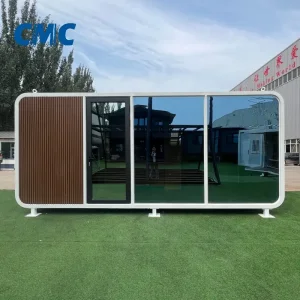
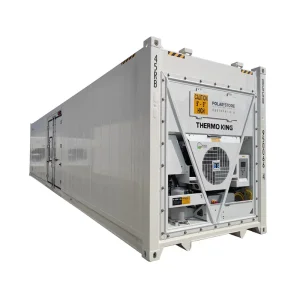
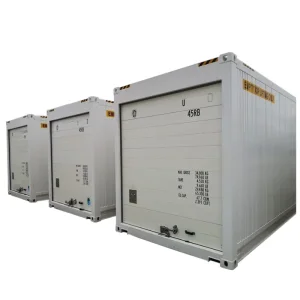

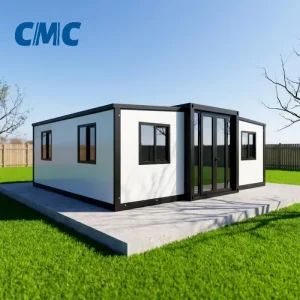
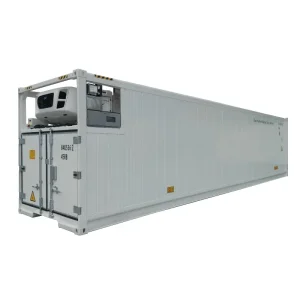
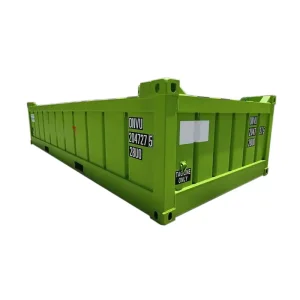
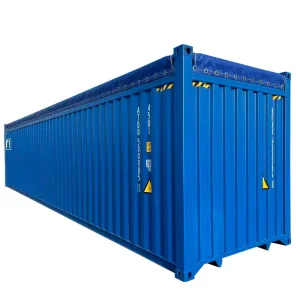
Strategic shift from traditional ISO standard volume to 9'6" High Cube, specialized thermal barriers, and energy-dense modular intermodal transport platforms.
Over the past four decades, global maritime, intermodal, and project logistics have experienced a fundamental volumetric pivot. The standard 8'6" ISO dry container is no longer the sole universal benchmark for enterprise cargo routing. In its place, the High Container (specifically 9'6" High Cube, 45-foot rail platforms, and modified vertical cubic units) has emerged as the essential standard for volume-sensitive cargo, cold-chain perishables, advanced Battery Energy Storage Systems (BESS), and modular prefab building enclosures.
As the international supply chain adapts to post-pandemic structural adjustments and carbon-neutral targets mandated by the International Maritime Organization (IMO 2030/2050), container manufacturing hubs in China—headquartered strategically in key industrial clusters like Tianjin and Jiangsu—have transitioned from pure structural steel fabricators into advanced industrial engineering conglomerates. Modern high-cube container manufacturing integrates ultra-high-strength weathering steels (such as SPA-H CORTEN-A), automated robotic continuous seam welding, cyclically tested micro-cellular polyurethane foaming, and aerospace-derived thermal decoupling barriers.
The volumetric advantage of a 40ft High Cube container (providing approximately 76.4 m³ of interior space compared to 67.7 m³ in standard height units) offers a direct 12.8% expansion in volumetric capacity. For enterprise-level logistics directors, this geometric optimization directly translates into lower freight ton-kilometer emissions, reduced slot charter costs, and optimized deadweight stowage utilization. The confluence of rising global reefer transport, expansive cross-border Eurasian railway trade routes under the "Belt and Road" initiative, and the boom in renewable energy enclosures has placed high containers at the center of modern industrial logistics.
Evaluating structural integrity, thermal coefficients, active life-cycle depreciation, and multi-tier regulatory compliance during asset fleet expansion.
Global shipping lines, container leasing firms, and private fleet investors look past initial invoice pricing. Sourcing evaluations emphasize tare-weight optimization, paint deterioration profiles, structural corner casting resilience, and residual resale salvage values at primary destination ports across Europe, Africa, and the Americas.
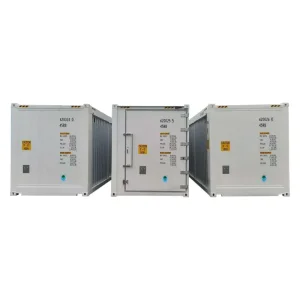
When procuring 40ft High Cube refrigerated units, cold storage operators require versatile machinery compatibility. Equipment frameworks must interface seamlessly with Tier-1 refrigeration assemblies—including Carrier Transicold, Thermo King, and Daikin units—paired with zero-ODP, non-flammable blowing agent insulation profiles.
Purchasing agreements mandate compliance with the International Convention for Safe Containers (CSC 1972), UIC 592 railway loadability approvals, TIR customs seals, Bureau Veritas (BV) or Lloyd's Register (LR) verification, and strict DNV 2.7-1 / EN 12079 dynamic drop-test certificates for offshore platforms.
Standardized and custom engineered high-cube container platforms deployed across global vertical markets.
| Industry Sector | Container Classification | Structural Metallurgy & Material | Thermal & Operational Parameters | Primary Regulatory Standard |
|---|---|---|---|---|
| Fresh Produce & Life Sciences | 40ft HC Reefer & Solar Cold Chain | MGSS Outer, SUS304 Food-Grade Liner | -35°C to +30°C Precise Thermal Mapping | ISO 1496-2, ATP, USDA Cold Treatment |
| Eurasian Rail Intermodal | 40ft / 45ft HC Rail Refrigerated & Dry | SPA-H Corten Steel, Reinforced Sills | Dual-voltage 380V/440V, Integrated Gen-set | UIC 592, CSC, TIR Customs Certified |
| Offshore Oil & Gas Rigs | Half-Height & Offshore Dry / Tank | High-Grade Charpy Impact Steel (EN 10025) | -20°C to -40°C Dynamic Impact Resilience | DNV 2.7-1, EN 12079, IMO MSC/Circ.860 |
| Renewable Energy & BESS | Custom HC Modular Enclosures | Structural Carbon Steel + Thermal Break Insul | Pre-installed HVAC, Novec Fire Suppressant | NFPA 855, UL 9540A, CSC Certified |
| Prefab Construction & Camps | 20ft/40ft Expandable Modular Pods | Lightweight Galvanized Tube + Rockwool PIR | U-value ≤ 0.28 W/(m²·K) Passive Insulation | CE, AS/NZS Building Code Compliance |
Across each industrial sector, engineering nuances dictate structural design. In offshore energy logistics, container units face violent dynamic wave impacts and multi-axial gravitational loads during crane transfers from supply vessels to floating platforms. The structural frames of DNV-certified half-height or offshore open-top containers must incorporate specialized low-temperature Charpy V-notch tested steel alloys, verified non-destructive testing (NDT) welds, and dedicated pad-eyes calibrated for 4-leg wire rope slings with master shackles.
In contrast, transcontinental rail corridors linking eastern China industrial centers with Central Europe require 45ft high containers with specialized gooseneck tunnels, heavy-duty floor cross-members capable of handling forklift axle weights up to 7,260 kg (16,000 lbs), and automated genset brackets providing non-stop 440V auxiliary power during weeks-long rail transits across extreme Eurasian sub-zero temperature differentials.
Rigorous factory testing matrices, coastal hub logistics, and comprehensive traceability protocols built on 40+ years of operational excellence.
Prior to release from Tianjin and Suzhou production plants, each high container undergoes extensive physical stress testing: 9-high static stacking weight testing (exceeding 216,000 kg gross weight on bottom corner castings), transverse racking tests, longitudinal restraint evaluations, and high-pressure water-spray weather-tightness audits.
Strategic positioning approximately 100 km from major seaports like the Port of Tianjin ensures minimal transit wear, swift dock-side delivery, low inland drayage tariffs, and immediate availability of one-trip export units directly to European, African, Middle Eastern, and American shipping lanes.
Each shipment is delivered with comprehensive compliance documentation: CSC Safety Plates, manufacturer declarations of conformity, classification society test reports (Bureau Veritas, ABS, or DNV), paint micron DFT verification certificates, and mill test certificates (MTC) for all structural steel members.
Pioneering decarbonized materials, autonomous sensor arrays, and thermal insulation architectures for the next generation of smart high containers.
Standardized embedding of low-power 5G/NB-IoT micro-sensor nodes into container corner posts and headers, capturing multi-axis vibration, door status, internal humidity, and real-time structural load shifts during oceanic transits.
Commercialization of hybrid vacuum-insulation (VIP) and silica-aerogel composites within 40ft High Cube reefer side walls, reducing wall thickness by 35% while improving overall thermal holding efficiency to match net-zero intermodal standards.
Integration of green-hydrogen direct reduced iron (DRI) steel for container shells, pairing zero-VOC powder coating layers with fully circular floor decking made of recycled thermoplastic-bamboo composites.
Definitive engineering and commercial answers to direct questions submitted by enterprise buyers, engineers, and supply chain operators.
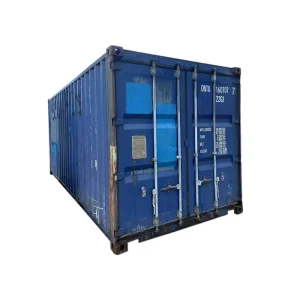
A standard ISO dry container measures 8'6" (2,591 mm) in external height, offering internal vertical clearance of 2,393 mm. A High Cube (HC) container measures 9'6" (2,896 mm) in external height, yielding 2,698 mm of usable internal height. This provides an additional 305 mm (1 foot) of vertical clearance, expanding cubic capacity from 67.7 m³ to 76.4 m³ in a 40-foot footprint.
Our refrigerated high container series can be engineered to interface with all Tier-1 machinery providers, specifically Carrier Transicold (ThinLINE, PrimeLINE), Thermo King (Magnum PLUS), and Daikin (Zestia). We assist clients in matching compressor drive styles, low-GWP refrigerant selections (such as R-513A or R-134a), and integrated power generator configurations.
Standard ISO shipping containers are designed primarily for smooth rail and vessel cellular guide stacking, whereas DNV 2.7-1 / EN 12079 offshore units are engineered to endure open-sea dynamic impacts, extreme vessel motion, and rough offshore crane lifts. Offshore units feature specialized low-temperature Charpy-tested steels, pad-eyes welded directly to primary members, and multi-leg sling sets.
Eliminating or cutting corrugated sidewalls for roll-up or full-side bi-fold doors reduces standard shear stiffness. Our engineering team compensates by introducing heavy box-section perimeter headers, reinforced corner post gussets, and high-tensile bottom side rails, ensuring the unit maintains full ISO corner-post racking stiffness and CSC compliance.
All units undergo automatic centrifugal grit-blasting to Swedish Standard Sa 2.5, followed by a three-coat paint system compliant with ISO 12944 category C5-M: a zinc-rich epoxy primer (minimum 30 μm DFT), an epoxy intermediate barrier coat (40 μm DFT), and a durable polyurethane topcoat (minimum 40 μm DFT), delivering over 1,500 hours of continuous salt-spray resistance.
For standardized high-cube units, existing factory stock and one-trip containers are available with an MOQ of 1 unit. Custom engineering builds requiring structural modifications, specialized paint schemes, non-standard door openings, or bespoke internal fittings typically start at an MOQ of 2 to 5 units, with large-scale production line allocation for multi-unit fleet orders.
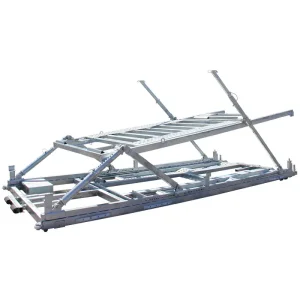
Explore our full line of offshore tank containers, auxiliary reefer gensets, verified used high cubes, and automotive rack platforms.
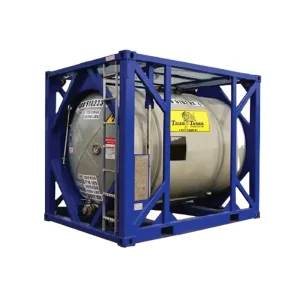
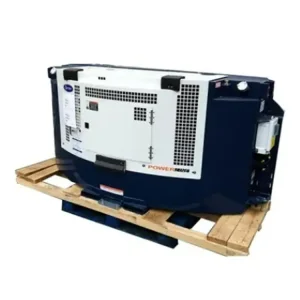
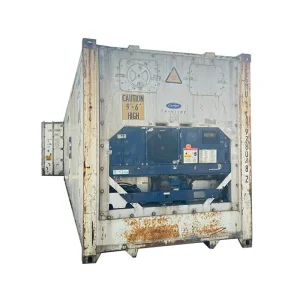
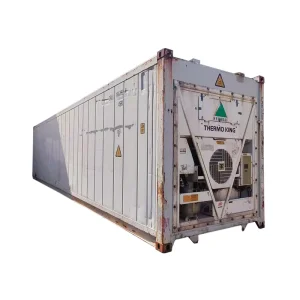
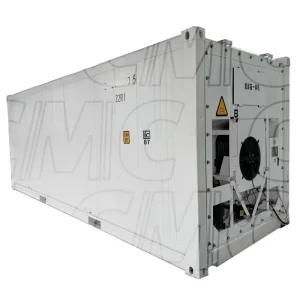
Whether you are commissioning a specialized batch of DNV offshore containers, securing transcontinental 45-foot rail reefers, or designing custom modular High-Cube battery enclosures, our engineering team delivers certified structural calculations, general arrangement drawings, and factory direct quotations within 24 hours.
