
Heavy Duty Dry
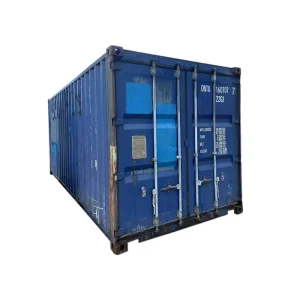
Heavy-duty Corten steel structural assets engineered to withstand dynamic maritime stresses, severe corrosion, and extreme land-based site environments with verified CSC approvals.
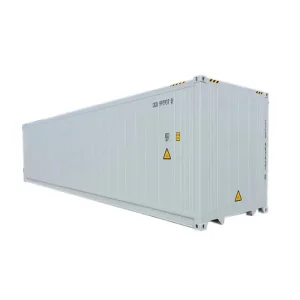
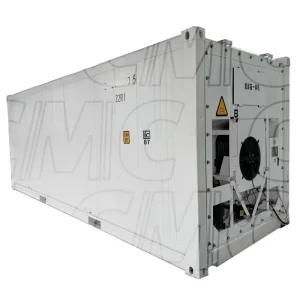
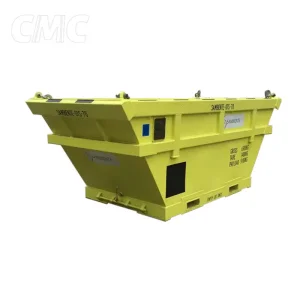
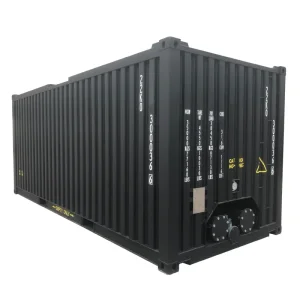
Exploring structural metallurgy, global capital expenditure optimizations, and how repurposing ISO intermodal equipment is redefining modern industrial logistics infrastructure.
Traditional brick-and-mortar warehousing entails massive municipal permitting delays, prolonged foundation engineering, and escalating property taxes. Converting high-cube ISO intermodal containers as modular on-site storage reduces capital expenditure by 60% to 75%, allowing asset write-downs over standard commercial equipment depreciation cycles.
Standard storage sheds collapse or corrode under marine weathering. Standard ISO containers utilize SPA-H or Corten-A atmospheric corrosion-resistant steel. Upon surface oxidation, a dense amorphous protective patina layer forms that prevents further sub-surface oxygen ingress, guaranteeing structural lifespans exceeding 30+ years in brutal outdoor exposures.
Unlike stationary tilt-up concrete structures, modified shipping containers maintain unified corner casting geometry complying with ISO 1161. When industrial job-sites, mining sectors, or agricultural operations shift, fully loaded or racked storage units can be hoisted via top spreader, flatbed trailer, or rail car without dismantling structural frames.
Integrated upstream metallurgical supply chains, automated submerged arc welding, and coastal deep-water container freight terminals drive an unmatched competitive moat.
Our Tianjin & Suzhou manufacturing bases utilize robotic laser profiling and automated wave corrugation press brakes. Standard wall profiles are pressed with uniform 2.0mm and 1.6mm vertical corrugated ribs, delivering high shear and torsional load tolerances certified for 9-high laden vertical stacking.
Surfaces undergo automated centrifugal shot-blasting to Swedish SA 2.5 cleanliness standards. This is followed immediately by a zinc-rich epoxy primer (30µm), an intermediate epoxy barrier coat (40µm), and a high-solid chlorinated rubber or polyurethane topcoat (40µm), repelling high salinity and UV degradation.
Located roughly 100km from Tianjin Xingang port terminals, finished units avoid complex cross-country transit fees. Export customs clearance, pre-shipment BV inspections, CSC plate renewals, and "one-way empty container loading" (SOC) arrangements are executed seamlessly in-house.
Discover how custom door arrangements, thermal foam insulation, and solar DC refrigeration modules adapt standard shipping containers for specialized commercial storage.
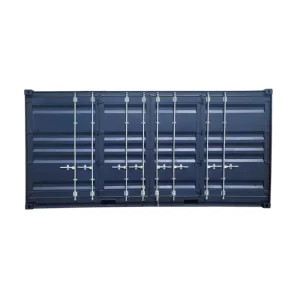
For logistics centers, building material yards, and distribution cross-docks, standard end-loading doors cause bottlenecks. Bi-folding side doors with recessed cam locks allow direct forklift drive-in, multi-pallet side-by-side loading, and instantaneous access to heavy machinery or oversized industrial crates.
Condensation ("container rain") threatens sensitive cargo such as electronic components, pharmaceuticals, and dry grains. Our thickened rigid polyurethane (PU) or rock-wool foam insulation panels are seamless and flame-retardant (Class A/B1), eliminating thermal bridging without ongoing electrical utility draw.
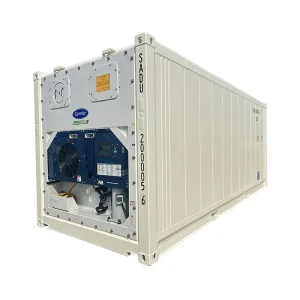
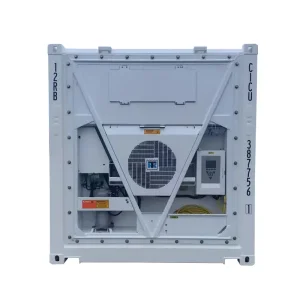
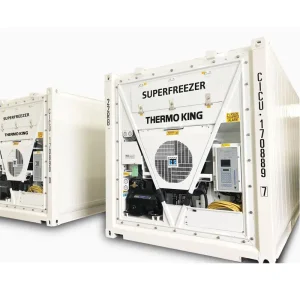
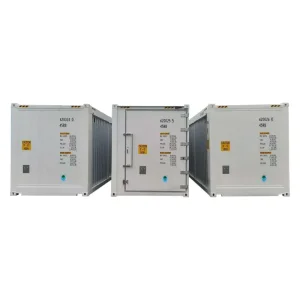
Equipped with roof-integrated monocrystalline solar arrays, DC inverter variable-speed compressors, and battery banks, these units maintain continuous -25°C to +15°C cold storage in remote agricultural farms, rural clinics, and disaster-relief operations without stable three-phase municipal grid connections.
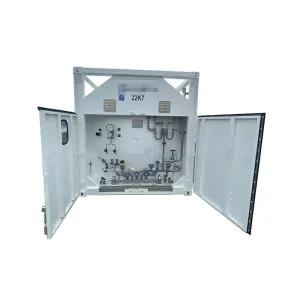
Built for industrial gases, LNG, liquid nitrogen, and volatile chemicals. These containers feature dual-shell stainless steel internal pressure vessels encased in an outer vacuum jacket with multilayer super-insulation, certified according to IMDG, ADR, RID, and ASME Section VIII directives.
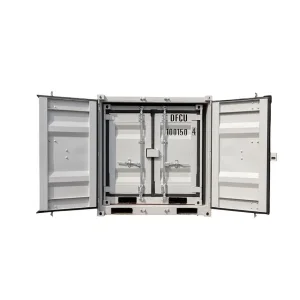
Self-storage facility operators frequently face high empty ocean repositioning costs. Our mini-storage line (4ft, 6ft, 8ft, 10ft) utilizes concentric engineered nesting profiles that pack inside a standard 40ft High Cube container, slashing international maritime ocean freight costs by more than 70%.
Specifically manufactured for offshore oil and gas drilling platforms and marine construction. Built with heavy-duty structural tubular profiles, Charpy V-notch impact-tested steel at -20°C, and dedicated four-part wire rope lifting sling attachments conforming to DNVGL-ST-E271 standards.
Review critical engineering metrics, structural limits, floor deflection ratings, and security capabilities across popular commercial storage setups.
| Specification Parameter | Standard 20ft Dry Cargo (GP) | 40ft High-Cube Insulated (HC) | 40ft Carrier / Thermo King Reefer | 20ft DNV Offshore Cargo Basket |
|---|---|---|---|---|
| Primary Steel Metallurgy | SPA-H / Corten-A Corrugated Steel | Corten-A Frame + Anti-UV Composite | MGSS External / 304 Stainless Interior | Structural High-Tensile Hollow Section |
| External Dimensions (L×W×H) | 6,058 × 2,438 × 2,591 mm | 12,192 × 2,438 × 2,896 mm | 12,192 × 2,438 × 2,896 mm | 6,058 × 2,438 × 1,300–2,591 mm |
| Max Gross Weight (Rating) | 30,480 kg (67,200 lbs) | 32,500 kg (71,650 lbs) | 34,000 kg (74,950 lbs) | Up to 15,000 kg (Offshore Dynamic) |
| Flooring System | 28mm Marine Apitong/Keruing Plywood | Steel Chequer Plate / Sealed Bamboo | Extruded Aluminum T-Floor Railings | Reinforced Grating / 6mm Carbon Plate |
| Thermal Control Range | Ambient Temperature Passive | ΔT 15°C Passive Retardation Barrier | Active -30°C to +30°C (±0.25°C Precision) | Ambient (Rated for -20°C Marine Cold) |
| Security & Gasket Standard | 4-Rod Galvanized Lockset + EPDM | High-Security Lockbox + EPDM Gasket | Hermetic Dual Lip Airtight Seals | Heavy Duty Welded Pad Eyes & Chains |
| Compliance Certification | ISO 1496-1, CSC Safety Plate, BV | ISO, BV Factory Batch Verified | CSC, BV, ATP Chilled Food Treaty | DNVGL-ST-E271 / EN 12079 Verified |
A practical procurement checklist for commercial importers, government contractors, cold-chain operators, and EPC project directors.
When requesting quotes for storage assets, establishing condition standards prevents procurement pitfalls:
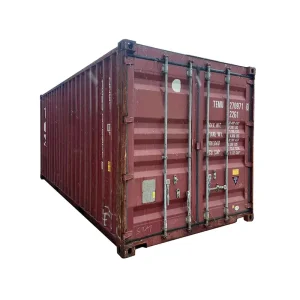
Units intended for international repositioning must carry an intact, unexpired Convention for Safe Containers (CSC) plate riveted to the left door:
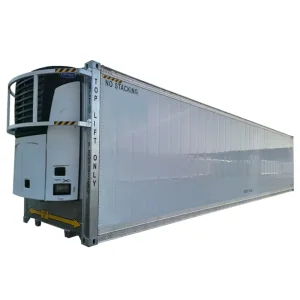
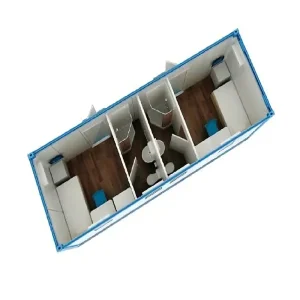
Explore specialized cold-room conversions, liquid cryogenic containment tanks, and modular habitat solutions ready for immediate factory-direct container dispatch.
How telematics, predictive energy storage integration, and circular green engineering transform static storage boxes into intelligent nodes.
Modern storage containers are equipped with satellite-cellular dual-mode telematics modems. Optical sensors continuously transmit internal door-opening cycles, ambient relative humidity, vibration alarms, and internal volumetric space utilization algorithms back to ERP inventory databases in real time.
Shipping container frames are rapidly becoming the global standard enclosure for Battery Energy Storage Systems (BESS). Integrated with lithium iron phosphate (LiFePO4) cell racks, fire suppression aerosol canisters, and HVAC climate control, they deliver turn-key energy storage for utility-scale solar farms.
Repurposing an ISO shipping container prevents roughly 3,500 kilograms of structural carbon steel from premature smelting. Coupled with ultra-low VOC waterborne protective coatings and recycled mineral fiber thermal core batting, containerized storage delivers unmatched ESG procurement metrics.
Authoritative, contract-grade answers addressing structural certifications, customs logistics, payload capacities, and bespoke fabrication inquiries.
Obtain immediate technical specifications, general arrangement (GA) drawings, and transparent CIF/FOB pricing quotes tailored to your project requirements.
Whether deploying remote off-grid reefers, sourcing bulk batches of CSC-plated dry boxes, or engineering DNV 2.7-1 certified offshore containers, our engineering team in Tianjin is ready to assist.