Review our high-demand OEM/ODM containers manufactured with ISO and Bureau Veritas certified production lines, ready for global intermodal deployment.

Why mini-intermodal containers command distinct price dynamics compared to standard 20ft and 40ft units, and how direct factory procurement eliminates intermediate logistics markups.
In global multimodal shipping, the 10 ft shipping container occupies a specialized yet critical operational niche. While 20-foot and 40-foot units form the bulk of standardized ocean volume, industrial procurement teams frequently encounter an apparent paradox: why does a new 10 ft container cost between 65% and 80% of a 20 ft unit, rather than precisely 50%? Understanding this unit economic reality requires an engineering-first evaluation of industrial tooling, Corten steel processing, corner casting assemblies, and tandem intermodal freight handling.
Founded in 1983, Tianjin Cimic Imp&Exp Co., Ltd. (CIMIC Group) has spent over four decades engineering, manufacturing, and exporting specialized ISO, offshore, and modular intermodal solutions. Operating major production bases in Tianjin and Suzhou, CIMIC is positioned approximately 100 km from premier Chinese seaports. This geographical proximity drastically reduces inland logistics overheads and ensures immediate dispatch to North America, Europe, Africa, Latin America, and Australasia.
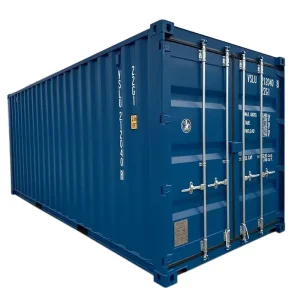
The manufacturing economics of a 10 ft container are governed by fixed component inputs. Regardless of internal volumetric capacity, every structural unit requires eight ISO 1161 cast corner blocks, high-tensile locking door hardware (cams, keepers, and hinges), heavy-duty EPDM weather-strip gaskets, and intensive longitudinal robotic welding. Thus, while material cubic meterage declines by 50% relative to a standard 20-foot Twenty-foot Equivalent Unit (TEU), the mechanical assembly, labor tooling, and class certification costs (Bureau Veritas, ISO, CSC, DNV) remain nearly identical on the shop floor.
From micro-footprint urban infrastructure to harsh offshore oil extraction, 10-foot containers resolve spatial, structural, and regulatory challenges where standard TEUs cannot fit.
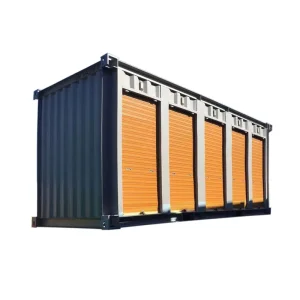
In dense metropolitan corridors across Western Europe and North America, spatial limitations prohibit 40ft semi-trailers. 10ft dry and roll-up door containers function as secure, weather-sealed last-mile micro-hubs, positioned directly on utility easements or compact commercial parking parcels without triggering permanent structure zoning hurdles.
Marine exploration sites in the North Sea, Gulf of Guinea, and Southeast Asia mandate rigorous dynamic impact ratings. 10 ft offshore dry cargo and tank containers engineered to DNV 2.7-1 / EN 12079 are structurally reinforced with pad-eyes and offshore sling sets, delivering safe high-seas crane transfers between supply vessels and floating rigs.
As renewable microgrids proliferate, electrical integrators require standardized, fire-resistant modular housings for lithium-ion battery racks, inverters, and HVAC liquid cooling systems. 10ft containers offer an optimized power-to-footprint ratio (typically 1 MWh to 1.5 MWh), allowing distributed sub-station deployment without crane-assembly delays.
Mining operations and agricultural centers require segregated, spill-contained storage for hazardous chemical reagents, paints, and lubricants. Customized 10 ft bunded containers equipped with floor sump grates, spark-proof internal electrical systems, and louvered passive explosion ventilation meet strict workplace safety environmental regulations.
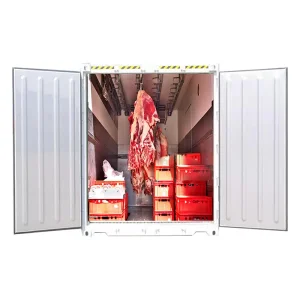
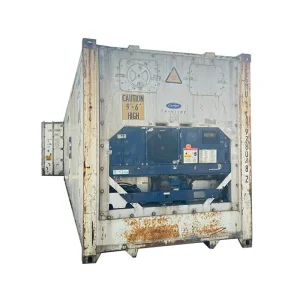
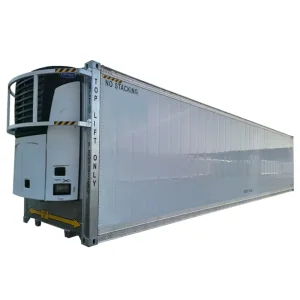
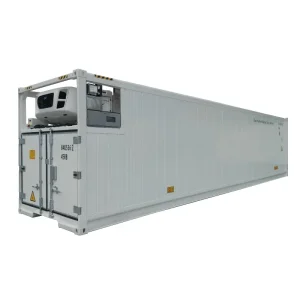
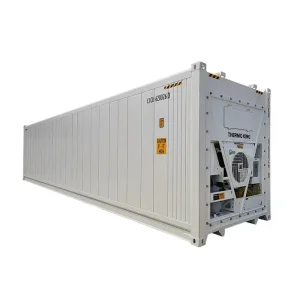
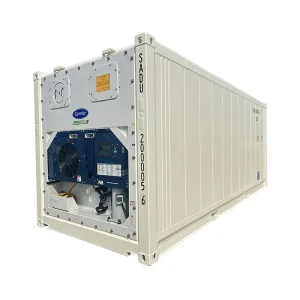
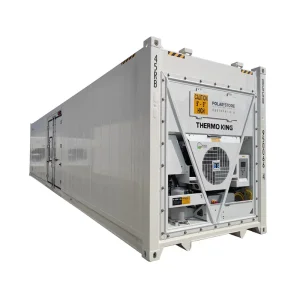
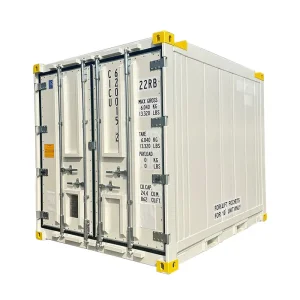
Fitted with cutting-edge Thermo King, Daikin, or Carrier refrigeration machinery, 10 ft reefer units serve regional food distributors, seasonal pharmaceutical stockpiling, and meat exporters. Their compact volume maintains tight internal temperature envelopes (-30°C to +30°C) with significantly lower electrical power draw than 40ft units.
Government contractors, geological survey teams, and military logistics divisions utilize 10ft high-cube footprints to create rapidly deployable mobile command rooms, water purification units, field hospitals, and satellite ground control nodes that can be air-lifted via C-130 or carried by medium-duty 4x4 flatbed trucks.
Comprehensive transparent matrix reviewing production costs, metallurgy inputs, and export pricing benchmarks across major 10ft configurations.
| Container Classification | Dimensions (L × W × H) | Structural Metallurgy & Flooring | Tare Weight / Max Payload | Estimated Factory Cost Tier (FOB China) | Key Certifications |
|---|---|---|---|---|---|
| 10 Ft Standard Dry Cargo | 2,991 × 2,438 × 2,591 mm (9'9.75" × 8'0" × 8'6") |
Corten-A (SPA-H) Steel; 28mm Marine Plywood floor | 1,300 kg / 8,860 kg (MGW 10,160 kg) | $1,950 – $2,650 USD | ISO 668, ISO 1496-1, BV, CSC |
| 10 Ft High-Cube Dry Container | 2,991 × 2,438 × 2,896 mm (9'9.75" × 8'0" × 9'6") |
Corten-A Corrugated Panels; Steel checkered or plywood | 1,420 kg / 8,740 kg (MGW 10,160 kg) | $2,200 – $2,950 USD | ISO 668, BV, CSC Approval Plate |
| 10 Ft DNV 2.7-1 Offshore Dry | 2,991 × 2,438 × 2,591 mm (Heavy-Duty Offshore Spec) |
Charpy V-Notch Impact Steel; Heavy subframe; Pad eyes | 2,100 kg / 7,900 kg (MGW 10,000 kg) | $4,500 – $6,800 USD | DNV GL 2.7-1, EN 12079, Lloyd's Register |
| 10 Ft Thermo King / Daikin Reefer | 2,991 × 2,438 × 2,591 mm (Cold Storage Intermodal) |
MGSS Outer, SUS304 Inner, Polyurethane High-Density Foam | 1,850 kg / 8,150 kg (MGW 10,000 kg) | $8,500 – $13,500 USD | CSC, BV, ATP Chilled/Frozen Certificate |
| 10 Ft Offshore Chemical / ISO Tank | 2,991 × 2,438 × 2,591 mm (Pressurized Liquid / Gas) |
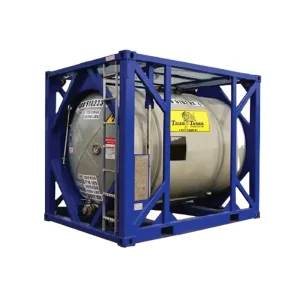
316L Stainless Steel Pressure Vessel; Heavy tubular frame | 2,400 kg / 10,000 L – 14,000 L volume | $11,000 – $18,500 USD | IMDG, ASME U-Stamp, DNV 2.7-1, RID/ADR |
At CIMIC, every 10ft container utilizes genuine SPA-H Corten-A weathering steel. Its proprietary copper-chromium-nickel alloy formulation produces a stable oxide patina when exposed to maritime atmospheres, eliminating catastrophic structural rust even when surface paint is abraded in transit.
Ocean shipping lines rarely load solo 10ft units due to crane spreader incompatibility. CIMIC manufactures dual 10ft units connected via certified ISO twist-locks and tie-plates into a rigid 20ft tandem envelope, enabling booking as a standard 20ft TEU slot and cutting ocean freight by up to 45%.
Standard commercial containers fail prematurely in harsh marine salt fog. CIMIC enforces a rigorous 3-layer coating system: Zinc-rich epoxy primer (30μm), epoxy intermediate barrier (40μm), and top fluorocarbon polyurethane coat (50μm), guaranteeing a verified 15+ year operational lifespan.
How structural engineers overcome standard ISO handling limitations to integrate 10-foot assets seamlessly into global rail, marine, and highway supply chains.
Standard container skeletal trailers are calibrated for 20ft or 40ft pin-locks. CIMIC engineers specialized dual-chassis configurations or heavy-duty forklift pockets (205 × 90 mm) allowing standard rough-terrain forklifts to hoist fully-laden 10ft units onto regional flatbeds safely.
Although miniature in footprint, each CIMIC 10ft dry container passes ISO corner-post compression tests exceeding 45,000 kg. This allows multi-tier vertical vessel cell guide stacking up to 8 units high, ensuring zero deck buckling under dynamic sea heave and roll conditions.
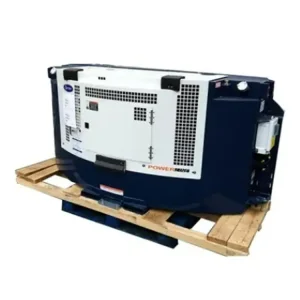
For perishable distribution without uninterrupted grid connections, CIMIC provides thickened foam passive insulated bodies (polyurethane foam core k-value ≤ 0.38 W/m²K) alongside clip-on diesel generator sets capable of continuous 72-hour standalone deep freezing.
From precision laser-cut apertures for acoustic louvers to structural fire-rated bulkheads (A60 class), CIMIC's direct-factory engineering teams provide 3D CAD modeling within 48 hours, facilitating customized containerized pump stations and compressor houses.
Anticipating regulatory decarbonization and supply chain digitizations through forward-engineered intermodal design.
The future of 10ft micro-reefers and high-value cargo transport lies in end-to-end transparency. CIMIC is implementing factory-installed satellite/cellular dual-mode telematics units. These micro-sensors monitor cargo internal temperature profiles, compressor amp-draw, humidity levels, and door-opening timestamps in real time. Critical predictive AI algorithms alert operators before a compressor thermal-overload event occurs, reducing cold-chain perishability losses to zero.
Under the Kigali Amendment and European F-Gas regulations, legacy hydrofluorocarbons (HFCs) like R-404A face accelerated phaseouts. CIMIC's refrigeration engineering pipeline integrates Carrier, Thermo King, and Daikin units pre-charged with eco-friendly alternatives including R-452A, R-513A, and natural CO2 (R-744) refrigerants featuring a Global Warming Potential (GWP) of 1, achieving high energy efficiency while ensuring full European compliance through 2035.
Sustainable infrastructure mandates non-toxic, infinitely recyclable manufacturing cycles. CIMIC has transitioned flooring options away from tropical hardwood species toward sustainable bamboo-ply composites and 100% recyclable galvannealed anti-slip steel decking. Solventless water-borne paint finishes decrease volatile organic compound (VOC) emissions by over 80% during factory application without degrading marine rust endurance.
Navigating local import customs, chassis requirements, and application footprints across major trading blocs.
High demand for 10ft and 20ft modular dry containers for self-storage franchises, jobsite tool cribs, and distributed battery projects. Strict adherence to CSC safety plates and Federal Motor Carrier chassis safety standards is paramount for road haulage out of Los Angeles, Long Beach, and Houston ports.
Strict municipal noise and environmental boundaries require ultra-quiet reefer units and eco-friendly paint systems. Importers in Rotterdam, Hamburg, and Antwerp favor side-opening 10ft high cubes to facilitate immediate sidewalk side-unloading in tight historical trading squares.
Critical infrastructure deficits drive massive demand for robust 10ft diesel generator enclosures, telecom repeater nodes, and mobile clinics. CIMIC supports bulk shipments to Mombasa, Durban, and Lagos with pre-cleared customs documentation and certified seaworthy CSC condition reports.
How CIMIC guarantees structural perfection through third-party surveying, ultrasonic weld inspections, and international maritime type approvals.
Purchasing industrial logistics hardware overseas requires uncompromised trust in certification authenticity and metallurgy standards. Every batch of 10 ft standard, high cube, reefer, or offshore containers produced at CIMIC's Tianjin and Suzhou facilities undergoes an exhaustive, multi-stage Quality Inspection System overseen by resident quality engineers and accredited third-party surveyors (Bureau Veritas, ABS, Lloyd’s Register).
In-depth technical answers addressing unit pricing, logistics consolidation, operational lifespans, and custom factory engineering.
Discover our specialized high-performance portfolio engineered for low-temperature food preservation, offshore mining transport, and intermodal railway corridors.