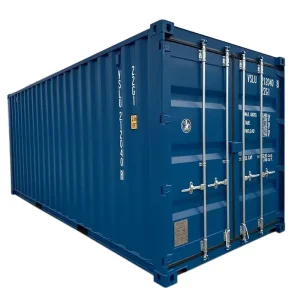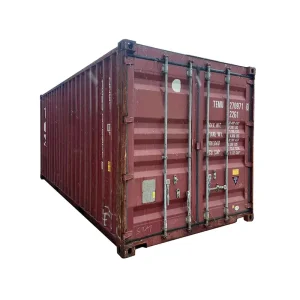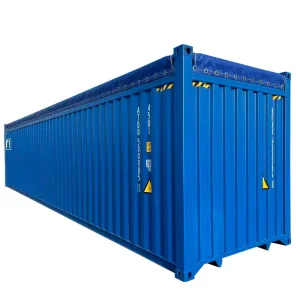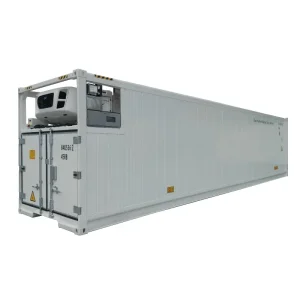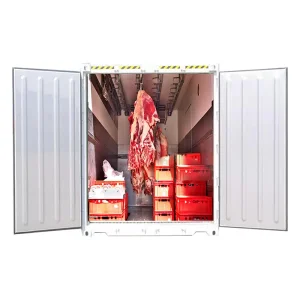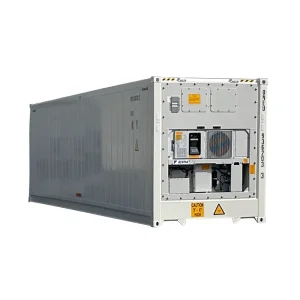
Verified heavy-duty intermodal and thermal-controlled units built to rigorous ISO/CSC guidelines, configured for immediate maritime and terrestrial operations.
Analyzing volumetric economics, supply chain reconfiguration, and the strategic pivot toward 9'6" High Cube architecture across transpacific and Eurasian freight corridors.
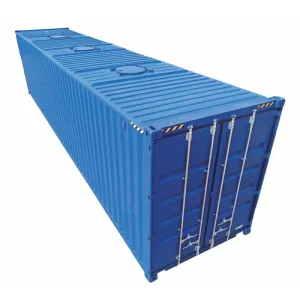
The standard 8'6" GP (General Purpose) container has steadily ceded market dominance to the 9'6" HQ (High Cube) configuration. By providing an additional 305 mm (1 foot) in vertical clearance, HQ containers deliver an estimated 12% to 14% increase in net cubic capacity (76.2 m³ vs. 67.7 m³ in standard 40ft units). In an era characterized by volumetric-limited ("cube-out") consumer electronics, e-commerce fast-freight, and lightweight automotive components, the high cube form factor directly compresses per-ton-kilometer transport expenditures.
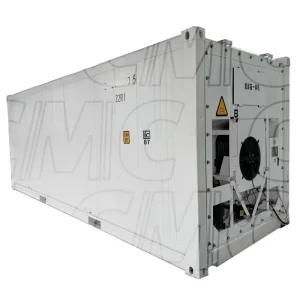
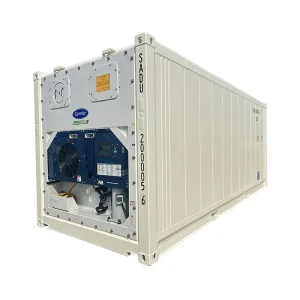
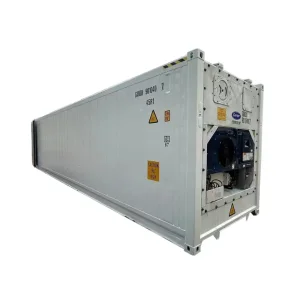
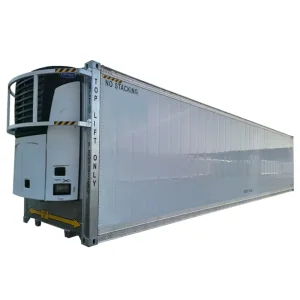
Within the reefer category, High Cube geometry is no longer optional; it is the universal global standard. Modern airflow ducting, T-bar flooring, and overhead evap plenum designs mandate the 9'6" profile to ensure continuous air circulation around temperature-sensitive biologics, premium fruits, and proteins without cannibalizing pallet payload heights. Factories operating at tier-one capacities integrate Carrier Transicold, Daikin LXE, and Thermo King MAGNUM Plus platforms directly within precision-milled HQ structural steel end-frames.
China remains the undisputed engineering nucleus for intermodal container fabrication, commanding over 85% of global output. Modern container manufacturing facilities located along maritime economic gateways—such as Tianjin, Suzhou, and the Bohai Rim—operate high-automation robotic GMAW welding lanes, closed-loop eco-friendly waterborne polyurethane paint lines, and certified quality-gate protocols governed by Bureau Veritas (BV), ABS, and DNV classification societies.
From cold-rolled weathering steel coils to automated high-pressure polyurethane foaming, explore the scientific parameters defining premium container lifespan and structural safety.
Every industrial-grade HQ dry and reefer chassis constructed by certified factories uses JIS G3125 SPA-H (or equivalent Corten-A) alloy. This metallurgical formulation contains deliberate copper, chromium, and nickel trace elements that form an impermeable, adherent oxide barrier (patina) when exposed to cyclic oceanic humidity and marine salt fog. Tensile yield strength is calibrated at ≥355 MPa, ensuring resistance to high dynamic shear stresses encountered during deck stack listing.
Reefer container thermal isolation performance is directly dependent on continuous automated cavity injection. Using zero-ODP, low-GWP hydrofluoroolefin (HFO) blowing agents, robotic foam injectors distribute 42-45 kg/m³ high-density rigid polyurethane between the exterior Corten/muffler skin and interior 304 food-grade stainless steel panels. This prevents thermal bridges, limits overall Heat Leakage Coefficient (U-factor) below 0.38 W/(m²·K), and complies with ATP Class FRC thermal insulation mandates.
To qualify for international CSC (Convention for Safe Containers) safety approval plates and UIC/TIR registration, prototypes undergo catastrophic destructive stress profiling in multi-axis test rigs. The structural skeleton is subjected to stacking loads exceeding 86,400 kg (representing 9-tier stacked high cubes), racking transverse force of 150 kN, longitudinal restraint simulations up to 2g acceleration, and water-tightness nozzle saturation tests under 100 kPa spray pressure.
Evaluating tier-one cooling unit integrations, inverter-driven scroll compressors, and integrated remote cold-chain IoT diagnostics for zero-loss temperature management.
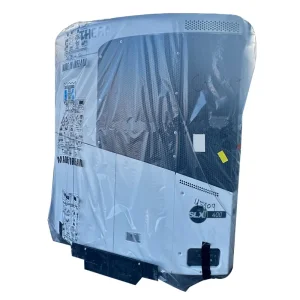
Factory-integrated high-cube reefers are built around globally serviceable refrigeration powerplants: Daikin LXE10E series featuring scroll compressors with patented DC inverter technology; Carrier PrimeLINE with digital scroll compression delivering ultra-low power consumption; and Thermo King MP-4000 controllers equipped with advanced temperature management algorithms. These systems dynamically adjust BTU cooling output relative to ambient enthalpy, cutting electrical draw by up to 35% compared to legacy reciprocating compressors.
Contemporary HQ smart containers incorporate dual-band cellular (LTE-M / NB-IoT) and low-earth-orbit (LEO) satellite transceivers into the machinery bulkhead. Edge-computing microcontrollers capture millisecond telemetry on supply/return air temperatures, relative humidity (50% to 95%), CO2/O2 atmospheric compositions (Controlled Atmosphere setups), electrical phase voltages, and compressor run-hours. Data streams push directly to carrier ERPs via standardized COA (Container Owners Association) API gateways.
Addressing intermodal corridors through emerging markets with unstable grid access, modern high-cube cold storage integrates flexible thin-film monocrystalline solar arrays across the exterior roof corrugation. Coupled with low-voltage DC inverter compressors and stationary lithium iron phosphate (LiFePO4) battery packs, these units maintain critical setpoints during cross-border transit, marshalling yard staging, and off-grid agrologistics consolidation points without diesel genset runtime.
Regulatory pressures, including the EU Carbon Border Adjustment Mechanism (CBAM) and IMO 2030 GHG emission targets, are forcing fundamental shifts in container manufacturing.
With F-Gas regulatory phasedowns accelerating in the European Union and North America, the transition away from high-GWP refrigerants (such as R-404A and R-134a) has become paramount. Factory assembly lines are actively rolling out trans-critical CO2 (R-744, GWP=1) systems, such as the Carrier NaturaLINE, alongside next-generation mildly flammable A2L blends (R-452A, R-513A). These refrigerants mitigate future carbon taxation penalties for global ocean alliances while achieving extreme thermal thermodynamic efficiencies.
The embodied carbon footprint of an ISO shipping container is overwhelmingly tied to initial raw steel smelting. Leading Chinese manufacturers are entering supply agreements with green hydrogen direct-reduced iron (DRI) producers and adopting EAF scrap-recycling processes. By shifting from traditional blast furnace/basic oxygen furnace routes, scope-1 and scope-2 manufacturing carbon intensities per TEU are dropping by up to 40%, safeguarding compliance under forthcoming CBAM export certificates.
The modern container ecosystem recognizes the 12-to-15-year sea freight retirement threshold not as an end of life, but as an inter-industry transfer. Used 90% new and cargo-worthy (CW) high-cube containers are systematically re-inspected, shot-blasted, re-coated, and retrofitted into mobile substation enclosures, modular Battery Energy Storage Systems (BESS), and rapid-deployment on-site agricultural walk-in cold rooms. This closed-loop structural utility maximizes total lifecycle lifecycle return on invested capital.
How specialized engineering adjustments solve thermodynamic and mechanical challenges across disparate global topographies and trade lanes.
Navigating the Trans-Eurasian rail lines exposes rolling stock to prolonged ambient temperatures of -40°C. Standard rubber door gaskets freeze, crack, and fail, causing rapid thermal loss. Engineering modifications for this theater incorporate arctic-grade EPDM door seals rated to -55°C, high-impact Charpy-V notch tested steel floor transoms, and internally mounted PTC trace heating elements along condensation drains to prevent catastrophic ice dams in high-cube reefers.
In equatorial dry ports (e.g., JAFZA, King Abdullah Port), ambient ground-level temperatures regularly surpass +50°C with severe solar radiant thermal loading on the roof sheets. To alleviate strain on refrigeration units, high-cube reefers specify high-albedo solar-reflective ceramic topcoats (reflectance >88%), dual-condenser fan arrays with electro-fin protective anti-sand coatings, and heavy-duty dust air pre-filters preventing condenser coil fouling.
The export of respiring perishables like bananas, avocados, and berries from Ecuador, South Africa, or Kenya requires precise Controlled Atmosphere (CA) balance. Nitrogen membrane separators and dynamic CO2 scrubbing are integrated into 40ft HQ reefers to suppress cellular metabolism, reducing oxygen levels to 2%-5% and elevating CO2 to 3%-8%. This stops ripening in transit, expanding viable sea freight sailing days from 14 to over 35 days.
Containers deployed between quayside supply bases and offshore rigs (e.g., North Sea, Gulf of Guinea) operate under DNV GL 2.7-1 / EN 12079 certifications. Unlike standard ISO dry boxes, high-cube offshore units feature integrated four-part wire rope lifting slings, massive pad eyes welded through the primary corner structure, and internal tie-down matrices engineered to survive violent ocean wave-slam dynamic loadings.
Strategic procurement models delivering integrated physical hardware, digital lifecycle management, and customized multi-door access configurations.
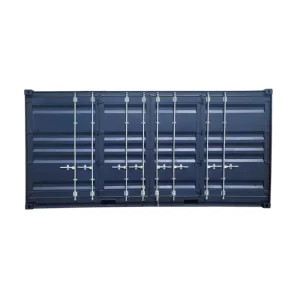
For cross-dock distribution hubs and rapid rail loading, traditional end-door access introduces pallet bottlenecking. The 20ft and 40ft High Cube Side-Door architecture eliminates this constraint by incorporating bi-folding or multi-leaf door portals along the entire lateral frame. Reinforced top and bottom side rails maintain structural rigidity without center posts during two-way loading, speeding forklift cycle times by up to 60%.
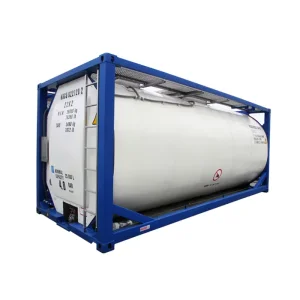
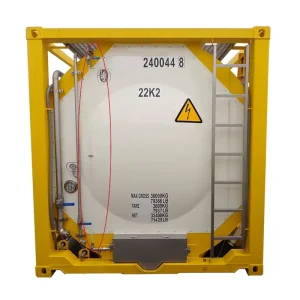
Bulk liquid transportation requires the fusion of an ISO structural frame with a pressure vessel. Specialized 20ft UN Portable T11/T14 tank containers built from SUS316L electropolished stainless steel provide the safety matrix needed for high-purity ethanol, food-grade wines, and corrosive chemicals. Fitted with steam-heating jackets, rockwool insulation, and top/bottom spill boxes, these units integrate seamlessly into standard maritime stacking lanes.
High-cube reefers engineered as on-site stationary cold storage rooms bypass expensive brick-and-mortar warehouse construction permits. Incorporating high-impact interior flat floors, integrated emergency personnel escape releases, butcher-style plastic strip curtains, and internal explosion-proof LED lighting, these turn-key packages provide rapid chilled storage for farm cooperatives, slaughterhouses, and pharmaceutical regional reserves.
Anticipating breakthroughs across smart telemetry, thermal barrier composites, autonomous energy harvesting, and ultra-high-strength metallurgy.
| Phase / Timeline | Technological Milestone | Core Engineering Specifications | Industry Impact & ROI | Status |
|---|---|---|---|---|
| Phase 1: 2025 - 2026 | Universal 5G & Satellite Telematics | Dual-band Iridium/LEO transceivers embedded into composite roof corner; zero external antenna footprint; micro-mesh BLE sensors for individual pallet tracking. | Zero blind-spot tracking across ocean routes; 80% decrease in manual yard inventory audits. | Production Ready |
| Phase 2: 2027 - 2028 | Ultra-Low GWP Natural Refrigeration | Commercial transition to standardized R-744 (CO2) trans-critical and R-290 (propane) micro-charge circuits with electronic expansion valves. | Exempt from international carbon levies; eliminates potential refrigerant disposal regulatory liabilities. | Pilot Deployments |
| Phase 3: 2029 - 2031 | Carbon-Neutral Green Steel Shells | Structural frames formed via 100% green-hydrogen DRI steel; water-based self-healing anti-corrosion nanocoatings replacing zinc primers. | Full compliance with EU CBAM Phase II; achieves 45% reduction in whole-life embodied carbon. | Advanced R&D |
| Phase 4: 2032 - 2035 | Aerogel Composite Insulation | Silica aerogel vacuum insulation panels (VIP) integrated into side walls; thermal conductivity k < 0.012 W/(m·K); wall thickness reduced from 70mm to 35mm. | Expands internal reefer volume by 4.8 cubic meters; lowers steady-state electrical power consumption by 40%. | Prototype Validation |
Direct engineering clarifications addressing structural standards, customs clearances, operational power requirements, and quality inspection protocols.
A 40ft High Cube (HQ) container features an exterior height of 9'6" (2,896 mm), compared to the 8'6" (2,591 mm) of a standard General Purpose (GP) unit. This 1-foot differential raises the interior clearance to 2,698 mm (approx. 8'10"), boosting cubic capacity from 67.7 m³ to 76.4 m³. This extra vertical space is crucial for palletized cargo, hanging garment configurations, tall industrial machinery, and standard refrigerated T-floor air circulation systems.
Standard ISO reefer machinery (Daikin, Carrier, Thermo King) is engineered for 3-phase dual voltage inputs: 460V AC at 60Hz or 380V AC at 50Hz, with a permissible voltage fluctuation tolerance of ±10%. Circuit protection requires a dedicated 32-Amp CEE-form circuit breaker. For inland intermodal trucking, clip-on or underslung diesel gensets delivering a minimum continuous output of 15 kW to 18.75 kVA are deployed to maintain power during highway haulage.
Every container manufactured for international intermodal transport is inspected during fabrication by authorized third-party surveyor agencies (such as Bureau Veritas, DNV, or ABS). Units receive an official stainless steel CSC (International Convention for Safe Containers) safety approval plate stamped with maximum gross weight, allowable stacking load (typically 192,000 kg or 216,000 kg), transverse racking values, and timber treatment compliance seals (Australian Quarantine / TCT standards).
A "90% new" used reefer undergoes full mechanical and thermal reconditioning. This protocol requires a comprehensive Pre-Trip Inspection (PTI) validating compressor oil purity, refrigerant pressure balances, heater rod operation, and defrost cycles. Structurally, the unit must be guaranteed Cargo-Worthy (CW) or IICL-5: zero structural deformation of corner posts, perfectly true door hinges, fully intact multi-lip EPDM gaskets, and pristine, corrosion-free interior stainless steel walls.
Yes. Removing the corrugation of a full lateral wall requires substantial engineering reinforcement. To offset the loss of shear resistance, factory designs introduce thickened upper box headers, reinforced bottom side rails using cold-formed structural channels, and robust intermediate box-section door frames. The final assembly undergoes ISO racking and longitudinal load testing to ensure it meets CSC requirements for stacking in standard ocean vessel slots.
Active refrigerated containers feature integrated cooling systems capable of holding setpoints from -35°C to +30°C, essential for long-haul routes or volatile perishables. In contrast, passive insulated containers rely on thickened polyurethane foam (often 75mm to 100mm) without active machinery. If the transit time is under 48 to 72 hours, cargo is pre-chilled, and temperature tolerances permit slight passive drift (0.5°C to 1.5°C per 24 hours), insulated units offer zero energy costs and minimal maintenance overhead.
High-performance ISO liquid tanks, double-door dry cargo, solar cold-chain integrations, and rail-optimized equipment for comprehensive global procurement programs.