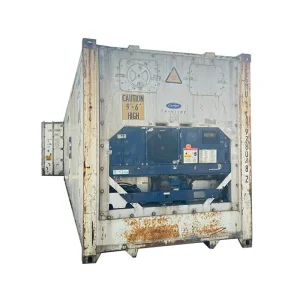
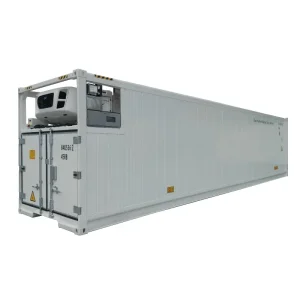
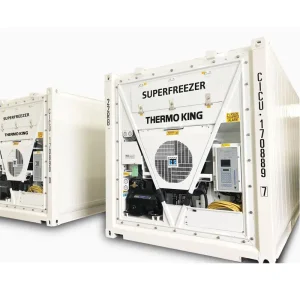
Verified ISO, BV, and DNV certified equipment tailored for maritime shipping, offshore extraction, cold chain transit, and industrial payload stability.
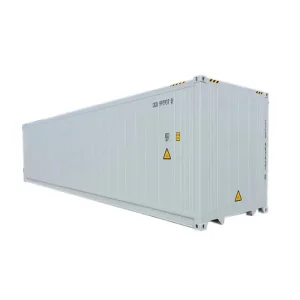

How the maritime supply chain shifted focus from gross tonnage to cubic-meter-cost optimization, automated stacking parameters, and carbon-neutral payloads.
Over 62% of cross-border shipments have migrated toward 9ft 6in High Cube configurations. The added vertical foot yields an additional 344 cubic feet (9.74 m³) of volume without altering vessel footprint constraints.
This structural change reduces the net shipping cost per cubic meter by up to 14.8% for lightweight consumer electronics, retail apparel, and oversized automotive knock-down kits.
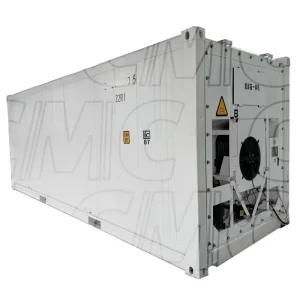
Traditional cold-storage reefer units lose between 12% and 18% of their internal cubic capacity due to thick polyisocyanurate (PIR) insulation panels.
Modern ODM manufacturers employ vacuum-insulated panels (VIP) combined with dense composite skins, clawing back up to 85 cubic feet of internal storage space while slashing compressor duty cycles by 22% in tropical trade lanes.
Multimodal transportation across European rail gauge restrictions, North American well-car tolerances, and the Belt & Road railway network requires precise engineering tolerances within 1.5mm.
Engineered structural frames ensure dynamic corner-casting resilience while preserving internal clear space across diverse flatcar environments.
Comprehensive baseline procurement index based on Corten-A high-tensile steel, robotic submerged-arc welding, zinc-rich epoxy primers, and international marine safety approval certification.
| Container Classification | External Dimensions (L x W x H) | Internal Volume (Cubic Feet / m³) | Payload Capacity (Tare vs Gross) | Certified Standard | Estimated ODM Tier Price (FOB) |
|---|---|---|---|---|---|
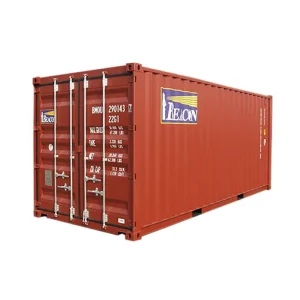
| 20ft Standard Dry ISO | 20' x 8' x 8'6" (6.058 x 2.438 x 2.591m) | 1,172 cu ft (33.2 m³) | 2,200 kg / 30,480 kg | ISO 1496-1, CSC, BV | $1,750 – $2,300 |
| 40ft High Cube (HC) Dry | 40' x 8' x 9'6" (12.192 x 2.438 x 2.896m) | 2,694 cu ft (76.2 m³) | 3,900 kg / 32,500 kg | ISO 1496-1, CSC, ABS | $2,850 – $3,650 |
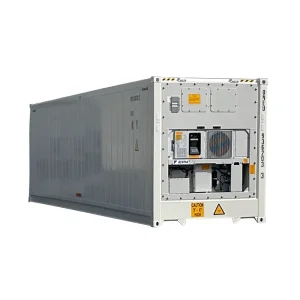
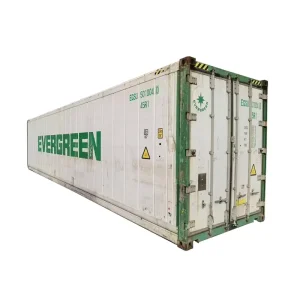
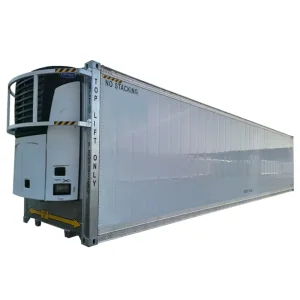
| 40ft HC Premium Reefer | 40' x 8' x 9'6" (12.192 x 2.438 x 2.896m) | 2,380 cu ft (67.4 m³) | 4,600 kg / 34,000 kg | Carrier / Daikin / Thermo King | $14,200 – $18,900 |
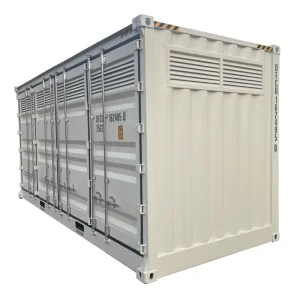
| 20ft Dangerous Goods (Side-Open) | 20' x 8' x 9'6" (6.058 x 2.438 x 2.896m) | 1,310 cu ft (37.1 m³) | 3,100 kg / 24,000 kg | EN 12079, CSC, IMDG Class | $4,100 – $5,400 |
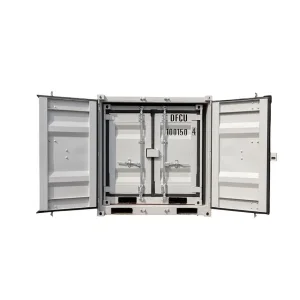
| DNV 2.7-1 Offshore Dry Unit | 10' x 8' x 8'6" (3.048 x 2.438 x 2.591m) | 560 cu ft (15.8 m³) | 2,050 kg / 10,000 kg | DNVGL-ST-E271, ISO 10855 | $5,200 – $7,100 |
| Half-Height Heavy Ore Carrier | 20' x 8' x 4'3" (6.058 x 2.438 x 1.295m) | 580 cu ft (16.4 m³) | 2,800 kg / 35,000 kg | DNV 2.7-1, High-Yield Weld | $3,800 – $4,950 |
* Note: Prices reflect baseline OEM/ODM production runs (MOQ > 10 TEU) from our Tianjin and coastal manufacturing lines. Rates fluctuate based on daily Corten steel spot prices, marine paint indices, component specs, and class certification testing fees.
Addressing structural compromises, harsh-climate tolerances, and specialized containment demands across high-risk logistics networks.
Standard containers fail prematurely when loaded with high-density ores, concentrates, or scrap metal due to floor buckle and center-of-gravity elevation.
Our half-height offshore ore carriers incorporate reinforced Hardox-wear-plate flooring, low-profile internal geometries, and certified top-lifting padeyes designed for high-stress cyclic offshore hoist applications.
Remote agricultural collection points and decentralized vaccine distribution hubs lack continuous shore power or high-amp diesel generator access.
We build hybrid solar reefer containers featuring DC inverter refrigeration, roof-integrated high-efficiency monocrystalline PV arrays, and LiFePO4 energy storage capable of maintaining -25°C without external grid assistance for up to 72 hours.
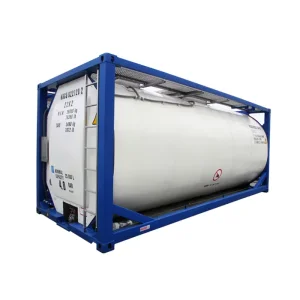
Volatile liquids and corrosive chemicals require exact volumetric stability to eliminate liquid surge dynamics (sloshing) while adhering strictly to IMDG rules.
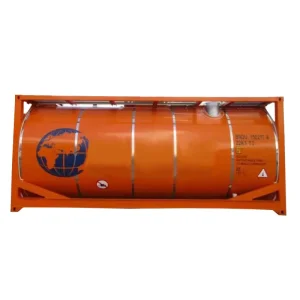
Our ISO tank containers utilize 316L electropolished stainless steel vessels with baffles, steam or electric heating jackets, and thermal perimeter cladding for zero-spill intermodal logistics.
Exporting equipment across international shipping routes demands rigorous third-party auditing, maritime insurance compliance, and regional localized technical support.
Every newly constructed or remanufactured dry and reefer container leaves our staging facilities with an authentic, verified CSC Plate (Convention for Safe Containers) issued by Bureau Veritas (BV), ABS, or CCS for valid stacking and handling worldwide.
Offshore container designs undergo destructive dynamic drop testing, structural finite element analysis (FEA), and non-destructive welding checks (MPI/UT) certified specifically for open-ocean handling platforms and harsh North Sea conditions.
Our reefer machinery assemblies match strict environmental requirements, including EU F-Gas regulations and US EPA SNAP rules, deploying low-GWP refrigerants (R-513A, R-452A, and CO₂ R-744 natural cycles) across Carrier, Daikin, and Thermo King units.
Headquartered in Tianjin with extensive production operations in Tianjin and Suzhou—approximately 100km from deepwater terminals—our export infrastructure provides rapid marshaling, custom export crating, vessel booking, and immediate container-yard release.
The progression toward automated tracking, intelligent internal volumetric allocation, structural light-weighting, and zero-emission refrigeration.
Factory-integrated LoRaWAN, cellular 5G, and satellite telematics positioned inside corner castings to stream internal cubic utilization metrics, temperature gradients, door access alerts, and shock analytics in real time.
Deploying advanced 700MPa micro-alloyed automotive-grade steels in corner post and bottom rail roll-forming, dropping tare weight by 180kg per 40ft TEU while maintaining 9-high laden vessel stacking safety factors.
Replacing mechanical hydrofluorocarbon vapor-compression units with solid-state Peltier cooling arrays and closed-loop cryogenic CO₂ pulse cooling for silent, ultra-reliable pharmaceutical transit.
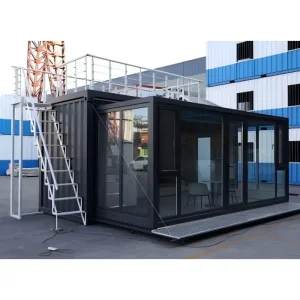
Standardized quick-connect interlocks and pre-routed building services integrated directly into container frame channels for conversion into structural living units, mobile edge data centers, and expandable battery storage nodes.
Clear, engineering-backed answers addressing the operational differences between reefer vs. insulated containers, custom order MOQs, inspection processes, and volumetric optimization.
Our standardized production covers 10ft (approx. 560 cu ft), 20ft standard (1,172 cu ft), 20ft High Cube (1,310 cu ft), 40ft standard (2,389 cu ft), and 40ft High Cube (2,694 cu ft). Furthermore, we manufacture bespoke half-height ore carriers, side-open door access units, roll-up shutter configurations, open tops, and offshore modules engineered precisely to client blueprints.
We supply new and remanufactured reefer containers fitted with genuine Carrier Transicold (such as the ThinLINE and PrimeLINE), Daikin LXE series, and Thermo King Magnum Plus units. Our engineering specialists evaluate your cargo temperature profile (ranging from -35°C to +30°C) and dockside electrical supply to recommend optimal compressor configurations.
CIMIC operates under ISO 9001 and ISO 14001 certified quality management systems. Containers intended for intermodal transit bear valid Bureau Veritas (BV) or ABS classification certificates and safety approval plates (CSC). Offshore structural containers comply fully with DNV 2.7-1 / EN 12079 manufacturing and dynamic lifting standards.
A refrigerated container incorporates an active, electrically powered cooling and heating unit with airflow floor channels (T-bar floor) to maintain set-point temperatures over prolonged ocean transits. An insulated container uses passive, thickened structural polyurethane foam or fiberglass walls without machinery, offering a lightweight, cost-effective solution for shorter routes and stable climates.
Yes. All second-hand and off-lease containers sourced from shipping line fleets across major Chinese maritime ports undergo strict structural surveys. We verify wind-and-water tightness (WWT), floor integrity, locking rod engagement, gasket seals, and run a complete pre-trip inspection (PTI) on reefer machinery. Individual unit photos and diagnostic logs are provided prior to export dispatch.
While standard and used containers from port inventories can be procured in single-unit quantities (MOQ = 1), bespoke ODM projects involving tooling modifications, non-standard dimensional framing, custom side openings, or specialized paint systems generally require a minimum production run of 2 to 10 units depending on structural engineering complexity.
Discover specialized transport equipment, modular housing pods, deep freeze systems, and hazardous cargo containers ready for global export.