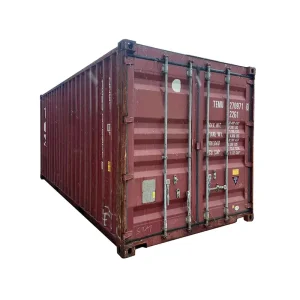
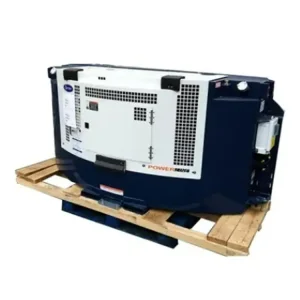
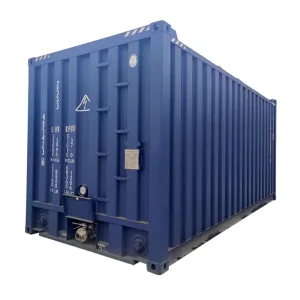
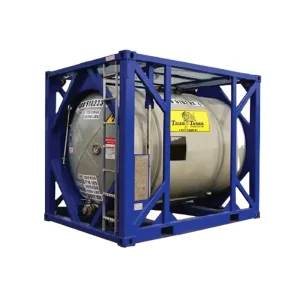
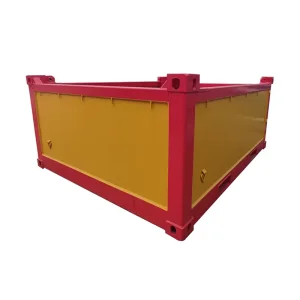
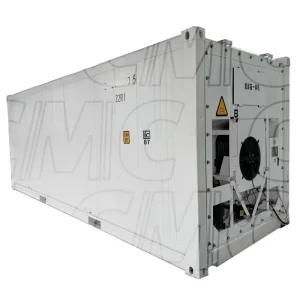
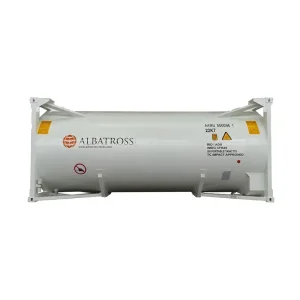
Explore our top-tier catalog of internationally certified shipping containers, customized dry cargo units, heated asphalt haulers, and offshore reefers ready for global export.
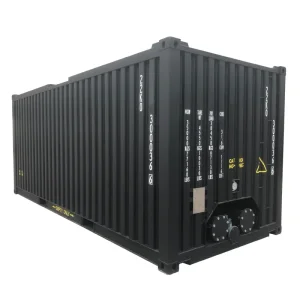
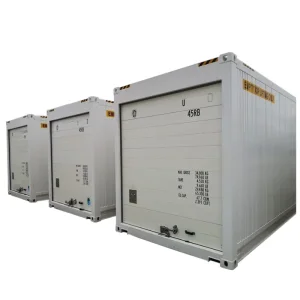
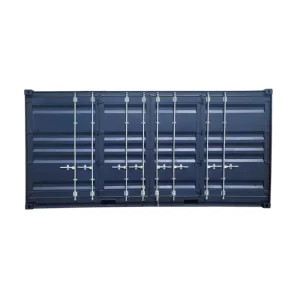
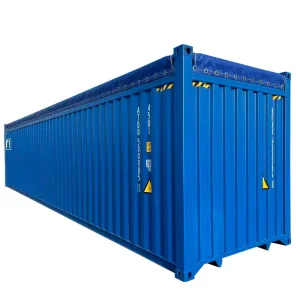
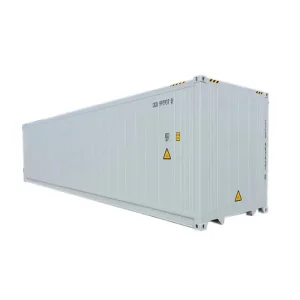
While standard 20-foot general purpose (GP) containers maintain an external height of 8 feet 6 inches (2,591 mm), the 20-foot High Cube (20 HC / 20 s HC) extends the vertical profile to 9 feet 6 inches (2,896 mm). This 1-foot (305 mm) enhancement expands interior cubic capacity from 33.2 m³ to approximately 37.4 m³—delivering an immediate 12.6% volumetric gain without increasing port footprint.
Global intermodal freight logistics is shifting rapidly toward denser volumetric packing, multimodal modularity, and specialized functional conversions. Here is how modern original design manufacturing (ODM) is reshaping the 20 HC segment.
Standard ISO pallets (1200 x 800 mm) and North American pallets (1200 x 1000 mm) frequently face vertical headroom starvation in standard 8ft 6in units. The extra 305 mm provided by the 20ft High Cube enables double-stacking of boxed consumer electronics, lightweight industrial machinery, and palletized bulk freight, slashing shipping cost per cubic meter by up to 11.4%.
The rapid rise of Battery Energy Storage Systems (BESS) and decentralized edge compute pods relies predominantly on 20ft High Cube enclosures. The additional ceiling clearance permits thermal management overhead ducting, liquid cooling piping, explosion relief venting, and high-voltage busbars required for multi-megawatt battery racks.
In temporary site camps, remote medical triage clinics, and mobile telemetry stations, standard 8ft 6in ceilings yield cramped interior finishing once false floors and acoustic insulation are applied. 20ft High Cube envelopes furnish finished interior heights above 2.4 meters, fully meeting international residential and industrial ergonomics.
Procuring customized container assets at commercial scale demands rigorous mitigation of manufacturing bottlenecks, dimensional tolerances, and multi-year lifecycle costs.
Commodity dry vans purchased off-the-shelf from trading middlemen frequently suffer from thin primer coats, non-certified welding, and brittle wooden floors unsuited for heavy axle forklift turns. When retrofitting third-party equipment (such as liquid bladders, gensets, or hydraulic side-doors), field modifications inevitably void CSC safety plates and compromise marine stacking certification.
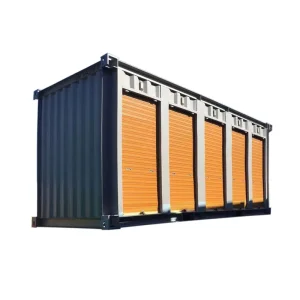
Our ODM engineering workflow provides end-to-end parametric modeling (SolidWorks / ANSYS finite element stress analysis) directly at our Tianjin fabrication lines. We engineer reinforcement gussets, recessed bulkhead apertures, roll-up shutter portals, and floor reinforcement tracks into the automated production jig before the container is welded, primer-dipped, or oven-cured.
A low initial capital expenditure (CapEx) often conceals crippling maintenance expenditures (OpEx). Marine exposure (C5-M ISO 12944 corrosion environments) degrades substandard carbon steels within 24 to 36 months, precipitating rust blooms, floor delamination, and seal hardening that invites salt spray ingress.
| Dimensional & Mechanical Attribute | 20ft Standard GP (8ft 6in) | 20ft High Cube ODM (9ft 6in) | Operational Gain / Advantage |
|---|---|---|---|
| External Height | 2,591 mm (8' 6") | 2,896 mm (9' 6") | +305 mm (+12.0 inches) vertical envelope |
| Internal Clear Height | 2,393 mm (7' 10") | 2,698 mm (8' 10") | Accommodates tall robotics, HVAC, and over-height cargo |
| Internal Cubic Capacity | 33.2 m³ (1,172 cu ft) | 37.4 m³ (1,320 cu ft) | +4.2 m³ (+12.6%) volume per TEU equivalent |
| Tare Weight (Standard Build) | 2,200 kg (4,850 lbs) | 2,340 kg (5,158 lbs) | Minimal tare delta (+140 kg) vs. significant volumetric gain |
| Max Gross Weight (M.G.W.) | 30,480 kg (67,200 lbs) | 30,480 kg (67,200 lbs) | Full CSC heavy-rated compliance across rail, sea, and road |
| Door Opening Clearance (H x W) | 2,280 x 2,340 mm | 2,585 x 2,340 mm | Eliminates mast collisions during high-mast forklift loading |
From refrigerated cold chains to extreme offshore energy installations, CIMIC manufactures bespoke 20 HC container platforms designed to excel under unforgiving operational environments.
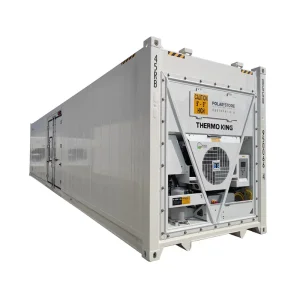
Our 20ft HC Reefer units combine deep polyurethane sandwich wall insulation (thermal conductivity ≤ 0.024 W/m•K) with premium chilling machinery from Carrier Transicold, Thermo King, or Daikin. T-section aluminum subfloors maintain laminar airflow across dense cargo pallets, preserving set-points between -35°C and +30°C.
Bespoke 20ft High Cube frames host ASME VIII-certified 25,000-liter stainless steel (316L) ISO tanks and heated bitumen asphalt bodies. Designed with integrated steam heating jackets, electrical trace heating, and lower center-of-gravity baffles to maintain fluid stability across heavy intermodal rail curves.
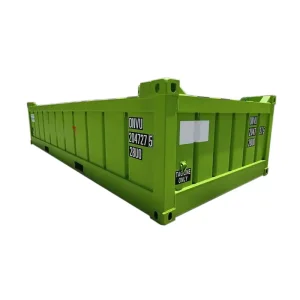
Engineered for extreme offshore conditions where units are hoisted via offshore vessel crane slings in rough open seas. Featuring Charpy V-notch tested steel for -20°C low-temperature ductility, integrated pad eyes welded directly to corner columns, and comprehensive non-destructive testing (NDT/MPI).
At CIMIC, every production run is certified by accredited classification societies (Bureau Veritas, DNV, ABS, or Lloyd's Register) in full alignment with international maritime safety codes.
Units undergo severe 9-high container vessel stacking load tests (up to 86,400 kg applied to corner posts), transversal racking tests (150 kN), transverse bending, and end-wall deflection testing to guarantee structural rigidity in tempestuous sea states.
Every 20ft HC undergoes continuous multi-nozzle water deluge testing at 1.0 bar (100 kPa) water spray over all seams, gaskets, and corner fits. Coating systems are tested via cross-hatch adhesion (ISO 2409) and magnetic dry-film thickness gauges to verify zero pinhole holidays.
Each unit leaves the line with an engraved, corrosion-proof stainless steel International Convention for Safe Containers (CSC) plate detailing maximum gross weight, allowable stacking weight, transverse racking test load values, and timber treatment certification for customs clearance.
As artificial intelligence, automated edge robotics, and sustainability mandates accelerate, CIMIC's advanced research division is deploying next-generation container innovations.
Integrating solar-harvesting edge sensors directly into corrugation recesses. Real-time monitoring of shock acceleration, door intrusion, humidity, internal atmospheric pressure, and GPS geo-fencing via satellite links.
Fully automated multi-axis robotic welding cells minimize thermal deformation on ultra-thin, high-tensile corrugations, boosting corner casting seam fatigue resistance by more than 35% compared to manual stick arc welding.
Transitioning to Hydrogen-Direct Reduced Iron (H-DRI) scrap-based electric arc furnace (EAF) Corten-A formulations, slashing embedded Scope 3 greenhouse emissions by 42% per manufactured 20ft High Cube TEU.
Next-generation micro-alloyed composite side sheets offering yield strengths exceeding 460 MPa. Reduces dead tare by up to 210 kg while increasing usable payload allowance for ultra-dense freight.
Authoritative answers on structural specifications, production lead times, minimum order quantities (MOQ), and international maritime compliance.
Explore our complete range of certified DNV offshore dry cargo units, ISO tank containers, used carrier assets, and specialized industrial generator sets ready for global deployment.