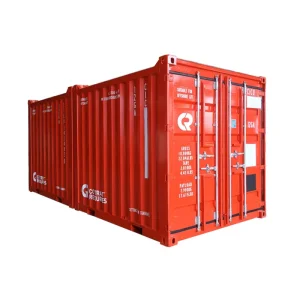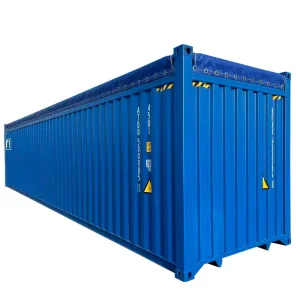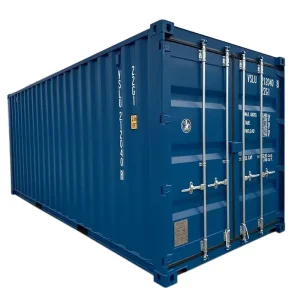
Explore heavy-duty containment units manufactured to CSC, ISO 1496-1, and offshore DNV 2.7-1 compliance for seamless rail, marine, and project logistics.
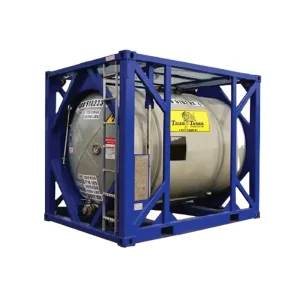
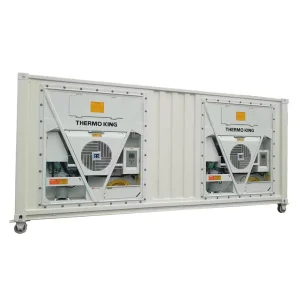
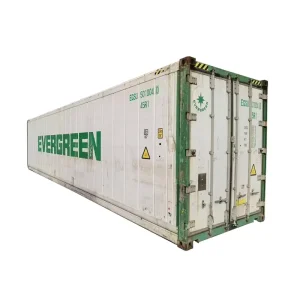
Analyzing global supply chain bottlenecks, break-bulk intermodal convergence, and engineering breakthroughs in heavy structural perimeter stabilization.
International container logistics is undergoing a fundamental recalibration. For decades, standard ISO closed dry freight containers (ISO 668) dictated the operational cadence of worldwide marine shipping lines and railway corridors. However, modern commercial realities—accelerated by high-density industrial manufacturing, renewable energy component transit, advanced mining machinery, and oversized infrastructural equipment—have exposed the limitations of traditional fixed-aperture containers. Open shipping containers (encompassing full-length side-open units, soft tarpaulin open-tops, rigid removable hard-tops, and multi-aperture roll-up configurations) have transitioned from niche assets into mission-critical supply-chain infrastructure.
The macroeconomic imperative is clear: traditional break-bulk vessel stowage presents excessive dwell times, elevated port stevedoring overheads, and severe risks of transit damage. By integrating heavy-gauge Corten-A steel open containers into standard container vessel slots, multimodal freight forwarders unlock the ability to top-load heavy machinery via overhead bridge cranes and side-load continuous 12-meter structural profiles via high-capacity pneumatic forklifts. This paradigm compresses turn-around time (TAT) at critical transshipment terminals across Rotterdam, Singapore, Tianjin, and Houston by up to 68%, substantially diminishing total landed transit risk.
Eliminating continuous corrugated sidewalls or longitudinal roof panels creates massive structural shear vulnerabilities. Our ODM open containers employ high-tensile SPA-H Corten steel box-section lintels and reinforced corner post geometries to counteract dynamic transverse racking forces up to 150 kN.
Engineered for high-clearance overhead gantry entry, our proprietary rear swing-out header assemblies rotate a full 270 degrees. This provides an uninhibited envelope for long-reach industrial equipment while retaining structural corner post engagement during transit lock-down.
Every customized open container features standard corner casting dimensions per ISO 1161, allowing seamless automated spreader interface at sea, inland rail yards, and specialized modular flatbed trailers without requiring out-of-gauge rigging adjustments.
Comprehensive technical benchmarks, metallurgic grades, Finite Element Analysis (FEA) profiles, and loading tolerances across our customized ODM variants.
The fundamental mechanical challenge of building ODM open-top and open-side containers lies in the mitigation of longitudinal bending moments and elastic shear deformation. In standard 20ft and 40ft dry conex boxes, the corrugated sidewalls serve as deep structural plate girders carrying up to 70% of the shear force generated during marine vessel pitch and roll motions. In our side-open and open-top structures, this shear capability must be redistributed into the lower side sills, upper box headers, and intermediate removable mullions.
To maintain zero structural failure under extreme sea state conditions (exceeding 2.0g vertical acceleration), our engineering department deploys ultra-heavy bottom side rails fabricated from cold-formed channel steel (SM490YA or equivalent ASTM A572 Grade 50) with cross-sectional moments of inertia up to 300% greater than standard ISO dry units. Below is the certified performance comparison between our proprietary structural configurations:
| Structural Parameter | 20ft Full Side-Open HC | 40ft High-Cube Open-Top (Tarpaulin) | 40ft Hard-Top Removable Steel Roof | 10ft / 20ft DNV Offshore Cargo |
|---|---|---|---|---|
| Primary Steel Grade | Corten-A (SPA-H / Q345D) | Corten-A (SPA-H / Q345D) | Corten-A (SPA-H / Q345D) | DNV-certified Grade E36 / NV D36 |
| Max Gross Weight (M.G.W.) | 30,480 kg (67,200 lbs) | 32,500 kg (71,650 lbs) | 34,000 kg (74,950 lbs) | 12,000 kg – 25,000 kg (Project Specced) |
| Payload Capacity | 27,180 kg | 28,200 kg | 29,150 kg | Up to 20,500 kg High Payload |
| Internal Opening Envelope | 5,898 × 2,580 mm Side Aperture | 11,880 × 2,230 mm Clear Roof | 11,920 × 2,210 mm Roof Aperture | Unobstructed Internal Hoist Envelope |
| Flooring System | 28mm Marine Apitong / Keruing | 28mm Marine Plywood or 4.5mm Checker | 4.5mm Heavy Steel Checker Plate | 6.0mm Skid-Resistant Steel Plate |
| Weather Sealing & Security | Dual-Lip Co-Extruded EPDM Gaskets | 650g/m² Heavy PVC Tarp w/ TIR Cable | Dual-Lock Perimeter Bolted Clamps | Subsea Offshore Rated Heavy Gasket |
| Certification Compliance | CSC, BV, ISO 1496-1, TIR | CSC, BV, UIC 592, TIR | CSC, BV, ISO 1496-1 | DNV 2.7-1 / EN 12079 / ISO 10855 |
From deep-sea drilling platforms to high-speed Eurasian railway lines, explore engineered operational deployment cases worldwide.
Seamless vertical loading of heavy mining drill heads, high-voltage transformers, and turbines into soft-top or hard-top open units without dismantling delicate components.
Customized side-open containers repurposed as integrated BESS (Battery Energy Storage System) housings, providing technician maintenance access across all battery racks simultaneously.
Rigid DNV 2.7-1 certified half-height and open cargo baskets engineered to endure aggressive saline wave slosh, sub-zero impact forces (-20°C design temperature), and dynamic offshore crane slings.
Full-access side doors allow standard counterbalanced forklifts to unload complete sets of standard Euro and US pallets in under five minutes, eliminating hazardous floor-level maneuvering inside tight spaces.
Detailed verification regimens ensuring your customized ODM container fleet maintains complete legal, safety, and operational clearance globally.
Each unit built in our facility undergoes strict survey protocols by Bureau Veritas (BV), Lloyd's Register (LR), or China Classification Society (CCS). High-strength stainless steel CSC safety approval plates are riveted directly to the left rear door, certifying vertical stacking capacity, transverse racking rigidity, and longitudinal floor strength under standard international convention.
Oceanic salt spray and harsh chemical terminals demand severe anti-corrosion protection. Our blast-cleaning lines prepare steel surfaces to SA 2.5 profile standards, followed by a multi-layer protective coating system: zinc-rich epoxy primer (30µm), high-build epoxy intermediate (40µm), and polyurethane acrylic exterior topcoat (40µm) delivering a minimum design life of 15 years.
For cross-border truck-rail corridors across Central Asia, the Middle East, and the European Union, open tarpaulin containers are fabricated in full compliance with the TIR Convention (Transport International Routier). Removable roof bows, tarpaulin eyes, and continuous steel core security cables are engineered to guarantee immediate tamper detection and uncompromised bonded transit.
How next-generation material science and autonomous IoT tracking systems are transforming industrial container manufacturing.
The future of open-top and open-side container fleets centers on autonomous structural telemetry and real-time situational awareness. In open cargo transport—where heavy mining assets, high-value generators, or fragile break-bulk equipment are stowed—vibration harmonics and acceleration shocks during rail switching or heavy-sea heave can cause severe load shifting. CIMIC’s technical roadmap integrates low-power LoRaWAN and satellite-linked IoT sensor suites directly into the upper side header box sections.
These smart telemetry nodes monitor 3-axis dynamic impact forces, ambient humidity, EPDM seal micro-deflections, and unauthorized door opening events in real time. Fleet dispatchers receive instantaneous warnings if lashing tensions slacken or if structural roof bow integrity is compromised across remote intermodal rail paths.
In alignment with international maritime decarbonization goals (IMO 2030 / 2050 net-zero targets), our manufacturing plants in Tianjin and Suzhou are pioneering the adoption of electric-arc furnace (EAF) produced green Corten-A steel, lowering the embodied carbon footprint per container by up to 42%. Additionally, conventional tropical hardwood Apitong floorings are being phased out in favor of high-durability recycled composite polymer-bamboo hybrid boards that exceed ISO 1496-1 concentrated wheel axle test requirements (7,260 kg test load) while offering superior resistance to chemical spills, grease, and biological rot.
Critical engineering considerations, payload specifications, weatherproofing systems, and custom procurement processes answered by our manufacturing team.
Standard containers rely on corrugated sidewalls to resist shear and racking. In our ODM Open-Side designs, we engineer ultra-heavy-gauge tubular box profiles into the upper roof rails and lower side sills, combined with high-yield reinforced corner post gussets and interlocking dual-cam vertical locking bars. This ensures the unit successfully passes the standard ISO 1496-1 transverse racking test of 150 kN without permanent plastic deformation.
A Soft Open-Top container utilizes removable galvanized steel roof bows spanned by a heavy-duty 650–900 g/m² waterproof PVC tarpaulin secured with a TIR cable, ideal for items that slightly exceed container height (OOG cargo). A Hard Open-Top features a rigid, fully detachable steel roof panel that locks to the top rails via high-tensile perimeter cam-locks. The Hard-Top offers maximum anti-vandalism security and identical weatherproofing to standard dry boxes while retaining full overhead crane loading functionality.
Yes. All of our custom-manufactured ODM open-top and open-side containers carry full CSC approval plates certified by Bureau Veritas (BV) or Lloyd's Register. They are engineered to endure full 9-tier stacking loads under dynamic 1.8g marine sea conditions, corresponding to a compressive force of approximately 86,400 kg (190,000 lbs) per corner post.
We deploy continuous dual-lip vulcanized EPDM gaskets engineered with specific compression elasticity curves. The interlocking door frame edges feature precision-machined water drainage gutters that route capillary moisture away from the interior cavity. Every production run undergoes automated high-pressure hydraulic spray tests (per ISO 1496-1 Section 6.14) to confirm zero water ingress under wind-driven storm conditions.
For custom ODM configurations (such as tailored side door positions, non-standard heights up to 9ft 6in High Cube, or built-in machinery anchor rings), the typical prototyping and production cycle is 25 to 35 business days from 3D CAD drawing approval. Our flexible manufacturing lines accommodate trial batches from 1 to 5 units for specialized project equipment, extending to full fleet orders of hundreds of TEU for major shipping operators.
Prior to dispatch from our Tianjin or Suzhou logistics facilities, clients receive a comprehensive engineering dossier: Factory Inspection Certificate (FAT), Mill Test Certificates (MTC) verifying Corten-A steel chemical compositions, weld non-destructive testing (NDT) reports, dry film thickness (DFT) paint logs, and high-resolution unit-level photo/video walkthroughs including door operation verification and CSC plate records.
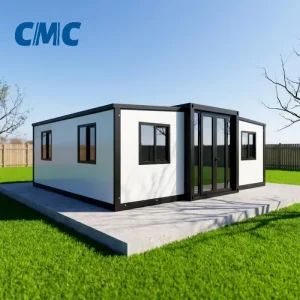
Explore specialized accommodation modules, open-top tarpaulin units, offshore liquid tanks, and extreme-duty freight containers.