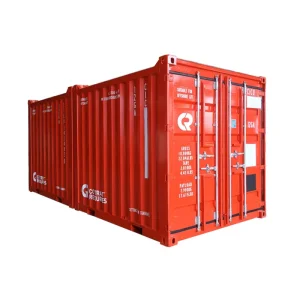
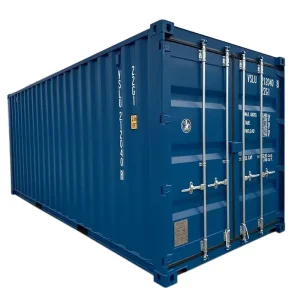
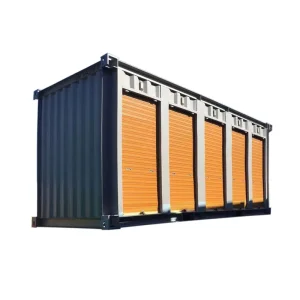
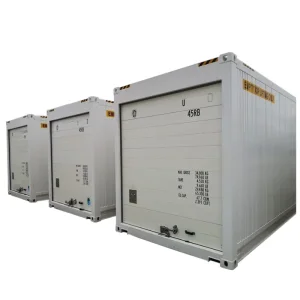
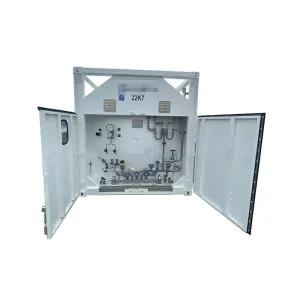
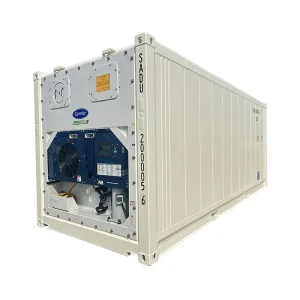
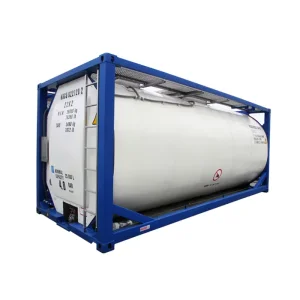
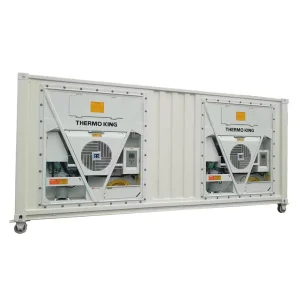
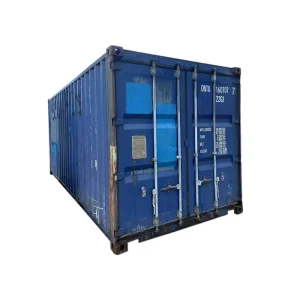
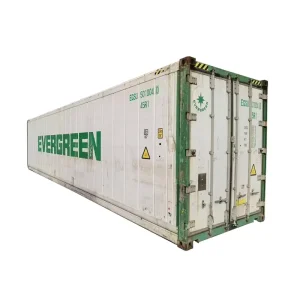
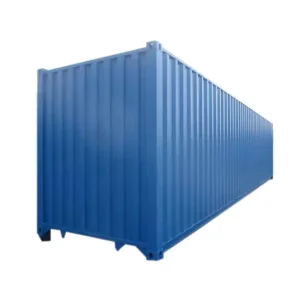
Direct factory dispatch solutions engineered to ISO, CSC, and DNV maritime standards. Inspect our top Tier-1 intermodal platform, reefer, and offshore units below.
A granular engineering economic analysis of factory rate formulation for ISO, reefer, offshore, and bespoke modular containers.
Atmospheric corrosion-resistant SPA-H Corten steel comprises 55% to 65% of bare dry freight production costs. Structural floor crossmembers, corner castings (SCW480), and corrugation thickness dictate structural yield strength under 9-high fully loaded stacking criteria (192,000 kg safe working limit).
Reefer container valuation pivots upon integrated thermodynamic machinery: Carrier Transicold PrimeLINE, Thermo King Magnum Plus, or Daikin LXE series. Variable scroll compressors, R-134a or low-GWP R-513A refrigerants, and microcontroller telemetry dictate up to 60% of cold chain unit procurement cost.
Mandatory waterborne zinc-rich primer and polyurethane topcoat systems replace volatile organic solvent formulations to comply with stringent volatile organic compound (VOC) emissions mandates, ensuring exceptional salt-spray endurance (>1,000 hrs ASTM B117) without micro-blistering along ocean corridors.
| Container Classification | Structural Metallurgy / Lining | Thermal / Mechanical System | Target Lifespan | Primary Cost Sensitivity Factors |
|---|---|---|---|---|
| 20ft / 40ft HC ISO Dry | SPA-H Corten Steel (1.6-2.0mm panels) | Passive ventilation / Keruing hardwood floor | 15–20 Years | Hot-rolled coil spot prices, floor lumber parity |
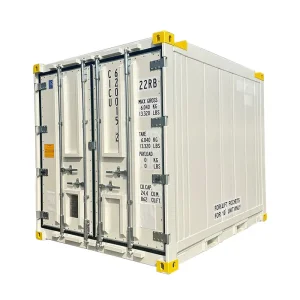
| 40ft High-Cube Reefer | SUS304 Stainless Interior / Corten Exterior | Carrier / Daikin / Thermo King (-30°C to +30°C) | 12–15 Years | Micro-channel condenser costs, cyclo-pentane foam blown resin |
| DNV 2.7-1 Offshore Cargo | High-yield structural steel (Charpy -20°C impact) | Integrated Pad Eyes & Slings to EN 12079 | 20+ Years | Class society witnessing fees (DNV/BV), weld NDT verification |
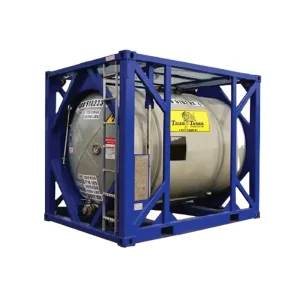
| T75 Cryogenic ISO Tank | Austenitic Stainless (S30408) / Carbon Outer | High-vacuum multilayer insulation jacket | 20 Years | Cryogenic pressure vessel forging, ASME Sec. VIII stamp validation |
Why global shipping conglomerates, military logistics commands, and energy operators anchor container fabrication contracts in China’s Northern Maritime Corridor.
Located in Tianjin FTA Pilot Area and Suzhou manufacturing zones, facilities operate precisely 100 km from Tianjin Xingang Port. Direct drayage reduces secondary staging charges and mitigates container empty repositioning friction.
Fully automated multi-torch submerged arc welding (SAW) lines and computerized high-pressure hydro-blasting guarantee identical weld penetration along side-wall corrugations, minimizing structural warping under dynamic racking loads.
Direct partnerships with state steel mills (Baosteel, Shougang) and certified marine component foundries shield factory rate structures from erratic raw material price spikes, providing locked-in forward pricing for long-cycle fleet deliveries.
Every container order executes under strict Bureau Veritas (BV) or DNV survey protocols. Dimensional cross-checks, light-tightness leakage tests, door gasket seal tests, and full CSC weight deflection tests precede terminal gate dispatch.
Balancing initial capital expenditure (CapEx) against operational longevity, thermal efficiency, and residual value in high-volume intermodal deployment.
Procuring low-grade containers saves 8–12% upfront but escalates life-cycle expenditure by 30% through paint peel, floor rot, premature corrosion, and lost cargo claims. High-spec build schedules pay dividends in secondary resale liquidity.
Multimodal transport requires a valid CSC Safety Approval Plate. Offshore projects mandate DNV 2.7-1 / EN 12079 type-approval and witnessed pull-tests. Tank containers require ASME, IMDG, ADR/RID, and USDOT approvals to enter intermodal service legally.
Tier-1 enterprise buyers deploy third-party inspectors (SGS, BV, Lloyd’s Register) at milestone checkpoints: raw steel Charpy impact tests, dry film thickness (DFT) paint verification, dimensional tolerance inspections, and air leakage decay checks.
Container safety certifications are legal preconditions for interchange across rail terminals, maritime ports, and high-risk offshore platforms.
Fully compliant with the 1972 International Convention for Safe Containers. Validated under dynamic transverse racking, end-wall strength, floor deflection, and 9-high container ship stacking conditions.
Mandatory certification for deepwater North Sea and Gulf of Mexico operations. Includes structural design calculations, low-temperature material toughness (-20°C / -40°C), and certified 4-point wire rope lifting slings.
Reefer box designs meet ATP international transport regulations for perishable foodstuffs. Interiors feature non-toxic food-grade stainless steel linings (SS304), T-bar subfloors, and hygienic steam-cleanable surfaces.
Constructed in accordance with TIR Customs conventions, with tamper-evident seal housings, continuous door hinge rivet welding, and high-security cam-lock gear preventing illicit cargo transit interference.
Containers engineered to withstand extreme environmental stress: sub-zero Siberian rail lines, humid equatorial shipping, and offshore storm swells.
DNV-rated mini-containers, tool skips, and half-height ore boxes transferred between dock supply vessels and offshore oil rigs in heavy sea states (significant wave height > 6m).
Seamless cold chain continuity across deep-sea liner vessels, broad-gauge railway wagons, and highway chassis for fresh fruit, vaccine concentrates, and frozen proteins.
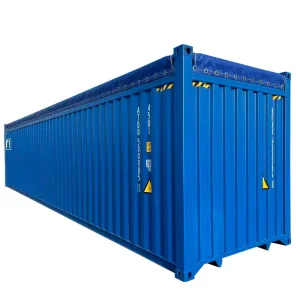
Reinforced half-height ore carriers and roll-over tipping boxes handling copper concentrate, iron ore, and mineral sands with heavy-gauge corrugated plates and internal tie-downs.
Bespoke container modifications for portable power generation units, BESS battery storage enclosures, water desalinization pods, and mobile tactical field headquarters.
Customized internal rack-stack structures, roll-up shutter access, and double-ended entry configurations tailored for completely knocked down (CKD) automotive logistics.
How technological innovations and decarbonization mandates are reshaping intermodal freight asset production.
Integration of flush-mount solar-powered satellite telematics tracking interior cargo temperatures, relative humidity, door-opening tamper events, and structural g-force shocks in real-time. Cloud synchronization ensures predictive refrigeration maintenance before cargo spoiling occurs.
Transition toward electric arc furnace (EAF) "green steel" container production, cutting the carbon intensity per TEU by up to 45%. Design-for-deconstruction principles enable automated robotic disassembly and 98% metallurgical recycling at end-of-life retirement.
Regulatory phaseouts of HFC compounds accelerate factory-installed natural refrigerant systems, including transcritical CO2 (R-744) units with a Global Warming Potential (GWP) of 1. These platforms deliver superior coefficient of performance (COP) in extreme ambient temperature profiles.
Engage directly with our senior marine structural engineers in Tianjin. We calculate shear loading, design custom footprints, and review port-of-call compliance for OEM/ODM fleet orders.
Clear engineering and commercial answers to the critical questions asked by international container purchasers.
ODM rates are calculated on a transparent cost-plus basis reflecting current SPA-H Corten steel mill indices, laser cutting/stamping time, paint dry-film thickness specifications, selected cooling machinery (Carrier, Thermo King, Daikin), and third-party classification witnessing fees (BV, DNV, LR). We provide line-item cost breakouts for major capital fleet projects.
For standardized ISO dry cargo boxes, typical lead times run 3 to 4 weeks after GA drawing sign-off. Bespoke ODM orders—such as side-opening reefers, DNV offshore units, or cryogenic tank containers—require 6 to 8 weeks to allow for finite element analysis (FEA) modeling, specialized stamping tooling, and class type-approval witness testing.
Our flexible manufacturing lines accept pilot trial orders as low as 1 to 5 units for custom engineered structures, high-value DNV offshore boxes, or specialized reefer skids. For custom dry cargo steel dimensions requiring dedicated stamping tooling, an MOQ of 10 to 20 units (TEU) is generally recommended to optimize tooling amortization.
Yes. Every used shipping container in our coastal depot stocks undergoes a full IICL-5 (Institute of International Container Lessors) survey. We verify corner cast integrity, door gear straightness, crossmember squareness, and floor soundess. Upon passing inspection, an extended CSC safety approval plate is validated for immediate international maritime transit.
We inject high-pressure cyclo-pentane polyurethane foam at a controlled density of 42 to 45 kg/m³ with zero ODP (Ozone Depletion Potential). This yields an exceptional thermal heat leakage coefficient (K-value) below 0.38 W/m²·K. This thermal boundary reduces refrigeration compressor duty cycles by up to 22%, saving thousands of kilowatt-hours annually per refrigerated box.
Every delivery includes a comprehensive technical packet: Certificate of Conformity (COC), Classification Society Certificate (BV, DNV, or ABS), CSC Safety Plate Registration, Factory Paint Dry Film Thickness (DFT) Test Logs, Refrigeration Pre-Trip Inspection (PTI) Data Records, and Mill Test Certificates (MTC) verifying SPA-H steel metallurgy.
Engineered solutions for aggressive offshore environments, high-capacity dry bulk logistics, cryogenic liquids, and extreme blast-freezer operations.