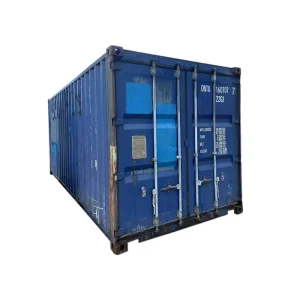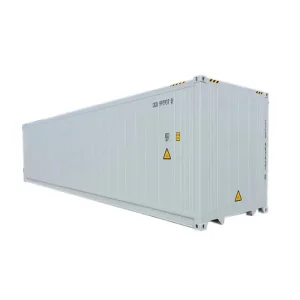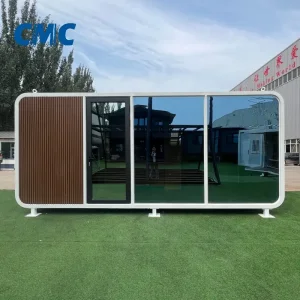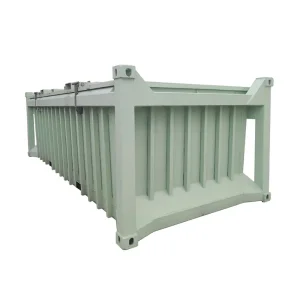
Pre-engineered standard configurations and specialty derivatives ready for structural modification and rapid deployment.
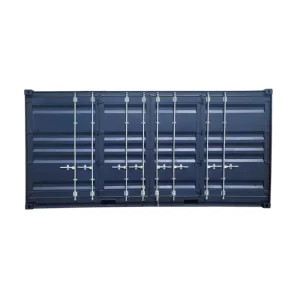
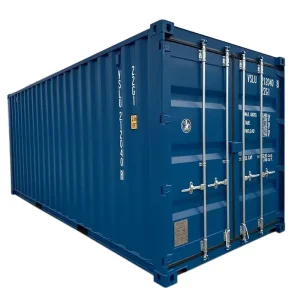
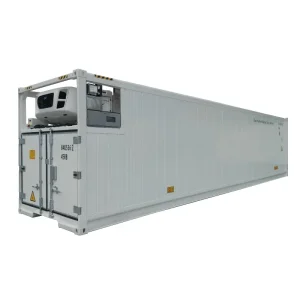
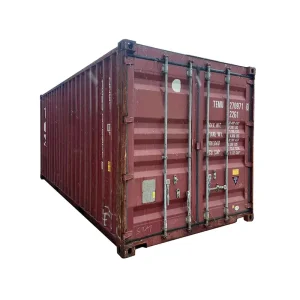
Understanding the transition from commoditized marine freight boxes to highly engineered structural enclosures across mission-critical supply networks.
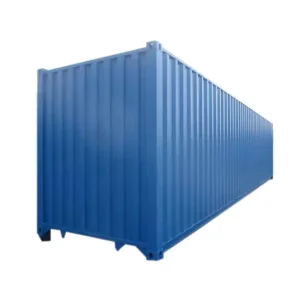
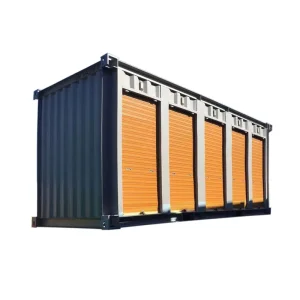
The unitized "1 Container" philosophy relies on high-tensile SPA-H Corten steel frameworks capable of absorbing 9-high stacking dynamic loads (up to 216,000 kg gross weight at corner posts). Engineering customizations retain the critical neutral axis while implementing apertures, custom doors, and ventilation arrays without diminishing finite element analysis (FEA) integrity.
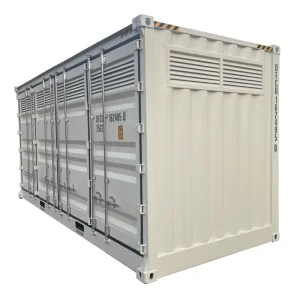
Global demand has shifted massively toward retrofitting 20ft and 40ft High Cube enclosures into utility-scale Battery Energy Storage Systems (BESS) and mobile hydrogen fuel cells. These require integrated A60 fire-rated thermal barriers, non-sparking explosion-proof relief louvers, and specialized bottom-rail weight distribution plates capable of handling concentrated payloads over 30 metric tons.
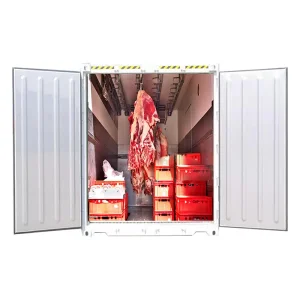
Modern intermodal temperature control moves beyond simple mechanical chilling. Advanced modified atmosphere systems (CA/MA) purge oxygen and regulate ethylene gas concentrations, allowing perishables to remain stable across 45-day sea voyages. Stainless steel inner linings (food grade SUS 304) and high-density micro-cellular polyurethane cores minimize thermal bridging down to a K-value of 0.35 W/(m²·K).
Navigating steel raw material shifts, shipyard fabrication quotas, and localized procurement strategies.
Procuring directly from specialized manufacturing clusters in China (such as Tianjin port corridors and the Yangtze River Delta) offers institutional buyers immediate logistical leverage. With steel raw material prices accounting for roughly 55%–62% of dry cargo enclosure costs, having direct access to domestic cold-rolled coil supplies keeps unit costs insulated from foreign exchange anomalies. OEM manufacturing enables tailored batch runs—ranging from standard ISO certified series to single-unit highly bespoke power enclosures—with delivery lead times often compressed to within 18–28 production days.
Ensuring cross-border maritime clearance, structural safety approvals, and onshore industrial conformity.
International Convention for Safe Containers certification ensures every container carries a validated data plate verifying transverse racking resistance, floor strength (testing up to 7,260 kg axle loads), and longitudinal wall resistance under ISO 1496/1.
Offshore units comply with rigorous DNV 2.7-1 / EN 12079 dynamic lifting requirements. Testing involves Charpy V-notch impact toughness for corner casting welds at sub-zero marine environments (-20°C to -40°C).
Standardized customs sealing configurations and security hinges prevent covert access. Built to comply with international cross-border railway accords, preventing cargo tampering along multimodal transit lines.
C5-M ultra-high durability zinc-rich epoxy primers paired with polyurethane topcoats guarantee protection exceeding 15 years against severe salt-spray marine exposure and abrasive bulk cargo impact.
Real-world integration of customized containers across distinct geopolitical and environmental operational zones.
Deployed across remote agricultural distribution hubs, specialized insulated and hybrid reefer containers equipped with Daikin and Thermo King machinery maintain internal storage temperatures at -22°C despite ambient desert heat reaching +48°C. Built-in genset mounting tracks guarantee continuous thermal stability during sudden regional power outages.
Optimized specifically for high-capacity rail routes across the "Belt and Road" network. Sized to hold 33 Euro pallets side-by-side without internal volume loss, these enclosures withstand severe longitudinal shunt shocks during train marshaling operations.
Specialized half-height ore carrier containers designed for extreme payload density. Low centers of gravity and continuous floor welding accommodate heavy mineral aggregates, bulk drilling slurry, and rough handling at major dockside transshipment terminals.
Strategic manufacturing benchmarks driving smart fleet integration, decarbonized materials, and automated structural monitoring.
Standardizing integrated satellite and cellular GPS trackers that deliver real-time data on internal temperature, humidity, door events, and G-force impacts directly to logistics platforms.
Adopting hydrogen-reduced low-carbon Corten steel coils, cutting baseline manufacturing carbon intensity by 34% per twenty-foot equivalent unit (TEU) produced.
Transitioning from traditional blown polyurethanes to vacuum-insulated panels (VIP) and aerogels, boosting internal payload capacity while elevating thermal retention efficiency.
Developing self-powered temperature management modules featuring flexible roof-integrated perovskite solar panels, enabling indefinitely sustained cold storage for off-grid operations.
Authoritative technical clarifications addressing MOQ thresholds, custom modifications, and freight validation.
For custom dry cargo modifications (such as personnel doors, custom louvers, cut-to-length framing), the MOQ is typically 1 unit. For full ground-up structural engineering lines requiring specialized welding fixtures, custom tooling, and bespoke production jig resets, batch production runs generally start at 2 to 5 units.
Any structural penetration that alters the side corrugated paneling alters the container's structural shear transfer. To retain valid CSC approval for ocean freight stacking, our engineers integrate perimeter reinforcement hollow sections (RHS) and carry out verified Bureau Veritas (BV) or DNV structural tests prior to shipping.
Standard ISO containers are engineered for vertical stack-weight distribution on ships using standardized corner twist locks. Offshore units built to DNV 2.7-1 / EN 12079 are designed for offshore crane lifting under high dynamic sea states, requiring specialized pad-eyes, certified sling sets, and low-temperature impact-resistant structural steel framing.
Railway refrigerated containers operating across long inland links (such as trans-Eurasian corridors) utilize clip-on or underslung diesel generator sets (gensets) with integrated 200L–400L fuel reservoirs. These supply an uninterrupted 380V/460V 3-phase electric current to the Carrier, Thermo King, or Daikin cooling units throughout the journey.
Liquid cryogenic tanks, modular accommodation modules, insulated bulk transport, and secondary structural assets.