
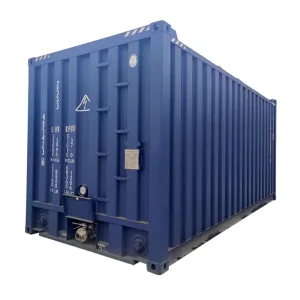
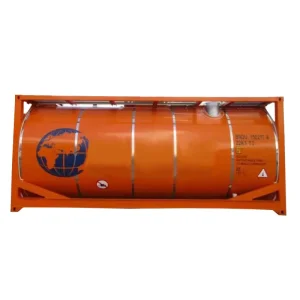
China New 20ft Square Liquid Container
Direct-from-factory quotes on brand-new and OEM customized marine container equipment ready for immediate deep-sea route deployment.
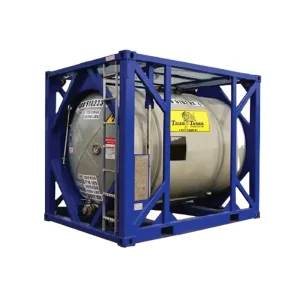
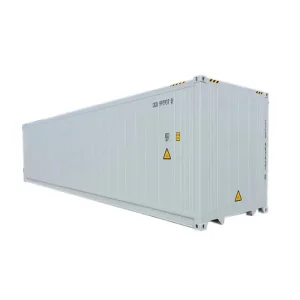
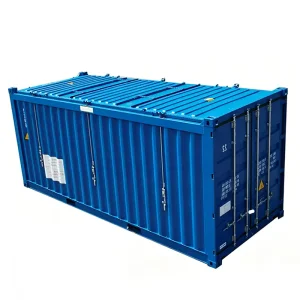
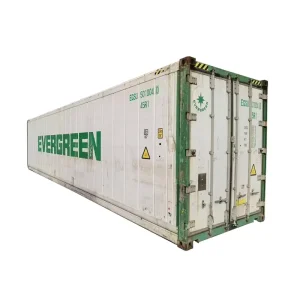
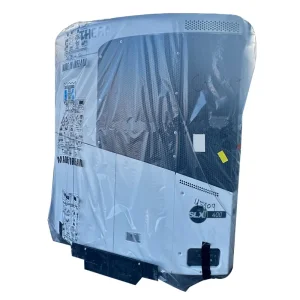
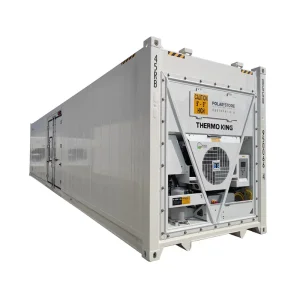
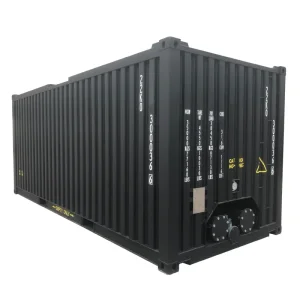
Operating containers in the sea demands specialized anti-corrosion metallurgy, extreme stack-load tolerance under dynamic swell, and thermal integrity for delicate intercontinental cargo.
Containers exposed to oceanic saltwater spray endure accelerated galvanic breakdown. We engineer all primary structural members—including corner castings, side sills, and corrugated roof panels—utilizing high-tensile SPA-H Corten steel that produces a stabilizing passivation layer against rust penetration.
Unlike standard wharf crane cycles, offshore units transferred to and from supply vessels face aggressive rolling, wave impact, and erratic pendulum kinetics. Our offshore product line integrates Charpy impact-tested steel for low-temperature ductile performance down to -40°C.
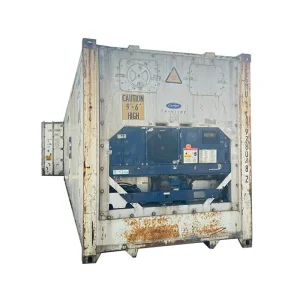
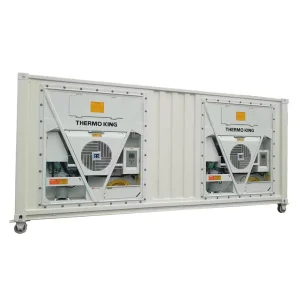
Deep-sea reefer transit requires micro-tolerance climate control across weeks in tropical or polar latitudes. In OEM alliance with Daikin, Thermo King, and Carrier, our thermal boxes implement cyclopentane high-density polyurethane injection for zero-thermal-bridge preservation.
How our modernized Tianjin and Suzhou manufacturing nodes compress lead times, safeguard raw material procurement, and optimize maritime unit economics.
Our Industry 4.0 production corridors incorporate 12,000-watt fiber laser sheet cutters and ABB automated multi-axis welding gantries. This guarantees sub-millimeter chassis squareness, mitigating corner post fatigue under extreme multi-tier vessel stacking loads (up to 9-high container stack limits).
Standard air-spray primers rapidly fail at sea. Our facilities run 7-stage automated degreasing, shot-blasting to SA 2.5 cleanliness, and environmentally conscious cathodic electrodeposition (E-coat) followed by zinc-rich marine polyurethane topcoats resisting 1,500+ hours of ASTM B117 salt fog testing.
Positioned less than 100 km from major oceanic loading terminals at Tianjin and interconnected coastal hubs, CIMIC avoids inland transport bottlenecks. OEM projects move immediately from final assembly to bonded marine terminals, dramatically shrinking FOB/CIF timelines for overseas purchasers.
From turnkey multi-modal fleets to heavy industrial off-grid deployment, we address procurement complexities with documented traceability and full class approval.
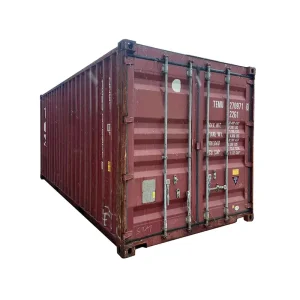
Procurement teams managing commercial dry box replacement or reefer fleet scaling require strict adherence to standard ISO dimensions, high inter-stack payload ratios, and verified CSC plate longevity. CIMIC delivers batch production runs with serialized laser-etched inventory tracking, custom corporate liveries, and pre-fitted GPS/satellite telematics integration for global asset monitoring.
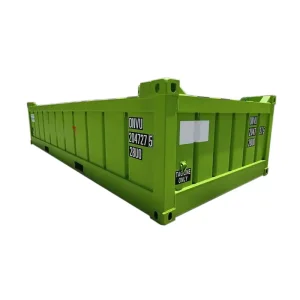
Extreme oceanic drilling operations demand zero structural defect margins. Our customized DNV 2.7-1 modules serve as tool baskets, chemical dosing skid enclosures, half-height ore bulk carriers, and offshore living quarters. Every unit is engineered with high-impact metallurgy, flame-retardant interior cladding, and complete marine classification documentation.
| Container Classification | Structural Metallurgy | Corrosion & Thermal Barrier | Certification Approvals | Typical Ocean Application |
|---|---|---|---|---|
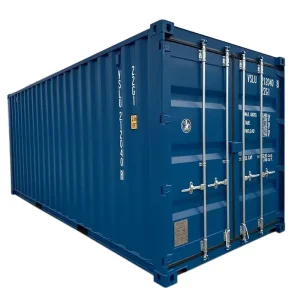
| ISO Dry Cargo (20ft / 40ft HC) | SPA-H Corten Steel (355 MPa) | SA 2.5 Blast + E-Coat + Marine Polyurethane | ISO 1496-1, CSC, BV, ABS | General ocean freight, multimodal rail-sea |
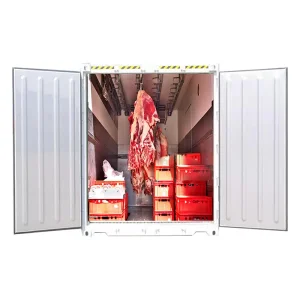
| Active Marine Reefer | SUS304 Inner, Corten Outer, Al T-Floor | Cyclopentane Polyurethane (75-100mm) | ATP, CSC, CE, BV, ClassNK | Perishable produce, vaccines, meat transit |
| DNV Offshore Baskets/Tanks | Structural Steel Grade S355J2 / S355NL | Heavy Zinc Silicate + Epoxy + Polyurethane | DNV GL 2.7-1, EN 12079, ISO 10855 | Rig supply, offshore mineral & chemical logistics |
| Intermodal Square Tank (T11/T14) | 316L Stainless Steel Shell + Corten Frame | Rockwool / Polyurethane with GRP Cladding | ASME VIII, IMDG, UN Portable Tank | Bulk chemicals, bitumen, food-grade liquids |
Navigating international maritime safety mandates while pioneering the next generation of smart, telematics-enabled, low-carbon container hardware.
Every container designed for international marine shipment leaves our facilities equipped with an authorized Stainless Steel CSC (International Convention for Safe Containers) safety approval plate. This documents maximum gross weight (R), allowable stacking tare for 1.8g acceleration, and transverse racking test values approved by Bureau Veritas or alternative IACS class societies.
Beyond new factory construction, CIMIC maintains operational inventory depots across major Chinese maritime hubs (Tianjin, Qingdao, Shanghai, Ningbo, Shenzhen). Overseas buyers requiring cargo-worthy one-trip or secondary used boxes can inspect high-resolution video proof, certified surveys, and enjoy rapid vessel booking release authorizations without red tape.
Our engineering roadmap centers on lightweight hybrid carbon-basalt composite panels that reduce tare weights by up to 18%, increasing ocean cargo payloads while decreasing shipping line fuel burn. Additionally, next-generation reefers feature integrated satellite mesh gateways providing continuous cold-chain audit trails directly to ERP platforms via API.
Everything logistics directors, freight forwarders, and equipment purchasers need to know regarding technical validations, commercial terms, and production logistics.
We exclusively utilize authentic SPA-H Corten steel for all external sheeting and structural frames. Corten forms a dense, self-healing iron oxide patina that arrests deep oxidation. Additionally, our automated finishing lines apply zinc-rich epoxy primers followed by heavy-duty marine polyurethanes rated to withstand aggressive saltwater immersion and atmospheric salt spray.
Yes. Our dedicated marine engineering department handles comprehensive OEM and ODM requirements. Whether you require full side-opening bi-fold doors, insulated thickened bulkheads, roll-up shutter doors for distribution, hanging meat rails, or heavy equipment skids, our team provides 3D SolidWorks drafting and FEA load analysis prior to cutting steel.
All standardized ISO boxes are supplied with valid CSC safety approvals endorsed by Bureau Veritas (BV), ABS, or CCS. For energy sector units, we provide full DNV GL 2.7-1 / EN 12079 manufacturing and material test reports (MTRs), including Charpy V-notch impact validation and magnetic particle weld inspections.
For standard 20ft and 40ft High Cube ISO dry containers in depot stock, release orders are cleared within 24 to 48 hours. Custom OEM production runs typically require an MOQ of 1 to 5 units depending on specification complexity, with typical industrial turnaround times of 15 to 30 calendar days from drawing sign-off.
While aboard containerships, refrigerated boxes connect to the vessel's 460V 3-phase auxiliary reefer plugs. For intermodal overland legs, trailer drayage, or ports lacking active plug banks, we engineer specialized clip-on or underslung mobile diesel gensets (featuring Thermo King or Daikin SLXi systems) ensuring unbroken power delivery.
Active reefers incorporate mechanical compressors, evaporators, and electric motors to dynamically drive interior temperatures to predetermined points (down to -30°C). Passive insulated containers feature vacuum-foamed polyurethane insulation barriers without machinery, making them fail-safe and cost-effective for short-sea food transport where cold buffer retention is sufficient.
Select your required configuration below to receive factory-direct engineering specs, load diagrams, and prompt export quotes.

Connect directly with CIMIC’s marine engineering desks in Tianjin and Suzhou. We provide immediate FOB/CIF pricing, Lloyd’s/BV design certifications, and full structural CAD documentation within 24 hours.