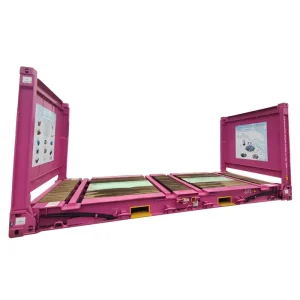
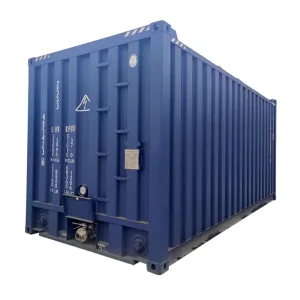
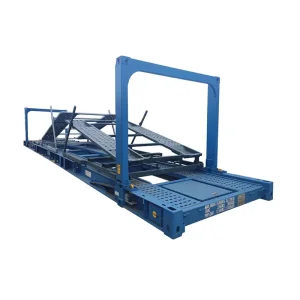
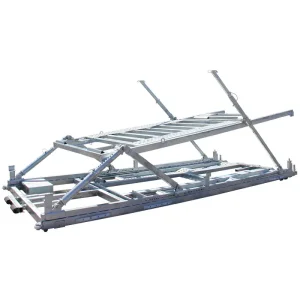
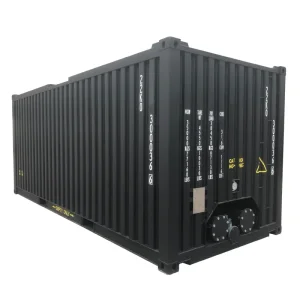
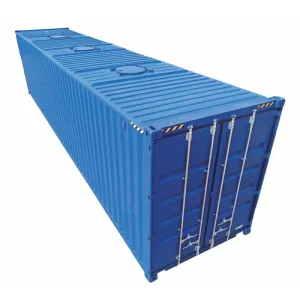
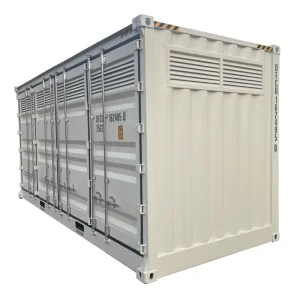
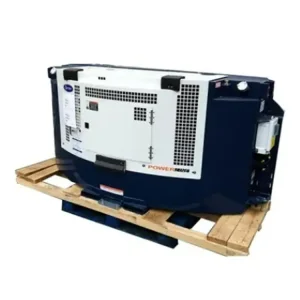
Engineered for structural resilience and intermodal compatibility across the Gulf of Thailand and regional trunk lines. Below are four primary heavy-load, liquid, and vehicle solutions currently deployed in Bangkok depots.
Bangkok functions as the fiscal and logistics nerve center of Mainland Southeast Asia. Anchored by the inland terminal capacity of Bangkok Port (Khlong Toei) along the Chao Phraya River and the deep-water transshipment powerhouse of Laem Chabang Port in Chonburi, the Greater Bangkok Metropolitan Region handles upwards of 10 million TEUs annually.
With the rapid rollout of Thailand’s Eastern Economic Corridor (EEC)—encompassing Chachoengsao, Chonburi, and Rayong—the industrial framework has pivoted decisively from standard break-bulk assembly to high-value electric vehicles (EV), advanced battery manufacturing, specialty agro-chemicals, and cold-chain perishables.
Standard dry shipping containers are fundamentally insufficient for these complex industrial operations. Transporting battery modules demands precise thermal suppression containers; moving bulk liquid polyols and resins for automotive coatings requires specialized ISO tank containers; and shipping oversized electrical transformers across highway flyovers requires high-deflection platform flat racks. Chinese manufacturers offering BV, ISO, and CSC certified special containers bridge this supply deficit directly.
How specialized engineering offsets extreme structural deflection, dynamic liquid sloshing, and high tropical thermal dissipation across international shipping lanes.
Standard steel yields rapidly to saltwater oxidation and heavy fatigue. Our special container chassis leverage cold-rolled atmospheric corrosion-resistant SPA-H Corten steel, exhibiting an ultimate tensile strength of 490 MPa. This ensures structural reliability during rough open-sea transits in the South China Sea.
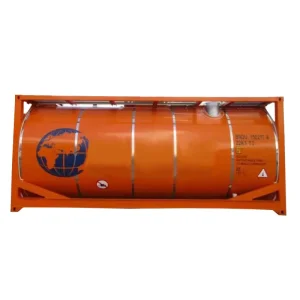
For liquid cargo moving through the bustling highway arterial networks linking Bangkok and Rayong, liquid wave dynamics present dangerous overturning hazards. Our square and cylindrical liquid tanks incorporate multi-chamber hydro-formed baffle plates that suppress longitudinal inertial surge by over 42%.
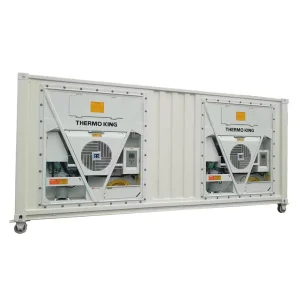
Bangkok encounters sustained ambient temperatures exceeding 38°C with relative humidity spiking past 90%. Our blast reefers and thickened foam containers deploy closed-cell, non-CFC polyurethane foam injected under 150 bar high-pressure foaming, maintaining a thermal conductivity factor as low as 0.032 W/(m·K).
| Equipment Category | Primary ISO/BV Standard | Structural Tare Weight | Max Gross Mass (RTM) | Target Bangkok Cargo Segment |
|---|---|---|---|---|
| 20ft Platform Flat Rack | ISO 1496-5 / CSC Certified | 2,750 kg | 34,000 kg | Mining equipment, transformers, industrial turbines |
| 20ft ISO Square Liquid Tank | ISO 1496-3 / IMDG T11 | 3,620 kg | 36,000 kg | Latex emulsions, industrial lubricants, solvents |
| 20ft Racked Car Carrier | ISO 668 / UIC 592 | 3,100 kg | 24,000 kg | Completely Built-Up (CBU) & KD electric cars |
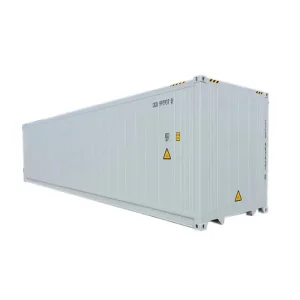
| 40ft High Cube Blast Reefer | ISO 1496-2 / ATP Cert | 4,680 kg | 35,000 kg | Tropical fruits (Durian/Mangosteen), pharmaceuticals |
| 20ft Dangerous Goods (DG) Side-Door | EN 12079 / DNV 2.7-1 | 3,250 kg | 25,000 kg | Class 3 Flammables, Class 9 Lithium energy packs |
Procurement professionals evaluating capital expenditure (CapEx) for special containers must account for raw material indices, international classification validation, and maritime logistics components.
Unlike mass-produced 20ft standard dry boxes whose price mirrors baseline spot steel curves, the pricing structure for customized units is driven by four key cost centers:
*Pricing varies with raw steel fluctuations, batch sizing, and selected options (PTI, telemetry, interior coatings).
From the deep draft berths of Laem Chabang to industrial processing corridors along the Chao Phraya River, our specialized containers power key supply chain initiatives.
Global EV OEMs assembling in Rayong and Chonburi depend on our specialized internal racking systems and dangerous goods side-door units to import battery modules, motors, and high-tensile stamped assemblies without transit damage or thermal runaways.
Bangkok acts as the export gateway for Thailand’s premium agricultural harvest. Durian, longan, and mangosteen shipments utilize our heavy-duty blast reefer containers to pull core pulp temperatures down from 32°C to 4°C within hours, safeguarding texture and shelf life before maritime export.
Transporting volatile aromatic hydrocarbons, polymer resins, and liquid chemicals from the Map Ta Phut petrochemical complex to processing facilities throughout Greater Bangkok relies on our IMDG-certified, insulated, heated ISO tank containers.
Operating specialized intermodal assets within Thailand requires rigorous adherence to both international maritime covenants and domestic Thai safety codes.
Every unit carries an anti-corrosive stainless steel CSC plate approved by BV, ABS, or LR, validating dynamic corner-post vertical loads up to 86,400 kg.
Our structural frames align with the structural codes of the Thai Industrial Standards Institute (TISI) for safe highway transportation on Thai chassis.
For offshore oil and gas developments in the Gulf of Thailand, our offshore containers come equipped with certified four-point lifting sling sets.
The next generation of special containers entering the Bangkok logistics pipeline features integrated AI-telematics hardware:
Browse the complete line of specialized, modified, and certified heavy-duty containers engineered in China for shipment directly to Bangkok and regional ports.
Authoritative technical insights for marine engineers, freight forwarders, and corporate procurement directors importing special containers into Bangkok.
Bangkok Port (Khlong Toei) is situated along the Chao Phraya River and is subject to navigation constraints, limiting vessel drafts to approximately 8.2 meters and vessel lengths to 172 meters (feeder class). While the container structural rating (Max Gross Weight) can support up to 34,000 kg, local road bridges and river barge draughts typically restrict container payloads to 21,500 kg without special ministerial transport permits. For heavy industrial units exceeding this threshold, we recommend discharging directly at Laem Chabang Port, which accommodates post-panamax vessels with drafts up to 16 meters, followed by heavy-haul road or rail delivery to Greater Bangkok.
Under the ASEAN-China Free Trade Agreement (ACFTA), shipping containers classified under HS Code 8609.00 qualify for 0% preferential customs duties entering Thailand (down from standard MFN tariffs of 5-10%). To secure this treatment, our factory coordinates with Chinese customs authorities (MOFCOM/Customs) to issue an official Certificate of Origin Form E. The commercial invoice, packing list, and bill of lading (B/L) must precisely reflect the unit serial numbers recorded on the Form E. Pre-clearance digital verification through Thai Customs’ e-Customs portal ensures instant tariff exemption upon arrival.
Bangkok’s high relative humidity (>90%) combined with daytime solar radiation can heat container exterior steel roofs to over 65°C. To prevent thermal bridging, our blast reefers use deep T-bar aluminum flooring that delivers continuous bottom-air delivery (up to 5,500 m³/hr airflow) and 100-120mm closed-cell polyurethane foam insulation with high cyclopentane blowing agent integrity. Furthermore, we equip our units with Carrier ThinLINE, PrimeLINE, or Daikin scroll compressors featuring digital scroll modulation, allowing deep-freeze pull-downs down to -40°C with minimal energy draw.
Yes. Modern electric vehicles exhibit curb weights 25% to 40% higher than traditional internal combustion vehicles due to dense underfloor lithium-ion battery packs. Our specialized vehicle transport racks and multi-tier car carrier containers utilize high-tensile hot-rolled steel platforms, heavy-duty hydraulic self-locking arms, and certified 5-ton tie-down polyester web lashings. They are structurally validated to carry three full-size electric SUVs within a 40ft High Cube profile while keeping the combined payload safely below structural load thresholds.
Standard production runs for catalog-specified special units (e.g., standard flat racks, open tops, and ISO liquid tanks) require 20 to 30 calendar days from structural drawing sign-off. Bespoke ODM container builds—incorporating automated side-open hydraulic access doors, custom electrical bulkheads, explosion-proof ventilation, or reinforced genset mounts—typically take 35 to 45 days. Ocean transit from Tianjin, Qingdao, or Shanghai ports directly to Bangkok (Khlong Toei) or Laem Chabang adds only 5 to 9 days, depending on carrier feeder schedules.
Our manufacturing facilities operate with resident or on-demand certified marine surveyors from Bureau Veritas (BV), ABS, and DNV. Every export batch undergoes physical witnessed quality controls: wall strength testing, dynamic floor load tests with weighted forklift simulations (up to 7,260 kg per axle under ISO 1496-1), corner casting magnetic particle inspections (MPI) for micro-fractures, and water spray tightness tests at 1 bar pressure. Full digital inspection certificates and structural test reports accompany the shipping documentation package.
Connect directly with our marine engineering and logistics specialists. We deliver full CAD drawings, finite element structural calculations, Form E customs paperwork, and competitive CIF Bangkok quotations within 24 business hours.
