Engineered for high-volume transpacific freight routes, intermodal railway connections, and Puget Sound cold chain operations requiring tight temperature stability and UN/CSC compliance.
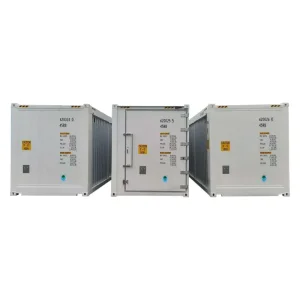
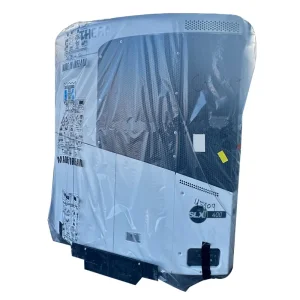
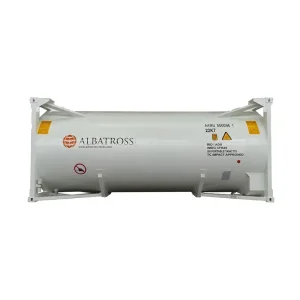
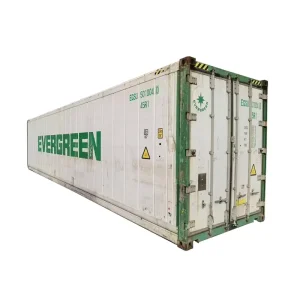
Analyzing the strategic imperatives of the Northwest Seaport Alliance (NWSA), transpacific cold chains, aerospace tooling consolidation, and maritime supply chains across Puget Sound.
The Seattle metropolitan area and the wider Puget Sound basin represent one of the most critical multimodal logistics nodes in North America. Anchored by the Northwest Seaport Alliance (NWSA) connecting the deepwater marine terminals of Seattle and Tacoma, this corridor handles hundreds of billions of dollars in foreign and domestic cargo. Unlike standard dry box distribution centers, the Pacific Northwest requires uniquely sophisticated specialized container solutions. The convergence of commercial deep-sea fishing fleets returning from the Gulf of Alaska, aerospace manufacturing campuses in Snohomish and King counties, clean-tech lithium-ion battery deployments, and agricultural exports from Eastern Washington places heavy demands on container structural performance, thermal insulation, and hazardous material containment.
Maritime operators transiting Puget Sound face brutal environmental conditions: dense saltwater fog, corrosive coastal air, sub-zero winters, and heavy dynamic loading during sea voyages across the North Pacific. Consequently, standard dry freight boxes fall short. Industrial enterprises in Seattle require purpose-engineered special containers—ranging from DNV 2.7-1 certified offshore baskets and modular chemical ISO tanks to solar-assisted refrigerated units with triple-zone partitions. These containers must adhere rigidly to international structural safety codes, including CSC (International Convention for Safe Containers), ISO 1496 series, and Bureau Veritas certification guidelines.
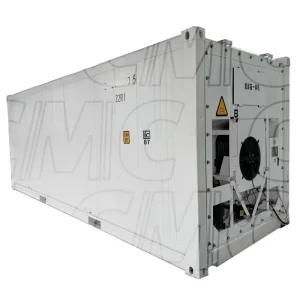
Over 60% of seafood harvested in Alaskan waters is funneled through Puget Sound terminals. Specialized multi-temp reefers and mobile power units preserve wild salmon, cod, and king crab integrity across cold chain transitions.
Surrounding Boeing's facilities in Renton and Everett, aerospace contractors utilize side-door dry cargo containers and customized interior racking systems to haul precision titanium bulkheads, composite fuselages, and avionics safely.
Naval architecture firms and marine salvage contractors operating out of Elliott Bay depend on certified offshore silt baskets and tool containers capable of surviving rough-sea crane transfers and offshore seismic activities.
Modern enterprise procurement of special containers is undergoing a structural paradigm shift. Where buyers once prioritized unit price above all else, global logistics directors and fleet leasing asset managers now optimize for Lifecycle Cost of Ownership (TCO), multi-modal energy efficiency, asset tracking transparency, and environmental compliance. Emerging macroeconomic constraints and stringent carbon mandates have spurred technical innovation across container manufacturing sectors.
With corporate Scope 3 emissions under increasing scrutiny, logistics providers serving Seattle's port terminals are transitioning to low-GWP (Global Warming Potential) refrigerants and variable-speed DC inverter cooling systems. Hybrid solar-powered refrigerated boxes now feature rooftop monocrystalline photovoltaic panels paired with micro-inverters. These units continuously trickle-charge internal battery reserves, significantly reducing generator run-time during intermodal rail idling along BNSF and Union Pacific corridors.
Washington State's aggressive Clean Energy Transformation Act (CETA) has accelerated the demand for customized enclosure containers engineered to house megawatt-scale lithium iron phosphate (LiFePO4) energy storage arrays. These customized ISO enclosures incorporate certified explosion-relief venting panels, localized water mist fire-suppression systems, and precision multi-stage thermal barriers capable of isolating thermal runaway events while maintaining structural rigidity.
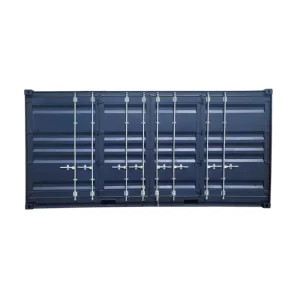
Distribution centers along Interstate 5 are increasingly adopting full-side opening containers. Traditional end-door configurations limit rapid loading of lengthy materials or rapid regional cross-docking. By deploying dual side-access doors featuring high-tensile hinges and multi-locking rods, shippers achieve forklift clearance across the full 20ft or 40ft container length, slashing terminal turnaround times by up to 45%.
How state-of-the-art Chinese container fabrication hubs integrate robotics, Corten-A metallurgical integrity, and digital quality management to support US West Coast port logistics.
Behind the reliability of modern specialized containers is an advanced manufacturing ecosystem centered in China's prime industrial clusters, such as Tianjin and Jiangsu. Our manufacturing operations combine over four decades of metallurgical mastery with Industry 4.0 automated production pipelines, giving Seattle fleet operators unparalleled reliability, predictable lead times, and certified quality standard compliance.
Automated fiber laser arrays profile Corten-A weathering steel plates with sub-millimeter precision. Six-axis robotic gantry welders deliver clean, continuous seam penetrations that prevent micro-fracturing under intense sea swell torsion.
Every unit leaving the assembly yard undergoes pressure decay testing, CSC weight deflection testing, and non-destructive weld examinations (NDT) accredited by international classification bodies: Bureau Veritas (BV), ABS, and DNV.
Located merely 100 kilometers from prime northern deep-water container terminals, our plants achieve smooth "One-Trip" ocean freight consolidation directly to the Port of Seattle, minimizing handling friction and storage overhead.
Through our comprehensive supply chain architecture, structural components, high-density closed-cell polyurethane foam insulation, and world-class machinery components (including Thermo King, Carrier, and Daikin) are bulk-procured at advantageous cost curves. This creates an unmatched value proposition for fleet owners in Washington State: top-tier metallurgical durability at wholesale factory direct pricing, backed by complete design-for-manufacture (DFM) engineering documentation.
From dockside cold storage in Terminal 91 to rugged hydro operations near Grand Coulee, specialized container engineering solves tough logistical problems across Washington State.
Processing facilities in Ballard and Elliott Bay demand rapid plug-and-play refrigeration. By utilizing 40ft High Cube containers equipped with Thermo King Magnum Plus or Carrier PrimeLINE units, operators freeze deep-sea catches to -35°C in hours, preserving export-grade sashimi quality.
Washington’s apple, cherry, and vineyard exports rely on controlled-atmosphere insulated containers. Precision ventilation dampers and active air scrubbers preserve sugar profiles during multi-week transpacific transit to East Asian consumer markets.
Rugged off-grid utility sites utilize custom prefab container pods as power control centers. Built with fireproof rockwool insulation, weather-resistant louvers, and reinforced flooring, these units support vital telecommunications and micro-hydropower generation.
Our engineering team delivers full CAD/BIM blueprints, Finite Element Analysis (FEA), and tailored class-society approvals for custom ISO shipping boxes, reefers, and tanks.
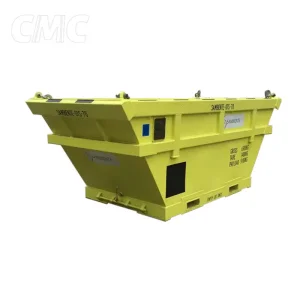
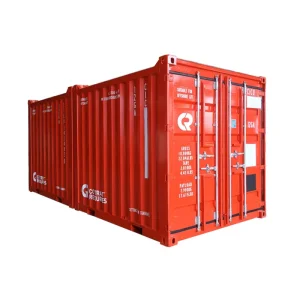
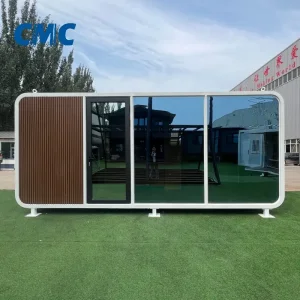
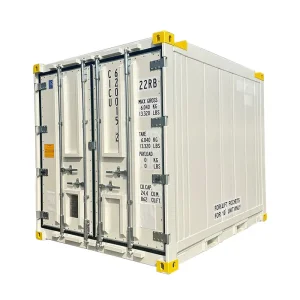
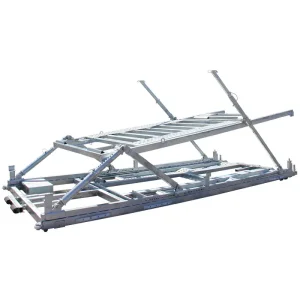
Send Inquiry NowFull suite of certified offshore cargo baskets, modular shelter units, liquid ISO tanks, and heavy equipment transport racks engineered for global distribution and Seattle transshipment.
Expert answers addressing the regulatory certifications, structural calculations, and logistical specifics of procuring special containers for Seattle and Pacific Northwest operations.
Whether you need certified DNV offshore units for North Pacific marine operations, cold-chain reefers for Alaska fisheries, or ISO tanks for liquid distribution through Seattle terminals, our engineers are ready to assist.
