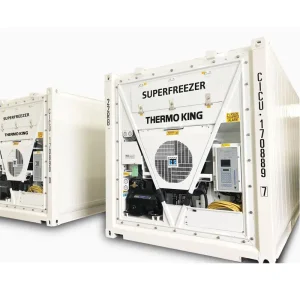
Designed for maximum thermodynamic draw-down speeds, rugged offshore survivability, and international intermodal compliance.
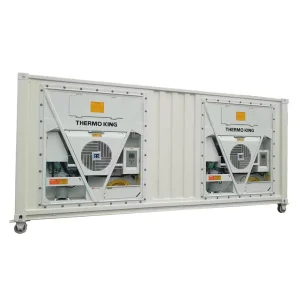
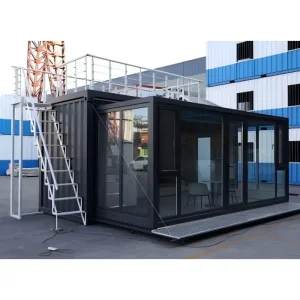
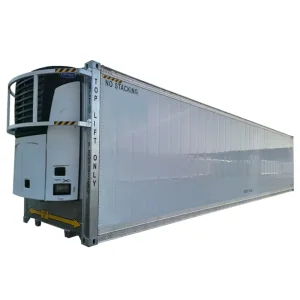
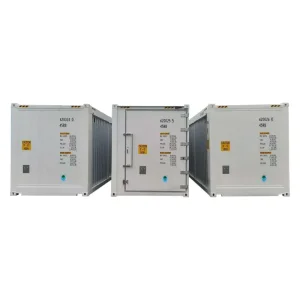
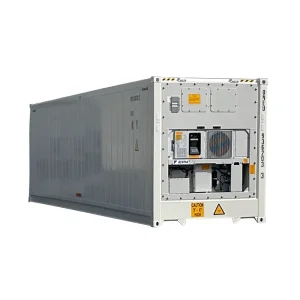
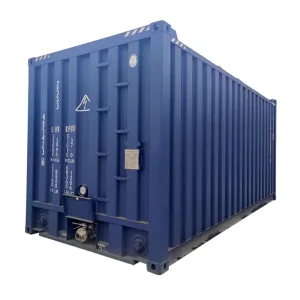
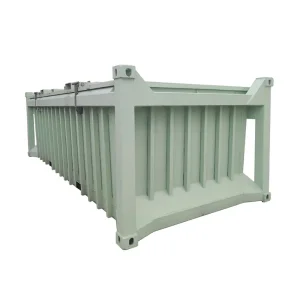
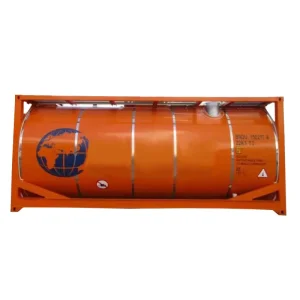
Understanding the thermodynamic differentiation between static holding reefers and forced-convection blast freezing containers in modern perishables, mariculture, and biologics supply chains.
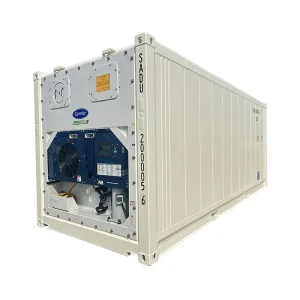
Global cold-chain logistics is encountering unprecedented pressure driven by shifting consumer preferences for fresh-frozen premium proteins (such as sashimi-grade Bluefin tuna, Norwegian salmon, and king crab), strict pharmacological temperature thresholds for active pharmaceutical ingredients (APIs) and viral vectors, and the urgent demand to curtail post-harvest agrarian loss. Within this landscape, standard intermodal refrigerated containers (conventionally operating between -25°C and +25°C) prove entirely inadequate. Standard reefers are holding freezers, engineered exclusively to maintain pre-conditioned core temperatures against ambient solar load; they possess neither the evaporator heat-exchange capacity nor the high-static pressure centrifugal airflow necessary to drive rapid phase transitions from ambient latent heat into a crystallized, biologically stable state.
As an internationally credentialed manufacturer founded in 1983 with deep manufacturing reserves across Tianjin and Suzhou, CIMIC Container leads the engineering evolution of the Blast Reefer Container (Quick-Freezing Reefer). These specialized units integrate multi-stage compound compression systems, cascading refrigeration circuits, or dual-scroll ultra-inverter technology designed to plunge cargo core temperatures across the critical zone of maximum ice crystal formation (0°C to -5°C) within minutes or a few hours, rather than days. By inhibiting large intercellular ice crystal accretion, blast reefer technology preserves the cellular wall integrity of cellular tissues, eradicates cellular drip loss upon thawing, and secures unparalleled biochemical freshness.
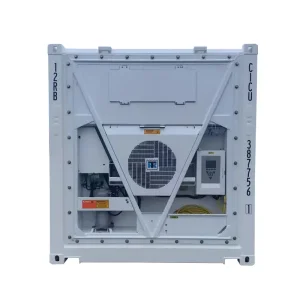
Equipped with Carrier X4, Daikin Zestia, or Thermo King Magnum Plus ultra-low architectures. Features liquid injection sub-cooling, economizer vapor circuits, and low-GWP refrigerants (R-452A, R-404A, R-513A, with drop-in readiness for trans-critical R-744 CO2) delivering seamless evaporating temps down to -70°C.
Eliminates microclimate hot spots and short-circuit airflow. Heavy-duty aluminum T-bar extrusion flooring with reinforced 75mm floor depth acts as a pressurized plenum, driving high-velocity vertical forced convection uniformly across all pallet stations.
Constructed with SPA-H high-yield Corten-A outer skin, food-grade 304/316 stainless interior liner, and robotic high-pressure injected 120mm cyclopentane polyurethane foam (density 42 kg/m³) resulting in exceptional overall heat transfer coefficients (U-factor < 0.28 W/m²·K).
Detailed technical trade-off analysis comparing thermal capacities, operational flexibility, footprint, and unit Capex/Opex across global logistics modalities.
| Performance / Engineering Attribute | Standard ISO Reefer (20ft/40ft HC) | Industrial Blast Reefer (CIMIC) | Liquid Nitrogen (LN2) Batch Tunnel |
|---|---|---|---|
| Operating Temperature Envelope | -25°C to +25°C (±0.5°C) | -40°C down to -70°C | -60°C down to -120°C |
| Pull-Down Speed (Core Phase Change) | Slow (18 - 48 Hours) | Ultra-Rapid (1.5 - 6 Hours) | Near-Instantaneous (10 - 45 Mins) |
| Compressor Mechanical Structure | Single-stage Scroll or Reciprocating | Dual-Stage Compound / Multi-Scroll | None (Consumable Cryogen Expansion) |
| Air Circulation & Static Pressure | Standard Plenum (~2,500 m³/h) | High CFM Aerodynamic Plenum (>6,500 m³/h) | Internal Turbulence Fans Only |
| Mobility & Intermodal Interoperability | Standard ISO / Sea / Rail / Truck | Fully Intermodal (CSC & BV Certified) | Stationary Factory Installation Only |
| Operating Expenditure (OPEX per Ton) | Low (Electricity / Marine Mains) | Economical (Optimized Electric / GenSet) | Extremely High (Continuous Liquid N2 Sourcing) |
| Biological Preservation Quality (Cell Wall) | Medium (Large Crystal Formation) | Superior (Micro-Crystal Retention) | Maximum (Vitrification Capable) |
| Cold Storage Room Conversion Mode | Static Holding Only | Dual: In-Field Freeze + Long Term Hold | Cannot Be Used for Storage |
Solving mission-critical supply challenges across specialized global industries, from open-ocean mariculture to polar exploration and municipal cold reserves.
In coastal ports across North Africa, Norway, and Latin America, pelagic fishing fleets deploy CIMIC blast reefer containers directly dockside or onto factory motherships. Tuna, squid, and salmon can be gutted, washed, and deep-blast frozen to -60°C within 120 minutes of catch, immediately stabilizing the metmyoglobin state for Grade-A sashimi valuation.
Global pharmaceutical distribution hubs mandate continuous validation between -40°C and -80°C for mRNA lipid nanoparticles, human plasma reserves, and bio-reagents. Our ultra-deep blast containers function as rapidly deployable, cGMP-compliant backup cold storage with multi-point calibrated thermistor arrays and cloud IoT alarms.
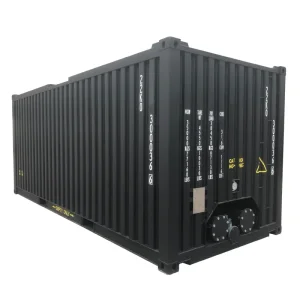
Extreme offshore environments require DNV 2.7-1 certified blast freezer and dry units engineered with heavy-duty padeyes, certified lifting slings, and anti-corrosive ISO 12944 C5-M marine epoxy paint systems. These units withstand continuous salt spray, high G-force crane transfers, and sub-zero Arctic wave slams.
Regional fruit, berry, and mushroom harvests suffer 25-40% spoilage when ambient temperatures overload local packhouses. Deploying mobile blast reefers at the farm gate allows growers to quickly blast freeze freshly picked berries or premium vegetables, creating an instant hedge against volatile harvest-season pricing.
Stringent quality controls governed by BV, DNV, CCS, ABS, and ISO 1496-2 frameworks guarantee complete structural safety during severe vessel stacking, heavy rail shunting, and offshore crane transfers.
Every blast reefer manufactured by CIMIC Container undergoes exhaustive non-destructive testing (NDT), dimensional verification, and thermal vacuum decay testing at our factory hubs located less than 100 km from Tianjin seaport. Our structural shells use SPA-H atmospheric corrosion-resistant Corten steel, configured with heavy-wall box section corner posts capable of supporting up to 9-high fully laden container stacking (equivalent to 216,000 kg gross stack weight) under ISO 1496/1 test procedures.
Internal liners are fabricated from food-grade AISI 304 or 316 austenitic stainless steel, finished with a seamless 2B or mirror-buffed passivated surface to comply with USDA, FDA, and EU hygiene directives. All joints are continuous-seam TIG welded to eliminate microbial harborage zones, facilitating high-pressure chemical washdowns. Thermal isolation between outer steel structural members and inner liners is maintained via high-density PVC thermal breaks, ensuring an unbroken thermal barrier that prevents condensation, external frost formation, and parasitic conductive heat loss.
Certified with stainless steel CSC safety plates for full intermodal status across international shipping lines, customs TIR systems, and rail corridors worldwide.
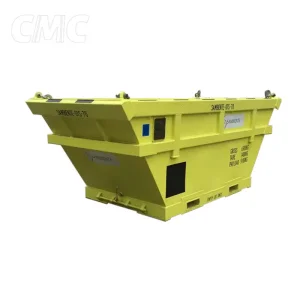
Offshore blast freezer and silt basket containers are certified to withstand dynamic offshore lift impacts down to -40°C design temperatures with pre-slung rigging sets.
Thermal performance complies with ATP Class FRC (reinforced insulation with mechanical cooling) for rapid perishables transport, satisfying strict food safety standards.
Pioneering advancements across low-GWP refrigerants, AI-driven thermodynamic modulating controllers, IoT sensor arrays, and solar-hybrid auxiliary microgrids.
Adoption of ultra-high pressure transcritical CO2 blast circuits featuring microchannel gas coolers. Eliminates fluorinated greenhouse gases (F-gases) and brings GWP down to 1.0, ensuring regulatory compliance with evolving EU F-Gas mandates.
Machine learning controllers monitor internal humidity, coil frosting thickness, and product load profiles via computer vision. Defrost cycles run on-demand rather than on static timers, cutting auxiliary energy draw by up to 28%.
Integration of silica nanogel vacuum insulation cores inside sidewall and ceiling panels. Reduces wall thickness by 40% while preserving thermal U-values, boosting internal volumetric cube capacity for lightweight high-value pharmaceuticals.
Ultra-thin flexible photovoltaic roofing laminated over container corrugations, coupled with integrated sodium-ion or LFP auxiliary battery banks. Delivers 6 to 12 hours of off-grid active blast and holding time without generator assistance.
Detailed technical answers addressing operational mechanics, electrical specifications, defrost strategies, and custom engineering considerations.
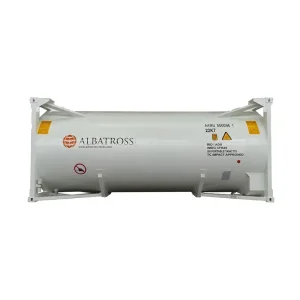
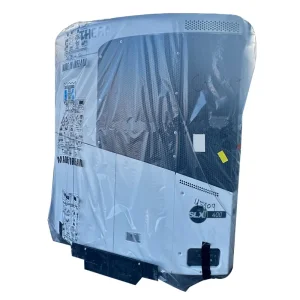
Expanding industrial logistics capability: certified offshore reefers, cryogenic gas tanks, bitutainers, platform flats, and mobile trailer refrigeration machinery.