

Direct manufacturer-engineered containers, pressure vessels, and cold-chain hardware fabricated for international maritime transport and project deployments.


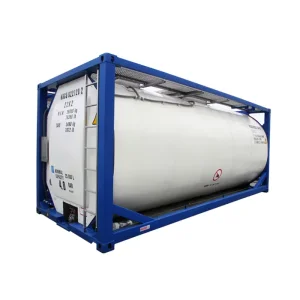
Understanding why 10-foot containers possess unique pricing architectures relative to standard 20ft and 40ft units across global manufacturing lines.
Standard container chassis, cellular ship guides, and spreader cranes do not natively accommodate isolated 10ft dimensions. Consequently, manufacturers build 10ft units as "Duo-Con" (twin-paired) assemblies connected by heavy-duty ISO-compatible bridge fittings and sacrificial joining pins. This dual manufacturing requirement increases structural jig setup time, welding meterage, and coupling hardware overhead.
A 10ft dry container requires approximately 65% to 70% of the raw Corten steel volume needed for a 20ft container, despite providing only 50% of the volume. Structural corners, door assemblies, locking bars, and header beams require the same standardized heavy-gauge cast steel corner castings (ISO 1161) regardless of length, resulting in a higher cost-per-cubic-meter baseline.
Every 10ft unit intended for maritime intermodal deployment requires independent classification society certification (Bureau Veritas, Lloyd's Register, ABS, or CCS). Type-testing involves longitudinal racking tests, vertical stacking tests up to 86,400 kg per corner post, and floor strength validations. Amortizing these strict non-recurring compliance costs across smaller production batches elevates per-unit cost.
| Container Classification | Dimensions (L × W × H) | Tare Weight (Approx.) | Max Gross Mass (MGM) | Indicative Ex-Factory Price (FOB Tianjin) | Compliance Standards |
|---|---|---|---|---|---|
| 10ft Standard Dry (Duo-Con Pair) | 2,991 × 2,438 × 2,591 mm | 1,250 kg (single unit) | 10,160 kg | $2,450 – $3,100 / single | ISO 1496-1 / CSC |
| 10ft High Cube Dry (9'6" Height) | 2,991 × 2,438 × 2,896 mm | 1,380 kg (single unit) | 10,160 kg | $2,750 – $3,450 / single | ISO 1496-1 / TIR |
| 10ft Offshore DNV Mini-Container | 2,991 × 2,438 × 2,591 mm | 2,150 kg (reinforced) | 10,000 kg (offshore rated) | $4,800 – $6,500 / single | DNV 2.7-1 / EN 12079 |
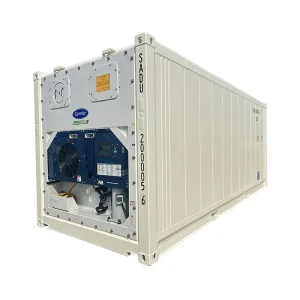
| 10ft Deep-Freeze Compact Reefer | 2,991 × 2,438 × 2,591 mm | 2,200 kg (inc. machinery) | 12,000 kg | $11,500 – $14,800 / unit | BV / ATP / ISO Reefer |
| 10ft Hazardous Waste & Bunded Unit | 2,991 × 2,438 × 2,591 mm | 1,650 kg (sump floor) | 10,000 kg | $3,800 – $4,900 / single | ADR / RID / IMO IMDG |
How northern China manufacturing hubs utilize deep-water ports and specialized alloy sourcing to dominate global 10ft container exports.
Operating out of Tianjin and the Yangtze River Delta industrial belts places fabrication facilities within approximately 100 kilometers of the world's most active container transshipment ports. This geographical proximity eliminates costly inland trucking charges and simplifies direct vessel positioning for outbound intermodal bulk containers and paired Duo-Cons.
Chinese manufacturers benefit from a consolidated upstream supply chain for JIS G3125 SPA-H atmospheric corrosion-resistant steel. Localized access to cold-rolled coil processing, automated profile punching, zinc-phosphate surface pretreatment, and computerized plasma profiling keeps per-ton transformation margins substantially more competitive than Western regional builders.
Rapid urban densification across Western Europe, North America, and Australia has accelerated demand for 10-foot containers. Unlike cumbersome 40-foot trailers, 10ft units satisfy strict spatial footprint limitations for metropolitan construction laydowns, decentralized self-storage developments, pop-up commercial architecture, and localized last-mile logistics depots.
A look at structural members, metallurgical alloys, and anti-corrosive multi-tier coating systems that withstand marine C5-M exposure.
All load-bearing members—including 4.0mm corner posts, 3.0mm cross-members, and 1.6mm corrugated side-panels—are pressed from JIS G3125 SPA-H weathering steel, forming a dense rust-inhibiting patina.
Automated shot-blasting to ISO Sa 2.5 standards followed immediately by a zinc-rich epoxy primer (30μm), an intermediate epoxy barrier coat (40μm), and an acrylic or polyurethane topcoat (50μm).
Equipped with 28mm certified Apitong/Keruing marine-grade hardwood plywood treated in compliance with Australian Department of Agriculture (AQIS) standards, or 4.5mm checker steel plate.
Features forged steel locking gear, hot-dip galvanized lock rods, anti-theft lock boxes, and UV-stabilized EPDM perimeter gaskets to guarantee weathertightness (WWT) against wind-driven precipitation.
Ensuring legal deployment across international shipping lanes, offshore oil fields, and domestic building-code jurisdictions.
Units shipped via commercial ocean carriers must hold a valid International Convention for Safe Containers (CSC) plate verified by classification societies such as BV or CCS. Our 10ft units undergo full-rack testing, verifying end-wall strength, side-wall deflection, floor load-bearing capacity, and corner casting shear limits before the CSC data plate is stamped and riveted.
For dynamic offshore operating environments, standard ISO shipping containers lack the impact tolerance required for high-seas vessel-to-rig crane transfers. We engineer bespoke 10ft offshore containers using heavy tubular structural frames, certified lifting pad-eyes, low-temperature impact-tested steel (down to -20°C / -40°C), and integrated 4-leg wire rope lifting slings.
When customized for modular architectural projects, electrical control houses (E-Houses), or mobile battery storage systems, structural engineering documentation must comply with localized building mandates such as AS/NZS 1170 (Australia), IBC (North America), or Eurocode 3 (Europe). Our in-house engineering office provides certified CAD and FEA calculations on demand.
Explore how global enterprise clients deploy 10-foot containers across high-stakes industrial, energetic, and urban infrastructure landscapes.
With the rapid rise of decentralized renewable grids, 10ft High Cube containers serve as the industry standard footprint for modular 1MWh–2MWh lithium-ion Battery Energy Storage Systems (BESS). Integrated with thermal management cooling ducts, explosion relief panels, and NFPA 855-compliant fire suppression piping.
DNV 2.7-1 certified 10-foot units operate as workshops, wireline logging cabs, and hazardous chemical stores on offshore production platforms. The compact footprint allows efficient deployment on crowded vessel decks where deck space commands substantial daily operational rates.
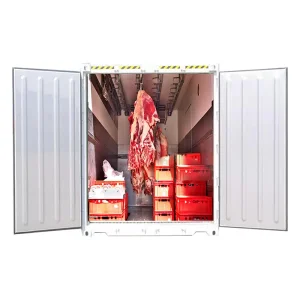
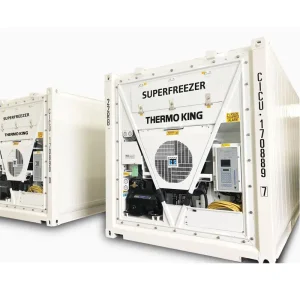
Fitted with Carrier, Daikin, or Thermo King refrigeration machinery, 10ft cold-storage boxes provide decentralized temperature control (-30°C to +30°C) for island resorts, pharmaceutical distributors, portside fisheries, and catering logistics hubs without demanding the electrical infrastructure of a 40ft reefer.
E-commerce distribution networks across dense metropolitan centers deploy 10ft side-opening and roller-shutter containers as secure micro-hubs. Positioned in commercial parking facilities or tight alleyways, they allow cargo bike and small electric van route dispatches.
How next-generation materials science, autonomous robotic fabrication, and satellite IoT monitoring are reshaping the container manufacturing sector.
In alignment with global Scope 3 decarbonization targets, our manufacturing facilities are progressively integrating electric arc furnace (EAF) Corten steels smelted using renewable power. Combined with low-VOC, waterborne polyurethane finishes, this transition cuts the embedded carbon footprint of a 10ft container by up to 38% compared to traditional blast-furnace fabrication.
Modern 10ft logistics assets can now be specified with flush-mounted, solar-harvesting IoT gateway transceivers. These transmit real-time telematics—including GPS geofencing, 3-axis kinetic shock levels, internal relative humidity, atmospheric pressure, and optical door-tamper status—via 5G NB-IoT and low-earth-orbit (LEO) satellite links directly into your ERP.
By transitioning to 6-axis robotic welding gantries for corrugation panel joining and end-frame assembly, structural dimensional variances are reduced to within ±1.5mm across production runs. This dimensional precision ensures seamless integration when stacking multi-tier modular container buildings or engineering custom equipment enclosures.
Definitive technical and commercial answers directly from our container design and export engineering staff.
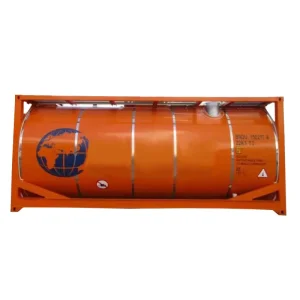
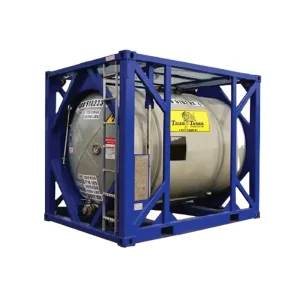
From offshore DNV-certified chemical tanks to high-cube reefer gensets and secondary fleet inventory ready for export deployment.
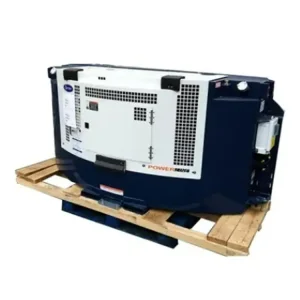
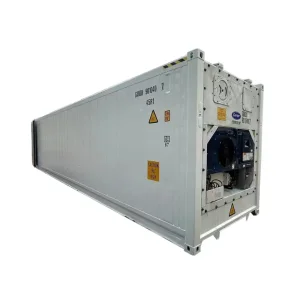
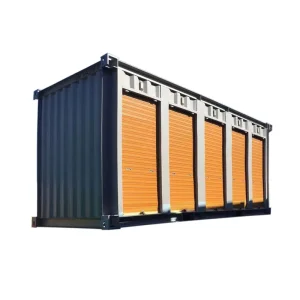
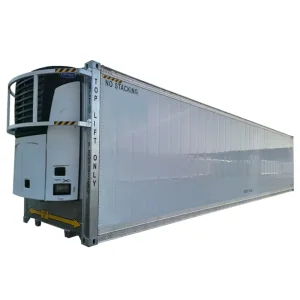
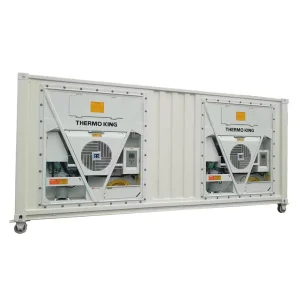
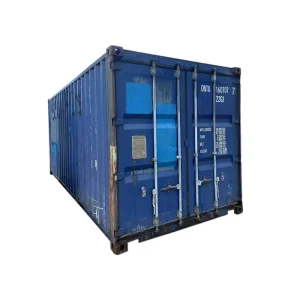
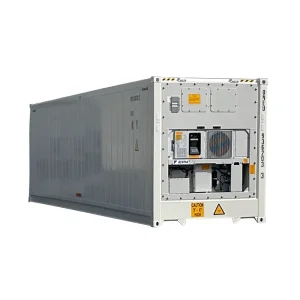
Consult with our marine structural engineers and international trade specialists to configure your 10ft container order. Whether you need standard Duo-Con dry boxes, DNV 2.7-1 offshore units, or customized modular housings, our Tianjin production line delivers certified precision to global ports.