Pre-engineered and customizable intermodal freight containers manufactured under ISO 9001 and Bureau Veritas (BV) supervision, ready for worldwide seaport dispatch.

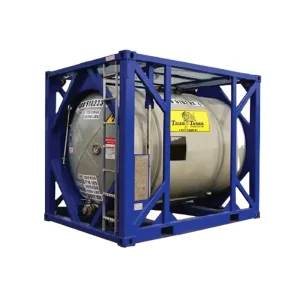
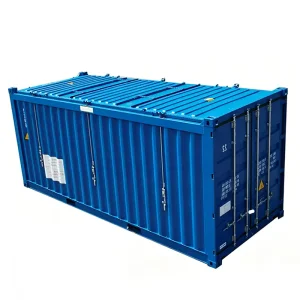
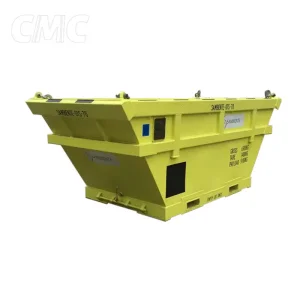
An engineering analysis of top-loading structural dynamics, heavy machinery logistics, and intermodal transport economics.
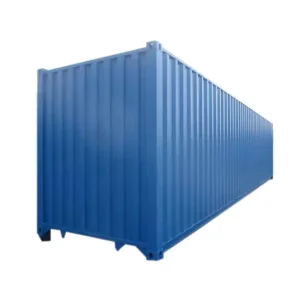
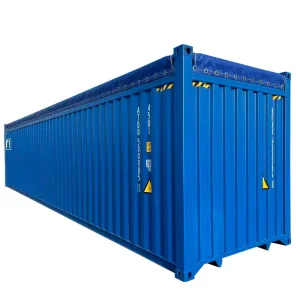
In modern intermodal freight operations, regular end-loading dry cargo shipping containers cannot accommodate heavy industrial equipment, tall steel coils, glass plates, large construction plant engines, and raw mineral ores. The international container supply chain relies heavily on specialized Open Shipping Containers. These include Soft Open-Top Containers (with heavy-duty PVC TIR-approved tarpaulins), Hard Open-Top Containers (removable rigid steel roof panels), Side Open Door Containers, and Offshore Half-Height Open Containers. When procurement officers search to buy open shipping containers, their decision balances payload margins, ISO corner casting deflection limits, roof-bow structural integrity, and long-term marine corrosion protection.
The global energy transition, coupled with cross-continental infrastructure projects like the Belt and Road Initiative, has caused a spike in demand for oversized, crane-loadable containers. Open-top configurations eliminate vertical crane hoisting limits, allowing overhead gantry cranes to drop heavy cargo directly onto reinforced internal lashing rings. Our Tianjin and Suzhou industrial manufacturing bases build open shipping container designs that meet high load demands, providing structural stability across rough sea crossings and multi-thousand-kilometer rail routes.
Equipped with a detachable rigid Corten steel roof panel hoisted via dedicated corner lifting points. Provides security equivalent to standard dry boxes while maintaining vertical loading flexibility for high-value industrial machinery.
Fitted with movable roof bows, a swing-out detachable rear header, and flame-retardant 650g/m² waterproof PVC tarpaulins secured by TIR sealing cords. Designed for project breakbulk and over-height cargo.
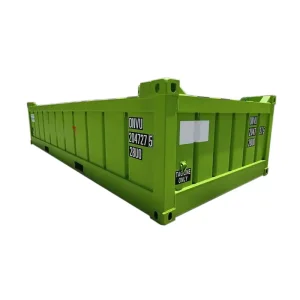
Engineered for deep-sea oilfield operations, dense subsea pipe transfers, and silt extraction. Certified under DNV 2.7-1 and EN 12079 to withstand harsh North Sea dynamic impact environments.
How our metallurgical supply chain, automated robotic welding, and coastal proximity reduce total procurement expenditure.
Purchasing open containers directly from Chinese manufacturing facilities provides significant commercial advantages. Since 1983, CIMIC Group (Tianjin Cimic Imp&Exp Co., Ltd.) has maintained continuous improvements across our manufacturing infrastructure in Tianjin and Suzhou. Building specialized open-top, flat-rack, side-door, and offshore containers requires tighter dimensional tolerances than standard dry boxes because the removal of a rigid roof changes structural stress distribution across the top side rails.
To eliminate chassis deformation under maximum gross weights (up to 34,000 kg for 20ft and 40ft units), our plants use dedicated steel processing lines. We process atmospheric corrosion-resistant SPA-H Corten steel, applying automated shot blasting to SA 2.5 standards followed by zinc-rich primers. Automated robotic welding arcs assemble structural corner posts, bottom side rails, and high-tensile hot-rolled steel floor crossmembers. This industrial approach prevents structural racking and frame twisting during open-ocean passages.
CNC laser and plasma processing keeps tolerances within ±0.5mm across swing-out header hinges, corner castings, and tarpaulin hook assemblies.
High yield strength (≥345 MPa) atmospheric corrosion-resistant steel produces a stable protective patina, preventing marine salt-air degradation.
Located within 100 km of Tianjin Port, our plant minimizes inland drayage costs, accelerates vessel bookings, and maintains steady dispatch times.
Direct access to raw coil stock and high-capacity assembly lines allows delivery of fleet orders in 20 to 35 calendar days.
Indicative FOB Port of Tianjin / Qingdao cost models, dimensional specifications, and payload ratings for global procurement teams.
Container pricelists fluctuate based on Hot Rolled Coil (HRC) Corten steel spot prices, fluorocarbon/waterborne coating material costs, and currency valuations. The technical pricelist below details indicative factory FOB rates for standard build configurations. All containers come equipped with custom color finishing (RAL palette), ISO standard 28mm marine-grade hardwood plywood or optional steel floor plating, zinc-plated door locking hardware, and certified CSC safety plates.
| Model / Size | Structural Type | External Dimensions (L × W × H) | Max Gross Mass | Floor Material | Standard Certifications | FOB China Unit Price (USD) |
|---|---|---|---|---|---|---|
| 20ft Soft Open-Top | Tarpaulin Roof + Swing Header | 6,058 × 2,438 × 2,591 mm | 30,480 kg | 28mm Marine Plywood | ISO / CSC / BV | $2,850 - $3,450 |
| 20ft Hard Open-Top | Rigid Steel Removable Roof | 6,058 × 2,438 × 2,591 mm | 32,500 kg | 28mm Marine Plywood / Steel | ISO / CSC / ABS | $3,350 - $4,100 |
| 40ft High Cube Soft Open | Tarpaulin Roof + Movable Bows | 12,192 × 2,438 × 2,896 mm | 32,500 kg | 28mm Marine Plywood | ISO / CSC / BV | $4,750 - $5,650 |
| 40ft High Cube Hard Open | Hoisted Removable Steel Roof | 12,192 × 2,438 × 2,896 mm | 34,000 kg | Checkered Steel Plate (4.5mm) | ISO / CSC / CCS | $5,400 - $6,450 |
| 20ft Full Side-Open Door | Multi-Fold Side Bi-Folding Doors | 6,058 × 2,438 × 2,591 mm | 30,480 kg | 28mm Hardwood Keruing | ISO / CSC / LR | $3,950 - $4,800 |
| 10ft DNV Offshore Half-Height | Open Top / Cargo Basket | 2,991 × 2,438 × 1,280 mm | 10,000 kg | Integral Chequered Steel | DNV 2.7-1 / EN 12079 | $3,200 - $4,200 |
| 20ft DNV Offshore Half-Height | Open Top Heavy Mining/Pipe | 6,058 × 2,438 × 1,280 mm | 18,000 kg | Reinforced Steel Grating/Plate | DNV 2.7-1 / BV | $4,600 - $5,900 |
*Note: The prices listed above serve as industrial engineering estimates for bulk volume procurements (MOQ ≥ 2-4 units). Pricing changes depending on raw steel market shifts, customized paint coatings, non-standard lashing eyes, and certified heavy-lift sling sets. Contact CIMIC sales for firm contractual quotations.
How engineering contractors, project forwarders, and offshore energy operators deploy open containers for specialized operations.
Industrial turbines, Caterpillar excavators, drill rigs, and manufacturing presses cannot clear standard end doors. Open-top configurations allow overhead factory cranes to lower equipment directly onto internal crossmembers, with perimeter lashing points securing items up to 4,000 kgf per eye.
Half-height open-top containers are purpose-built for high-density commodities like copper concentrate, lithium ores, and raw scrap. Their low center of gravity prevents vehicle rollover on mine access roads, while rigid tipping brackets speed up rotary car-dumper unloading at terminal ports.
DNV 2.7-1 certified open containers, silt baskets, and offshore mud tubs carry drill collars, riser casing, and offshore umbilical assemblies. Designed to handle severe snatch loadings and sea conditions up to Sea State 6 during crane transfers from supply ships to platforms.
Next-generation metallurgical developments, automated tarp closures, and intelligent condition monitoring.
The manufacturing sector for open shipping containers is shifting from basic welded boxes toward specialized, automated equipment. The following developments reflect changes in global buyer specifications:
Manual tarpaulin handling introduces fall risks for dockworkers. Next-gen soft open-tops feature pneumatic and mechanical self-sheeting roof systems, allowing ground-level operators to cover and unseal open payloads within 90 seconds.
Compliant with global VOC reduction mandates, factory coating lines utilize ultra-durable two-pack waterborne epoxy systems. These reduce carbon emissions during manufacturing while maintaining 1,500-hour salt-fog resistance ratings.
Solar-powered satellite and 5G sensor nodes are installed directly inside the top side rail channels. These units transmit real-time telemetry on heavy machinery acceleration spikes (G-force), ambient humidity, and unauthorized tarp tampering.
Factory certified equipment manufactured to ISO standards, BV maritime compliance, and DNV offshore lifting certifications.
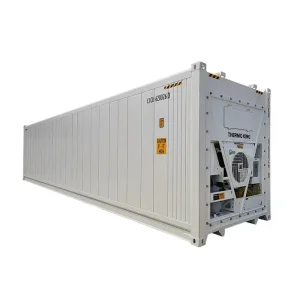

How our inspection processes confirm structural compliance prior to vessel departure.
Purchasing specialized open shipping containers across international borders requires rigorous quality control checkpoints. Missing a defective structural member or failing a CSC plate inspection can lead to cargo delays and refusal of carriage by container shipping lines. CIMIC Group applies systematic quality control procedures across every production batch:
Every coil of SPA-H Corten steel includes raw material test certificates (MTR) verifying chemical composition (Chromium, Nickel, Copper alloy contents) and yield strengths exceeding 345 MPa.
Corner post-to-casting welds undergo non-destructive ultrasonic and magnetic particle testing. Hardwood and steel floors are tested against ISO 1496-1 forklift axle load limits of 7,260 kg (16,000 lbs).
Open-top tarpaulins, rubber perimeter gaskets, and hard-top closures undergo high-pressure water spray tests at 100 kPa (1 bar) to verify weather-tight sealing under marine storm conditions.
Technical and logistical insights from our container engineering department.
A soft open-top container uses removable curved steel roof bows covered by a heavy-duty, waterproof PVC tarpaulin secured with TIR wire cords. This setup accommodates slightly over-height cargo. A hard open-top container features a rigid, detachable Corten steel roof panel hoisted via standard forklift pockets or corner lifting hooks. Hard-tops provide enhanced anti-theft security and weather protection while maintaining overhead crane loading capabilities.
Both 20ft and 40ft open-top shipping containers feature a swing-out or fully detachable rear door header. During overhead gantry crane operations, the rear header swings open horizontally or unpins completely. This design allows forklift trucks and cranes to roll heavy machinery directly through the door aperture without height clearance restrictions, preventing impact damage to the upper frame.
Open containers deployed in offshore drilling, such as half-height baskets and silt tubs, must comply with DNV 2.7-1 (Standard for Certification of Offshore Containers) and international standard EN 12079. Unlike standard ISO CSC maritime boxes, DNV certified units undergo drop tests, multi-point dynamic sling pull tests, and Charpy impact toughness evaluations at -20°C to survive deep-sea crane snatch lifts.
Yes. When manufactured in compliance with ISO 1496-1, open-top containers feature high-strength corner posts designed to support standard 9-high container vessel stacking tiers at a total cell-guide test load of 86,400 kg per post. Hard-top containers stack like standard dry containers, while soft open-tops can be stacked provided roof bows are properly seated and latched into the top side rails.
Standard build dimensions (20ft and 40ft soft or hard open-top containers) require 20 to 30 calendar days for batch orders ranging from 2 to 50 units. Complex modifications, such as customized side-door openings, non-standard floor grating, hazardous spill reservoirs, or specialized DNV lifting bridles, generally take 30 to 45 calendar days, including third-party classification society survey sign-offs.
We offer two main freight models: (1) One-Way Cabotage Load: We arrange for international freight forwarders to load your new containers with clean dry cargo destined for your local seaport, offsetting inland ocean freight costs; or (2) Shipper Owned Container (SOC) position: Units are loaded empty or nested as flat-packs directly onto scheduled container vessels sailing from Tianjin or Qingdao.
Partner directly with CIMIC Group's engineering department. Contact our technical team with your dimensional requirements, payload configurations, and destination ports for detailed quotations within 24 hours.
