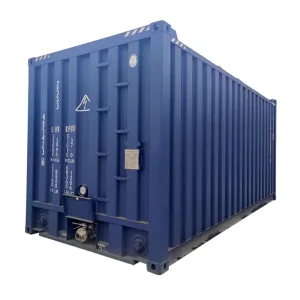
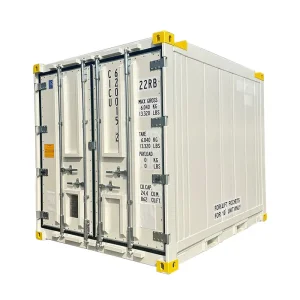
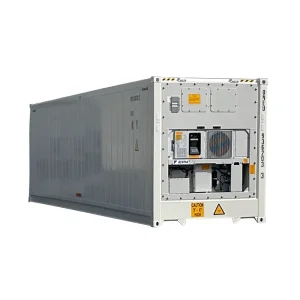
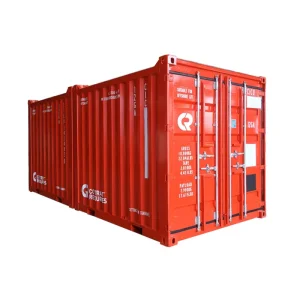
Every container engineered at our facilities undergoes rigorous load testing to meet global railway interchange tolerances, intermodal twistlock fatigue tolerances, and cross-border rail-sea transit demands.
Intermodal rail transport is rapidly becoming the spine of decarbonized international freight. Discover how factory-direct container sourcing mitigates cross-border supply chain volatility and unlocks unprecedented volumetric efficiency across Trans-Eurasian, North American, and Pan-African rail lines.
Global supply chain leaders are reorganizing asset purchasing around rail-sea intermodal containers. Driven by ESG mandates, strict carbon taxation in the EU, and fuel volatility, rail freight produces only 20–25% of the emissions of highway trucking while moving massive payloads continuously across continents.
Railway containers face dynamic acceleration and deceleration forces unseen in ocean carriage. Our production lines deploy automated SAW welding, strict UIC 592/596-5 load-bearing gussets, and anti-buffing corner castings designed to withstand rigorous shunting shocks of up to 4g.
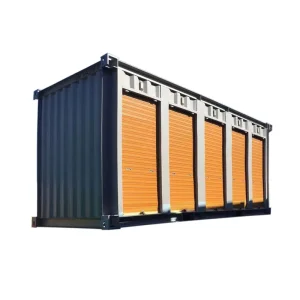
Procuring directly from our established Tianjin & Suzhou manufacturing clusters cuts intermediaries, verifies batch metallurgical certificates, and provides dedicated factory engineering for custom interior battens, roll-up gates, side doors, or integrated Genset clips.
Understanding technical differentiation ensures procurement aligns precisely with track gauge, axle load tolerances, shunting shock thresholds, and cargo volatility.
| Equipment Category | Structural Metallurgy | Max Gross Mass (Rating) | Governing Railway Standard | Primary Industrial Application | Factory Lead Times |
|---|---|---|---|---|---|
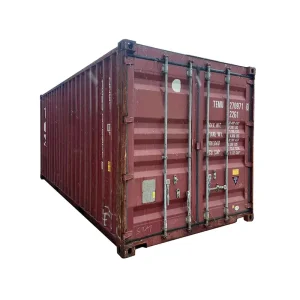
| 20ft/40ft ISO Rail Dry Cargo | Corten SPA-H (JIS G3125) | 30,480 kg – 32,500 kg | ISO 1496-1, UIC 592, CSC | General intermodal freight, machinery, fast-moving goods | 2-3 Weeks (In Stock) |
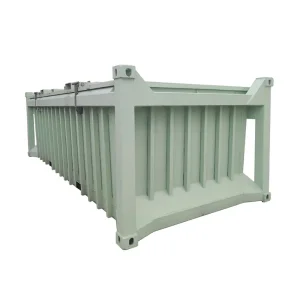
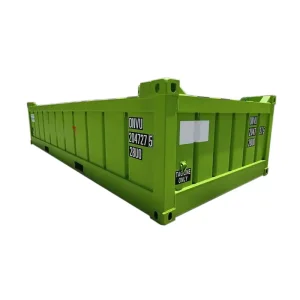
| Half-Height Mineral Ore Carrier | High-Strength Hardox / Q345E | 36,000 kg – 40,000 kg | UIC 596-5, DNV 2.7-1, EN 12079 | Iron ore, copper concentrate, dense aggregates, minerals | 4-6 Weeks Custom Build |
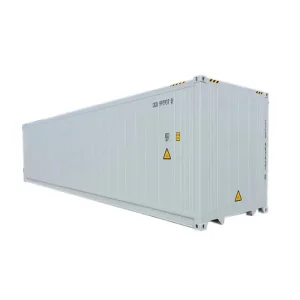
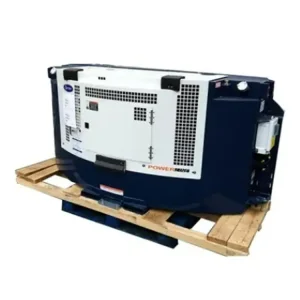
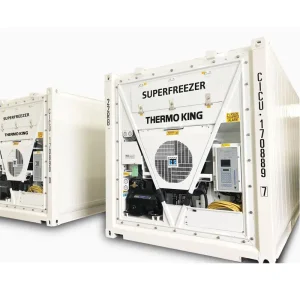
| Refrigerated Rail Intermodal (with Genset) | Stainless Steel 304 / Cyclopentane | 34,000 kg | ATP Certified, UIC 592, ISO 1496-2 | Temperature-sensitive meat, dairy, vaccines, fresh fruit | 3-5 Weeks Production |
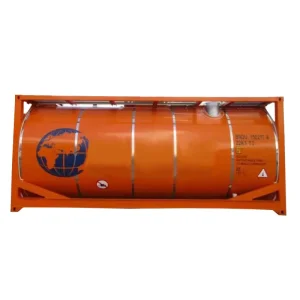
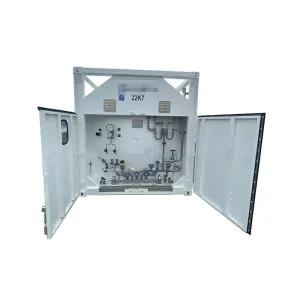
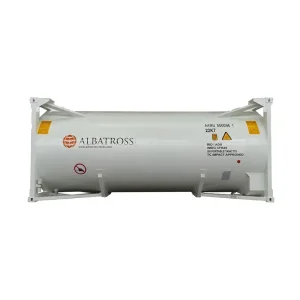
| T75 Cryogenic Rail Tank Box | Austenitic SS / SA240 Gr 304/304L | 36,000 kg (Full Baffle System) | ASME VIII Div 1, IMDG, RID, ADR | Liquid Nitrogen, Argon, Oxygen, Liquefied Natural Gas (LNG) | 6-8 Weeks Engineered |
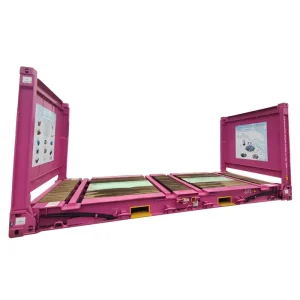
| Platform / Collapsible Flat-Rack | Heavy Cast Steel Corners / 45mm Wood | 45,000 kg – 50,000 kg | AAR M-930, UIC 592, CSC | Oversized earthmovers, heavy rail parts, military logistics | 3-4 Weeks Batch Run |
Railway containerization goes far beyond standard maritime boxes. Our specialized factory configurations address specific physical challenges across demanding geographic environments.
Transporting dense metal ores by rail causes severe floor stress in conventional containers. Our half-height ore containers feature reinforced floor troughs, low centers of gravity, and optional hydraulic tippler discharge points for rapid offloading at rail yards.
On cross-border routes like the China-Europe rail link through Siberia, ambient temperatures reach -40°C. Our reefers feature dual-fuel auto-switching diesel gensets and high-efficiency vacuum insulation panels (VIP) to keep pharmaceutical temperatures locked.
Automobile manufacturers utilize 40ft High Cube containers configured with internal racking systems, anti-vibration tie-downs, and side-opening panels to speed up assembly line parts feeding directly from train sidings.
Classified liquids and technical gases traveling across rail lines require compliance with RID/ADR and RID-tested surge baffle plates. Our ISO T11 to T75 tank containers withstand emergency rail brake forces without surge-induced derailment risks.
The next generation of railway container manufacturing combines metallurgy optimization with digital telemetry, smart sensors, and advanced thermal retention to lower operational expenditures.
By shifting from conventional steel to advanced thermomechanically rolled micro-alloyed steels, our factory engineers shave up to 450 kg off the tare weight of a 40ft High Cube container while preserving full UIC impact resistance. Less deadweight translates directly into higher payload capacity and rail fuel savings.
Modern cross-border railways require constant situational visibility. Our factory installs factory-integrated, ATEX-certified solar IoT hubs that report real-time GPS coordinates, acceleration/shunting impact metrics, door-seal tampering alerts, and internal reefer sensor readings directly to your ERP via satellite and 5G cellular.
To replace hydrofluorocarbons, our thermal container workshops are deploying cyclopentane non-ozone-depleting blowing agents and nano-porous aerogel blankets. This maintains an overall heat transfer coefficient (K-value) below 0.36 W/(m²·K), allowing perishable transit for 96 hours without active power draw.
Established in 1983, our industrial container production hub occupies a strategic geographical footprint approximately 100 kilometers from the Tianjin deepwater port terminal. This short transit minimizes drayage costs, guarantees rapid vessel loading, and simplifies factory inspection tours for international engineering auditors.
Find authoritative answers to structural standards, certification documentation, minimum order quantities, and multimodal rail compatibility.
While maritime ISO containers are designed primarily to withstand 9-high stacking loads and marine pitch/roll, dedicated railway containers must comply with UIC 592/596-5 specifications. These containers incorporate heavier cross-members, reinforced corner castings to resist intense shunting impacts, side-wall deflection reinforcement to withstand aerodynamic wind displacement when passing trains at high speed, and standardized bottom recesses tailored to railroad flatcar twistlocks.
Yes. Every container leaving our production lines comes complete with valid International Convention for Safe Containers (CSC) safety approval plates, and our plant holds active quality approvals from Bureau Veritas (BV). For offshore, mining, and high-risk intermodal projects, our manufacturing workshops are fully certified to manufacture in accordance with DNV 2.7-1 and EN 12079 structural standards.
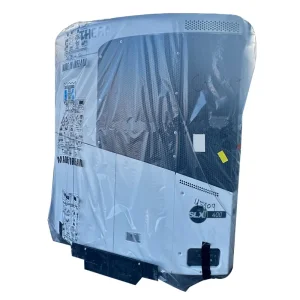
Our intermodal reefer containers integrate cutting-edge cooling machinery from industry-leading manufacturers including Thermo King, Daikin, and Carrier. For cross-border railway routes lacking continuous rolling stock power lines, we furnish high-capacity diesel generator sets (gensets) with integrated 200–500L fuel reservoirs, allowing 20+ days of autonomous active cooling and deep-freeze capability across remote railway tracks.
For standard inventory configurations and reconditioned second-hand containers stored across key Chinese coastal ports, our minimum order quantity starts at just one unit. For bespoke OEM/ODM custom container fabrications (including specialized side-door profiles, custom lengths, roll-up gates, and specialized ore carrier frames), our production line batch MOQ typically starts at 2 to 4 units depending on the engineering complexity.
All primary structural components, including corner posts, bottom side rails, header crossbeams, and corrugated sidewalls, are fabricated from atmospheric corrosion-resistant SPA-H Corten steel. When exposed to outdoor moisture and industrial railway environments, Corten steel oxidizes to form an ultra-dense, self-healing protective patina that halts internal structural oxidation. Furthermore, we apply zinc-rich epoxy primers and multi-coat polyurethane marine finishes with a dry film thickness exceeding 120 microns.
To dramatically reduce shipping charges for international buyers, our export team can arrange "one-way cargo loading" (cabotage). Instead of shipping an empty container on an ocean vessel or freight train, the brand-new container is loaded with revenue-generating export dry cargo to your nearest destination rail terminal or seaport. Upon cargo discharge, the container is released directly into your commercial fleet, effectively saving thousands in deadhead positioning costs.
Explore the second tier of our high-performance inventory, specifically configured for chemical containment, mobile refrigeration units, and custom warehousing layouts.