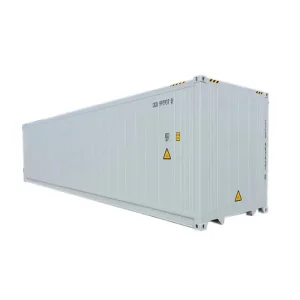
From 10ft compact reefers up to 40ft High Cube extended cubic feet platforms, discover certified transport containers manufactured to rigorous international safety standards.

In modern supply chain optimization, every single cubic foot represents direct revenue potential and fuel-to-payload economy. Understanding internal usable cubic volume versus gross external dimensions determines long-term freight viability.
In international freight economics, the metric of Container Cubic Feet (cu ft) serves as the fundamental denominator for volume-limited cargo stowage, sea freight pricing matrices, and intermodal transport efficiency. Sourced through China's premier heavy industrial manufacturing centers—specifically Tianjin Cimic Imp&Exp Co., Ltd. (CIMIC Group)—container manufacturing combines structural metallurgy with micro-toleranced interior dimensioning. Established in 1983, our manufacturing operations balance Corten-A weathering steel integrity against internal clearance optimization to yield maximum cubic capacities across dry cargo, refrigerated, insulated, and offshore frames.
Standard 20ft general purpose containers yield ~1,172 cu ft (33.2 m³), while 40ft High Cube containers expand capacity to ~2,694 cu ft (76.3 m³). Structural corrugation profiles are engineered to prevent internal bulge under concentrated stowage stress.
Engineered for seamless transfer between ocean vessels, double-stack railway wagons, and highway chassis. Corner castings and structural base frames strictly satisfy ISO 1161 and ISO 1496-1 specifications.
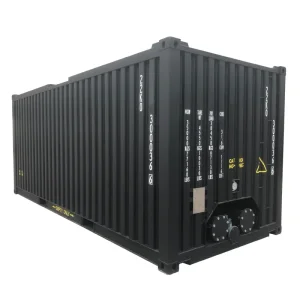
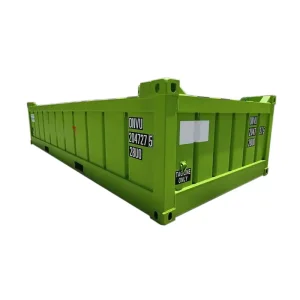
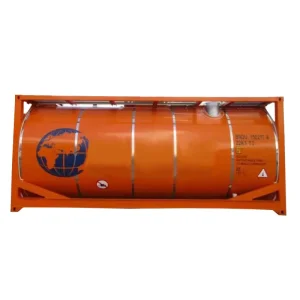
For specialized offshore and harsh chemical cargo, units receive DNV 2.7-1 / EN 12079 structural certification, alongside Bureau Veritas (BV) shipping appraisal and mandatory CSC safety approval plates.
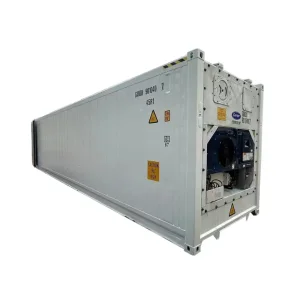
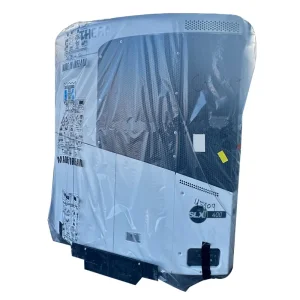
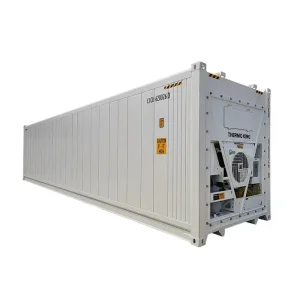
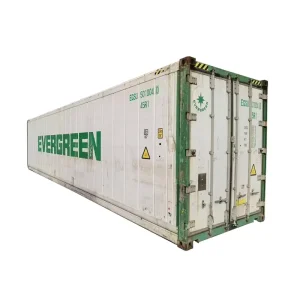
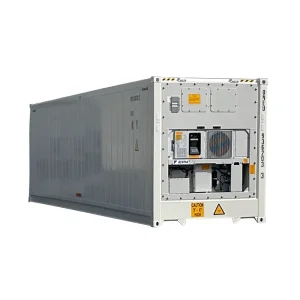
Seamless engineering integration with Thermo King, Daikin, and Carrier cooling machinery. Deep T-bar flooring and vacuum-injected polyurethane insulation preserve cubic cargo volume while minimizing thermal bridge leakage.
| Container Classification | Cubic Feet (cu ft) | Cubic Meters (CBM) | Internal Dimensions (L × W × H) | Tare Weight (kg) | Max Payload (kg) | Primary Industrial Applications |
|---|---|---|---|---|---|---|
| 10ft Standard Dry / Offshore | 560 cu ft | 15.9 CBM | 2,831 × 2,352 × 2,393 mm | 1,300 kg | 8,700 kg | Offshore platform supply, dense tooling, secure site lockups |
| 20ft Standard Dry (20GP) | 1,172 cu ft | 33.2 CBM | 5,898 × 2,352 × 2,393 mm | 2,200 kg | 28,280 kg | Heavy commodities, machinery, minerals, bulk grain logistics |
| 20ft High Cube Dry (20HC) | 1,310 cu ft | 37.1 CBM | 5,898 × 2,352 × 2,698 mm | 2,350 kg | 28,130 kg | Volumetric goods requiring 1ft extra clearance, modular housing |
| 40ft Standard Dry (40GP) | 2,389 cu ft | 67.6 CBM | 12,032 × 2,352 × 2,393 mm | 3,750 kg | 26,730 kg | General ocean freight, consumer packaged goods, textile rolls |
| 40ft High Cube Dry (40HC) | 2,694 cu ft | 76.3 CBM | 12,032 × 2,352 × 2,698 mm | 3,980 kg | 28,520 kg | E-commerce retail, palletized consumer electronics, furniture |
| 40ft High Cube Reefer (40HCR) | 2,380 cu ft | 67.4 CBM | 11,583 × 2,290 × 2,544 mm | 4,480 kg | 29,520 kg | Frozen meats, biopharma, sensitive chemicals, fresh agricultural goods |
| 45ft High Cube Pallet Wide | 3,040 cu ft | 86.1 CBM | 13,556 × 2,426 × 2,698 mm | 4,820 kg | 27,680 kg | Short-sea European transport, 33 Euro-pallet high-density loading |
How international shipping syndicates, chemical exporters, and mining operators optimize their procurement strategies across Chinese manufacturing hubs.
Over 62% of dry cargo builds in China have transitioned to 40ft High Cube geometry (2,694 cu ft). Low-density, high-volume e-commerce goods dictate taller internal clearances to prevent empty air space above standard EUR-pallets.
Modern insulated and reefer containers employ fourth-generation HFO (Hydrofluoroolefin) blowing agents. These deliver thermal conductivity (K-factor) under 0.38 W/(m²·K) with zero ODP, preserving cubic capacity without bulky insulation walls.
CIMIC integrates factory-installed solar-powered tracking beacons, interior temperature sensors, door-opening telemetry, and dynamic cargo vibration monitors into the roof recess structure without encroaching on internal cubic capacity.
When purchasing from China container cubic feet factories, procurement engineers routinely balance structural tare weight against internal payload limits. Excessive corner post reinforcement or improper floor undercoating can degrade internal width tolerances, hindering standard 1,200 × 800 mm Euro-pallet arrangement. CIMIC addresses these macro engineering bottlenecks through precise metallurgical manufacturing:
1. Corten-A Cold-Formed Steel Panels: Corrugated steel sheets (1.6 mm side walls, 2.0 mm front panels) are pressed with microscopic pitch consistency, maximizing the internal cross-sectional span while withstanding 9-high container vessel stacking (192,000 kg total superimposed load).
2. 28 mm Hardwood Marine Plywood with Ceramic Coatings: Flooring systems meet the 7,260 kg axle front load test prescribed by ISO 1496-1. The planks are chemically pressure-treated for phytosanitary compliance (AQIS) without outgassing hazardous VOCs into the cubic storage interior.
3. Port-Proximity Distribution: CIMIC's direct manufacturing facilities in Tianjin and Suzhou lie within 100 km of critical sea terminals (Tianjin Xingang, Shanghai/Taicang). This geographic advantage guarantees rapid release, reduced inland drayage, and direct factory-to-berth vessel stowage.
Every unit leaving our facilities carries uncompromised third-party classification approvals ensuring frictionless customs clearance across worldwide port jurisdictions.
Certified by Bureau Veritas (BV), ABS, and CCS under the International Convention for Safe Containers (CSC). Plates specify gross tare weight, allowable racking test load, and certified stacking capability.
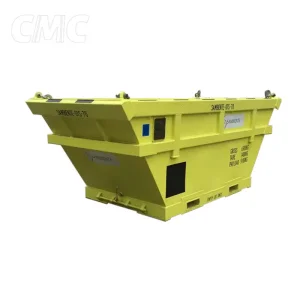
Built to survive hostile offshore sea states down to -20°C and -40°C. Structural pad eyes, four-point lifting slings, and Charpy V-notch impact-tested structural steels prevent catastrophic offshore drop failures.
Ultra-low VOC waterborne zinc-rich primer and polyurethane topcoats deliver 5-year marine warranty durability (C5-M environment), withstanding extreme salt spray without chipping or flaking.
Transitioning assembly lines to high-power fiber laser seam welding. Continuous non-porous welds eradicate moisture entrapment points, enhancing structural lifespan by up to 35% compared to manual SMAW welding.
Precise technical guidance addressing volumetric calculations, custom OEM engineering, and international port delivery.
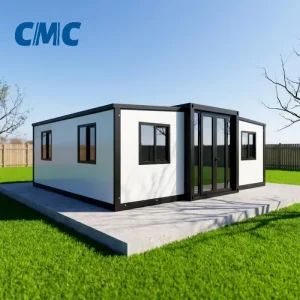
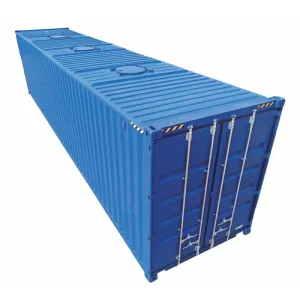
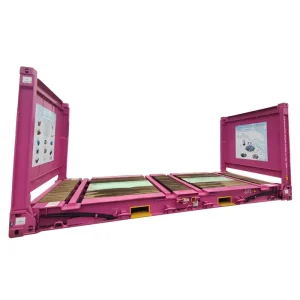
Explore secondary fleet solutions including expandable modular container structures, mobile power cooling units, bulk dry freight boxes, and offshore lifting containers.