Precision-engineered units compliant with ISO, BV, and DNV maritime standards, manufactured directly by leading Chinese production hubs.
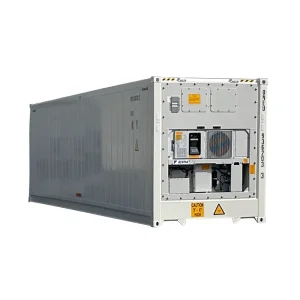
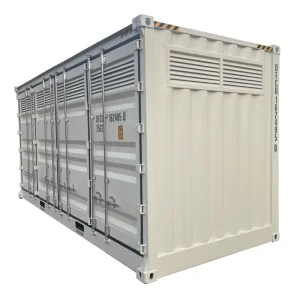
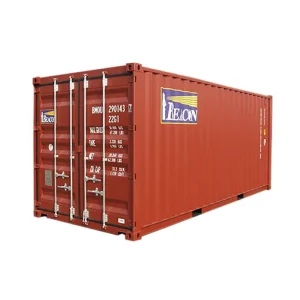
How world-leading metallurgy, deep coastal logistics, and specialized welding automation empower Chinese exporters to lead global offshore suspended container delivery.
Industrial hanging basket fabrication requires low-temperature impact-tested steels such as Q345E, Corten SPA-H, and EN 10025 S355ML. Chinese manufacturers benefit from upstream integration with domestic steel mills, providing certified Charpy V-Notch testing down to -40°C. This ensures dynamic structural resilience against brittle fracture during offshore wave-slam events and high-stress crane transfers.
Chinese production lines utilize 6-axis robotic MAG/MIG multi-pass submerged welding units to deliver flawless seam penetration across primary lift lugs, internal tie-down eyes, and load-bearing perimeter frames. Full Non-Destructive Testing (NDT), including Ultrasonic Testing (UT) and Magnetic Particle Inspection (MPI), is integrated directly into factory QA protocols prior to shot blasting.
Strategically situated within 100 km of core maritime hubs like Tianjin, Qingdao, and Shanghai, factories achieve swift consolidation of custom offshore hanging baskets, DNV certified 4-leg wire rope lifting slings, and subsea silt traps. This proximity slashes inland demurrage and guarantees strict shipping deadlines for international energy operators.
Industrial suspended containers, silt baskets, and offshore crane baskets are subjected to extreme dynamic loading factors that standard intermodal ISO boxes never encounter. Leading Chinese exporters implement rigorous verification pipelines that govern dynamic drop testing, 2.5x Gross Mass static pull evaluations, and marine C5-M anti-corrosion coating regimens. By marrying high-volume production speed with classification society oversight (Bureau Veritas, DNV, ABS, Lloyd’s Register), Chinese manufacturers supply mission-critical cargo units directly to global exploration fields, subsea contractors, and deep-sea dredging operations.
The global shift toward automated offshore energy installations, carbon footprint accountability, and smart sensor integration is redefining export specifications.
Modern hanging baskets are increasingly outfitted with intrinsically safe ATEX-certified IoT nodes. Real-time accelerometers and load pins track cumulative crane cycles, peak G-forces during vessel touchdowns, and structural fatigue over years of offshore supply runs.
Environmental compliance pushes Chinese fabricators toward zero-VOC waterborne epoxy zinc-rich primers coupled with aliphatic polyurethane topcoats. These multi-layer barrier systems survive over 3,000 hours of cyclic salt spray testing without underfilm corrosion creep.
By engineering specialized corrugated profiles and strategic weight relief cutouts using Strenx 700 grade steels, container tare weight is reduced by up to 22%, yielding higher payload ratios for offshore crane hoists without compromising shear safety limits.
Custom hanging and silt baskets are increasingly designed with ISO twistlock corner castings matching standard 10ft, 20ft, and 40ft footprints. This allows seamless intermodal transport on rail flatcars, standard container vessels, and specialized anchor handlers.
Tailored structural designs matching distinct operational regimes across North Sea platforms, Middle Eastern deepwater fields, and Southeast Asian aquaculture hubs.
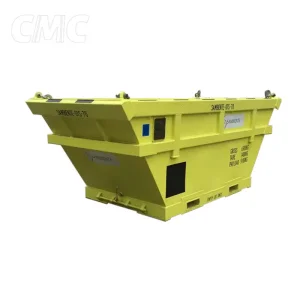
During deepwater drilling operations, specialized silt baskets and cutting collection skips receive spent drill cuttings and high-density mud slurries from shaker tables. Units are built with sealed heavy-duty dump gates, forklift pockets with locking pins, and internal baffle walls to prevent fluid surging during high-seas crane lifts from platform deck to offshore supply vessels (OSVs).
Certified personnel hanging baskets operate under strict LOLER and DNV standardizations. Equipped with overhead crash-protection roofs, fall-arrest anchors, perimeter safety mesh, and high-impact absorbing rubber outriggers, they guarantee life-critical transfers between drilling rigs, construction vessels, and topside production units.
Installation of deepwater jacket foundations and turbine monopiles requires continuous high-altitude hoisting of hydraulic bolt-tensioning tools, heavy shackle rigs, and umbilical cables. Low-profile half-height baskets and heavy open baskets provide quick overhead crane access while keeping rigging items secured in rough 5-meter swells.
Detailed dimensional and structural criteria adhered to by top-tier Chinese export manufacturers.
| Basket / Container Classification | Standard External Dimensions (L×W×H mm) | Max Gross Mass (Rating kg) | Tare Weight (Approx. kg) | Certified Governing Standard | Key Operational Application |
|---|---|---|---|---|---|
| DNV 2.7-1 Silt & Slurry Basket | 2,438 × 1,829 × 1,450 | 10,000 kg | 1,850 kg | DNV GL-ST-E271 / EN 12079 | Drill cuttings collection, subsea dredging sludge transfer |
| Heavy Offshore Tubular Basket | 6,058 × 1,200 × 1,300 (or 12m length) | 15,000 kg | 2,900 kg | ISO 10855 / DNV 2.7-1 | Drill pipe, downhole tools, casing handling, offshore rig transport |
| 4-Man Suspended Personnel Basket | 1,500 × 1,500 × 2,350 | 1,200 kg | 420 kg | ABS / BV Offshore / LOLER | Topside maintenance, platform-to-ship emergency evacuation |
| Half-Height Mineral & Ore CCU | 6,058 × 2,438 × 1,295 | 20,000 kg | 2,450 kg | CSC / DNV Offshore / BV | High-density metallic concentrate haulage, offshore subsea rock dumping |
| Subsea ROV Tooling Rig Basket | 3,000 × 2,000 × 1,800 | 8,000 kg | 1,650 kg | DNV 2.7-3 / IMCA Guidelines | Deploying hydraulic power packs and tooling to subsea wellheads |
Quality Assurance Requirement: Under DNV 2.7-1 certification, every prototype basket undergoes dynamic impact testing involving drop testing from a minimum height of 50 mm at 0° inclination and 100 mm at a 5° angle onto a rigid foundation, followed immediately by multi-point magnetic particle inspection of all primary load-bearing welds.
What international procurement divisions at Shell, BP, TechnipFMC, and Subsea 7 require when vetting Chinese manufacturing facilities.
EPC tenders mandate complete material traceability back to original heat numbers. Chinese manufacturers must issue EN 10204 Type 3.1 mill test certificates documenting chemical analysis, tensile yield, elongation, and Charpy impact absorbed energy for every plate and hollow section.
Welders must be certified according to ISO 9606-1 or AWS D1.1 standards under the direct supervision of an IWE (International Welding Engineer). Full PQR documentation must prove acceptable macro-etching, hardness surveys, and side bend tests for thick structural joint welds.
Baskets destined for offshore lifting cannot be shipped bare. Operators require integrated 4-leg wire rope slings fitted with master links and Crosby / Green Pin safety pin bow shackles, verified and proof-load certified in tandem with the primary CCU assembly.
Direct answers to the most critical technical, commercial, and operational questions asked by international buyers and project directors.
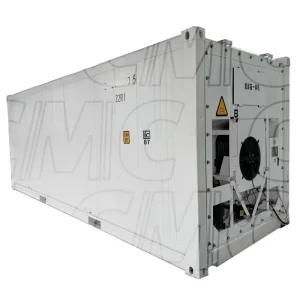
Heavy-duty transport platforms, liquid ISO tanks, and specialized reefers engineered to withstand intercontinental transit and offshore rig supply.
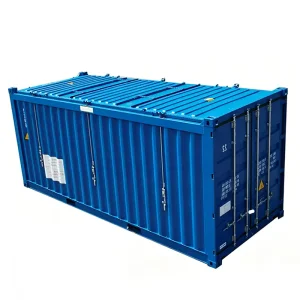
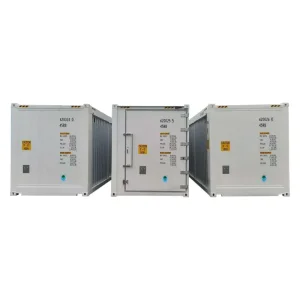
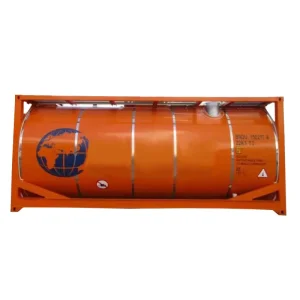
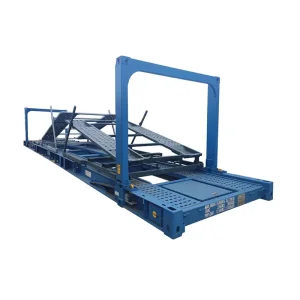
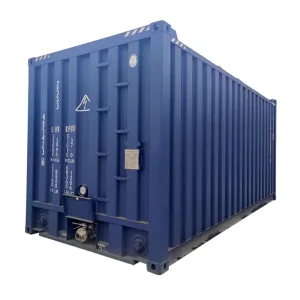
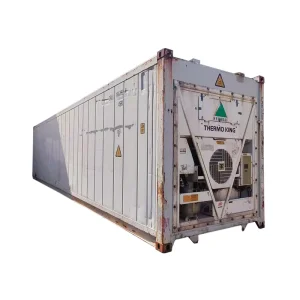
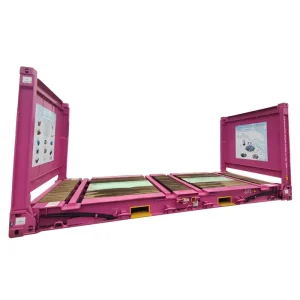
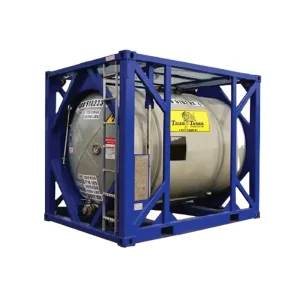
Whether you require an individual certified DNV 2.7-1 silt basket prototype, fleet fabrication of offshore CCU containers, or specialized Reefer & ISO Tank configurations, CIMIC’s Tianjin and Suzhou technical design teams deliver prompt structural calculations, certified 3D CAD modeling, and transparent factory direct pricing.
