Engineered for deep-freeze integrity, maritime resilience, and intermodal compatibility under ISO, DNV, and BV standards.
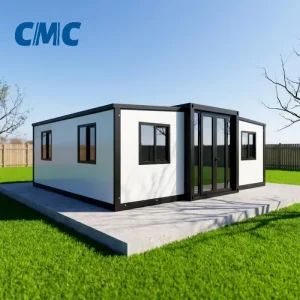
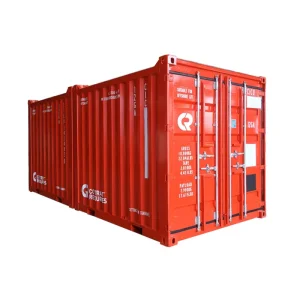
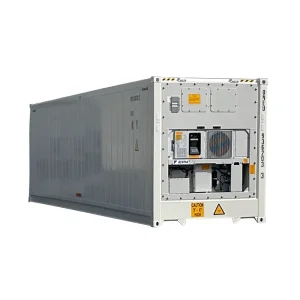
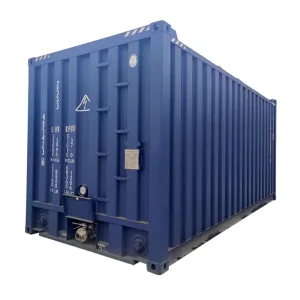
A macroscopic look into the cold chain infrastructure driving cross-border perishables, biologics, and chemical logistics.
China continues to command over 85% of global refrigerated container manufacturing output. With integrated coastal manufacturing ecosystems spanning Tianjin, Jiangsu, and Guangdong, factories leverage proximity to raw Corten steel mills, specialized polyurethane blowing plants, and direct marine berths to minimize logistics lead times.
>85% Global Production ShareThe transition from pure maritime sea-freight to integrated intermodal rail-sea-road networks has increased the demand for High-Cube (HC) reefers featuring low-tare frameworks. Rail networks such as the China-Europe Railway Express require equipment engineered to endure extreme temperature shifts from -40°C in Siberian transits to +45°C in desert regions.
Dual-Zone & Broad Range Temp ControlStrict environmental policies, including the EU F-gas regulations and the Kigali Amendment, require reefer systems to adopt lower Global Warming Potential (GWP) refrigerants (e.g., R-452A, CO2/R-744). Modern Chinese manufacturers lead in vacuum insulation panels (VIP) and cyclically optimized scroll compressors that cut operational energy draw by up to 35%.
GWP Compliance & VIP InsulationHow advanced telematics, materials science, and atmospheric control are redefining high-value cargo transport.
Real-time edge sensors monitor supply/return air temperatures, relative humidity, compressor running status, and power continuity. Wireless mesh protocols automatically synchronize data with cloud fleet management software via satellite and 4G/5G fallbacks.
Advanced systems dynamically balance O2 and CO2 levels to retard the ripening process of climacteric fruits. By dropping oxygen levels to 2-5% and elevating CO2, ocean transport shelf-life expands by up to 300% compared to standard chilled containers.
Next-generation thermal break designs utilize cyclic pentane-blown polyurethane foam combined with structural thermal isolators at corner posts and floor perimeters, preventing thermal bridging and decreasing K-value decay rates over a 15-year lifecycle.
Utilizing high-tensile SPA-H Corten steel for corrugated exteriors, MGSS (Muffler Grade Stainless Steel) inner side linings, and extruded high-strength HG4 aluminum T-bar floors ensures washdown hygiene and structural resistance against marine salt mist.
Tailored configurations solving operational challenges across specialized global cold chain sectors.
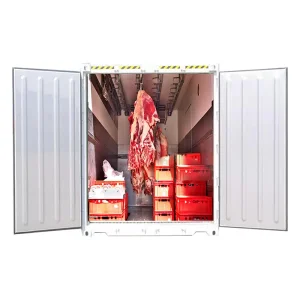
Requires ultra-low temp units capable of reaching -35°C to -60°C for sashimi-grade tuna, beef quarters, and processed meats. Equipped with heavy-duty ceiling meat hooks, unslotted air delivery for uniform cold retention, and food-grade stainless interior finishes.
Complies with Good Distribution Practices (GDP) requiring strict +/- 0.5°C accuracy across +2°C to +8°C pharmaceutical ranges. Incorporates dual-redundant refrigeration machinery, backup battery systems, and automated door-opening alarm relays.
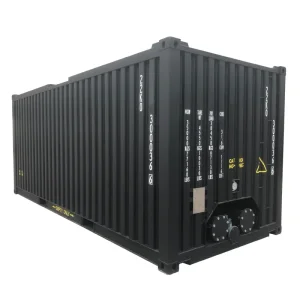
DNV 2.7-1 / EN 12079 certified offshore reefers built with specialized padeyes, heavy-duty sling sets, and anti-spark electrical circuits for offshore oil platforms, harsh marine facilities, and mining base stations.
The industrial evolution toward automated decarbonization, self-sustaining microgrids, and intelligent thermal management.
Broad deployment of transcritical CO2 (R-744) units and propane-based blends replacing conventional HFCs, lowering system GWP below 1.5 while optimizing extreme-ambient condensing cycles.
Integration of flexible roof solar arrays and regenerative kinetic braking integration on rail chassis, reducing diesel genset dependencies by 40-60% on long intermodal hauls.
Machine-learning control algorithms that dynamically adjust defrosting cycles and airflow patterns based on cargo thermal mass, external weather forecasts, and route elevation variations.
Modular hydrogen fuel-cell power generators combined with vacuum-sealed aerogel insulation, realizing zero-loss thermal continuity on 30-day transcontinental railway corridors.
Turnkey delivery frameworks bridging design, certification, mass-production, and intermodal compliance.
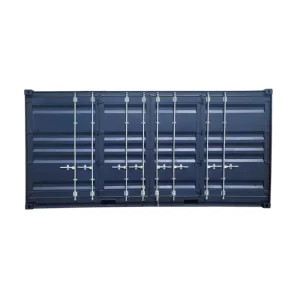
Beyond standardized 20ft and 40ft units, our facilities provide custom length configurations, multi-temperature partition bulkheads, hydraulic roll-up doors, full-length side-access bi-folds, and specialized chassis mounting systems built around project drawings.
Every batch produced carries full validation from major maritime societies including Bureau Veritas (BV), ABS, Lloyd's Register, or DNV. Certification includes CSC safety approval, TIR customs compliance, ATP food carriage certification, and ISO 1496/2 thermal ratings.
Located within 100km of North China's core maritime hubs (Tianjin Xingang), units can be released directly with "One-Way Free Use" loading agreements (SOC containers) or positioned on domestic rail flatcars, lowering initial repositioning costs significantly.
Detailed insights regarding manufacturing specifications, refrigeration machinery, testing, and warranties.
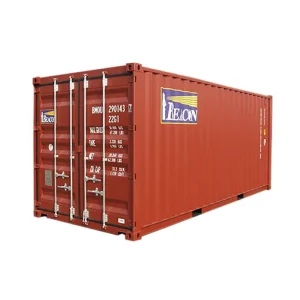
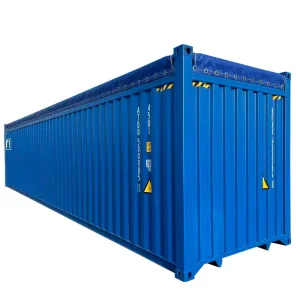
Our reefer, dry, and insulated lines are manufactured in standard 10ft, 20ft, 20ft High-Cube (HC), 40ft, and 40ft High-Cube (HC) configurations. Additionally, we engineer custom length designs (e.g., 45ft pallet-wide, 53ft domestic intermodal), half-height bulk containers, full side-open doors, roll-up shutter access, open-tops, and DNV offshore modules according to client specifications.
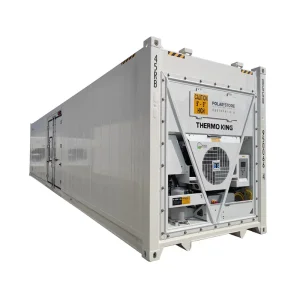
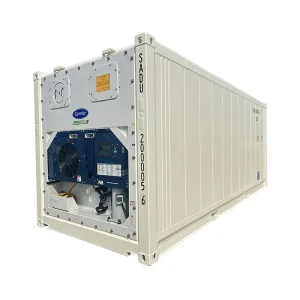
We supply factory-integrated reefer containers fitted with genuine Carrier Transicold (e.g., PrimeLINE, ThinLINE), Thermo King (Magnum Plus), and Daikin (Zestia, LXE series) machinery. Both dual-voltage 380V/460V 3-phase systems and optional water-cooled condenser integrations are available depending on regional power infrastructure and maritime operating profiles.
Our manufacturing sites operate strictly under ISO 9001 quality management and Bureau Veritas (BV) marine survey protocols. Offshore units are engineered, welded, and proof-load tested in strict adherence to DNV 2.7-1 / EN 12079 criteria. All ISO containers ship with a valid CSC (Container Safety Convention) plate, TIR customs approval, and thermal efficiency documentation.
An active reefer container incorporates an electrically driven refrigeration unit to actively remove heat and maintain temperatures anywhere from -35°C to +30°C, requiring 3-phase power or a clip-on diesel generator. A passive insulated container relies solely on thickened cyclopentane foam walls (typically 75mm-120mm) to retard heat gain without mechanical power, suitable for short domestic corridors and non-freezer goods.
Our certified second-hand inventory consists of retired shipping line units stored across key Chinese coastal hubs. Each unit undergoes a rigorous PTI (Pre-Trip Inspection) evaluating compressor pressure, electrical resistance, evaporator condition, fan operation, and thermal seal integrity. Detailed mechanical inspection reports and multi-angle high-resolution photos are confirmed before dispatch.
For standard ISO reefer sizes or port-stocked units, orders can start from 1 single unit. For custom-engineered OEM/ODM builds—such as side-opening roll-ups, pharmaceutical split systems, or custom blast freezers—the typical MOQ ranges between 2 to 5 units, with custom tooling, thermal calculation, CAD modeling, and classification approval completed within 25-35 calendar days.
Explore heavy industrial racks, liquid ISO tanks, modular accommodation units, and dedicated thermal systems.