Factory-direct intermodal containers engineered for global maritime, railway, and offshore lifting conditions. Fully compliant with CSC safety standards and international classification societies.
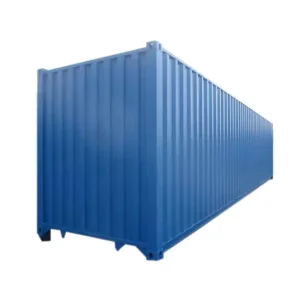

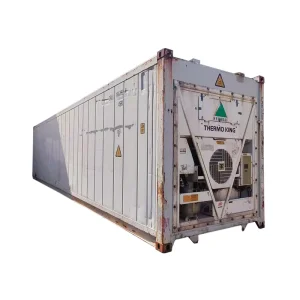
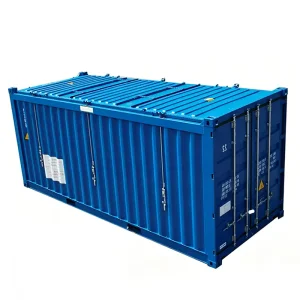
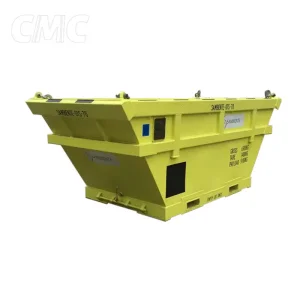
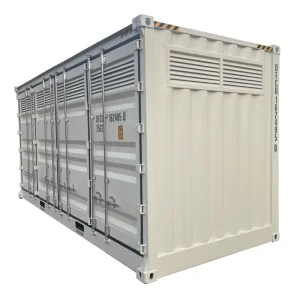

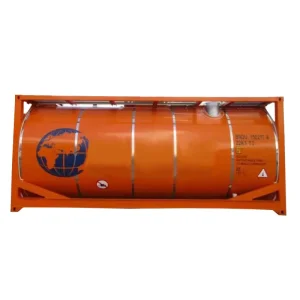
Selecting the precise shipping container length is an engineering trade-off between tare mass, structural payload capacity, corner casting load distribution, and intermodal transport geometry. The technical matrix below details nominal, external, and internal dimensions alongside cargo payload capacities for standard and specialized Chinese export configurations.
| Nominal Length | Container Type Code | External Dims (L × W × H) | Internal Volume | Tare Weight | Max Payload | EUR-Pallet Capacity |
|---|---|---|---|---|---|---|
| 10ft Standard | 10GP (Mini/Storage) | 2,991 × 2,438 × 2,591 mm | 15.9 m³ (561 cu.ft) | 1,300 kg | 8,860 kg | 4 units (1200×800) |
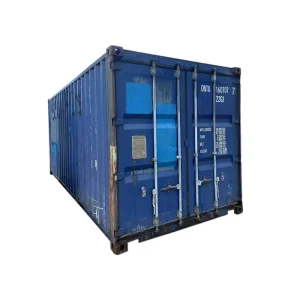
| 20ft Standard | 22G1 (General Purpose) | 6,058 × 2,438 × 2,591 mm | 33.2 m³ (1,172 cu.ft) | 2,180 kg | 28,300 kg | 11 units (1200×800) |
| 20ft High Cube | 25G1 (HC Dry/Chemical) | 6,058 × 2,438 × 2,896 mm | 37.4 m³ (1,320 cu.ft) | 2,350 kg | 28,130 kg | 11 units (1200×800) |
| 40ft Standard | 42G1 (Standard Dry) | 12,192 × 2,438 × 2,591 mm | 67.7 m³ (2,390 cu.ft) | 3,750 kg | 26,730 kg | 25 units (1200×800) |
| 40ft High Cube | 45G1 (High Cube Intermodal) | 12,192 × 2,438 × 2,896 mm | 76.4 m³ (2,698 cu.ft) | 3,900 kg | 28,600 kg | 25 units (1200×800) |
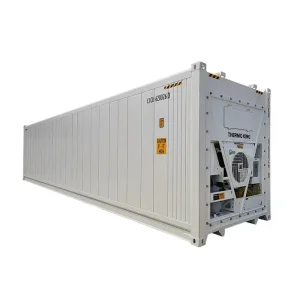
| 40ft HC Reefer | 45R1 (Active Cold Chain) | 12,192 × 2,438 × 2,896 mm | 67.3 m³ (2,376 cu.ft) | 4,480 kg | 29,520 kg | 23 units (1200×800) |
| 45ft High Cube | L5G1 (Pallet Wide Euro) | 13,716 × 2,438 × 2,896 mm | 86.5 m³ (3,054 cu.ft) | 4,820 kg | 27,680 kg | 33 units (Pallet-wide) |
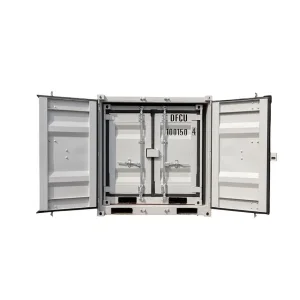
| Mini Nested Series | 4ft / 6ft / 8ft Modular | Custom Modular Fitment | 4.5 – 12.8 m³ | 450 – 980 kg | 2,500 – 5,000 kg | Modular Nesting |
Fabricated using authentic SPA-H atmospheric corrosion-resistant steel with copper-chromium alloying. Yield strengths exceed 345 MPa, delivering superior fatigue endurance against salt-laden oceanic environments.
Corner posts and ISO 1161 casting assemblies are load-certified to sustain vertical compression loads exceeding 86,400 kg per post, supporting full 9-high stacking on fully loaded ultra-large container vessels (ULCVs).
Floors are lined with 28mm marine-grade apitong or keruing hardwood plywood, autoclave-treated to comply with stringent Australian Quarantine (AQIS) standards, resisting forklift axle loads of up to 7,260 kg.
Procurement economics from Chinese container manufacturing hubs are driven by cold-rolled Corten coil indices, automated coating compliance, class society survey fees, and machinery unit configurations. Below is an indicative price benchmark based on FOB Tianjin/Qingdao/Shanghai ports.
| Equipment Category | Size / Specification | New Build (One-Trip) FOB | Used Cargo-Worthy (CW) | Key Machinery / Standards | Lead Time (Standard MOQ) |
|---|---|---|---|---|---|
| Dry Cargo Intermodal | 20ft GP Standard (Corten-A) | $1,750 – $2,200 | $1,050 – $1,350 | CSC / BV / ISO 1496-1 | 7 – 15 Days (Stock ready) |
| Dry Cargo High Cube | 40ft HC (9'6" Height) | $2,850 – $3,450 | $1,650 – $2,100 | ABS / BV / Lloyd's Register | 10 – 20 Days |
| Refrigerated Container | 40ft HC Active Reefer | $12,800 – $16,500 | $5,200 – $7,800 | Carrier / Thermo King / Daikin | 15 – 25 Days |
| Offshore Certified | 20ft DNV Offshore Box / Silt | $6,800 – $9,500 | Project Specific | DNV 2.7-1 / EN 12079 / Slings | 20 – 30 Days |
| ISO Tank Container | 20ft UN Portable T11/T14 | $18,500 – $26,000 | $9,800 – $13,500 | ASME VIII / IMDG / RID / ADR | 25 – 40 Days |
| Special Open Top | 20ft Hard/Soft Open Top | $3,200 – $4,100 | $1,850 – $2,400 | Removable Steel Roof / Tarpaulin | 15 – 25 Days |
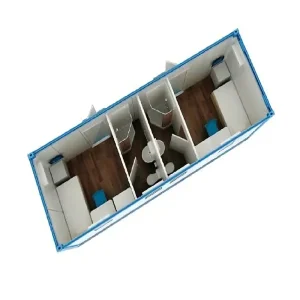
| Modular Accommodation | 20ft / 40ft Prefab Living Unit | $4,200 – $8,900 | N/A (Custom Build) | CE / UL Electrical & Rockwool | 20 – 30 Days |
Headquartered strategically within the Tianjin Pilot Free Trade Zone and manufacturing corridors in Suzhou, CIMIC integrates robotic automation, automated high-throughput welding, and advanced supply chain networks to de-risk procurement lead times.
Continuous twin-torch automated submerged arc welding systems guarantee root penetration along critical bottom side rails (BSR) and top side rails (TSR), eliminating non-conformities and weld porosity.
Multi-stage automated surface shot-blasting to Sa 2.5 standards followed by high-solid, low-VOC waterborne zinc-rich primer, epoxy intermediate coats, and polyurethane topcoats offering over 1,500 hours salt-spray resistance.
Situated within 100 km of Tianjin Xingang—the primary maritime gateway of Northern China—our logistics footprint reduces inland repositioning costs and ensures guaranteed direct-vessel berthing berths.
Standard containers fulfill generic cargo movements, yet high-consequence industries require customized modifications. CIMIC engineers deliver verified solutions across critical global sectors.
Optimized 20ft and 40ft high cubes equipped with high-security lockboxes, custom interior lashing rings (1,500 daN to 2,000 daN pull ratings), and anti-condensation roof designs for deep-sea routes.
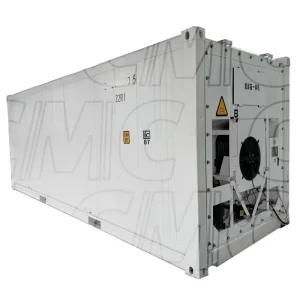
Active 40ft HC reefers powered by scroll-compressor Daikin or Carrier microprocessors, maintaining precision set-points between -35°C and +30°C with digital USDA cold-treatment data loggers.
DNV 2.7-1 / ISO 10855 certified offshore tool skips, silt baskets, and workshops built for harsh North Sea wave impacts, dynamic side-impact drops, and extreme sub-zero brittle fracture resistance.
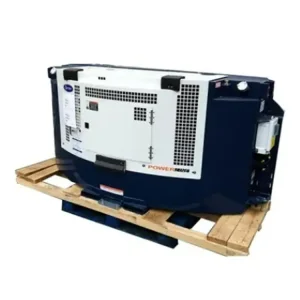
Reinforced ISO containers adapted for Battery Energy Storage Systems (BESS), solar inverter hubs, and diesel backup power enclosures featuring high fire-stop ratings and tailored floor loadings.
Every container manufactured by CIMIC is backed by comprehensive statutory verification documents, guaranteeing frictionless customs clearance and international transport authorization.
Every dry, open-top, and reefer unit leaves our fabrication facility bearing a valid International Convention for Safe Containers (CSC) data plate surveyed and issued by classification authorities such as Bureau Veritas (BV) or ABS.
Overcoming the challenges of cross-border procurement, we provide comprehensive Factory Acceptance Test (FAT) dossiers, non-destructive weld testing (NDT), light-leak inspections, and pre-trip reefer diagnostics (PTI) with serial-matched photographic records.
Constructed in full compliance with the Customs Convention on the International Transport of Goods Under Cover of TIR Carnets and International Union of Railways (UIC) directives for cross-continental Eurasian land-bridge freight.
The international container manufacturing ecosystem is progressing through rapid technological advancements. CIMIC's engineering roadmap prioritizes smart logistics telemetry, decarbonized lifecycle materials, and solar-integrated refrigeration units.
Next-generation smart containers integrated with low-power satellite and 5G cellular sensors. Providing continuous real-time cargo temperature monitoring, geographic positioning, door-seal security breaches, and harmonic vibration alerts.
Roof-embedded micro-crystalline photovoltaic arrays coupled with DC inverter compressors reduce diesel genset fuel reliance by up to 34% during intermodal dwell periods and inland freight transfers.
Transitioning side-wall profiles to high-strength, lightweight steel-aluminum hybrid structures and recyclable polyurethane cores, decreasing tare weight by up to 18% to maximize commercial cargo payload allowances.
Procurement executives balancing capital expenditure against lifetime maintenance must evaluate the Total Cost of Ownership (TCO). A strategic container sourcing workflow requires evaluating four key structural dimensions:
Assess cargo bulk density. High-density cargo (ores, concentrated liquids, steel components) utilizes the maximum payload capacity of a 20ft container long before cubic capacity is reached, while consumer goods require the superior cubic optimization of 40ft High Cube containers.
Evaluate empty positioning cycles. Investing in OEM "One-Way / One-Trip" container programs enables shippers to generate revenue on the maiden export voyage from China, effectively offsetting initial manufacturing and ocean shipping expenses.
In coastal or industrial operating environments, lower-tier coatings degrade quickly, causing rust around door gaskets and corner castings. Specifying zinc-rich primers and minimum 120-micron Dry Film Thickness (DFT) preserves structural integrity and extends container lifespans beyond 15 years.
Protect against delivery risks by mandating Class Society Survey Certificates (Bureau Veritas, DNV, ABS) prior to final financial settlement, ensuring the equipment meets all structural requirements for immediate deployment into global liner networks.
Expert answers to common engineering, commercial, and regulatory questions encountered by corporate procurement teams sourcing containers from China.
Explore engineered container configurations for liquid logistics, vehicle transport, modular buildings, and off-grid solar refrigeration systems.