Immediate procurement specifications for standard, open-top, offshore structural baskets, and high-cube refrigeration modules engineered with full CSC plate compliance and international safety certifications.
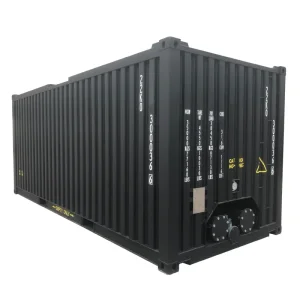

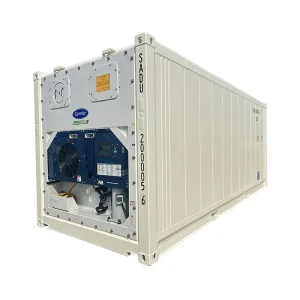
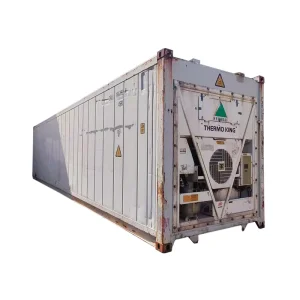
Understanding the transition from generic box shipping to specialized equipment containers engineered for localized harsh climates, off-grid energy, and sensitive industrial supply chains.
Global commerce is moving rapidly beyond standardized standard dry freight. Logistics operators require targeted enclosures: temperature-controlled reefers for biopharma cold chains, heated bitumen/asphalt containers for road infrastructure projects in sub-Saharan Africa, and ultra-high payload half-height boxes for heavy bulk ore transportation across Australian mining corridors.
Cross-border equipment movement mandates absolute traceability. Our manufacturing processes conform directly to Bureau Veritas (BV), ISO 1496-1, CSC (Convention for Safe Containers), and specialized offshore lifting certifications (DNV 2.7-1 / EN 12079). Containers engineered without structural Corten-A steel fail maritime fatigue tests in heavy sea states.
Modern fleet managers calculate total life-cycle emission costs. By engineering reefer units that interface with scroll compressor technologies (Carrier, Daikin, Thermo King), utilizing high-density non-ozone-depleting cyclopentane polyurethane insulation, and guaranteeing 25-year structural longevity, asset depreciation is minimized while ESG metrics are enhanced.
A granular assessment of materials science, welding criteria, insulation coefficients, and dynamic stress load mitigation engineered into every custom CIMIC container frame.
Every structural equipment container produced across our Tianjin and Suzhou manufacturing plants utilizes authentic SPA-H high-yield weathering steel. Corten steel develops a regenerative passivating oxide layer upon maritime atmospheric exposure, arresting oxidation penetration even when continuous marine spray breaches initial primer coatings.
For thermal management systems—specifically 40ft High Cube Carrier/Daikin refrigerated units and thickened foam passive insulation hulls—our thermal barrier panels integrate high-pressure injection cyclopentane polyisocyanurate (PIR) cores delivering a thermal conductivity rate (λ) of less than 0.021 W/(m·K). This structural cohesion eliminates thermal bridging and maintains internal cryo-stability across exterior ambient extremes from -40°C to +55°C.
| Engineering Attribute | Standard ISO Spec | CIMIC Industrial Standard |
|---|---|---|
| Primary Structural Steel | Q235 Carbon Steel | SPA-H / ASTM A588 Corten Steel |
| Floor Load Capacity | 5,460 kg (ISO 1496 axle) | 7,260 kg (High-density reinforced steel chassis) |
| Corner Casting Hardness | Standard SCW480 | High-impact Charpy V-Notch certified at -20°C / -40°C |
| Offshore Lifting Pad Eyes | Not applicable | Integrated 4-point DNV 2.7-1 proof tested to 2.5x MGW |
| Internal Lining (Reefer) | Basic Stainless Sheet | Food-Grade SUS304 / HG Anti-Bacterial Aluminum |
| External Marine Coating | 2-Coat Paint (80μm) | 3-Coat Zinc-Rich Epoxy + Polyurethane (180μm+) |
How our diverse container topologies integrate seamlessly into remote resource concessions, maritime offshore exploration, global cold-chain transit, and modular urban housing projects.
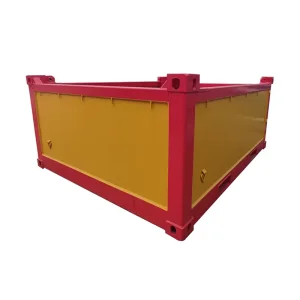
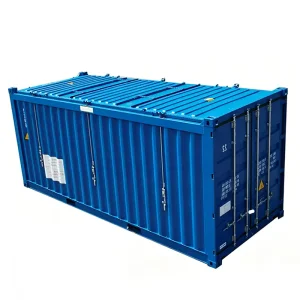
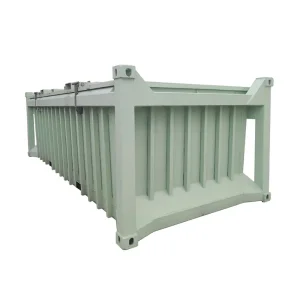
Deployed across the North Sea, Gulf of Guinea, and Southeast Asian fields. DNV-certified dry cargo units, sling-attached equipment baskets, and half-height ore containers endure continuous crane lifting, dynamic vessel roll accelerations, and persistent saltwater saturation without frame deformation or latch failure.
Our ISO tank containers for high-purity alcohols and high-cube dangerous goods containers fitted with blast-mitigating louvers protect cross-border chemical transits throughout Europe, Central Asia, and Latin American railway networks, meeting strict ADR/RID and IMDG regulations.
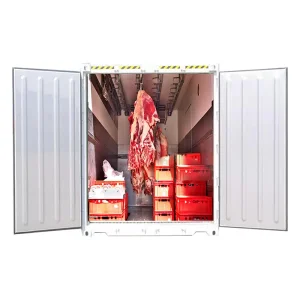
Configured with heavy-duty internal stainless ceiling rails, our specialized hanging meat containers and side-open reefers allow rapid loading of fresh carcass beef, lamb, and fragile fruits. Uniform bottom-air delivery ensures zero hot-spot degradation along multiday sea and trucking corridors.
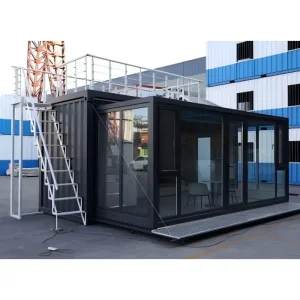
Foldable prefab modular homes and expandable container units equipped with pre-plumbed sanitary bathrooms provide immediate, insulated human habitation for mining outposts, infrastructure construction camps, and disaster relief zones, deploying fully within 45 minutes on unpaved terrain.
Why leading logistics lines, sovereign defense contractors, and industrial developers establish long-term ODM partnerships with CIMIC manufacturing hubs in Tianjin and Suzhou.
Our dual primary industrial facilities in Tianjin and Suzhou sit approximately 100 kilometers from Northern and Eastern China's primary international container terminals. This tight geographic proximity curtails inland drayage expenses, insulates orders against highway transport bottlenecks, and ensures guaranteed berthing delivery within tight carrier documentation windows.
CIMIC operates direct long-term raw material sourcing protocols with Tier-1 Chinese steel foundries. We eliminate third-party coil brokerage, securing immediate allocation of calibrated Corten SPA-H steel, heavy plate beams, and custom roll-formed side panels at stable volumetric pricing, maintaining production continuity when global spot material markets spike.
Every single container leaving the assembly hall undergoes mandatory high-pressure water tightness spray tests (operating at 200 kPa per ISO 1496/1), weld ultrasonic inspections, and individual dimensional laser mapping. Every serial number is backed by high-resolution factory photographic archives and factory inspection certificates prior to dispatch.
Where heavy intermodal hardware converges with IoT connectivity, predictive preservation modeling, and ultralight composite structures over the 2025–2030 industrial cycle.
Next-generation CIMIC intelligent equipment containers integrate low-profile, solar-supplemented dual 5G/Iridium satellite transceivers directly into the corner casting cavity. Real-time telemetry streams internal core cargo temperature, absolute relative humidity, oxygen/CO2 levels, shock acceleration (g-force), and geofence status directly to operator ERP systems.
By combining high-density thickened foam insulation panels with micro-encapsulated organic phase-change thermal layers, our specialized non-powered insulated containers maintain pharmaceutical and biological cargoes within strict +2°C to +8°C parameters for up to 120 hours without requiring external electrical genset connection.
Research prototypes currently undergoing structural fatigue verification combine continuous fiberglass-reinforced epoxy sandwich side panels with high-strength Corten structural perimeter frames. This hybrid architecture slashes container tare weight by up to 18%, translating directly into expanded net payload capacities and measurable oceanic bunker fuel savings.
How our team supports international procurement teams from CAD engineering and factory acceptance tests (FAT) to customs clearing documentation and localized lifecycle servicing.
Custom ODM projects—such as side-open refrigerated bays, dangerous goods explosive enclosures, or mobile containerized sub-stations—begin with complete 3D mechanical and finite element analysis (FEA). We confirm all structural shear vectors, hoist center-of-gravity points, and dynamic floor deflection rates before cutting raw steel.
Importing equipment containers without compliant certification risks catastrophic demurrage or border impoundment. CIMIC manages every documentation layer: formal Bureau Veritas classification reports, DNV structural certificates, CSC Safety Approval registration plates, Certificate of Origin (CO), and certified mill test certificates (MTC).
By outfitting our temperature-controlled fleet exclusively with Carrier Transicold, Daikin, and Thermo King machinery, our global clients enjoy immediate access to local spare parts depots, factory warranty processing, and certified refrigeration technicians across 120+ destination countries.
Explore our extended manufacturing series: hazardous chemical enclosures, high-cube side-access reefers, food-grade chemical ISO tanks, car carriers, and passive insulated structures.
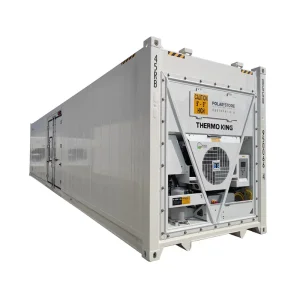
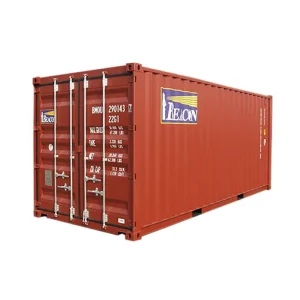

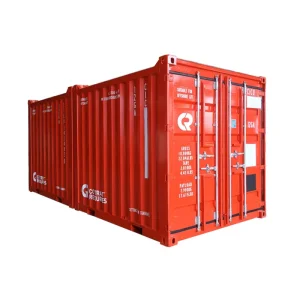
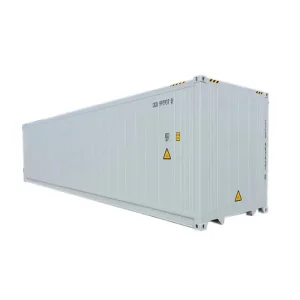
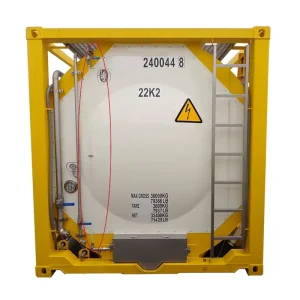

In-depth answers addressing structural criteria, custom tooling MOQ, corrosion resistance treatments, power compatibility, and international maritime safety certifications.
Standard ISO containers are engineered for vertical stack compression on cellular container ships and gentle spreader lifting. Conversely, DNV 2.7-1 (and EN 12079) offshore containers are specifically designed to withstand violent dynamic impact forces, wave slams, and snatched 4-point padeye sling lifting operations from tossing supply vessels to offshore drilling rigs. Offshore units feature continuous structural fillet welds, SPA-H/specialized structural alloy grades with certified Charpy impact values at -20°C or -40°C, and mandatory non-destructive examination (NDE) of 100% of critical lift-point welds.
Active refrigerated containers incorporate mechanical refrigeration machinery (such as Thermo King, Daikin, or Carrier) requiring 380V/460V 3-phase electrical input or diesel clip-on gensets. They are essential for deep-freezing down to -30°C or long oceanic routes spanning weeks. In contrast, passive thickened foam insulated containers use zero electricity and have no moving parts. Utilizing 80mm to 120mm vacuum-bonded polyurethane cores, they preserve pre-chilled freight on short 24- to 72-hour intermodal routes, cutting equipment capital expenditure by ~60% and entirely eliminating electrical and maintenance overheads.
For standard catalog items, second-hand port stock, and standard 20ft/40ft dry and reefer units, the MOQ is 1 unit. For non-standard dimensional projects requiring dedicated jig setup, tooling reconfigurations, custom laser cutting of corrugation dies, or specialized Bureau Veritas type testing (e.g., custom side-door configurations or hazardous chemical containment bays), the standard production threshold is generally 2 to 4 units. Trial prototype builds can be accommodated with dedicated engineering fees applied to the initial balance.
Our surface finishing strictly follows ISO 12944 C5-M (Very High Marine) anti-corrosion criteria. Steel components undergo SA 2.5 automatic shot-blasting to strip mill scale and establish a 40-75 μm surface roughness anchor profile. We apply a 3-layer coating system: a zinc-rich epoxy primer (providing cathodic sacrificial protection), a high-build polyamide epoxy intermediate barrier layer, and an aliphatic acrylic polyurethane topcoat resistant to extreme UV degradation, yielding a total minimum dry film thickness (DFT) of 180 to 220 μm.
Yes. We regularly build specialized internal architecture directly into our factory line. Hanging meat containers feature overhead SUS304 food-grade stainless steel crossrails with load capacities up to 1,500 kg per meter and anti-sway safety stoppers. Hazardous chemical containers are engineered with sealed bunded retention sub-floors (capable of capturing 25% of internal liquid capacity in line with OSHA/EPA regulations), flame-proof spark arrestor louvers, non-sparking zinc-plated floor grates, and ATEX-certified internal wiring conduits.
All international shipping containers fabricated in our facilities are stamped with an authentic stainless steel CSC (Convention for Safe Containers) safety approval plate riveted to the left door. The plate records the Bureau Veritas or classification society approval reference, timber treatment identification (conforming to Australian AQIS / ISPM 15 standards), maximum operating gross weight, allowable stacking weight (typically 216,000 kg for 9-high laden ocean stacking), and racking test values. These validated documents are released concurrently with final customs commercial invoices.
Our specialized container design engineers review client drawings, thermal specs, and cargo routing within 24 business hours. Connect with our technical export office in Tianjin for verified factory pricing, lead-time schedules, and CSC/DNV classification documentation.
