Enterprise Intermodal Engineering Whitepaper

High-Quality Container Sea Pricelist & Quotes

Direct-Factory Manufacturing Economics, ISO/CSC/DNV Certification Benchmarks, and Global Multimodal Procurement Intelligence for Industrial Operators.

Standard & Heavy Special Portfolio

Priority Container Sea Catalog & Direct Quotation Index (Tier 1)

Explore initial technical parameters and factory-floor price configurations across marine dry bulk, temperature-controlled, mini-modular, and offshore lifting containers.
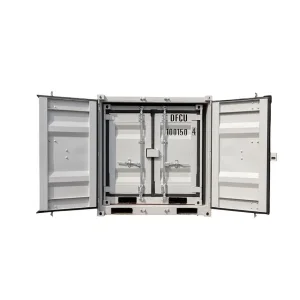
OEM Durable Cargo Shipping Container 4Ft/5Ft/6Ft/7Ft/8Ft/9Ft/10Ft/11Ft/12Ft Mini Storage Container

OEM Durable Cargo Shipping Container 4Ft/5Ft/6Ft/7Ft/8Ft/9Ft/10Ft/11Ft/12Ft Mini Storage Container

Get Instant Quote
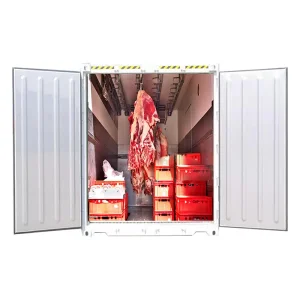
Buy Brand new hanging meat container for low temperature fresh transportation

Buy Brand new hanging meat container for low temperature fresh transportation

Get Instant Quote
OEM New DNV Certification Offshore Dry Cargo Container

OEM New DNV Certification Offshore Dry Cargo Container

Get Instant Quote
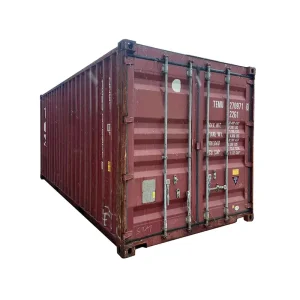
Famous 20ft Used Shipping or Storage Container

Famous 20ft Used Shipping or Storage Container

Get Instant Quote
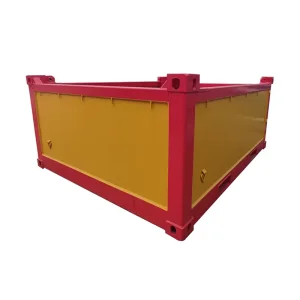
High-Quality New Offshore Basket Container for Offshore Operations

High-Quality New Offshore Basket Container for Offshore Operations

Get Instant Quote
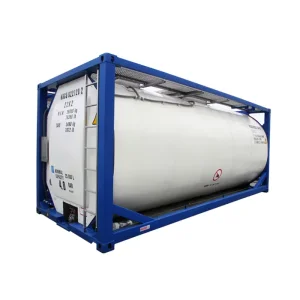
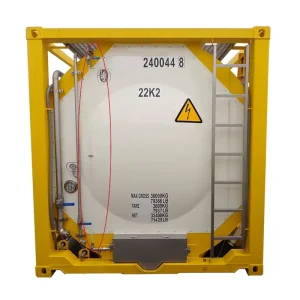
Buy ISO Standard 20ft Versatile Tank Container for Transport Chemicals

Buy ISO Standard 20ft Versatile Tank Container for Transport Chemicals

Get Instant Quote
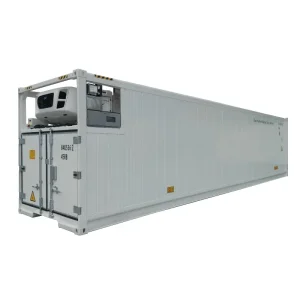
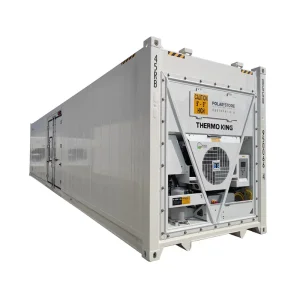
Famous New 40-foot high cube & 45-foot 'Belt and Road' railway refrigerated container

Famous New 40-foot high cube & 45-foot "Belt and Road" railway refrigerated container

Get Instant Quote
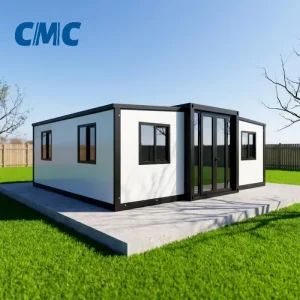
ODM 20ft Foldable Prefab Modular Homes Mobile Expandable Container House

ODM 20ft Foldable Prefab Modular Homes Mobile Expandable Container House

Get Instant Quote
Macro Supply Chain Intelligence

Global Intermodal Shipping & Container Sea Manufacturing Realities

Analyzing structural shifts across maritime steel allocation, decarbonization directives, and ocean freight logistics corridors governing the current purchasing ecosystem.

92.4M
Global TEU Inventory
SPA-H
Corten Weathering Steel Standard
100 KM
Factory to Port Corridor Proximity
ISO/BV/DNV
Triple Audit Traceability

Structural Steel Price Mechanics

Over 85% of total marine container tare weight consists of hot-rolled Corten-A (SPA-H grade) anti-corrosive alloy steel. Macro volatility in iron ore concentrates and metallurgical coking coal directly sets base pricing. Importers securing strategic factory quotes must lock steel price windows to avoid mid-production rate adjustments during 3,000-unit fleet fabrications.

IMO 2030 & Decarbonization Mandates

Stricter International Maritime Organization (IMO) carbon intensity indexes (CII) and EU Emission Trading Systems (ETS) are accelerating the demand for lightweight high-yield structural framing. Next-generation containers utilize structural optimization geometries that reduce unladen tare weights by 3.8% while maintaining dynamic stacking capacities up to 216,000 kg.

Cold Chain Cold-Loss Prevention

Global pharmaceutical logistics and fresh produce transits demand ultra-dense, non-fluorinated polyisocyanurate (PIR) and cyclopentane-blown polyurethane core formulations. Modern sea reefer architecture must balance absolute thermal conductivity coefficients (λ ≤ 0.032 W/m·K) against severe oceanic torsional flexing under extreme Beaufort force conditions.

Factory Quotation Architecture

Container Sea Pricelist & Technical Parameter Matrix

A transparent breakdown of direct capital expenditures, standard build dimensional metrics, structural tare specifications, and industrial certification parameters for commercial buyers.

Equipment Category Dimensions (L × W × H) Tare Weight (kg) Max Payload (kg) Thermal / Shell Spec Standard Pricing Index (FOB China) Compliance Standards
20ft Standard Dry ISO 6,058 × 2,438 × 2,591 mm 2,180 kg 28,300 kg Corten-A SPA-H 2.0mm Corrugated $1,750 - $2,350 ISO 1496-1, CSC, BV, ABS
40ft High Cube (HC) Dry 12,192 × 2,438 × 2,896 mm 3,740 kg 28,760 kg 28mm Marine Hardwood / Bamboo-Steel Composite $2,850 - $3,700 ISO 668, CSC, Cargo Worthy
40ft High Cube Marine Reefer 12,192 × 2,438 × 2,896 mm 4,480 kg 29,520 kg Carrier/Thermo King/Daikin (-30°C to +30°C) $11,800 - $17,400 ATP, ISO 1496-2, CSC, BV
20ft ISO Intermodal Chemical Tank 6,058 × 2,438 × 2,591 mm 3,620 kg 32,380 kg 316L Stainless Shell (17,500L - 26,000L) $15,500 - $24,000 IMDG, ASME VIII Div 1, ADR/RID
DNV 2.7-1 Offshore Cargo Basket Custom lengths (3m - 14m) 1,850 - 4,200 kg 15,000 kg Charpy V-Notch impact tested steel @ -20°C $4,200 - $8,900 DNVGL-ST-E271, EN 12079, Lloyd's
20ft Modular Expandable House 5,900 × 6,300 × 2,480 mm (Open) 2,450 kg Residential Grade 75mm Fireproof EPS/Rockwool Panels $5,100 - $8,400 CE, ISO 9001, Flame-Retardant B1

Direct Quotation Line Item Drivers: Transparent Total Cost of Ownership (TCO)

Procuring intermodal maritime assets involves much more than ex-factory equipment purchase prices. Engineering managers and global procurement officers must evaluate five interdependent cost factors that directly determine the landing efficiency of any fleet acquisition:

  • Metallurgical Chemistry & Steel Grade: Standard mild commercial steel degrades rapidly under oceanic saline atmospheres. True marine container builds require SPA-H weathering corten steel that forms an impervious atmospheric oxide protective layer, adding up to 15 years to container service life.
  • Paint Primer & Tri-Coat Protective Coating Systems: Zinc-rich epoxy primers (minimum 30μm dry film thickness), followed by high-build epoxy intermediate barriers (40μm) and polyurethane or acrylic waterborne finish topcoats (40μm), guarantee salt-spray resistance exceeding 1,000 hours per ASTM B117 standards.
  • Refrigeration Machinery Brand Ecosystem: Machine options dictate capital variance. Choosing between Carrier Transicold PrimeLINE, Thermo King Magnum PLUS, or Daikin LXE involves balancing compressor warranty durations, worldwide parts availability at transshipment ports, and operational coefficient of performance (COP) ratings.
  • Classification Society Surveying Overheads: Independent unit-by-unit audits and stamping by Bureau Veritas (BV), American Bureau of Shipping (ABS), Det Norske Veritas (DNV), or China Classification Society (CCS) confirm valid CSC plates, air leakage integrity, and transverse racking resistance.
  • Inland Intermodal Port Repositioning Feeds: With production plants strategically situated within 100 kilometers of the major Northern China maritime hubs (such as Tianjin Port), overland staging and ocean vessel feeder transfers remain completely isolated from inland rail bottlenecks and delays.
Macro Sector Solutions

Intermodal Sea Containers Across Critical Global Industries

Purpose-engineered structural architectures designed to endure harsh maritime corridors, isolated mining terrain, and sensitive pharmaceutical cool chains.

Hazardous Chemicals & Bulk Liquids

T11 and T14 ISO tank containers engineered with 316L pickled and passivated stainless steel pressure vessels, steam heating conduits, and compressed-air discharge valves. Designed to carry food-grade concentrates, hazardous industrial solvents, corrosive acids, and liquid petrochemicals across intermodal sea-rail-road networks without dangerous decanting risks.

Cold Chain Biopharma & Perishables

Blast freezers and hanging meat reefer units that deliver precise multi-temperature zoning down to -60°C. Controlled Atmosphere (CA) technology accurately modulates O2 and CO2 levels to retard produce respiration, extending the shelf-life of transatlantic and transpacific seafood, poultry, beef, and delicate exotic fruits.

Offshore Exploration & Dynamic Lifting

Standard marine containers will deform catastrophically under dynamic snatch-lifting loads experienced on open-ocean oil rigs. Our DNV 2.7-1 and EN 12079 certified offshore cargo baskets and dry units incorporate Charpy impact-tested structural steel, integral four-leg wire rope lifting slings, and heavy pad-eyes engineered for sea-state 6 emergency conditions.

Heavy Mineral & Dense Ore Logistics

Half-height open-top containers specifically reinforced for iron ore concentrates, bauxite, mineral sands, and heavy metallic scrap. Featuring high-tensile steel tipping bodies, reinforced internal lashing rings, and removable tarpaulin covers, these units maximize payload mass within tight ship-to-shore gantry weight limitations.

Belt and Road Multimodal Railway Links

Custom 45ft high-cube pallet-wide units engineered for direct interchange across standard gauge (1,435 mm) and broad Russian gauge (1,520 mm) railway networks. Seamless intermodal transition eliminates physical cargo handling at rail-to-sea freight transfer yards across the Eurasian continental land bridge.

Expeditionary & Rapid Modular Camps

Turnkey expandable mobile shelter containers featuring plug-and-play electrical wiring, thermal insulation envelopes, and integrated sanitation. Serving disaster recovery outposts, military operating bases, and remote mining extraction worker quarters where traditional brick-and-mortar construction is impossible.

Compliance & Quality Engineering

Global Regulatory Frameworks & Mandatory Structural Certification

Ensuring cross-border compliance with international maritime conventions, classification society rules, and structural load-bearing verifications.

CSC Safety Approval Stamping

Every commercial container intended for international sea transit must carry a stainless steel CSC (International Convention for Safe Containers) safety approval plate. The plate certifies stacking tests up to 9-high container columns loaded to full maximum gross weight (MGW), transverse racking resistance up to 150 kN, and floor load resistance testing.

Customs Convention on Containers (TIR/CCC)

To move across global land borders without intermediate customs cargo unloading, container hardware must comply with the Customs Convention on the International Transport of Goods Under Cover of TIR Carnets. All door hinges, locking bars, cam-keepers, and rivet attachments are engineered to prevent clandestine access without breaking tamper-evident seals.

Timber Treatment Phytosanitary Directives

Timber flooring installed in marine containers undergoes rigorous phytosanitary treatment verified by the Australian Quarantine and Inspection Service (AQIS). Floor panels receive pressurized chemical preservation (such as Basileum or synthetic pyrethroid treatments) preventing the international spread of destructive wood-boring pests.

Classification Societies & Factory Audits

Production facilities maintain ongoing quality control accreditation overseen by Bureau Veritas (BV), Lloyd's Register (LR), Det Norske Veritas (DNV), and the American Bureau of Shipping (ABS). Continuous factory non-destructive testing includes radiographic weld inspections, corner casting tensile tests, and pressurized water-jet ingress tests.

Field Application Scenarios

Regional Operating Environments & Operational Case Scenarios

Real-world engineering adjustments tailored for extreme temperature variations, corrosive saline docks, and demanding overland haulage routes.

Middle East High-Ambient Desert Corridors

Standard sea containers experience internal temperatures exceeding +65°C when exposed to prolonged Arabian Gulf solar radiation. For logistics assets operating in Saudi Arabia, UAE, and Oman, our units feature high-reflectance thermal ceramic topcoat barriers and heavy-duty reefer condensing fans designed to run continuously in ambient environments up to +52°C.

Sub-Zero Nordic & Arctic Logistics

Container steel undergoes ductile-to-brittle crystalline phase changes when operating in Arctic waters and high-latitude Finnish/Norwegian territories. Our sub-zero offshore containers utilize Charpy-tested impact-resistant structural steel that maintains certified fracture toughness down to -40°C, preventing catastrophic corner casting failure during cargo crane transfers.

West African Heavy Mine Operations

Heavy bauxite, iron ore, and lithium mining operations across Guinea, Ghana, and the DRC subject containers to aggressive mechanical abrasions and prolonged unpaved road vibrations. We supply reinforced cross-member floor chassis structures with 4.5mm thick high-yield wear plates and dust-proof heavy EPDM door seals that protect vital mining equipment.

North American & European Distribution

Fast urban freight distribution requires rapid side and end access. In these markets, traditional end-door loading causes costly forklift delays. Full side-open bi-folding door containers and industrial roller-shutter reefer containers enable complete sideways forklift access, accelerating cross-docking operations by up to 65%.

Technology Roadmap 2025-2035

Future Horizons: Smart Intermodal Telematics & Material Innovations

The convergence of satellite telematics, structural aerogel composites, and low-GWP refrigerants in the next generation of maritime cargo systems.

IoT Satellite Telematics & Predictive Maintenance

Next-generation intermodal containers integrate solar-harvesting edge telematics with dual-mode cellular and low-Earth-orbit (LEO) satellite transceivers. Fleet owners receive real-time data on internal temperature, humidity, shock impact, door openings, and compressor health, preventing cargo degradation before it occurs.

Ultra-Thin Silica Aerogel Insulation Systems

Traditional reefer containers lose usable internal cubic volume due to thick 75mm foam walls. Silica aerogel blanket composites offer superior thermal performance at a fraction of the thickness (λ ≤ 0.015 W/m·K). This material breakthrough increases internal container payload volume by up to 7% while reducing overall refrigeration energy consumption.

Ultra-Low GWP Natural Refrigerants (CO2 / R-744)

Global environmental treaties such as the Kigali Amendment are accelerating the phase-down of synthetic HFCs like R-134a and R-404A. We are deploying trans-critical CO2 (R-744) refrigeration units that deliver a Global Warming Potential (GWP) of exactly 1. These systems offer zero ozone depletion potential, non-flammability, and outstanding cooling efficiency across high-ambient trade routes.

Heavy Industrial & Specialized Logistics

High-Performance Intermodal Catalog & Special Asset Index (Tier 2)

Review heavy-duty, high-cube refrigerated, liquid asphalt, side-access, and offshore certified container variants ready for deployment across global maritime networks.
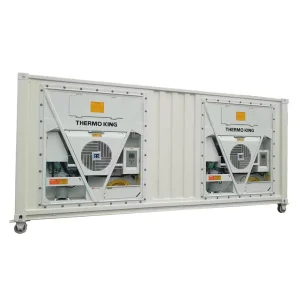
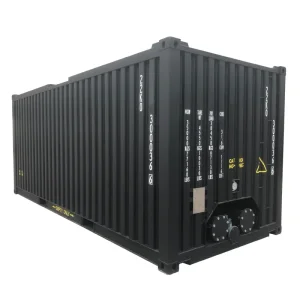
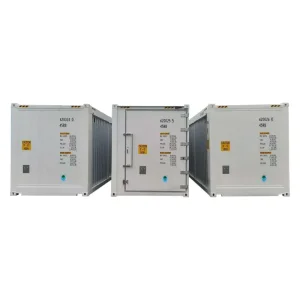
China The new blast reefer containers are certified by classification societies

China The new blast reefer containers are certified by classification societies

Get Instant Quote
Famous 20 Feet Heated Shipping Asphalt Container

Famous 20 Feet Heated Shipping Asphalt Container

Get Instant Quote
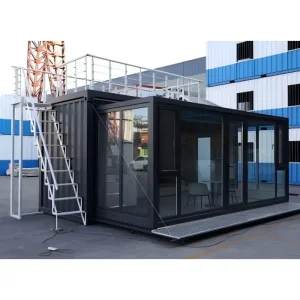
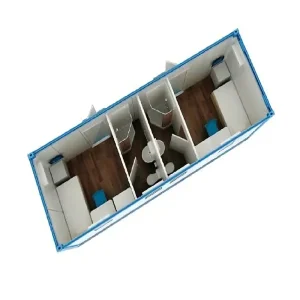
ODM 20ft 40ft Standard Size Accommodation Modular House Container

ODM 20ft 40ft Standard Size Accommodation Modular House Container

Get Instant Quote
Famous 20ft Modular Container Houses Expandable Steel Container House

Famous 20ft Modular Container Houses Expandable Steel Container House

Get Instant Quote
China OEM 40ft High-Cube Customized Three-in-One Combination Reefer Storage Container

China OEM 40ft High-Cube Customized Three-in-One Combination Reefer Storage Container

Get Instant Quote
ODM 40ft High-Cube Side Open Door Reefer Container

ODM 40ft High-Cube Side Open Door Reefer Container

Get Instant Quote
ODM New Half Height Ore Carrier Container Offshore Container

ODM New Half Height Ore Carrier Container Offshore Container

Get Instant Quote
Famous 20ft Tank Container for Alcohol

Famous 20ft Tank Container for Alcohol

Get Instant Quote
Technical Advisory

Frequently Asked Questions: Container Procurement & Sea Quotes

Expert answers addressing the primary technical, commercial, and regulatory concerns raised by international logistics directors and equipment buyers.

What specific variables dictate container sea price volatility across Asian manufacturing hubs?
Container manufacturing quotes are governed by three primary variables: hot-rolled Corten-A (SPA-H) steel spot prices, marine-grade hardwood or composite bamboo flooring availability, and currency exchange movements. Because raw steel accounts for approximately 60% of a dry container's total factory cost, shifts in global iron ore markets directly impact per-unit quotes. Additional price drivers include eco-compliant waterborne paint systems, skilled welding labor, and classification society surveying fees.
What distinguishes a standard ISO container from a DNV 2.7-1 certified offshore container?
Standard ISO 1496 containers are engineered strictly for horizontal cargo ship cell-guide stacking and calm dockside crane lifts via twist-locks. In contrast, DNV 2.7-1 / EN 12079 certified offshore containers are constructed with heavier structural steel profiles, Charpy V-notch impact-tested corner pads, and integrated four-leg wire rope slings. This engineering ensures offshore units withstand the violent dynamic shock loads and angular stresses caused by floating crane hooks lifting in open-sea conditions.
How does an active reefer container compare with a passive insulated container?
An active refrigerated (reefer) container integrates an all-electric compressor unit (such as Carrier Transicold, Thermo King, or Daikin) powered by a 380V/460V 3-phase supply or external diesel generator (genset), continuously controlling internal cargo temperatures from -30°C up to +30°C. An insulated container uses thick polyurethane foam walls to passively limit thermal transfer without a mechanical compressor. Insulated units require no electrical power, making them ideal for short coastal transits or temperature-sensitive goods that simply need protection from freezing.
What structural documentation and certification plates are mandatory for international ocean shipment?
Every container shipped internationally must display a valid CSC (Convention for Safe Containers) safety approval plate riveted to the exterior left door. The plate must document the manufacturer, approval reference, date of manufacture, maximum gross weight, allowable stacking load (typically 192,000 kg to 216,000 kg), and transverse racking test values. Units moving across rail borders must also comply with UIC 592 regulations, and timber floors must carry an AQIS-approved phytosanitary treatment certificate.
What is the practical Minimum Order Quantity (MOQ) for custom-engineered OEM/ODM container builds?
Standard ISO dry boxes and off-lease units stored in port yards can be purchased in single-unit quantities (MOQ = 1). However, custom OEM/ODM configurations—such as bespoke side-opening door geometries, non-standard lengths (4ft to 12ft mini containers), heated asphalt tanks, or specialized blast-freezer enclosures—typically require an MOQ of 2 to 10 units. This allows the factory to balance tooling setup costs, stamping die calibrations, and third-party classification prototype testing.
How does proximity to port terminals reduce container total procurement costs?
Operating manufacturing and staging facilities approximately 100 km from major export hubs (such as Tianjin Port) delivers measurable cost savings. Inland transport fees from central inland facilities can add $400 to $900 per box in repositioning expenses. Factory-to-quay proximity minimizes road drayage, guarantees access to empty container yards, and accelerates vessel loading onto major East-West shipping lanes.
What are the key differences between food-grade and chemical-grade ISO tank containers?
While both types share 20ft external ISO dimensions, food-grade tank containers are built with 316L stainless steel polished to a high mirror finish (≤ 0.8μm Ra) to eliminate bacterial traps. They are reserved strictly for consumable cargo such as spirits, edible oils, juices, and dairy. Chemical-grade tanks (classified under IMDG code T11 through T22) feature specialized burst discs, top/bottom emergency shutoff valves, and high-pressure insulation systems rated for corrosive, toxic, or flammable materials.