Standardized intermodal machinery manufactured in accordance with strict ISO 1496-1, ISO 1496-2, and CSC guidelines. Directly certified for demanding overland corridors and high-salinity oceanic transit.
In modern supply chain architecture, different types of shipping containers are no longer treated as simple passive steel enclosures. They have transformed into active, precision-engineered nodes in multinational intermodal infrastructure.
Over 90% of global manufactured dry goods rely on standardized ISO corner castings.
Driven by pharmaceutical biologics, perishable agricultural corridors, and strict temperature control.
Atmospheric corrosion resistance 4 to 8 times higher than standard structural carbon steels.
Structural tolerance engineered for dynamic open-ocean crane snatches up to 30 knots wind.
Corporate logistics directors face mounting pressures: escalating inland multi-modal transshipment fees, severe geopolitical route deviations, and tightening carbon accounting regulations (such as the EU ETS maritime extension and IMO carbon intensity metrics). Consequently, selecting high-quality shipping container types requires rigorous alignment between structural yield strengths, volumetric payloads, aerodynamic profiles, and thermal retention metrics.
From agricultural exporters along the West African coast to clean energy infrastructure developers across Northern Europe, the requirement is clear: Containers must survive minimum 15-year marine deployment cycles without structural fatigue or atmospheric delamination. Equipment failure at sea translates directly to millions of dollars in compromised cargo, hazardous spills, or catastrophic vessel stability failures.
Different commercial requirements demand different container configurations. Below is an exhaustive breakdown of container types manufactured for heavy industry, mining, petrochemicals, cold-chain transport, and modular operations.
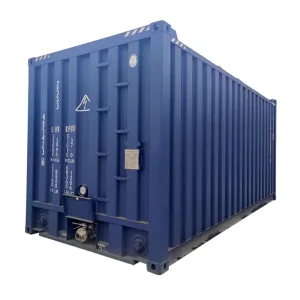
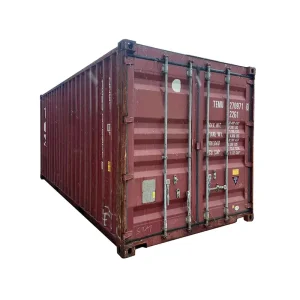
Constructed with corrugated SPA-H Corten steel panels, 28mm marine-grade hardwood plywood floors (Apitong or Keruing), and heavy-duty corner posts capable of supporting up to 9-high stacked static loads (approx. 216,000 kg). Available in 20ft Standard, 40ft Standard, and 40ft High-Cube (9'6" height for additional 12% volumetric capacity).
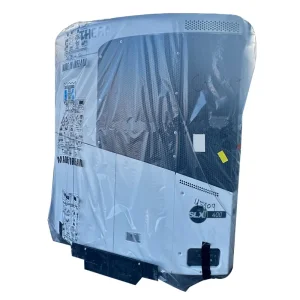
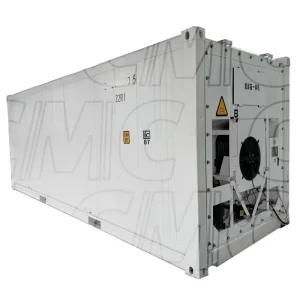
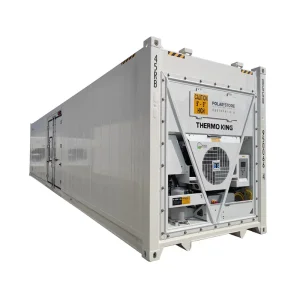
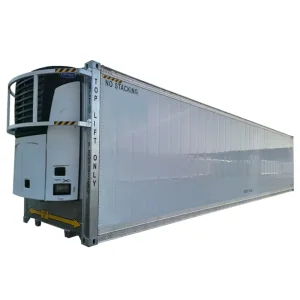
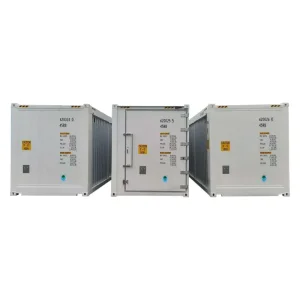
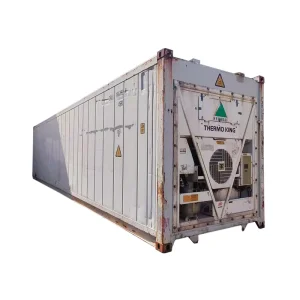
Equipped with integrated refrigeration compressors (Thermo King, Carrier Transicold, or Daikin) utilizing eco-friendly R134a or R452A refrigerants. Insulated with high-density cyclopentane-blown polyurethane foam (yielding thermal leakage $K \le 0.38\text{ W/m}^2\text{K}$) paired with T-bar aluminum subflooring for uniform pressurized airflow distribution.
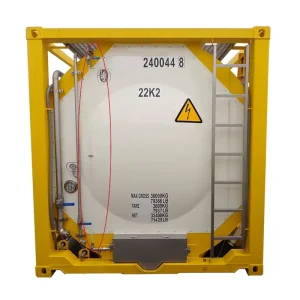
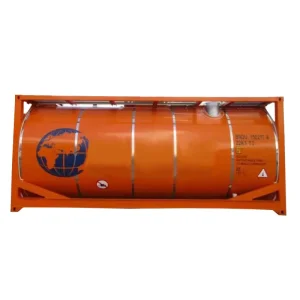
Built according to ASME Section VIII and IMO/IMDG Type 1 (T11/T14/T50) standards. High-grade 316L stainless steel pressure vessels enclosed within a 20ft structural steel ISO framework. Designed to safely transport food-grade liquids, industrial alcohols, and aggressive chemical payloads under severe hydraulic pressures.
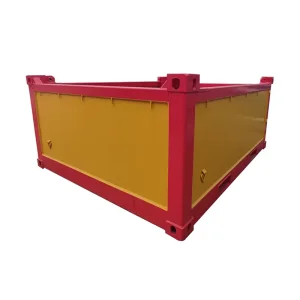
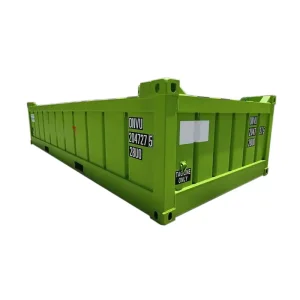
Engineered for extreme offshore conditions in oil, gas, and offshore wind logistics. Features include reinforced pad-eyes, heavy structural tube framing, low-temperature impact-tested steels (-20°C charpy test verification), and dedicated 4-leg sling sets. Ideal for offshore baskets, tool containers, and half-height mineral haulers.
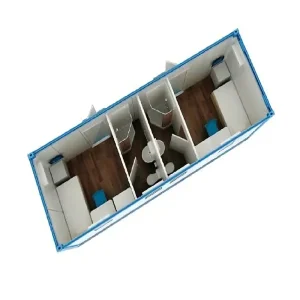
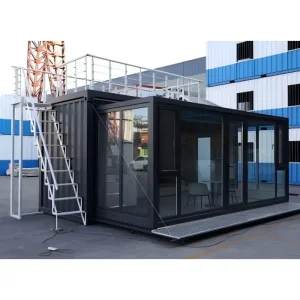
Prefabricated container dwellings, mobile field laboratories, and Battery Energy Storage System (BESS) enclosures. Featuring fire-resistant rockwool core wall panels, integrated UL/CE-certified electrical channels, and modular folding mechanisms that compress volume by 75% during oceanic repositioning.
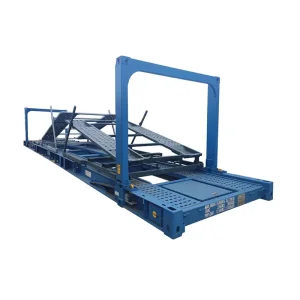
Special configurations designed to overcome dimensional loading bottlenecks. Full side-opening doors facilitate forklift access for extra-wide machinery; tarpaulin-sealed open tops accept overhead gantry crane placement; and hydraulic vehicle racking systems maximize automotive density up to 4 sedans per 40ft HC.
| Container Classification | Primary Material Standard | Payload Capacity (kg) | Key International Benchmark | Typical Industrial Mission |
|---|---|---|---|---|
| 20ft Standard Dry GP | SPA-H Corten Steel / 28mm Hardwood | 28,200 kg | ISO 1496-1, CSC Approved | Dense manufactured goods, mining gear, base metals |
| 40ft High-Cube Dry (HC) | SPA-H Corten Steel / Bamboo Composite | 28,800 kg | ISO 668, TIR, UIC | Volumetric consumer goods, electronics, palletized freight |
| 40ft High-Cube Active Reefer | SUS304 Stainless / Al-Alloy / PU Foam | 29,400 kg | ISO 1496-2, ATP Certified | Biopharmaceuticals, frozen seafood, fresh horticulture |
| 20ft T11 ISO Tank | 316L Stainless Steel / Q345R Frame | 32,000 kg | ASME VIII, IMDG, ADR/RID | Chemical solvents, edible oils, industrial reagents |
| Offshore Half-Height / Basket | High-Strength Structural Steel (S355) | 10,000 - 15,000 kg | DNV 2.7-1, EN 12079, ISO 10855 | Subsea drill pipe transport, offshore rigging equipment |
Procurement executives often focus solely on initial unit cost, ignoring structural lifecycles, maintenance costs, and terminal handling charges. A comprehensive TCO model protects long-term operational margins.
Confirm the container body is stamped with authentic Corten-A/SPA-H alloy. Coating schemes must feature a zinc-rich epoxy primer (minimum 30μm), an epoxy intermediate barrier (40μm), and an acrylic or polyurethane topcoat (40μm), totaling $\ge 110\mu\text{m}$ dry film thickness (DFT). This ensures salt-spray resistance exceeding 1,000 hours per ASTM B117.
Flooring constitutes up to 18% of container tare maintenance. Apitong hardwood veneers must be preserved with Australian Department of Agriculture (AQIS) compliant immunizing treatments to avoid customs rejections. Eco-friendly bamboo composites provide equal bending strength ($E \ge 8,500\text{ N/mm}^2$) with improved moisture resistance.
Verify that every unit has a physical, riveted stainless steel CSC (Convention for Safe Containers) safety approval plate. The plate must verify Bureau Veritas (BV), ABS, Lloyd’s Register, or DNV classification, confirming compliance with ISO 668 dimensions, ISO 1161 corner castings, and ISO 1496 strength criteria.
The shipping container manufacturing landscape is undergoing significant technological advancement. Driven by digital transformation and net-zero commitments, containers are adopting new telemetry and eco-friendly features.
Active tracking has moved beyond basic cellular triangulation. Next-generation containers incorporate low-earth-orbit (LEO) satellite transceivers, integrated door sensors, and shock-detection accelerometers. Fleet operators receive real-time temperature, humidity, atmosphere composition ($O_2/CO_2$), and route deviation alerts mid-ocean.
Next-generation insulation utilizes silica aerogel blankets and micro-encapsulated Phase Change Materials (PCMs). By maintaining temperature stability passively for up to 120 hours without external power, these designs lower reefer compressor duty cycles by 35%—substantially cutting marine diesel burn and battery consumption.
Decarbonized metallurgy using Green Hydrogen Direct Reduced Iron (H2-DRI) will drastically reduce embedded manufacturing emissions. Combined with 100% waterborne Zero-VOC paint formulations and thermoplastic recyclable floor composites, future container fleets will meet stringent ISO 14040/44 life-cycle carbon neutrality benchmarks.
Deploying custom or standard containers requires full compliance with international maritime statutes. Each piece of equipment undergoes rigorous verification prior to release.
Standardized dimensional limits, structural strength, door opening spans, and handling interface requirements for dry multi-modal units.
Offshore dynamic lift verification ensuring steel toughness at -20°C and certified 4-point master-link sling safety configurations.
Ensures refrigerated containers meet international cold-chain compliance for perishable transport across transcontinental trade routes.
Stringent safety protocols governing pressure relief valves, periodic hydrostatic shell testing, and burst margins on liquid chemical tank units.
High-durability configurations built for specialized industrial, mining, and field operations. Engineered to meet international classification requirements.
Engineering, compliance, and operational answers compiled by factory specialists to guide industrial procurement decisions.
