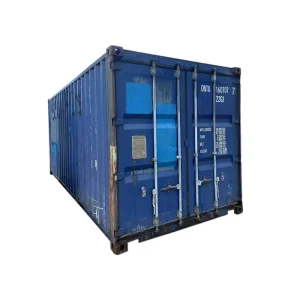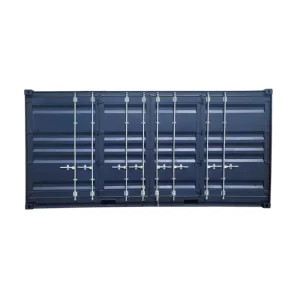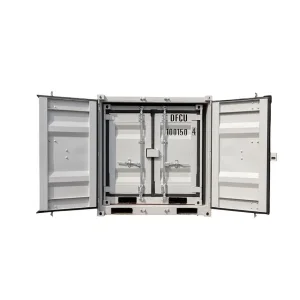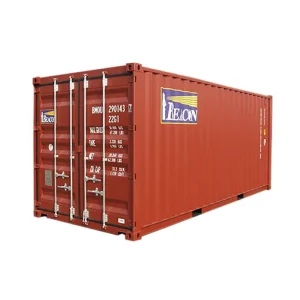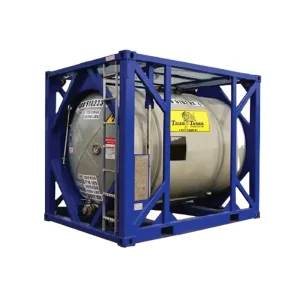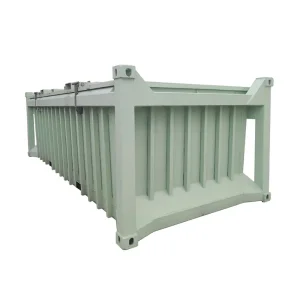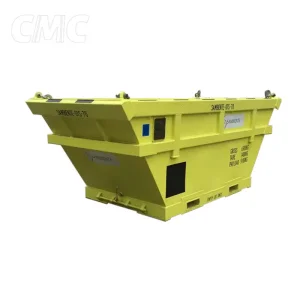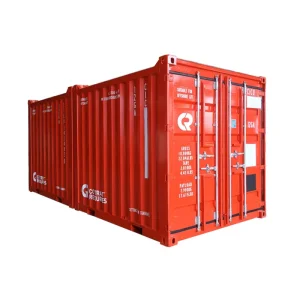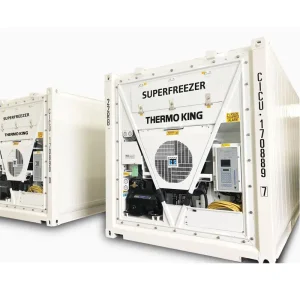
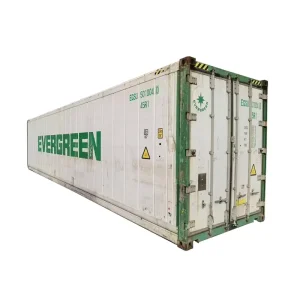
Browse our core inventory of standard intermodal freight boxes, specialized hazardous containers, and temperature-controlled units engineered to ISO and BV marine standards.
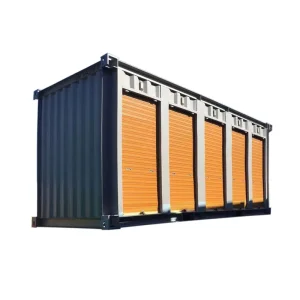
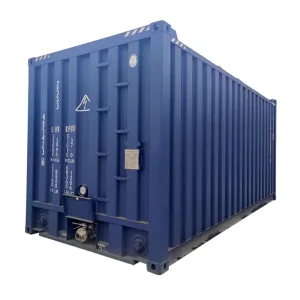
Closing the engineering gap between standard 20ft density limits and 40ft spatial constraints. How the 30-foot footprint addresses modern axle load restrictions, bulk density distribution, and modular power integration.
Standard 40ft containers frequently "cube out" before reaching maximum permissible highway weight, whereas 20ft units suffer from floor space starvation for voluminous medium-density commodities. The OEM 30ft container strikes the exact mechanical equilibrium for high-density bulk cargo, heavy industrial hardware, and dual-pallet logistics without triggering over-axle transit penalties across European and North American road networks.
As the renewable energy sector shifts toward turnkey utility-scale Battery Energy Storage Systems (BESS), the 30-foot form factor has emerged as the global structural benchmark. It accommodates heavy liquid-cooled lithium-iron-phosphate (LFP) battery racks, power conversion systems (PCS), and automatic aerosol fire suppression manifolds within a footprint that remains fully crane-hoistable and chassis-transportable worldwide.
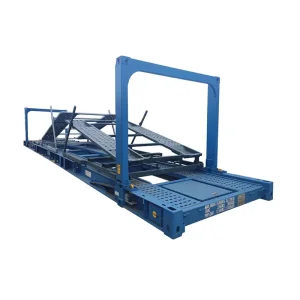
Custom 30ft chassis and rail pocket designs integrate directly into multimodal European Swap Body networks and North American well cars. Engineered with corner castings at both the standard 30ft geometry and specialized 20ft intermediate points, our OEM containers guarantee seamless transshipment across maritime spreader bars, reach stackers, and specialized articulated spine cars.
Operating from premier manufacturing clusters in Tianjin and Suzhou, CIMIC leverages more than four decades of continuous industrial innovation to deliver unmatched structural reliability, supply chain resilience, and global shipping convenience.
Direct mill partnerships with domestic steel giants guarantee verified Corten-A (SPA-H) structural steel sourcing. We strictly regulate yield strength (≥ 345 MPa), elongation properties, and atmospheric corrosion resistance through full mill test certification (MTC) tracking from the blast furnace to cold-roll shearing.
Our Tianjin automated manufacturing facilities employ six-axis robotic tandem MIG/MAG welding lines, ensuring absolute weld root penetration across corner casting joints, sill rails, and side panel corrugations. This eliminates micro-fissuring and delivers zero-distortion assembly across customized 30ft framing geometries.
Every fabricated unit undergoes SA 2.5 shot-blasting to strip mill scale before receiving a specialized 3-coat marine painting cycle: zinc-rich epoxy primer (30µm), high-build epoxy intermediate (40µm), and polyurethane topcoat (40µm) formulated to withstand 1,000+ hours of continuous salt-spray testing under ISO 12944 C5-M standards.
Situated within 100 kilometers of the major international shipping hub of Tianjin Port, our logistics yard enables real-time vessel staging, "One-Way Cargo" load planning to slash empty repositioning freight costs, and instant Bureau Veritas (BV) or China Classification Society (CCS) surveyor sign-offs.
Rigorous dimensional accuracy built under ISO 668 and ISO 1496/1 classifications. Fully verifiable structural data for engineering consultants, naval architects, and procurement leads.
| Technical Parameter | 30ft Standard Dry Van (30' x 8' x 8'6") | 30ft High Cube Dry Van (30' x 8' x 9'6") | 30ft Offshore Modular (DNV 2.7-1 / EN 12079) |
|---|---|---|---|
| External Length / Width / Height | 9,125 mm / 2,438 mm / 2,591 mm | 9,125 mm / 2,438 mm / 2,896 mm | 9,125 mm / 2,438 mm / 2,896 mm (excl. pad eyes) |
| Internal Length / Width / Height | 8,980 mm / 2,352 mm / 2,393 mm | 8,980 mm / 2,352 mm / 2,698 mm | 8,850 mm / 2,220 mm / 2,500 mm (insulated) |
| Door Opening (Width x Height) | 2,340 mm x 2,280 mm | 2,340 mm x 2,585 mm | Custom Blast / Weather-tight Hatching |
| Internal Volume Capacity | 50.6 m³ (1,787 cu. ft.) | 57.1 m³ (2,016 cu. ft.) | 49.1 m³ (project specific payload interior) |
| Tare Weight (Base Box) | 2,850 kg (6,283 lbs) | 3,150 kg (6,945 lbs) | 5,400 kg (11,905 lbs with padeyes & sling set) |
| Max Gross Weight (Rating) | 34,000 kg (74,957 lbs) | 36,000 kg (79,366 lbs) | 38,000 kg (83,775 lbs dynamic lift rated) |
| Flooring System | 28mm Marine Apitong Hardwood Plywood | 4.5mm Heavy Chequered Steel Floor Plate | Anti-Static / Fire-Resistant Aluminum Grating |
| Corner Castings Standard | ISO 1161 (8 units, top & bottom) | ISO 1161 with supplemental 20ft intermediate | Integrated Forged High-Impact Pad Eyes (4-point) |
| Certification & Class Approvals | BV / ABS / CCS / CSC / UIC 592 | BV / ABS / CCS / CSC / TIR | DNVGL-ST-E271 / ISO 10855 / Lloyd's Register |
Across harsh offshore oil exploration zones, municipal energy sites, remote mineral corridors, and advanced temperature-monitored cold distribution networks.
Utility project developers select custom 30ft containers because their volume provides the ideal length-to-weight balance for high-capacity battery configurations without exceeding highway bridge limits. We incorporate structural roof reinforce plates for HVAC chillers, pre-cut explosion relief panels, NFPA 69/68 compliant venting doors, and automated floor drainage gutters for localized coolant retention.
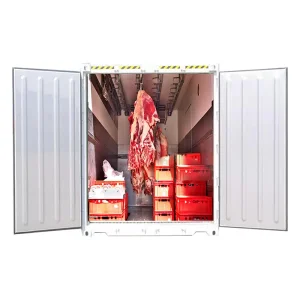
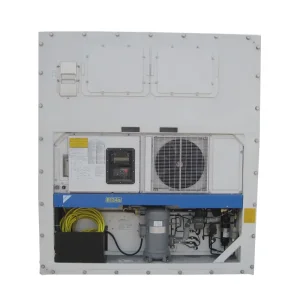
For fresh seafood, high-yield meats, and biopharmaceutical freight, standard 20ft units frequently lack the internal staging room for pallet airflow circulation, while 40ft reefers prove too long for nimble mountain haulage or urban wholesale distribution centers. The 30ft reefer platform balances thermal envelope efficiency with superior internal cubic utilization.
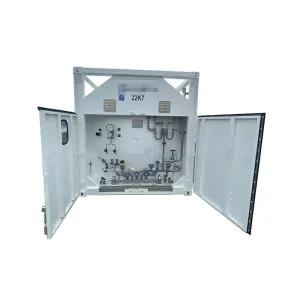
Designed for severe North Sea and Gulf of Mexico operational cycles, our 30ft offshore skid-mounted enclosures undergo rigorous drop impact testing, Charpy V-notch steel impact validation at -20°C or -40°C, and certified non-destructive testing (NDT). Outfitted with multi-point master lifting slings for safe hoist transfer between offshore support vessels (OSVs) and production platforms.
Comprehensive procurement intelligence for EPC contractors, logistics directors, and OEM fleet procurement committees navigating global trade realities.
Global carbon tariffs and road emission regulations are pushing fleet managers to eliminate unnecessary deadweight. Our R&D department incorporates high-tensile Domex and high-yield Corten configurations that strip up to 12% of structural tare weight while reinforcing side wall anti-buckling strength.
Every newly commissioned 30ft container can be pre-fitted with integrated solar-harvesting GPS trackers, acoustic impact sensors, interior atmospheric monitors (CO2, humidity, temp), and electronic door-seal monitoring systems wired directly to private enterprise cloud dashboards.
Non-standard lengths can present customs approval friction if not managed at the factory engineering level. CIMIC secures combined CSC (International Convention for Safe Containers) safety approval plates recognized by customs authorities in over 160 nations, certifying both rail swap-body and maritime service.
Custom non-ISO standard lengths typically accrue empty-haul charges. CIMIC provides custom interlocking engineering solutions that permit paired linking or one-way payload booking through our direct relationships with international container shipping alliances, slashing landed procurement budgets.
Critical procurement considerations, manufacturing parameters, structural modifications, and compliance protocols addressed directly by our senior engineering staff.
While cellular containership cell guides are set for 40ft units, 30ft containers are engineered with corner castings adhering strictly to ISO 1161 standards. For sea voyages, they are typically stowed on breakbulk decks, top tier deck stacks using specialized twistlock spacing, or fitted with intermediate corner castings at 20-foot centers to allow standard 20ft spreader lock-ins.
For custom engineering and bespoke production lines (e.g., customized roll-up side doors, bespoke equipment integration hatches, specific steel gauge framing), our typical line run MOQ is 2 to 4 units. For mass utility projects (like standardized BESS power housings), our facilities can comfortably scale to hundreds of units per month.
Yes. Our offshore modular containers are engineered and manufactured in strict compliance with DNVGL-ST-E271 (DNV 2.7-1) and EN 12079 standards. This encompasses structural material traceability (3.1 certificates), verified low-temperature impact testing, complete weld non-destructive testing (NDT), and load testing witnessed by certified class surveyors.
Beyond traditional 28mm marine-grade tropical hardwood Apitong plywood (which offers high elasticity and flexural strength), we manufacture containers with 4.5mm to 6.0mm anti-slip diamond chequered steel plates, smooth structural steel with leak-proof bunding for hazardous fluids, and removable galvanized grating for sub-floor cabling installations.
Standard engineering review, CAD model sign-off, and production scheduling take 15 to 25 business days depending on design complexity. With our factory situated just 100 km from Tianjin seaport, units can be staged for terminal gate-in within 48 hours of final QC clearance, with transit times varying by destination port (e.g., Europe: 28-35 days, US West Coast: 14-18 days).
We implement a strict 5-stage quality gate protocol: incoming raw steel spectrographic analysis, weld dimensional and penetration testing, 100% full-volume rain/water tightness testing at 2 bar nozzle pressure, dry film thickness (DFT) paint verification, and pre-dispatch CSC certification audits with complete photography documentation delivered directly to your desk.
Explore specialized industrial carriers, heavy-density bulk ore containers, and DNV-certified marine lifting baskets engineered for offshore performance.