Engineered for aggressive media, hazardous materials, and extreme offshore deployment environments.
Strategic perspectives for multinational chemical producers, logistics operators, and dangerous goods freight forwarders.
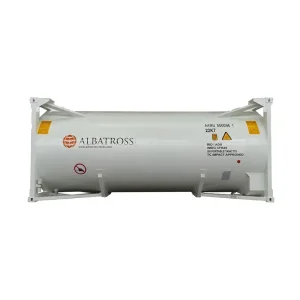
The global transport of liquid and solid bulk chemicals has undergone a seismic shift from conventional flexibags and steel drums toward standardized, high-integrity ISO tank containers and custom dangerous goods (DG) enclosures. This transition is propelled by intensified global regulatory scrutiny—predominantly the International Maritime Dangerous Goods (IMDG) Code, RID (European Rail), and ADR (Road Transport)—demanding zero-emission transport loops and secondary containment security.
For chemical multi-nationals and project procurement teams across North America, Europe, Africa, and Australia, sourcing chemical containers from Chinese manufacturing hubs requires verifying metallurgical pedigree, certification legitimacy, and precision manufacturing capabilities:
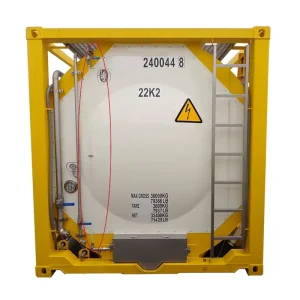
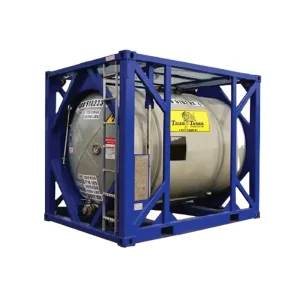
1. Metallurgical Formulation & Internal Linings: The handling of Class 3 (flammable liquids), Class 6 (toxic substances), and Class 8 (corrosives) dictates explicit tank shell metallurgy. Engineering standard ranges from high-grade austenitic stainless steel (316L) to specialized lining technologies, including Fluoropolymer PTFE/PFA coatings, phenolic resin, and vulcanized rubber barriers designed to counter pitting and stress corrosion cracking (SCC).
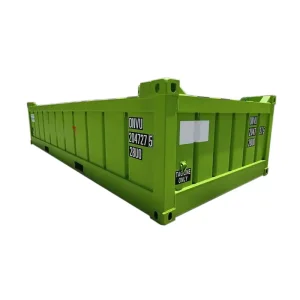
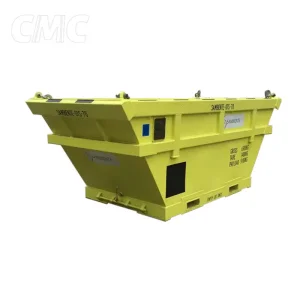
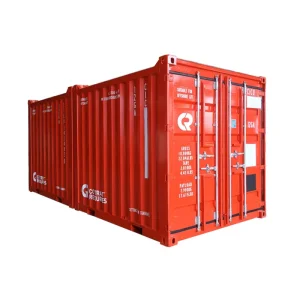
2. Offshore Heavy-Impact Certification: Standard ISO containers are architecturally unsuited for dynamic marine platform offloading. Sourcing offshore chemical and silt containers demands adherence to DNV 2.7-1 / EN 12079 structural tolerances, equipped with certified pad-eyes and crash-rated perimeter framing to prevent containment failure during deepwater transfers.
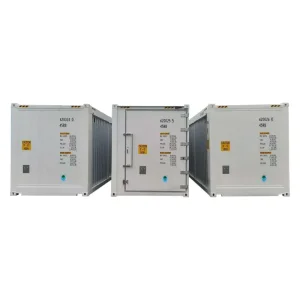
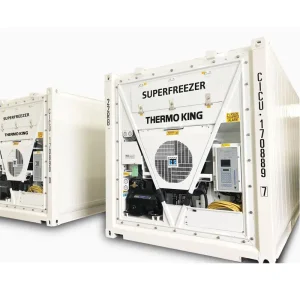
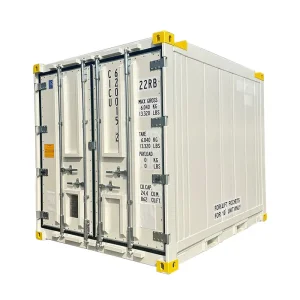
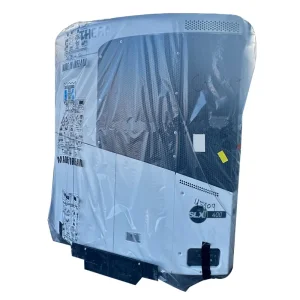
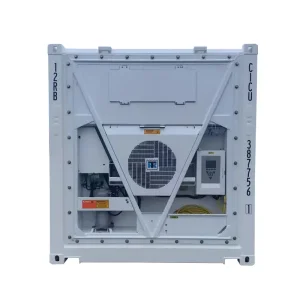
3. Thermal Homogeneity & Temperature-Controlled Chemistry: Sensitive precursors, catalysts, and polyurethane raw materials risk irreversible crystallization or auto-polymerization under temperature fluctuations. Integrating advanced insulation—such as vacuum insulation panels (VIP) paired with thickened polyurethane foaming or high-efficiency reefer machinery (Thermo King, Carrier, Daikin)—guarantees thermal deviation remains within ±0.5°C across 40-day maritime voyages.
Full integration of emergency relief valves, burst discs, and vapor recovery return lines to protect against over-pressurization during volatile transit conditions.
Thickened polyurethane wall structures combined with active steam heating or electric heat-tracing loops to prevent payload crystallization.
Certified to DNV 2.7-1 / ISO 10855 parameters for marine offshore logistics, ensuring resistance against heavy ocean spray and wave slamming forces.
Delivering end-to-end reliability from Tianjin manufacturing floors to destination discharge ports.
Operating out of modern production facilities in Tianjin and Suzhou, situated within 100 km of prime international shipping terminals. This proximity streamlines port drayage, avoids container demurrage, and facilitates direct port-of-loading vessel scheduling.
Every OEM chemical containment project undergoes documentation screening. Units are built under Bureau Veritas (BV) and DNV survey regimes, receiving authenticated CSC plates and Lloyd's/BV inspection certificates before dispatch.
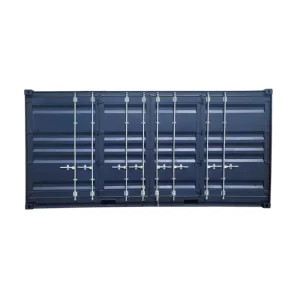
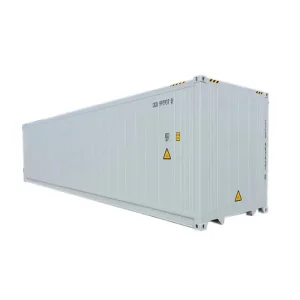
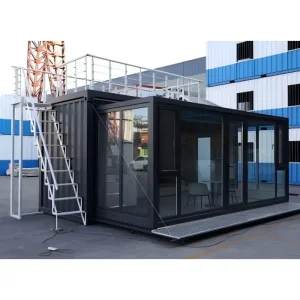
Accommodating dangerous goods side-access assemblies, explosion-proof interior ventilation, spark-arresting electrical infrastructure, and reinforced subfloor bunding designed to contain up to 110% of chemical spillage capacity.
Anticipating structural, metallurgical, and telemetry evolutions in smart chemical logistics.
Full deployment of ATEX Zone 1 certified telematics arrays. Real-time monitoring of internal pressure gradients, ullage levels, geo-fenced velocity, temperature differentials, and volatile organic compound (VOC) vapor leakage via encrypted satellite link.
Research into low-tare structural architecture utilizing duplex stainless steels (such as 2205) and composite outer ribbing, yielding up to a 14% reduction in tare weight to optimize commercial payload capacities per voyage.
Advanced zero-residue discharge sump geometry paired with non-stick fluoropolymer nanotechnology, mitigating hazardous washwater discharge volumes at port-side chemical depots and lowering lifecycle cleaning costs.
Technical clarity for procurement managers, logistics heads, and international trading desks.
Explore specialized containment solutions designed for chemical transfer, offshore rigs, and industrial storage.