Explore our certified intermodal solutions engineered under strict ISO & BV standards for maritime, offshore, cryogenic, and specialized cold chain operations.
A rigorous dimensional analysis of ISO 668 Series 1 freight containers (Designation 1CC and 1C), evaluating physical clearances, structural deflections, and payload capacities under global transport guidelines.
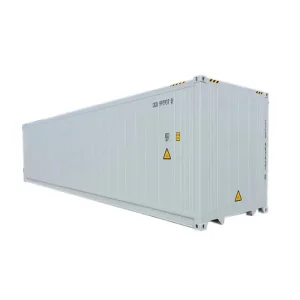
In the global logistics ecosystem, understanding the exact dimensions of a 20 foot shipping container is essential for optimizing payload mass distribution, calculating multimodal volumetric stowage, and engineering structural modifications. While the exterior envelope of a standard 20-foot intermodal unit is defined by ISO 668 (nominal length of 20 feet, width of 8 feet, and height of 8 feet 6 inches), OEM manufacturing variations frequently arise depending on corrugated panel depths, floor ply thickness, and structural sub-assemblies.
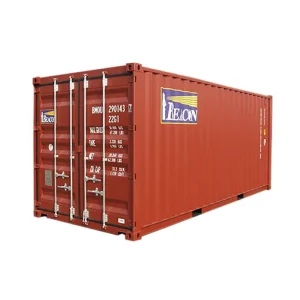
Standard 20-foot general purpose (GP) containers—designated as ISO Type 1CC—feature external dimensions of exactly 6,058 mm (19 ft 10.5 in) in length, 2,438 mm (8 ft 0 in) in width, and 2,591 mm (8 ft 6 in) in height. Internally, usable clearances are determined by the inner corrugation profiles of the SPA-H Corten steel side walls and the depth of the roof bows. Standard internal clearance yields a length of 5,898 mm, an interior width of 2,352 mm, and an internal vertical clearance of 2,393 mm from the top of the apitong or bamboo composite flooring to the lower flange of the roof corrugation.
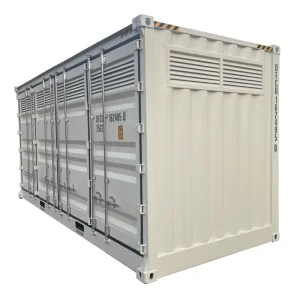
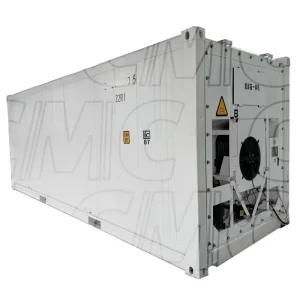
| Dimensional Metric | 20ft Standard Dry (1CC) | 20ft High Cube (1CD) | 20ft Reefer (Cold Storage) | 20ft Open Top / Side Door |
|---|---|---|---|---|
| External Length | 6,058 mm (19' 10.5") | 6,058 mm (19' 10.5") | 6,058 mm (19' 10.5") | 6,058 mm (19' 10.5") |
| External Width | 2,438 mm (8' 0.0") | 2,438 mm (8' 0.0") | 2,438 mm (8' 0.0") | 2,438 mm (8' 0.0") |
| External Height | 2,591 mm (8' 6.0") | 2,896 mm (9' 6.0") | 2,591 mm (8' 6.0") | 2,591 mm (8' 6.0") |
| Internal Length | 5,898 mm (19' 4.2") | 5,898 mm (19' 4.2") | 5,444 mm (17' 10.3") | 5,898 mm (19' 4.2") |
| Internal Width | 2,352 mm (7' 8.6") | 2,352 mm (7' 8.6") | 2,290 mm (7' 6.1") | 2,286 mm (7' 6.0") |
| Internal Height | 2,393 mm (7' 10.2") | 2,698 mm (8' 10.2") | 2,275 mm (7' 5.5") | 2,338 mm (7' 8.0") |
| Door Aperture (W × H) | 2,340 × 2,280 mm | 2,340 × 2,585 mm | 2,290 × 2,264 mm | Side: 5,700 × 2,180 mm |
| Tare Weight (±2%) | 2,200 kg (4,850 lbs) | 2,420 kg (5,335 lbs) | 3,080 kg (6,790 lbs) | 2,850 kg (6,283 lbs) |
| Max Payload Capacity | 28,280 kg (62,350 lbs) | 28,060 kg (61,860 lbs) | 27,400 kg (60,410 lbs) | 27,630 kg (60,917 lbs) |
| Internal Volume | 33.2 m³ (1,172 cu ft) | 37.4 m³ (1,320 cu ft) | 28.3 m³ (1,000 cu ft) | 31.5 m³ (1,112 cu ft) |
Intermodal stacking rigidity relies upon strict adherence to ISO 1161 corner casting geometries. In a factory-new OEM 20-foot unit, the center-to-center diagonal distances of the aperture holes in corner castings are held to a micro-tolerance of ±3.0 mm across opposite diagonal axes. This ensures automatic locking pins on gantry spreaders, container vessel cell guides, and skeletal semi-trailer twist-locks interface without mechanical binding.
The flooring substructure comprises cold-formed C-channel cross members welded at 300 mm pitch. When tested under ISO 1496-1 procedures, the floor structure must withstand an axle load test of not less than 7,260 kg (16,000 lbs) applied through a contact area of 142 cm² per wheel, guaranteeing safe forklift maneuvering during high-density container stuffing.
How state-of-the-art Chinese production corridors integrate metallurgical precision, robotic welding, and coastal port logistics to deliver high-integrity shipping containers globally.
Direct pipeline integration with premier domestic steel mills provides uninterrupted access to high-tensile SPA-H / Q345D atmospheric corrosion-resistant Corten steel. This preserves metallurgical yield strengths exceeding 345 MPa and ensures optimal passivation oxide layer formation.
High-precision fiber laser cutting systems, automatic corrugation presses, and six-axis multi-pass Cold Metal Transfer (CMT) robotic welding lines maintain bead consistency, minimize heat-affected zone (HAZ) stress cracking, and guarantee squareness across all spatial planes.
Automated shot-blasting to Swedish SA 2.5 profile followed by multi-stage robotic electrostatic application of zinc-rich epoxy primers and low-VOC waterborne polyurethane topcoats guarantees dry film thicknesses (DFT) >120 μm, surpassing 1,000-hour ASTM B117 salt-spray standards.
Production facilities located within the Tianjin Free Trade Zone and Greater Suzhou Industrial Corridors maintain substantial throughput advantages. Situated within 100 kilometers of international container terminals (e.g., Tianjin Port and Shanghai Port), completed OEM units bypass extended inland freight delays.
For international buyers, this enables single-dispatch "One-Way Cabotage Free Use" repositioning or direct vessel yard-transfer arrangements. Export documentation, CSC plate verification, and classification certifications (Bureau Veritas, China Classification Society, DNV) are executed within port-side bonded zones, reducing transit turnaround cycles by up to 35% compared to inland alternatives.
Tracing technical shifts across multimodal electrification, intelligent telematics, cryogenic chemical handling, and localized deployment models.
The standard 20-foot shipping container is evolving from a static steel box into a highly integrated, dynamic intermodal platform. Global logistics operators are prioritizing digital visibility, energy transition solutions, and custom structural modularity.
Modern fleet consignments increasingly demand factory-integrated IoT sensory clusters. Embedded flush within internal corrugation recesses or mounted to header beams, these ruggedized telematics transceivers communicate across low-power wide-area networks (LPWAN) and satellite links. Monitored parameters extend beyond basic GPS location to include real-time tri-axial shock mapping, door breach sensors, cargo atmosphere composition (CO&sub2;, ethylene), and structural deflection sensors.
A transformative macro trend is the modification of 20-foot high-cube containers into turnkey Battery Energy Storage Systems (BESS). Engineering an energy enclosure demands strict thermal management redesigns: integration of HVAC liquid-chilling loops, FM200/Novec fire suppression plumbing, explosion-relief roof hatches compliant with NFPA 68, and interior reinforcement capable of supporting battery bank dead loads exceeding 25 metric tons.
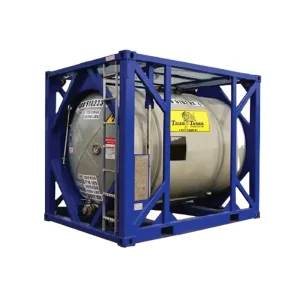
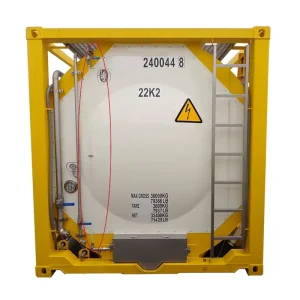
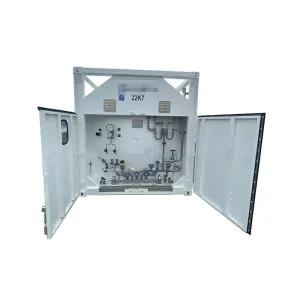
Beyond standard dry freight, specialized 20ft ISO frames engineered under ASME Section VIII and IMDG Chapter 6.7 host austenitic stainless steel (304L/316L) pressure vessels. For liquid cryogens (LNG, LOX, LN2), T75 containers incorporate high-vacuum multi-layer insulation (MLI) to maintain thermal hold times exceeding 30 to 45 days, facilitating direct transshipment between maritime vessels, rail flatcars, and regional distribution chasses without cargo re-pumping.
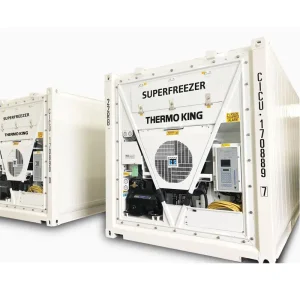
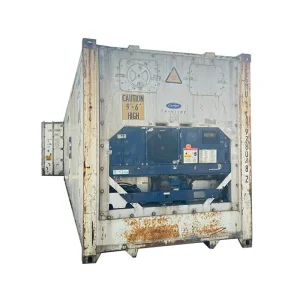
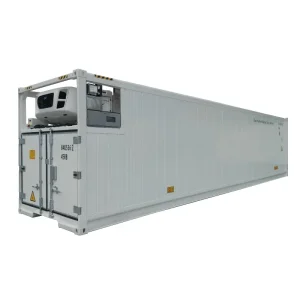
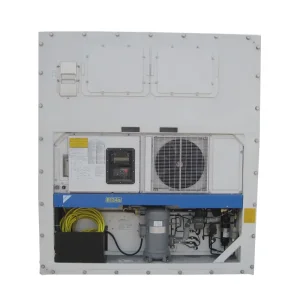
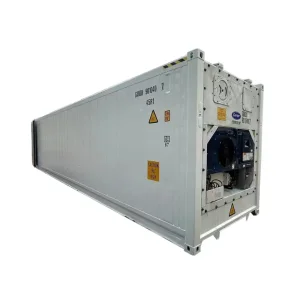
Transition from traditional fixed-displacement compressors to scroll DC inverters powered directly by hybrid solar arrays reduces active power draw by up to 40%, protecting pharmaceutical and perishable cargo.
Replacing traditional hardwood floorboards with high-tensile glass-fiber-reinforced polymer (GFRP) sandwich panels decreases tare weight by up to 180 kg while remaining impervious to moisture and biological contaminants.
Engineered corner casting collars and heavy-duty bottom side rails engineered to absorb severe 4G dynamic longitudinal shunting impacts on Eurasian transcontinental rail corridors.
Examining field-tested performance across extreme maritime offshore environments, dense mining operations, and modular architectural conversions.
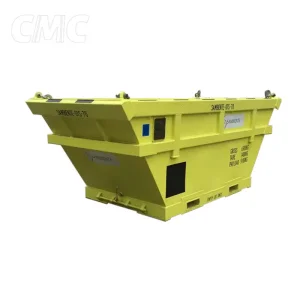
In offshore North Sea and Gulf of Mexico operations, standard ISO container designs are structurally insufficient to manage dynamic marine loading. Our specialized OEM 20ft offshore containers and silt basket systems feature heavy-duty external structural pad eyes welded directly to upper primary beams, accommodating dedicated four-part wire rope lifting slings. Structural steel undergoes stringent Charpy V-notch impact testing at -20°C (minimum 27 Joules absorption), preventing brittle fractures during heavy sea lifts.
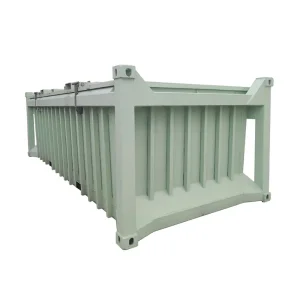
Dense mineral ores (iron ore fines, bauxite, copper concentrates) quickly exceed standard container floor ratings before volumetric capacity is reached. For mining conglomerates, our OEM half-height 20ft open-top containers feature thickened floorplates (up to 6.0 mm structural steel), removable hard roofs, and internal wall liners engineered to manage aggressive loading abrasion while lowering the center of gravity during transit.
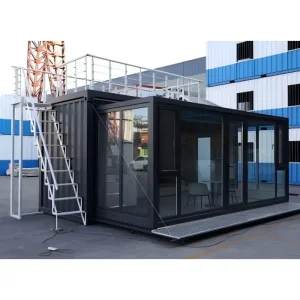
Precision dimensions make the 20-foot frame the ideal substrate for rapid-assembly expandable shelters, military field command posts, and decentralized clinics. Utilizing fold-out chassis outriggers, insulated structural insulated panels (SIP), and integrated electrical systems compliant with CE and UL requirements, these modified modules deploy in under 30 minutes, maintaining structural integrity across repeated relocations.
A procedural overview of factory acceptance testing (FAT), destructive load testing, and international certification required for global intermodal fleet operations.
Corner posts undergo comprehensive axial compressive proof loading of 84,800 kg per post (totalling 339,200 kg per 4-corner set), simulating a full 9-high container stack on commercial cellular vessels under rough sea conditions.
Hydraulic actuators apply transverse loads of 150 kN to top corner fittings to verify that racking deflections remain within ISO allowances, preserving door alignment and frame squareness throughout vessel rolling motions.
Every newly built unit must pass an automated high-pressure water spray test: 100 kPa nozzles deliver water over the roof, panel seams, and dual EPDM door gaskets at 1.5 m distance, verifying zero interior ingress.
Intermodal containers intended for international sea transit must carry a valid, stainless steel CSC (International Convention for Safe Containers) Plate. This riveted plate documents the manufacturer identification, approval reference, timber treatment compliance (Australian Quarantine Inspection Service - AQIS standards), maximum gross weight, allowable stacking weight, and racking test load values.
Our OEM/ODM manufacturing processes operate under full surveillance by international classification societies including Bureau Veritas (BV), DNV, American Bureau of Shipping (ABS), and Lloyd’s Register (LR). Material mill certificates (EN 10204 3.1/3.2), welder certifications (AWS D1.1), non-destructive testing (NDT) magnetic particle reports, and ultrasonic weld flaw assessments are cataloged for full batch traceability.
Answers to technical questions regarding dimensional tolerances, structural certifications, and custom modifications.
Review additional certified configurations engineered for hazardous freight, intermodal liquid carriage, expandable mobile living, and rail transport.