Explore heavy-duty offshore equipment, integrated gensets, asphalt heating modules, and ISO standard cargo units engineered to strict international maritime safety certifications.
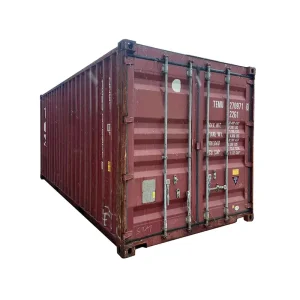
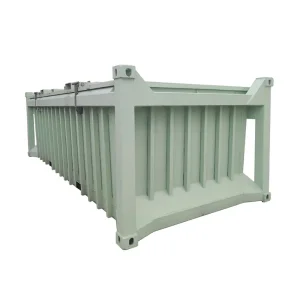
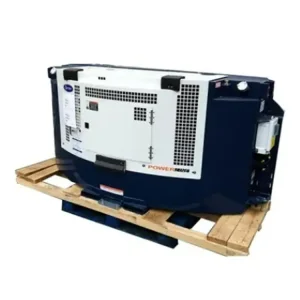
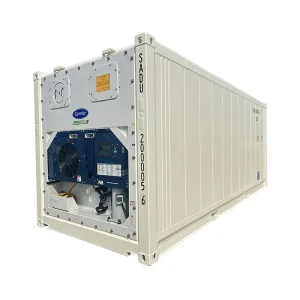
Procuring shipping containers directly from Chinese manufacturing facilities eliminates middleman markup, unlocks structural customization, and guarantees adherence to ISO 1496 and CSC safety conventions.
In modern intermodal freight logistics and bespoke modular engineering, the decision to buy a shipping container directly from manufacturers and specialized factories represents a fundamental pivot from transactional sourcing to strategic supply chain fortification. Global trade volatility, burgeoning energy storage system (BESS) deployments, and the escalating demand for cold-chain integrity require freight buyers, asset managers, and industrial EPC contractors to critically analyze the metallurgical pedigree, structural tolerances, and compliance standards of their containerized equipment.
A shipping container is far more than an enclosed steel box. Under international maritime transport mandates, each intermodal box functions as a sophisticated load-bearing structure capable of withstanding dynamic racking forces, corrosive marine atmospheres, and nine-high vertical stacking under full nominal capacity (exceeding 216 metric tons on the bottom corner castings). Sourcing through primary Chinese container factories guarantees that units are built with virgin atmospheric corrosion-resistant Corten steel (such as SPA-H or equivalent ASTM A588 grades), fitted with verified EPDM perimeter weather seals, and sealed with advanced zinc-rich epoxy paint formulations.
Direct factory manufacturing utilizes SPA-H Corten atmospheric corrosion-resistant steel. Upon oxidation, this alloy creates a dense patina barrier that impedes atmospheric rust penetration, maintaining structural rigidity across 25+ years in harsh saline sea environments.
Top-tier manufacturing facilities run comprehensive factory acceptance tests (FAT), certifying units to ISO 668, ISO 1496-1, and CSC (International Convention for Safe Containers) under class societies like Bureau Veritas (BV), ABS, and Lloyd's Register.
Factory-direct integration allows custom internal framing, acoustic dampening, side-opening bifold doors, explosion-proof HVAC systems, and custom interior bulkhead partitions tailored for equipment housing and site utility cabins.
China's integrated industrial hubs deliver unbeatable economies of scale, seamless access to upstream steel foundries, and integrated port logistics located within 100km of terminal berths.
Strategic geographic placement of manufacturing clusters near world-class seaports—most notably Tianjin, Shanghai, Ningbo, and Qingdao—provides an irreplaceable operational moat. Facilities located approximately 100 km from marine gates drastically reduce inland drayage expenses, shorten transit cycles from final assembly to vessel stowage, and mitigate pre-shipment transit wear.
Tianjin's free-trade pilot zones (FTA) offer streamlined customs clearance frameworks for international buyers purchasing "One-Way / SOC" (Shipper Owned Container) units. SOC procurement empowers international enterprises to load outbound commercial cargo in China, completely eliminating repositioning costs while exporting the structural asset directly to its final destination terminal.
China supplies over half the world's raw crude steel and specialized alloys. Leading domestic container manufacturers maintain direct off-take agreements with state-of-the-art domestic mills for continuous supply of high-grade SPA-H cold-rolled weathering steel coils. This vertical proximity eliminates long lead times for raw commodities and cushions overseas buyers against localized supply chain chokepoints.
From automated robotic seam welding and CNC continuous corrugation lines to multi-stage automated shot-blasting and cathodic electrodeposition painting halls, the Chinese container industrial complex delivers repeatability, low dimensional variance (within ±1.5mm across diagonal corner fixtures), and unmatched production volume.
| Evaluation Parameter | Direct Chinese Factory Order (Tier 1) | Local Secondary Reseller / Broker | Refurbished / Third-Party Repurposer |
|---|---|---|---|
| Corten Steel Specification | Certified Virgin SPA-H Weathering Steel | Variable / Mixed Grade Origins | Aged Mild Steel or Recycled Panels |
| CSC Plate Approval | Fresh 5-Year Valid Safety Plate (BV/ABS/LR) | Expired or Dependent on Prior Line | Void or Non-Compliant for Ocean Freight |
| Dimensional Tolerance | ISO 668 Strict Automated Tolerance (±1.5mm) | Prone to Residual Twist & Frame Deflection | Substantial Racking Distortion |
| Internal Flooring | 28mm Keruing / Apitong Marine Plywood (Tested) | Aged / Saturated / Repaired Timber | Composite or Patch-Welded Steel Plates |
| Unit Economics | Wholesale Factory Gate Direct (FOB / CIF) | Marked up 25% - 45% Broker Commission | Inflated based on regional scarcity |
Technological disruption is rapidly transforming intermodal equipment from static containers into intelligent, IoT-enabled infrastructure for high-value logistics and decentralized energy.
Modern container manufacturing integrates embedded cellular and satellite IoT sensors within cold-chain reefer housings and dry van door posts. Sensors transmit real-time telemetry: geo-location coordinates, internal humidity, temperature curve deviations, door-opening alerts, and tri-axial shock incidents during rough maritime handling.
Global decarbonization has ignited exponential demand for specialized ISO containers modified into Battery Energy Storage System (BESS) enclosures. Factories provide precision cutouts for liquid-cooling chillers, reinforced floor crossbeams to handle lithium iron phosphate battery stacks exceeding 30 tons, and NFPA 68/69 deflagration venting systems.
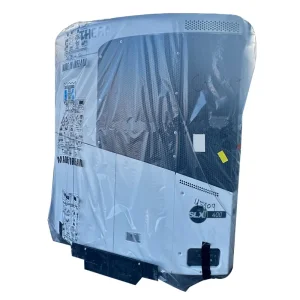
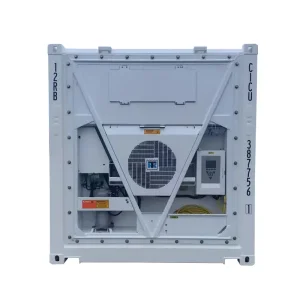
The global trade of high-value pharmaceuticals, biologics, and premium frozen seafood has accelerated reefer engineering. Modern factories integrate Carrier Transicold, Daikin, and Thermo King machinery featuring variable-speed digital scroll compressors, vacuum insulation panels (VIP), and low-GWP hydrofluoroolefin (HFO) refrigerants reaching -60°C.
Container versatility extends far beyond standard marine freight. Discover how factory-tailored units perform across harsh operational environments worldwide.
Half-height ore carriers and arctic-grade dry containers designed for Northern Canadian and Central Asian mines incorporate low-temperature impact-resistant steel rated down to -40°C, high-yield corner castings, and heavy-duty mechanical tipping latches for unrefined ores.
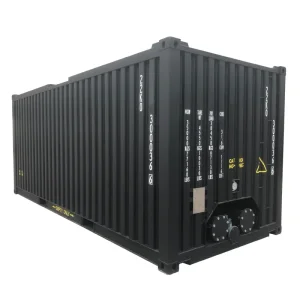
Offshore containers certified to DNV 2.7-1 / ISO 10855 incorporate continuous structural perimeter welds, standardized certified pad eyes, and specialized four-leg sling lifting sets to endure extreme dynamic acceleration during North Sea supply vessel transfers.
Passive insulated containers and mobile diesel-generator powered reefer units provide rapid field cold rooms in sub-Saharan Africa and Latin America, safeguarding fruit and vegetable harvest longevity without access to permanent municipal three-phase power grids.
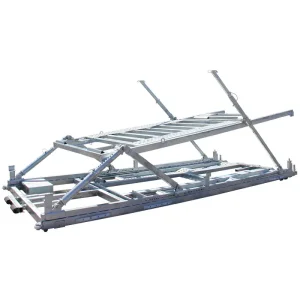
Integrated car carrier container racks and double-deck interior frames optimize pure car/truck transport. By converting standard 40ft high cube containers into secure multi-vehicle transit modules, logistics providers bypass expensive dedicated Ro-Ro ship delays.
Explore T75 cryogenic liquid tanks, multi-nested mini storage boxes, second-hand inspected fleets, and precision cooling units engineered for global delivery.

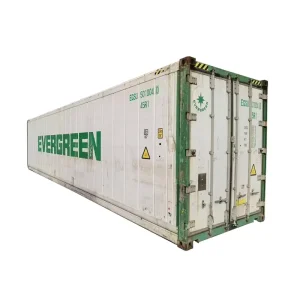

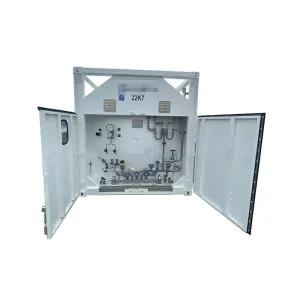
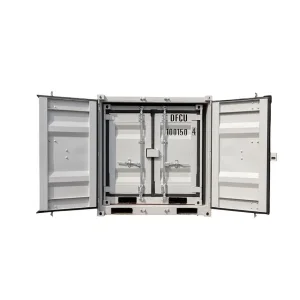
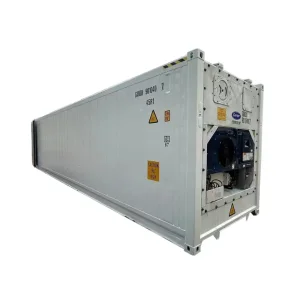
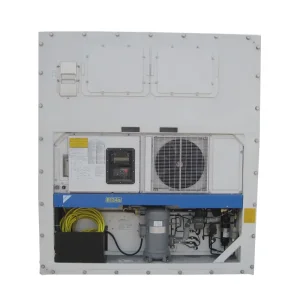
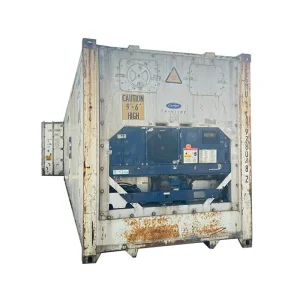
Procuring shipping containers directly from Chinese production lines involves verifiable engineering checks to guarantee safety, watertightness, and long-term asset value.
Every newly assembled or refurbished container undergoes a rigorous dark-room light inspection. Technicians enter the unit, close all doors securely, and confirm zero light ingress around the perimeter gaskets, roof sheets, corner castings, and floor junctions, certifying weather-tight integrity (WWT).
In accordance with ISO 1496-1, high-velocity water jetting (minimum nozzle pressure 100 kPa / 1 bar at 1.5 meters distance) is applied continuously across door seals, ventilation louvers, and welded sheet interfaces to guarantee zero water seepage during severe maritime storms.
Dry film thickness (DFT) magnetic gauges verify primer and topcoat applications across corrugation peaks, valleys, and understructures. Standard marine coatings must exceed 100-120 microns total DFT, accompanied by cross-hatch adhesion testing to avoid premature offshore delamination.
Explore engineering parameters, international customs classifications, structural payload calculations, and custom OEM processes directly from factory engineers.
