Precision-manufactured in compliance with ISO 1496, CSC, and DNV-GL standards for harsh oceanic transit, cryogenic custody transfers, and offshore dynamic lifting.
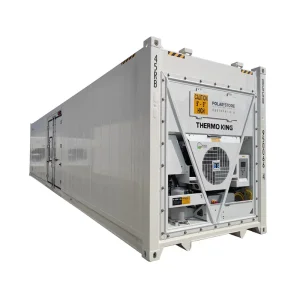
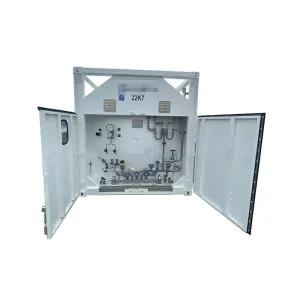
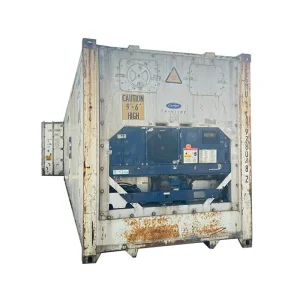
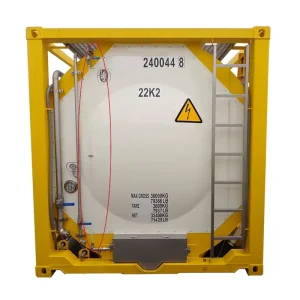
In modern intermodal supply chains, the dry freight shipping container, refrigerated container (reefer), and pressurized ISO tank represent the quintessential infrastructure of globalized trade. Over 95% of worldwide intermodal containers are engineered and manufactured along China's coastal industrial corridors, with Tianjin, Qingdao, and the Yangtze River Delta leading technological innovation. China Container Shipping Containers s Product ecosystems have shifted from standard low-cost welding lines toward high-precision robotic assembly, advanced metallurgical formulations, and integrated digital telematics.
Global demand continues to diverge beyond the standard 20ft and 40ft dry box. Industrial supply chain architectures necessitate sophisticated multi-temperature reefers capable of holding sub-zero ranges down to -70°C for sensitive biopharmaceuticals, DNV 2.7-1 certified offshore containers built to endure non-standard wave impact dynamics during offshore crane lifts, and cryogenic T75 ISO tanks facilitating international bulk transfers of liquid natural gas (LNG), argon, oxygen, and liquid hydrogen. CIMIC Group (Tianjin Cimic Imp&Exp Co., Ltd.) leverages more than four decades of continuous structural engineering experience to furnish freight forwarders, energy conglomerates, and shipping lines with units certified under ISO, Bureau Veritas (BV), and Det Norske Veritas (DNV).
Fabricated with atmospheric corrosion-resistant SPA-H steel, producing an oxidized passive patina that withstands severe oceanic salt fog, mitigating sheet perforation and extending operating lifespans past 25 years.
Fully stamped International Convention for Safe Containers (CSC) plates certifying allowable stacking weights (up to 216,000 kg for 9-high configurations) and transverse racking test parameters exceeding ISO 1496-1.
Cold-chain insulated assemblies utilize cyclically molded, high-density cyclopentane-blown polyurethane foam insulation ensuring an overall heat transfer coefficient (K-value) below 0.38 W/(m²·K).
Container structural engineering hinges on specific dimensional envelopes, dynamic shear factors, and internal volumetric optimization. Below is an engineering taxonomy covering primary production lines fabricated in CIMIC manufacturing hubs, covering structural profiles, payload metrics, and relevant international regulatory regimes:
| Container Classification | Standard Dimensions (L×W×H) | Max Gross Mass (R) | Tare Mass (Nominal) | Structural Metallurgy / Core Specs | Governing Regulatory Code |
|---|---|---|---|---|---|
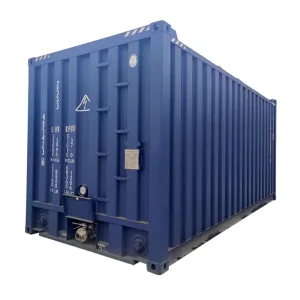
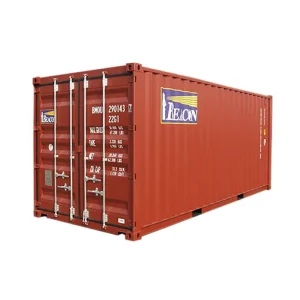
| 20ft ISO Standard Dry Cargo | 6,058 × 2,438 × 2,591 mm | 30,480 kg (67,200 lbs) | 2,200 kg | Corten-A Corrugated Side Panels, 28mm Marine Plywood Floor | ISO 1496-1 / CSC |
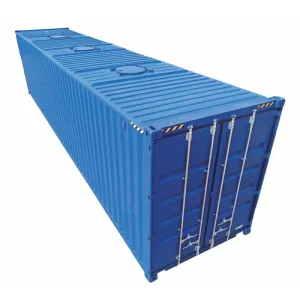
| 40ft High Cube (HC) Dry | 12,192 × 2,438 × 2,896 mm | 32,500 kg (71,650 lbs) | 3,850 kg | High-Yield SPA-H Framing, Gooseneck Tunnel Tunnel Floor Design | ISO 1496-1 / BV |
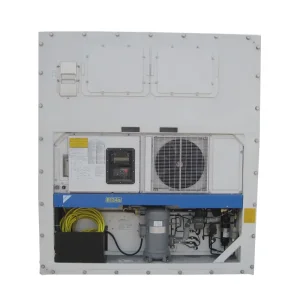
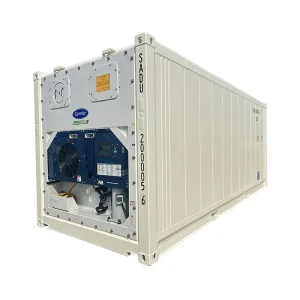
| 40ft HC Controlled Atmosphere Reefer | 12,192 × 2,438 × 2,896 mm | 34,000 kg (74,950 lbs) | 4,600 kg | SS304 Interior Lining, Polyurethane Insulation, Carrier/Daikin Units | ATP / ISO 1496-2 |
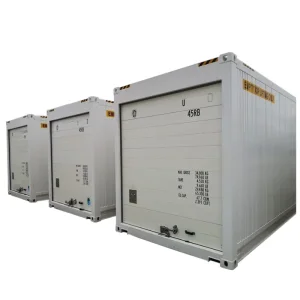
| 10ft / 20ft DNV Offshore Tank | 2,991 × 2,438 × 2,600 mm | 12,000 - 18,000 kg | 3,100 kg | 316L Stainless Shell, 4-Point Pad Eye Welded Rigging Assembly | DNV 2.7-1 / EN 12079 |
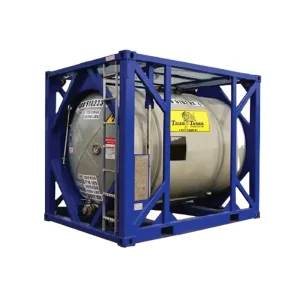
| T75 Cryogenic ISO Liquid Tank | 6,058 × 2,438 × 2,591 mm | 36,000 kg | 7,800 kg | Double-walled Vacuum Multilayer Super-insulation, 304/316 Vessel | ASME VIII / IMDG T75 |
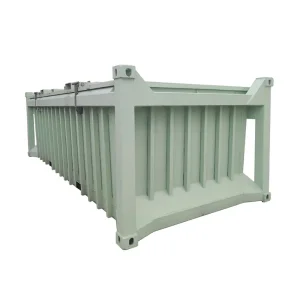
| Half-Height Bulk Ore Carrier | 6,058 × 2,438 × 1,280 mm | 32,000 kg | 2,800 kg | Reinforced Bottom Longitudinal Rails, Removable Hard-Top/Tarp | ISO / CSC / Heavy Mining |
From high-seas hydrocarbon platforms to inland rail networks, modern container design requires application-specific customizations.
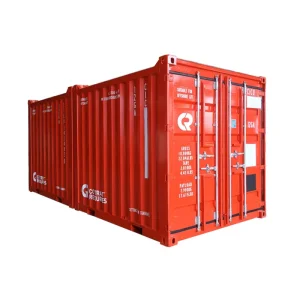
Offshore units undergo extreme lateral shear during marine vessel loading. CIMIC DNV 2.7-1 dry cargo and tank containers include impact-tested structural corner castings, internal lashing points for heavy tooling, and integrated sling sets tested at -20°C design temperatures.
Half-height open-top containers deployed in Australian and South American mining routes transport copper concentrates, iron ore, and heavy industrial slurries. The reduced center-of-gravity geometry prevents catastrophic tipping during intermodal rail turns and open-sea swells.
T75 and T50 tank systems handle liquid argon, CO2, and LNG custody transport. Engineered with high-vacuum insulation performance (vacuum integrity maintained below 0.1 Pa), these units deliver holding periods exceeding 60 days without boil-off venting during maritime transits.
The global shipping container paradigm is shifting toward smart, sensor-laden, and carbon-minimized logistics assets. Three macro transformations define the 2025–2035 manufacturing roadmap:
1. Autonomous IoT Edge Nodes & Cargo Telemetry: Traditional passive containers are increasingly retrofitted or natively manufactured with low-power satellite and cellular NB-IoT transceivers. Embedded sensors continually stream structural shock events, door breaches, atmospheric humidity, and reefer compressor diagnostic logs directly to cloud analytics architectures. This minimizes cold-chain spoilage for high-value biologicals and reduces insurance claims on rough trans-Pacific voyages.
2. Low-VOC Waterborne Coatings & Eco-Metallurgy: Under environmental mandates, solvent-borne polyurethane paints have been replaced across Chinese manufacturing facilities by low-VOC waterborne epoxy zinc-rich primer and acrylic topcoat systems. These chemistry formulations cut volatile organic compound emissions by over 70% during manufacturing while meeting ISO 12944 C5-M extreme marine corrosion classifications.
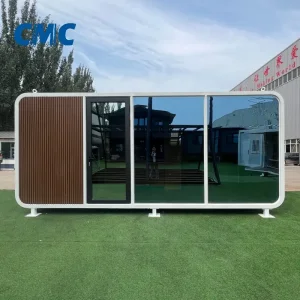
3. Prefabricated Modular Architecture (Apple Cabins & Office Pods): Structural ISO container dimensions have permeated global civil architecture. Factory-fitted 20ft modular pods featuring thermal break aluminum framing, rockwool acoustic insulation, and plug-and-play photovoltaic linkages streamline deployment for rapid field housing, disaster relief clinics, and distributed telecom data enclosures.
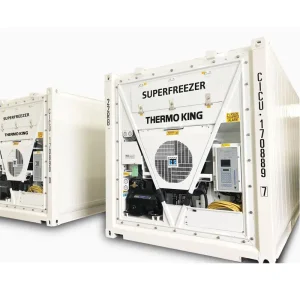
Explore heavy industrial bulk boxes, modular prefabricated cabins, and active Carrier/Thermo King freezer units direct from our manufacturing lines.
Engineered responses covering certification parameters, refrigeration systems, metallurgical validation, and export freight dynamics.
Standard ISO containers are engineered for land and static container-ship cell guide stacking (up to 9 tiers) where lifting forces occur strictly through four top or bottom corner castings via specialized spreaders. DNV 2.7-1 / EN 12079 offshore containers are built to survive open-sea dynamic wave impacts during crane hoisting onto drilling rigs. They require higher-yield steel charpy impact toughness at -20°C, welded multi-point pad eyes, and certification by DNV-GL or Bureau Veritas.
Each production lot undergoes factory validation including transverse racking tests, floor deflection assessments using a 7,260 kg test axle load per ISO 1496-1, and 6-bar hydraulic pressure sealing checks for tank shells. Insulated and refrigerated units receive thermal bridge thermographic analysis and vacuum decay testing to guarantee zero air pocket degradation inside the foamed panels.
CIMIC integrates tier-one marine refrigeration units including Carrier Transicold (ThinLINE, PrimeLINE), Thermo King (Magnum Plus), and Daikin (Zestia). Units can be calibrated for multi-voltage shore or gen-set operations (380V/460V 3-phase 50/60Hz) with digital dual-recording systems and optional Controlled Atmosphere (CA) nitrogen purging modules.
Standard inventory units (standard dry containers, used reefers, and ISO tanks stored at Tianjin, Qingdao, and Shanghai port yards) can be purchased from single-unit lots. Bespoke OEM/ODM builds—such as side-opening roll-up reefers, explosion-proof battery energy storage containers (BESS), or modified 10ft offshore skids—typically mandate a preliminary batch of 2 to 5 units depending on tooling and welding jig retooling requirements.
