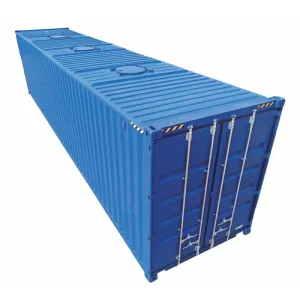
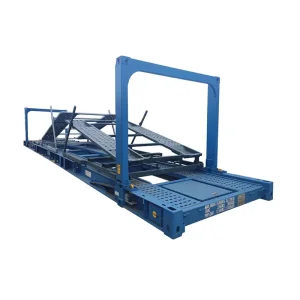
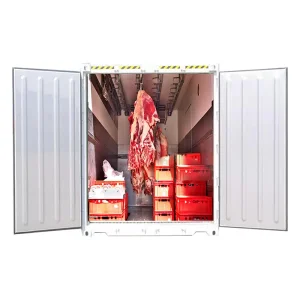
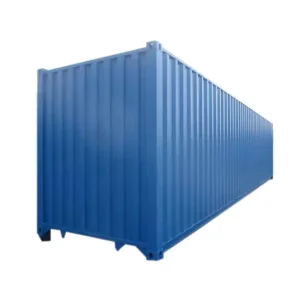
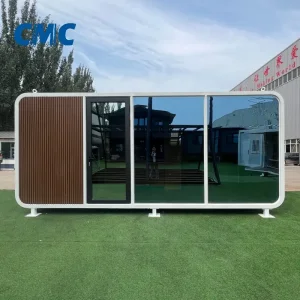
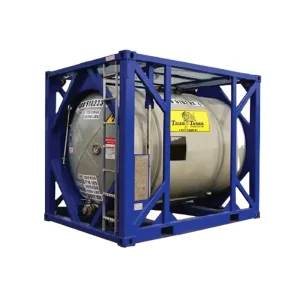
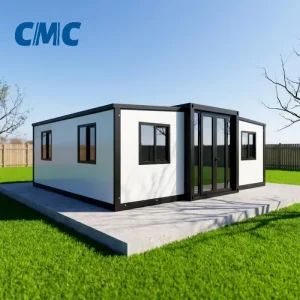
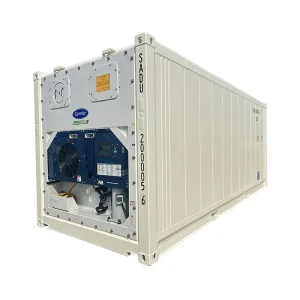
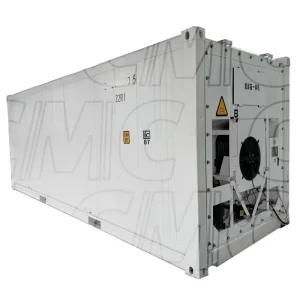
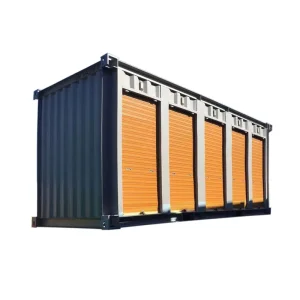
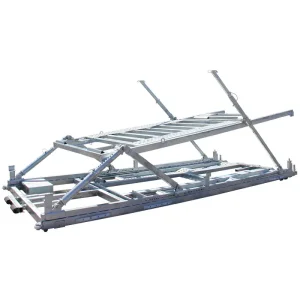
Explore our primary manufacturing series engineered in Tianjin and Suzhou, including certified offshore baskets, refrigeration modules, and specialized heavy bulk units fabricated to international shipping standards.
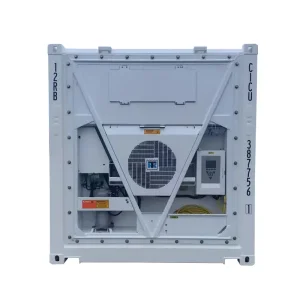
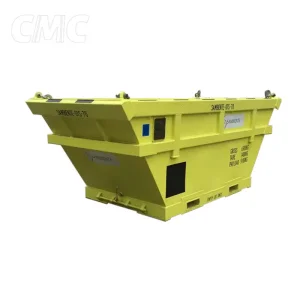
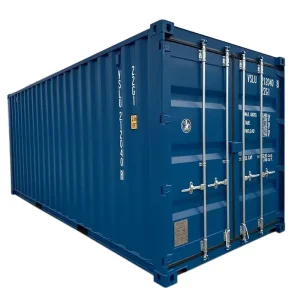
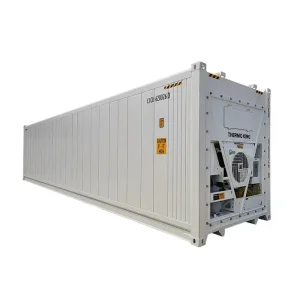
Meeting stringent subsea lifting requirements, deepwater exploration demands, and offshore wind farm expansion across hostile marine environments worldwide.
Standard ISO shipping containers are designed for predictable vertical stacking loads on vessel cellular guides. In contrast, offshore basket containers are subjected to severe dynamic multi-axis loads during vessel-to-rig crane transfers in open swells. Under standards like DNV 2.7-1 (DNVGL-ST-E271), BS EN 12079, and ISO 10855, baskets must maintain structural integrity under accelerated snatch-lifts, side-impact collisions, and sub-zero embrittlement conditions down to -20°C or -40°C.
The rapid global growth of deepwater hydrocarbon fields (in the Gulf of Mexico, North Sea, Santos Basin, and West Africa) combined with commercial-scale offshore wind energy developments has generated unprecedented demand for specialized tubular baskets. These baskets securely transport drill collars, long subsea umbilical cables, riser sections, casing joints, and heavy seabed anchoring hardware between supply shore bases and offshore installations without bending or cargo shifting.
Regulatory bodies such as IMO, LOLER, and major operators like Shell, BP, and TotalEnergies forbid uncertified units in offshore blocks. Every offshore cargo basket manufactured by certified Chinese fabricators must include mill test certificates (EN 10204 3.1/3.2), verified Non-Destructive Testing (NDT) reports (MPI and Ultrasonic), calibrated 4-leg wire rope sling assemblies, and permanent laser-etched data plates stamped by third-party surveyors (DNV, BV, LR, or ABS).
A deep breakdown of steel grade selection, integrated padeye stress analysis, cargo tie-down matrices, and specialized protective surface finishes.
Offshore baskets are fabricated using certified structural hollow sections and heavy plates, primarily S355J2+N or S355NL high-yield steel conforming to EN 10025. This ensures guaranteed notch toughness (minimum 27 Joules at -20°C or 40 Joules at -40°C) to withstand brittle fracture in Arctic or harsh North Sea operations. Side walls can be specified with expanded metal mesh, removable safety pins, or reinforced solid drop-doors.
Padeyes represent the single most safety-critical lifting point. Each padeye is modeled through Finite Element Analysis (FEA) to confirm minimum stress concentration under multi-directional angles (typically 45° from vertical). Fabricated from single thick monolithic plate passes without laminations, welded with full-penetration ultrasonic-tested butt welds, and machined with precise shackle pin hole tolerances to prevent point-loading wear.
Offshore baskets are exposed to constant salt spray, green seas, and abrasive mechanical wear. Factory finishing options include full immersion Hot-Dip Galvanizing (HDG) to ISO 1461 (achieving >85-120 µm coating thickness) or an advanced three-coat marine epoxy polyurethane system (zinc-rich primer, micaceous iron oxide intermediate, and aliphatic polyurethane topcoat) delivering C5-M / CX extreme marine protection.
| Basket Type / Size | Standard Lengths | Max Gross Weight (MGW) | Typical Payload | Common Applications |
|---|---|---|---|---|
| Tubular Drill Pipe Basket | 33ft / 45ft / 70ft / 90ft | 12,000 – 25,000 kg | 9,500 – 21,500 kg | Drill pipes, drill collars, casing, tubing, bottom hole assemblies (BHA) |
| Subsea Tooling Basket | 10ft / 15ft / 20ft | 8,000 – 15,000 kg | 6,200 – 12,800 kg | ROV intervention skids, subsea valves, flowline jumpers, hydraulic winches |
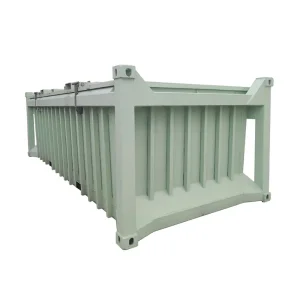
| Half-Height Cargo Basket | 20ft / 24ft | 10,000 – 18,000 kg | 7,800 – 15,200 kg | Wellhead valves, heavy drill bits, mooring shackles, wire spooling drums |
| Offshore Silt & Cuttings Basket | 8ft / 10ft | 6,000 – 12,000 kg | 4,500 – 9,800 kg | Drilling mud skips, industrial silt filtering, marine dredging sediment transport |
Why leading offshore operators and oilfield service companies (SLB, Baker Hughes, Halliburton, TechnipFMC) procure DNV-certified baskets from Chinese manufacturing hubs.
Our primary production plants in Tianjin and Suzhou leverage China's world-leading heavy industrial clusters. Proximity to tier-one steel producers (such as Baosteel, Ansteel, and HBIS) guarantees mill-certified S355 plates within hours, while specialized shot-blasting, large-scale hot-dip galvanizing baths, and certified NDT labs are located within a 50 km logistics radius, compressing production schedules by over 40%.
Welding integrity is maintained through qualified Welding Procedure Specifications (WPS) and Procedure Qualification Records (PQR) witnessed and endorsed by DNV and BV surveyors. Utilizing computerized submerged arc welding (SAW) and robotic flux-cored arc welding (FCAW) stations, our factories achieve consistent penetration, clean bevel joints, and zero slag inclusions on structural frames and lifting points.
Located approximately 100 km from Tianjin Port and Shanghai/Ningbo ports, transport time from factory floor to international container vessels or breakbulk carriers is reduced to under 24 hours. Long tubular baskets (up to 70ft-90ft) are shipped via flat-rack containers or chartered breakbulk vessels with custom sea-fastening brackets, saving international buyers thousands in inland freight.
Customized container engineering matched to drilling rigs, floating production units, subsea umbilical risers, and offshore wind installations.
On floating semi-submersibles and drillships in the North Sea, Gulf of Mexico, and West Africa, 45ft to 70ft drill pipe baskets transport high-torque drill strings, logging tools, and perforating guns. Equipped with heavy-duty internal wooden/nylon liners and ratchet binder lashing points, they prevent surface damage to high-alloy drill pipes during transport.
Offshore wind turbine installation vessels (WTIV) and Crew Transfer Vessels (CTV) in the North Sea and East China Sea use low-profile half-height cargo baskets to transport heavy hydraulic torque wrenches, bolt-tensioning gear, heavy turbine blade lifting slings, and subsea array cable joints through high sea states.
Subsea operations require tool baskets lowered directly to the mudline at ocean depths of 1,000 to 3,000 meters. These specialized baskets incorporate auto-release mechanical lifting bails, corrosion-resistant sacrificial zinc anodes, drainage grate floors, and quick-latch safety lids operable by ROV manipulator arms.
Silt basket containers and cuttings boxes facilitate closed-loop environmental management. Drilled rock cuttings impregnated with synthetic-based drilling muds (SBM) are gathered at the shale shakers, loaded into leak-tested sealed baskets with NBR gasketed lids, and safely shipped ashore for processing without marine contamination.
Examining the transition toward smart sensor-equipped units, lightweight high-tensile alloys, and low-carbon production cycles.
Modern offshore fleets are moving from passive steel baskets to intelligent logistics nodes. Chinese manufacturers now install explosion-proof (ATEX Zone 1 / Zone 2 certified) satellite GPS trackers, solar-powered shock sensors, and continuous weight distribution strain gauges. Operators can track position, dynamic g-forces experienced during crane snatch-lifts, and load history directly via cloud platforms.
Using advanced 3D topology optimization and finite element simulation, structural engineers can strategically remove non-loadbearing mass from basket sub-frames. The adoption of fine-grain structural steels allows up to a 15% reduction in tare weight while preserving nominal Max Gross Weight (MGW), boosting supply vessel deck efficiency and trimming voyage fuel consumption.
While traditional hot-dip galvanizing remains standard, select engineering batches for harsh offshore wind operations are piloting new continuous Zinc-Aluminum-Magnesium (ZAM) structural coatings. These coatings deliver superior cut-edge self-healing protection and triple the corrosion resistance of standard hot-dip zinc in marine splash zones.
Essential technical criteria EPC contractors, drilling procurement teams, and logistics directors must evaluate when requesting offshore basket quotations.
Confirm whether the project requires DNVGL-ST-E271 (DNV 2.7-1), EN 12079, or ISO 10855. Specify the classification society responsible for witness testing and certificate stamping (e.g., DNV, Bureau Veritas, Lloyd's Register). Request the Design Appraisal Document (DAD) number prior to steel plate cutting.
Define the maximum length, diameter, and weight of tubular cargo or tools. Include internal clear dimensions (L × W × H) to ensure proper clearance for couplings, lifting subs, and handling chocks. Clarify tare weight limits based on offshore crane capacities on receiving platforms.
Offshore baskets are unsafe without matching sling sets. Verify if the quotation includes a certified 4-leg wire rope sling with top master link and quad assembly, fitted with safety pin bow shackles conforming to DNV 2.7-1 / EN 12079. Ensure slings are rated for the basket's Max Gross Weight (MGW).
Clarify Incoterms (FOB Tianjin/Qingdao/Shanghai or CIF/DAP port of destination). Outline inspection milestones: Raw Material Traceability Review → Welding Inspection & NDT → 2-Point and 4-Point Proof Load Testing (witnessed by surveyor) → Final Surface Painting/Galvanizing Inspection → Third-Party Certificate Issuance.
Engineering explanations covering class standards, sling configurations, testing procedures, and customs clearance protocols.
Standard ISO containers (conforming to ISO 1496 / CSC) are built for vertical stacking within ship holds and shore crane gantries under static conditions. DNV 2.7-1 (and ISO 10855) containers are specifically engineered for offshore dynamic open-sea transfers. They feature higher design factors (typically 2.0 to 3.0× dynamic amplification), heavy-duty pad eyes, Charpy V-notch tested steel at sub-zero temperatures, and mandatory proof-load testing witnessed by third-party surveyors.
Yes. We specialize in custom-length offshore tubular baskets ranging from 10ft up to 90ft (approx. 27.4 meters). For extremely long baskets, our design incorporates enhanced structural side trusses, intermediate forklift pockets with anti-lift retainers, internal divider bars, and engineered slings with precise leg angles to prevent deflection under heavy casing loads.
All structural butt welds and lifting padeye attachment welds undergo 100% Visual Inspection (VT), 100% Magnetic Particle Inspection (MPI) or Dye Penetrant Inspection (DPI), and Ultrasonic Testing (UT) on heavy plates. Testing is performed by certified ASNT / ISO 9712 Level II technicians, and full NDT dossier packages are provided with each unit.
Slings can be supplied as a turnkey package or excluded based on client preference. When supplied, we provide certified 4-leg wire rope sling assemblies with master link and sub-links, fitted with Crosby or Van Beest Green Pin safety bow shackles. All sling components are strictly certified in accordance with DNV 2.7-1 / EN 12079 Section 8.
Standard catalog models (such as 20ft or 33ft baskets) typically take 25 to 35 days for a production batch of 5 to 10 units, including third-party class witness testing. Custom engineered baskets requiring new finite element analysis and DNV drawing approval generally require 40 to 55 days from design freeze to final port delivery.
Our fabrication yards regularly collaborate with DNV (Det Norske Veritas), BV (Bureau Veritas), LR (Lloyd’s Register), and ABS (American Bureau of Shipping). Surveyor inspections are arranged on site for load testing, weld examination, and final certification documentation.
Discover additional heavy-duty industrial containers, DNV offshore tank containers, modular structures, and vehicle transport equipment produced across our facilities.