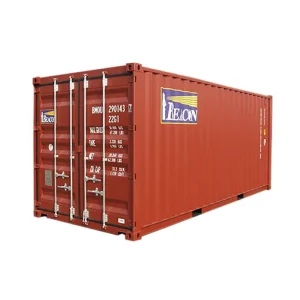
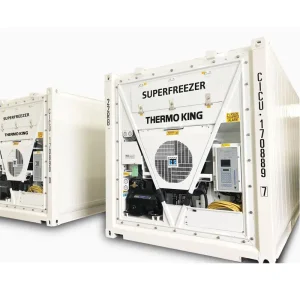
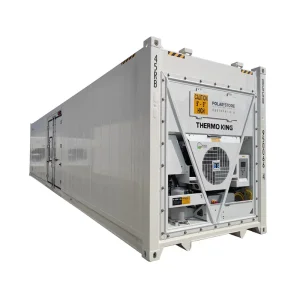
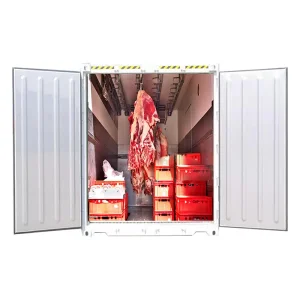
Explore certified specialized offshore tank modules, cargo baskets, heavy-duty insulated freezers, and dry freight solutions deployed globally.
A rigorous examination of heavy-lift dynamics, metallurgical integrity, and compliance demands governing the modern offshore shipping container manufacturing sector.
Unlike standard ISO shipping boxes governed solely by CSC conventions, DNV containers operate in dynamic offshore marine environments where snatch loads, vertical accelerations, and open-ocean side impacts occur routinely during supply vessel crane transfers. Every unit features high-strength Corten structural frames and pad eyes rated for multi-leg sling bridles.
Structural failure under deep freeze conditions is mitigated by strictly enforcing Charpy V-Notch impact testing at -20°C and -40°C. CIMIC utilizes specialized fine-grain micro-alloyed structural steels that retain high ductility, ensuring the outer frame absorbs energy without catastrophic micro-fracture during turbulent subsea transfers.
The global surge in floating offshore wind farms and carbon capture, utilization, and storage (CCUS) projects has dramatically increased demand for bespoke offshore containers, modular switchgear cabins, subsea umbilical storage reels, and specialized chemical supply tank systems across international waters.
Continuous operational research has driven offshore container engineering far beyond basic cargo boxes into smart, integrated digital hubs.
Adoption of automated shot blasting to SA 2.5 coupled with thermal spray zinc metallizing and multi-coat high-build epoxy marine paints engineered to surpass C5-M ISO 12944 standard life cycles under aggressive salt spray environments.
Integrated ATEX Zone 1 & Zone 2 certified sensory hubs that monitor internal temperature, shock impact acceleration, hatch micro-switches, and GPS geolocation via satellite uplinks on high seas.
Incorporating finite element analyzed (FEA) sandwich panels and ultra-high-strength steel alloys to reduce tare weight by up to 18%, substantially increasing available payload capacity on heavy crane lifts.
Custom DNV architectural structures equipped with integrated battery energy storage systems (BESS), HVAC, and fire suppression systems built specifically for offshore offshore wind transformer substations.
Specific field configurations mapped to extreme global environments where conventional shipping boxes fail.
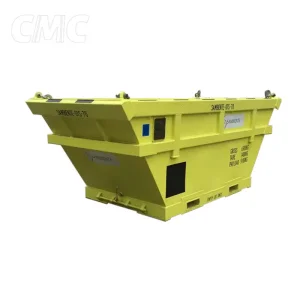
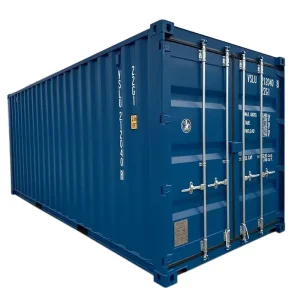
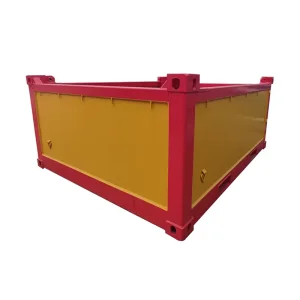
Characterized by volatile sea states, heavy storm surges, and strict NORSOK standards. Deploying heavy-duty DNV open-top containers, silt baskets, and tool boxes engineered with specialized pad eye geometry calculated for 45-degree sling angles.
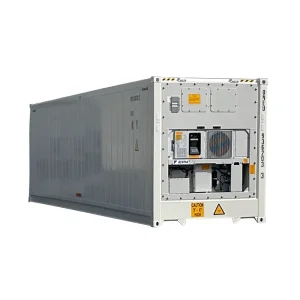
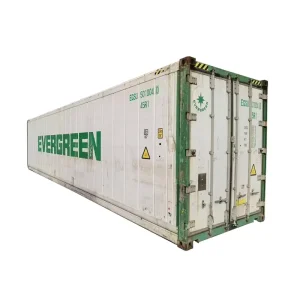
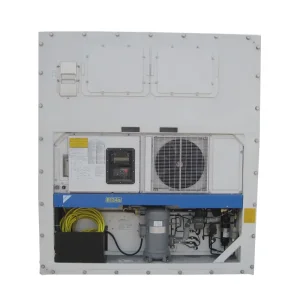
Subjected to ambient heat waves reaching +50°C and hypersaline humidity. DNV offshore reefer containers utilize tropicalized compressor cooling modules, vacuum-injected polyurethane insulation, and 316L stainless internal liners.
Demands specialized ultra-low center of gravity silt baskets, half-height ore bins, and heavy pipe carriers equipped with internal tie-down ratchets that guarantee subsea payload balance during dynamic vessel winch drops.
From raw metallurgical procurement to multi-point non-destructive testing (NDT), our manufacturing process ensures flawless field execution.
Mill test certificates (MTC 3.1 / 3.2) verifying low-temperature chemical composition, phosphorus/sulfur limits, and full 3D ultrasonic lamination screening.
All structural frame joints and pad eyes welded strictly by certified personnel under ASME Section IX / AWS D1.1 offshore structural welding standards.
Full 2-point and 4-point dynamic lift tests at 2.5x Maximum Gross Mass (RGM), followed by vertical drop impact assessments onto rigid concrete platforms.
Physical inspection by Bureau Veritas (BV) or DNV surveyors, stamping of the stainless steel data plate, and release of offshore certification dossier.
Providing global energy majors with fully customized, project-specific offshore structural architectures.
Beyond standard 10ft, 20ft, and 40ft lengths, CIMIC manufactures bespoke half-height ore carriers, extra-wide offshore modular cabins, and low-profile skid units tailored to deck space restrictions on platform supply vessels (PSVs).
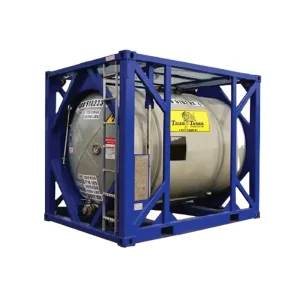
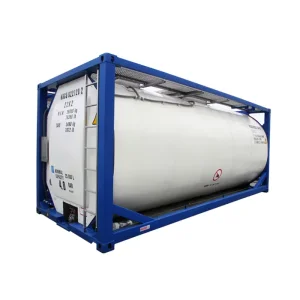
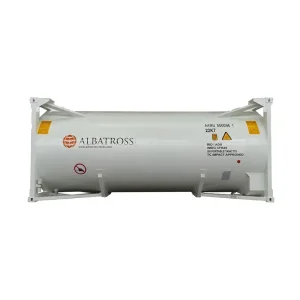
T11 and T14 classified offshore tank containers certified for high-pressure acids, hydrocarbon solvents, and offshore drilling fluids. Integrated with emergency relief valves, vapor return lines, and heavy structural crash frame guards.
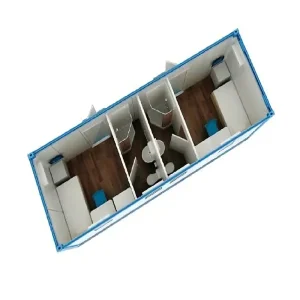
Specialized architectural modules meeting A60 fire rating specifications, H60 blast resistance, pressurized positive-air purge systems, and integrated HVAC suitable for engineering crews situated adjacent to volatile wellhead zones.
Clear, definitive technical clarifications directly from our offshore structural engineering department.
ISO containers rely heavily on light corrugated steel walls to transfer vertical loads through corner castings and are designed solely for calm-water vessel stacking. DNV offshore containers are built with heavy hollow structural steel (HSS) profiles and specialized integrated pad eyes, capable of withstanding rough-sea snatch loads and wave slam impacts without catastrophic deformation.
Every delivered unit is accompanied by a comprehensive technical manufacturing dossier. This contains the third-party DNV / BV Survey Certificate, Mill Test Certificates (MTC) 3.1 for all main structural steel, WPS/WPQR weld procedure certifications, NDT (MPI & Ultrasonic) inspection reports, sling bridle test certificates, and Proof Load Test data.
In offshore operations, high dynamic loads occur under subzero atmospheric conditions. Plain carbon steels suffer a ductile-to-brittle transition when exposed to Arctic temperatures, which can lead to instant frame cracking. Charpy V-notch testing at -20°C or -40°C ensures the steel matrix absorbs impact energy without brittle failure.
Yes. Our in-house engineering team provides complete 3D FEA design analysis for bespoke equipment mounts, explosion-proof ATEX Zone 1 electrical cabinets, Carrier/Daikin/Thermo King refrigeration modules, side-access rolling doors, and automated load-securing cargo nets.
Explore gas tank containers, offshore baskets, double-door dry cargo units, modular housing, and commercial equipment solutions.