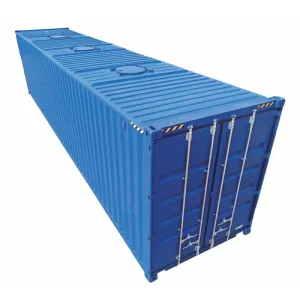
Explore our top-tier export configurations engineered with high-tensile Corten weathering steel, international classification society approvals (BV, ISO, DNV), and factory-direct rate economics.
Analyzing the metallurgical, logistic, and fiscal drivers that allow Chinese container manufacturing clusters to command over 90% of global intermodal equipment supply.
Global container procurement executives and supply chain directors recognize that shipping container rates are not merely a reflection of carrier spot indexes (such as SCFI or Drewry WCI), but are fundamentally rooted in the raw material capital expenditure, automated manufacturing yields, and strategic export terminal proximity of Chinese specialized production bases.
In modern multimodal shipping economics, container equipment acquisition represents a substantial baseline capital outlay. Understanding how unit rates are formulated allows global logistics operators, mining conglomerates, and freight forwarders to execute counter-cyclical asset purchasing. The dominance of Chinese container factories is established not through low-wage assembly, but through unrivaled industrial integration: dedicated cold-rolled Corten steel rolling mills, high-efficiency robotic seam welding, automated electrostatic powder coating lines, and integrated sea-terminal access within a 100-kilometer drayage corridor.
Our northern manufacturing bases in Tianjin operate in direct supply synergy with premier state metallurgical foundries. By securing prime SPA-H / Corten-A weathering steel coils directly from domestic mills, raw material transportation friction is eliminated, hedging buyers against volatile international spot metal spikes.
From multi-axis robotic laser profile cutting to twin-wire automatic submerged arc welding on bottom side rails, production facilities achieve micro-millimeter tolerance control. This eliminates dimensional drift, guarantees watertight integrity under ISO 1496 racking loads, and substantially cuts defect scrap rates.
Located adjacent to Tianjin FTA Pilot Area and major deepwater maritime channels, completed units transition from the inspection line to bonded container freight stations in less than 24 hours. SOC (Shipper Owned Container) units can immediately load cargo for outbound one-way export, dropping deadhead repositioning costs to near zero.
How edge IoT sensor telemetry, ultra-low GWP refrigerants, advanced composite thermal barriers, and circular manufacturing are rewriting shipping asset lifespans.
The global shipping container market is undergoing an unprecedented transition driven by strict IMO 2030/2050 decarbonization mandates, corporate ESG benchmarks, and the exponential demand for pharmaceutical and high-value cold chains. No longer a simple steel box, the modern container is a connected, thermodynamic asset.
Integration of low-power satellite and 5G dual-band trackers providing continuous interior temperature, humidity, door-breach detection, and tri-axis g-force impact monitoring throughout intermodal transshipment.
Adoption of waterborne zinc-rich primers, ceramic micro-sphere solar reflective roof coats, and solvent-free polyurethane finishes that suppress VOC emissions by 85% while providing 1,500-hour salt spray resistance.
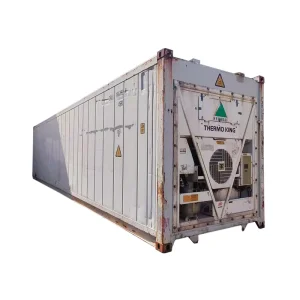
Incorporation of next-generation Carrier PrimeLINE, Daikin Zestia, and Thermo King scroll compressors operating on R-513A and R-1234yf refrigerants, slashing operational power consumption by up to 32% per voyage.
Non-CFC high-density cyclopentane-blown polyurethane foam insulation cores engineered for vacuum-tight structural bonding, maintaining stable interior isotherms with zero active power on short-sea routes.
| Container Model / Technology | Standard Tare Weight | Target Payload (Max Gross) | Corrosion Resistance Spec | Ideal Application Horizon | Lifecycle Efficiency Rating |
|---|---|---|---|---|---|
| 20ft Standard Corten Dry Cargo | 2,200 kg (4,850 lbs) | 30,480 kg (67,200 lbs) | ISO 12944 C5-M Marine Coating | Dry general freight, mineral concentrates, building gear | Class A+ Economical |
| 40ft High Cube Heavy Duty Dry | 3,900 kg (8,598 lbs) | 32,500 kg (71,650 lbs) | 2-Coat Zinc Epoxy + Polyurethane | Consumer goods, high-cube e-commerce pallet consolidation | Class A Standard |
| 40ft High Cube Cold Chain Reefer | 4,520 kg (9,965 lbs) | 34,000 kg (74,950 lbs) | Stainless Inner Skin + Al-MG Exterior | Fresh produce, frozen fisheries, biotech vaccines (-30°C to +30°C) | Precision Active Cold |
| DNV 2.7-1 / EN 12079 Offshore Basket | 1,800 - 3,500 kg | Up to 25,000 kg Dynamic | Hot Dip Galvanized ≥ 85µm | Subsea exploration, offshore oil rigs, harsh marine lift zones | Extreme Duty Safety |
| 20ft Square ISO Liquid Tank Container | 3,450 kg (7,605 lbs) | 36,000 kg Gross Shell | 316L Pickled & Passivated Shell | Food-grade alcohol, industrial solvents, hazardous chemicals | Hazard Class 3-8 Ready |
Analyzing high-stakes deployment scenarios where customized structural parameters, heavy-duty cargo securing, and precision thermal barriers solve complex logistical bottlenecks.
Standardized 20ft and 40ft boxes fulfill mainline consumer routes, but high-margin industrial applications demand bespoke structural modifications. As an integrated manufacturer-exporter, CIMIC engineers containers configured specifically to overcome environmental, chemical, and dimensional hurdles across distinct global enterprise sectors.
Standard ISO corner castings fail under violent sea-state accelerations. Our DNV 2.7-1 certified baskets and certified offshore containers incorporate reinforced padeyes, high-yield Charpy V-notch tested steel for -20°C sub-zero wave impacts, integrated four-leg wire rope slings, and full structural traceability for offshore deepwater platforms in the North Sea, West Africa, and the Gulf of Mexico.
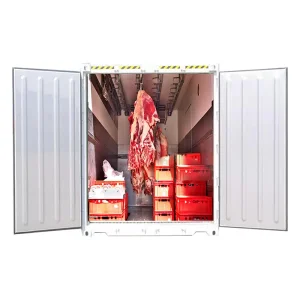
From our custom hanging meat reefers outfitted with dual-rail overhead stainless carcass hooks to 40ft high-cube thickened foam passive insulation containers, we preserve cargo value across extreme transit corridors. Engineered with internal stainless steel air-ducting floors (T-bar floor profile), temperature deviations are restricted to within ±0.25°C throughout 30-day ocean voyages.
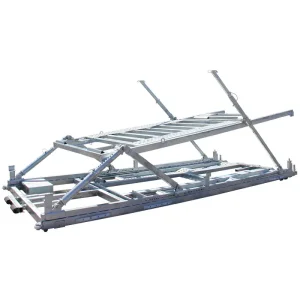
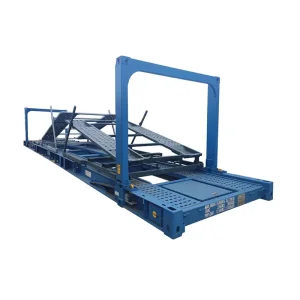
Given the acute volatility in pure car and truck carrier (PCTC) vessel charter rates, our specialized car carrier containers and modular vehicle transport racks allow vehicle manufacturers and export traders to load up to 4 finished SUVs or sedans safely inside standard high-cube envelopes, protecting paint finishes while bypassing Ro-Ro congestion.
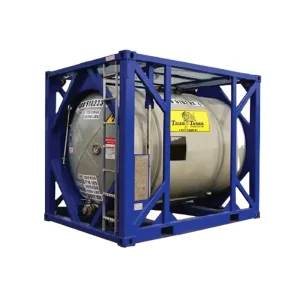
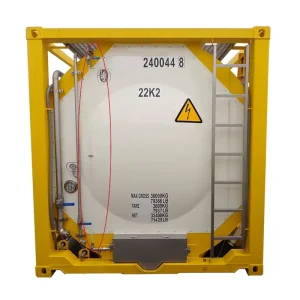
Our square liquid tank containers and UN-certified alcohol tanks deliver maximum payload volume over cylindrical designs. Utilizing pharmaceutical-grade 316L inner vessels, top-tier safety relief valves, heating steam coils, and anti-slosh baffle architecture, dangerous goods (IMO Class 3, 6, 8, and 9) are transported safely across road, rail, and sea networks.
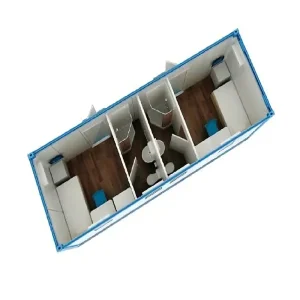
Modular accommodation units, command centers, and medical pods pre-fitted within standard ISO dimensions enable zero-tool on-site crane deployment for major infrastructure contractors in remote deserts, mining fields, and humanitarian disaster recovery zones, providing immediate plug-and-play living and operational spaces.
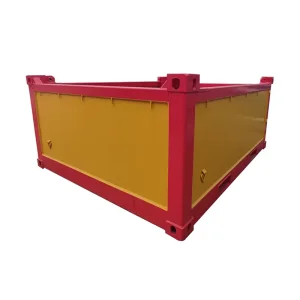
Dense mineral transport requires specialized half-height ore containers engineered with 450-grade high-wear steel floor panels, removable tarpaulin covers, and automatic rotational tippler discharge brackets, enabling clean, continuous discharge of iron ore, copper concentrate, and lithium rocks without cargo residue.
A blueprint for corporate procurement teams: navigating classification society approvals, factory acceptance tests (FAT), and optimizing shipper-owned container (SOC) freight savings.
Procuring international shipping containers from China requires stringent adherence to multinational marine safety conventions. Purchasing mistakes—such as invalid CSC documentation or improper floor timber treatment—can lead to vessel loading refusals, heavy port demurrage fines, and quarantine rejections at destination hubs.
Every export container must feature a tamper-proof stainless steel International Convention for Safe Containers (CSC) approval plate. Our production runs are certified under classification societies including Bureau Veritas (BV), ABS, Lloyd's Register (LR), or China Classification Society (CCS), ensuring stacking capability of 192,000 kg (9-high laden stack).
Rigorous Quality Assurance protocols include ultrasonic weld inspection on all principal corner post castings, radiographic spot checks on lifting interfaces, continuous air-water pressure testing (spray rack testing under 1 bar pressure for 30 minutes), and comprehensive load deflection measurements on floor longitudinal crossmembers.
By acquiring Shipper-Owned Containers (SOC) directly at origin, international shippers bypass daily carrier demurrage fees and destination container detention charges, which typically escalate after 7-14 free days. When combined with one-way outbound freight leasing, total landed shipping container rates drop significantly.
Authoritative, engineering-backed answers addressing the most critical technical, commercial, and regulatory inquiries submitted by global procurement managers.
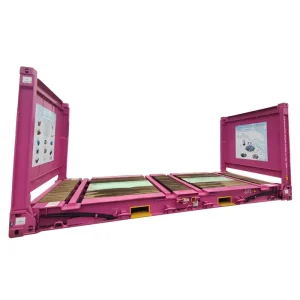
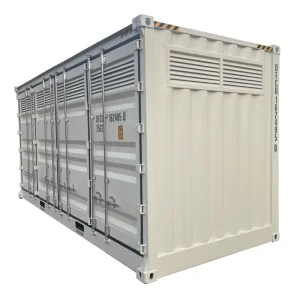
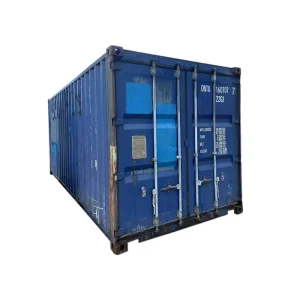
Expanding global fleet capabilities with certified offshore tanks, heavy nested mini-storage units, hazmat ventilation lockers, platform frames, and high-cube dry cargo equipment.