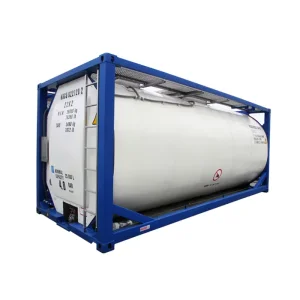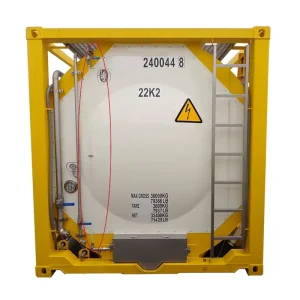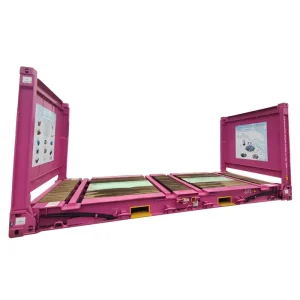
Direct factory configurations delivering maximum durability, certified under BV, CSC, and DNV maritime regulations.
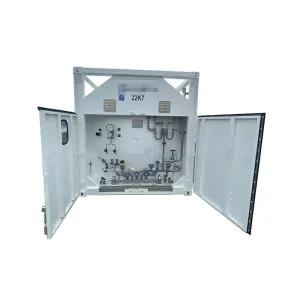
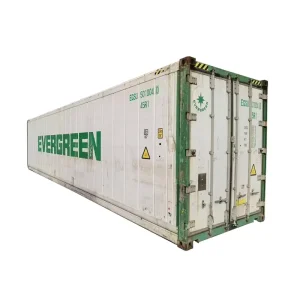
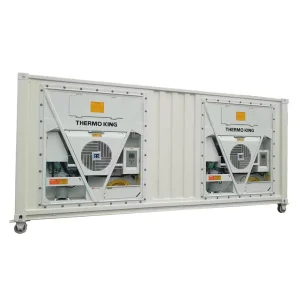
Analyzing chemical intermodal shift, green supply chains, and bulk transport efficiencies across major geopolitical corridors.
Traditional transport via 55-gallon steel drums and intermediate bulk containers (IBCs) carries substantial structural tare weight, high product residue losses, and recycling liabilities. A single 20ft ISO tank container holds up to 26,000 liters—displacing roughly 128 drums—reducing handling cycles, eliminating packaging disposal fees, and slashing total landed freight carbon emissions by over 38% across intercontinental multimodal chains.
Modern petrochemical and fine chemical logistics require zero-tolerance for vapor escape or cross-contamination. Standardized 20 tank containers (T11, T14, and T50) comply with stringent UN portable tank specifications, IMDG (maritime), ADR/RID (European road/rail), and US DOT regulations. Vacuum relief valves, rupture discs, and redundant bottom-discharge isolation systems ensure structural integrity under severe dynamic loads.
The global fleet of tank containers is rapidly migrating toward ATEX-certified IoT telemetry. Smart sensors monitor shell pressure, real-time ullage volume, internal product temperature, and geofencing anomalies. Enterprise fleet operators integrate this sensor data directly with automated ERP systems, ensuring continuous cold-chain validation for sensitive resins, food-grade alcohols, and cryogenic industrial gases.
How clustered metallurgy, automated robotic welding, and coastal port integration drive unmatched lead times and cost-performance.
Our manufacturing facility utilizes high-precision CNC longitudinal and circumferential welding fixtures. By combining dual-wire submerged arc welding (SAW) with robotic plasma back-gouging, we eliminate slag inclusions and ensure flawless weld seam profiles. Every single pressurized cylinder undergoes 100% real-time radiographical (RT) or ultrasonic non-destructive testing (NDT), securing hydraulic proof pressures up to 6.0 bar without micro-fissuring.
Tank shells are constructed from certified 316L stainless steel (EN 1.4404 / ASME SA240), tailored with optional internal PTFE, PFA, or vinyl ester lining for aggressive halogenated chemicals. Our factory applies proprietary automated pickling and electrochemical polishing protocols, achieving mirror surface finishes down to Ra < 0.2 μm. This ultra-smooth baseline completely prevents cargo adhesion, streamlining cleaning cycle times at destination wash depots.
Our strategic industrial hub is positioned within 100 km of North China’s premier maritime terminals. This geographic proximity minimizes domestic deadhead haulage, protects specialized exterior coatings from inland transit debris, and enables flexible vessel stowage arrangements. Buyers leverage expedited customs manifests, direct port gate-in privileges, and combined bulk loading for swift regional deliveries.
Bypassing trading intermediaries, our factory engineering team provides direct consultative cost estimates and parametric CAD modeling within 24 hours. Custom configurations—such as integrated electrical heating blankets, glycol heating channels, low-temperature polyurethane insulation jackets, or specialized spill containment boxes—are fabricated straight from engineering blueprints to production lines with complete transparency.
Compare core engineering parameters across T11, T14, T50, and T75 ISO tank container classifications.
| ISO Tank Type | Nominal Capacity | Working Pressure (MAWP) | Shell Material | Primary Cargo Scope |
|---|---|---|---|---|
| T11 Unlined | 21,000L – 26,000L | 1.75 – 4.00 bar | Stainless Steel 316L | Non-hazardous & mild hazardous chemicals, foodstuff, spirits, lube oils |
| T14 Corrosive | 17,500L – 21,000L | 4.00 bar | 316L / Carbon + Lining (PTFE/Rubber) | Corrosive acids (HCl, H2SO4), caustic soda, volatile toxic compounds |
| T50 Gas Tank | 24,000L – 24,500L | 15.0 – 34.5 bar | High-Strength Fine Grain Carbon Steel | Liquefied petroleum gas (LPG), ammonia, refrigerant gases, propane |
| T75 Cryogenic | 20,000L – 22,000L | 8.0 – 16.0 bar | Inner Austenitic SS / Outer Carbon Steel | Liquefied Natural Gas (LNG), liquid nitrogen, liquid oxygen, argon |
Optimized tank structural frames built to thrive in harsh field realities, from offshore drill rigs to agricultural refineries.
CORTEN steel full-perimeter structural frames (ISO 1496-3 standard) absorb violent dynamic forces encountered in rail humping and long-distance chassis haulage. Top and bottom ISO corner castings ensure seamless transition from flatbed road semi-trailers to international railway wagons, preserving internal baffle efficiency and preventing liquid surge instability.
Engineered for bulk food-grade transport including premium potable spirits, edible vegetable oils, liquid sugars, and fruit concentrates. Fully passivated contact surfaces prevent trace metal extraction. Steam heating channels ensure controlled viscosity reduction for discharge without localized caramelization or flavor profile alteration.
Equipped with specialized DNV 2.7-1 / EN 12079 certified padeyes and heavy-duty four-leg lifting slings, these units support marine rig supply runs. They deliver drilling muds, lubricants, and treatment chemicals directly to remote offshore energy platforms, resisting open-ocean salt fog exposure via multi-coat zinc-rich epoxy marine paint systems.
Key criteria corporate procurement directors, asset lessors, and fleet operators evaluate prior to awarding multi-year container production runs.
Sophisticated buyers no longer calculate value purely on initial CAPEX. Frame durability, corrosion resistance, valve component standardization (such as Fort Vale or Perolo valves), and ease of spare part procurement heavily influence twenty-year residual value. Premium weld passivation and heavy-duty walkway safety handrails drastically minimize downstream repair depot expenditures.
Multinational shippers are mandated to publish verified scope-3 emission reductions. Deploying lightweight, high-tensile 20 tank containers increases payload capacity per shipment while decreasing the required ship voyages. Switching from flexibags to reusable ISO tanks entirely avoids single-use plastic waste generation and incinerator-bound synthetic landfill bulk.
To insulate fleets from trade friction and regional output disruptions, international leasing companies partner directly with Tier-1 Chinese manufacturing yards with proven raw material reserves. Having immediate factory-floor access, on-demand third-party surveyor sign-offs, and staged production slot reservations ensures steady fleet renewal regardless of macroeconomic volatility.
Comprehensive engineering and procurement details for logistics managers and global buyers.
With proper preventive maintenance, five-year periodic hydrostatic re-testing, and compliance with ITCO cleaning protocols, an ISO tank container manufactured with 316L stainless steel features an operational life cycle exceeding 20 to 25 years. Routine valve rebuilding and gasket replacement preserve vacuum and pressure integrity throughout its lifetime.
Tanks can be equipped with either steam heating manifolds, electrical heating blankets, or glycol heat-exchange jackets. Steam channels welded to the lower shell quickly circulate dry industrial steam at discharging terminals, raising the core temperature of viscous products (like palm oil or resins) safely without localized hot spots or product scorch.
Our units ship with a comprehensive certification dossier including CSC (Container Safety Convention), IMDG (International Maritime Dangerous Goods), ADR/RID (Road/Rail Transport), US DOT approval, and ASME 'U' Stamp upon buyer specification. Leading classification societies such as Bureau Veritas (BV), LR, or CCS conduct inspections directly on the production line.
For standard T11 chemical and food-grade tanks, MOQs start from 1 unit for pilot testing or standard fleet integration. Specialized custom projects requiring bespoke internal linings (like PFA or rubber) or cryogenic specifications (T75) typically have a production run lead time of 4 to 8 weeks depending on steel plate allocation and certification agency scheduling.
Located around 100 km from major export seaport terminals, we eliminate long, expensive cross-country truck transfers that add structural vibration fatigue to newly painted units. Furthermore, we can coordinate "one-way cargo" repositioning trips with major shipping lines, significantly reducing or completely eliminating ocean dead-freight costs to destination ports.
From alcohol food-grade vessels to heavy-duty mining chassis and specialized intermodal containers.