Global Annual Movement
Certified Build Standards
Thermal Tolerance Band
Engineering Quote Turnaround
Direct manufacturer deployment of heavy-gauge intermodal freight, temperature-regulated cold chain boxes, and modular offshore industrial structures.
A rigorous examination of multi-modal trade velocity, container fleet utilization indices, and the structural reliance on ISO-standardized maritime hardware.
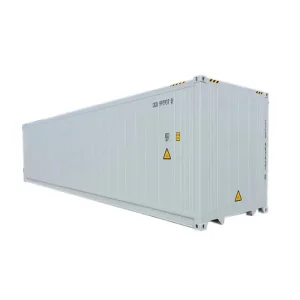
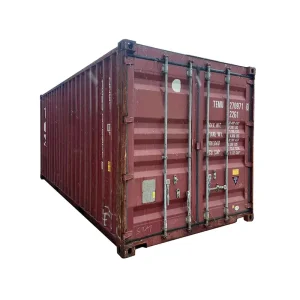
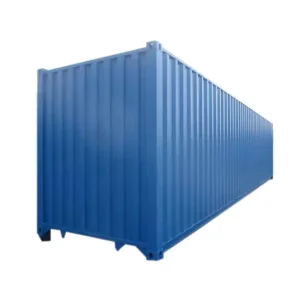
Global multi-modal freight logistics fundamentally rests upon approximately 52 million TEUs of active steel containers. As international trade corridors pivot across trans-Pacific routes, Eurasian rail land-bridges, and equatorial maritime straits, asset positioning requires strict structural adherence to ISO 668 and ISO 1496-1 parameters. Storage container transportation is no longer a localized dry-box operation; it has transformed into a precision-engineered science balancing gross weight payload ratings, empty deadhead redistribution economics, and inland terminal turnaround cadence.
Industrial reliability in harsh ocean atmospheres demands superior metallurgical composition. High-grade storage and transit containers are manufactured with SPA-H / Corten-A atmospheric corrosion-resistant steel. This copper-chromium-nickel alloy forms an inert, self-passivating oxidized surface barrier under cyclic wet-dry maritime conditions, preventing deep-grain rust propagation. When bonded with two-pack zinc-rich epoxy primers and polyurethane topcoats rated up to ISO 12944 C5-M extreme marine standards, service lives routinely exceed 20 to 25 continuous operational years.
Cross-border commercial shipping mandates continuous compliance with the International Convention for Safe Containers (CSC). Safety approval plates bolted to end doors represent structural validation against 9-high container vessel cell-guide stacking forces up to 216,000 kg (476,200 lbs). Units designated for harsh oilfield exploration and subsea mining must satisfy DNV 2.7-1 / EN 12079 dynamic drop-impact standards, including certified four-point pad-eye lifting slings, Charpy V-notch impact toughness at -20°C, and non-destructive weld testing (NDT).
| Classification Category | Structural Steel Grade | Payload Rating (Max Gross) | Thermal / Mechanical Range | Primary Certification Protocol | Optimal Logistics Role |
|---|---|---|---|---|---|
| ISO General Cargo (Dry/HC) | SPA-H / Corten-A Corrugated | 30,480 kg – 32,500 kg | -40°C to +80°C Ambient | ISO 668 / CSC / BV | Container ship liner routes, intermodal flatbed rail |
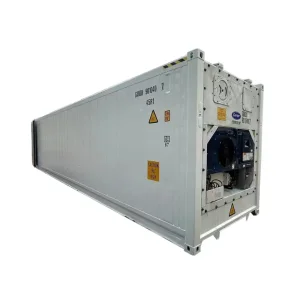
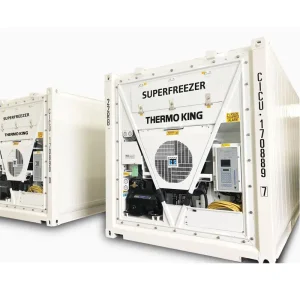
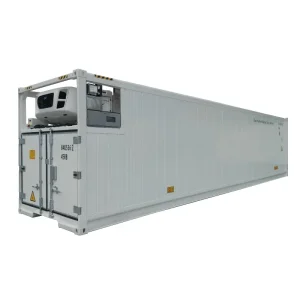
| Active Cold-Chain Reefer | Stainless Outer / 304 Interior | 34,000 kg Rated Structure | -30°C to +30°C Controlled | ATP / ISO 1496-2 / CE | High-value perishables, biologics, deep-freeze cargo |
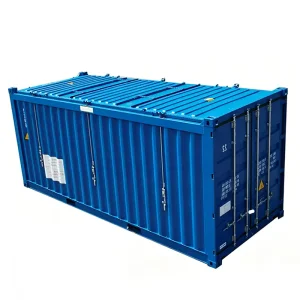
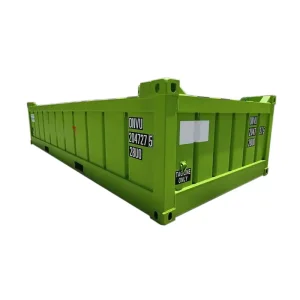
| DNV 2.7-1 Offshore Unit | Low-Alloy Quenched Plate | 10,000 kg – 25,000 kg | -20°C Dynamic Drop Toughness | DNVGL-ST-E271 / EN12079 | Rig supply vessels, heavy subsea exploration drills |
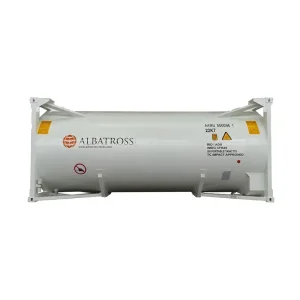
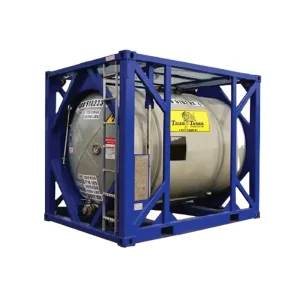
| ISO T11/T50 Cryogenic Tank | 316L SS / Inner Pressure Vessel | 25,000 Liters Capacity | Full Vacuum to 34.5 Bar Test | ASME VIII / IMDG / RID / ADR | Bulk specialty gases, petrochemicals, liquid fuels |
Analyzing key structural transformations: from passive containment units to intelligent, decarbonized, and telemetry-synchronized logistics nodes.
The convergence of low-power 5G, satellite connectivity (LEO), and long-life solid-state batteries has accelerated smart container deployments across global trade corridors. Continuous telemetric monitoring tracks interior atmospheric pressure, three-axis vibration shocks (G-force), door tamper status, door opening events, and real-time GPS locations. In reefer transport, automated microcontroller boards feed real-time compressor telemetry into cloud diagnostic engines, pre-empting compressor coil failures hours before cargo degradation occurs.
Traditional refrigerated containers rely predominantly on cyclopentane-blown rigid polyurethane foam (PUF) insulation. Contemporary research introduces hybrid insulation cores integrating nanoporous silica aerogel blankets and vacuum insulation panels. This reduces thermal wall thickness by up to 35% while sustaining an ultra-low thermal transmittance coefficient (U-value ≤ 0.32 W/m²·K). The result is increased internal volumetric cubic capacity (TEU gain) without sacrificing boundary heat-loss prevention in extreme desert transit.
Decarbonization pressures across the International Maritime Organization (IMO) framework are driving demand for green steel production in container manufacturing. Electric Arc Furnace (EAF) processing using recycled scrap steel diminishes embodied carbon emissions by over 60% compared to traditional basic oxygen furnaces. Furthermore, non-toxic bio-based resin floors, low-VOC waterborne coatings, and bamboo-composite decking provide sustainable alternatives to hardwood timber floors without compromising fork-truck axle load ratings up to 7,260 kg (16,000 lbs).
Engineering modifications built for distinct climate zones, infrastructure constraints, and extreme logistics missions.
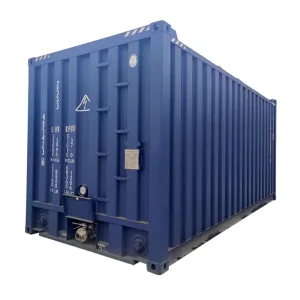
Offshore exploration zones in the North Sea, Gulf of Mexico, and West Africa require high-spec DNV/ISO units built to withstand brutal maritime heave dynamics. Structural features include pad-eyes machined from vacuum-degassed forged carbon steel, offshore grade sling sets with master links, and half-height ore carrier bodies designed to safely handle heavy drill pipe and dense mineral concentrates.
Trans-Eurasian rail freight traverses extreme climate bands, shifting from humid Chinese seaports to -45°C Siberian winters within days. Specialized 40ft and 45ft high-cube railway refrigerated containers incorporate multi-voltage clip-on gensets, dual-redundant diesel fuel systems with heating glow-plugs, and reinforced side rails engineered for heavy container well-car dynamic racking loads.
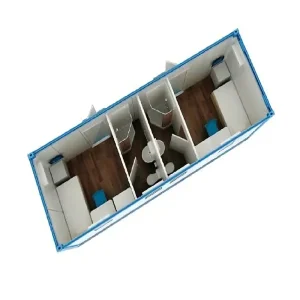
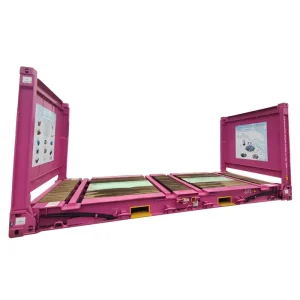
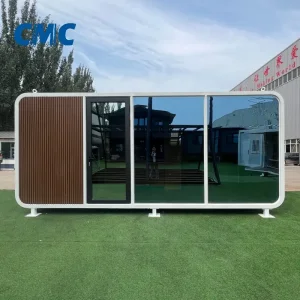
Autonomous resource concessions in the Pilbara, Atacama, or Sub-Saharan Africa demand modular flat-pack structures and ISO container conversions. Heavy-duty sandwich panel insulation, double-glazed hermetic windows, integrated HVAC systems, and plug-and-play wiring allow container modules to be deployed as command centers, labs, medical pods, and workforce housing within hours of arrival.
For blood plasma, mRNA vaccines, and precision industrial chemicals, active T-floor reefer units provide strict ±0.25°C temperature stabilization. Units feature micro-channel heat exchangers, variable-speed scroll compressors, automated fresh-air air exchange (ventilation) dampers, and cloud-linked digital data loggers conforming to FDA 21 CFR Part 11 and WHO GDP protocols.
A multi-phase forecast detailing the systemic convergence of automated manufacturing, light-weighting composites, and autonomous multimodal transport handling.
Integration of fully automated 6-axis fiber-laser welding systems across corrugation press lines. Sub-millimeter weld bead geometry reduces microscopic structural stress concentrations while non-toxic thermal-spray aluminum-zinc (TSA) coatings provide enhanced corrosion protection in extreme splash-zone applications.
Implementation of carbon-fiber reinforced polymer (CFRP) structural framing for non-stacking walls and ceiling sections. Tare weight reductions of 18% to 22% unlock higher net payload capacities across overland transport routes, directly lowering fuel consumption per ton-kilometer.
Transition from passive paper/metal CSC inspection certificates to encrypted digital ledger chips embedded within corner castings. Onboard edge AI processors evaluate structural fatigue life using vibrational data collected throughout ocean crossings and rail transits.
Next-generation reefer boxes featuring roof-integrated bifacial perovskite solar cells and kinetic axle energy regeneration. Active refrigeration operates autonomously on hybrid clean power during extended inland staging, eliminating fossil-fueled diesel generator hookups.
Authoritative insights addressing dimensional tolerances, refrigeration machinery, structural testing, and regulatory documentation.
Our ISO storage and transport containers are constructed exclusively from SPA-H or equivalent atmospheric corrosion-resistant Corten steel. Structural components undergo automated centrifugal abrasive grit blasting to SA 2.5 purity. The coating system includes an inorganic zinc-rich primer (30μm), an epoxy intermediate barrier coat (40μm), and an aliphatic acrylic polyurethane topcoat (50μm), providing total dry film thickness (DFT) ≥ 120μm conforming to ISO 12944 C5-M extreme marine durability.
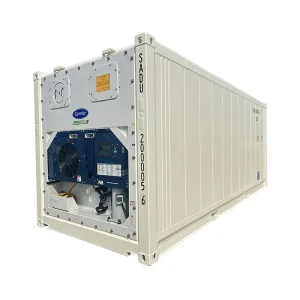
An active reefer container incorporates an electrically driven refrigeration condensing unit (Carrier Transicold, Daikin, or Thermo King) that actively extracts heat to maintain tight cargo temperatures between -30°C and +30°C. In contrast, an insulated container features thickened closed-cell foam walls without mechanical refrigeration. It relies on passive thermal retention to protect temperature-sensitive freight across shorter transit windows without external power.
Every ISO container manufactured for international intermodal transport carries an official International Convention for Safe Containers (CSC) safety plate validated by classification societies such as Bureau Veritas (BV) or ABS. For offshore energy installations, units undergo rigorous non-destructive weld testing (NDT), charpy impact toughness verification at -20°C, and structural drop/tilt testing to earn formal DNVGL-ST-E271 (DNV 2.7-1) and EN 12079 certification.
Our heavy-duty floor structures feature 28mm thick 19-ply marine-grade hardwood plywood or bamboo-composite floorboards treated to meet Australian Quarantine Inspection Service (AQIS) standards. Sub-floor transverse C-channel crossmembers are spaced at 300mm centers to withstand forklift axle loads up to 7,260 kg (16,000 lbs) as specified by ISO 1496-1. For liquid food or chemical tank containers, high-grade 304 or 316L stainless steel drainage pans can be integrated.
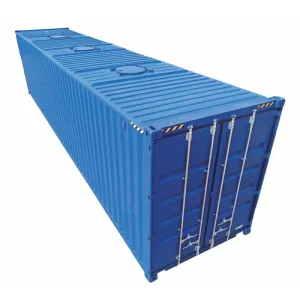
Yes. We offer end-to-end OEM and ODM structural customization. Modifications include full bi-fold side-opening doors for uninterrupted lateral loading, heavy-duty commercial extruded aluminum roll-up doors, interior partition bulkheads, internal tie-down track rings, custom cable glandular pass-throughs, and structural cut-outs for specialized power genset or containerized modular office installations.
All secondary and fleet-demobilized containers stored in our coastal port depots undergo comprehensive multi-point IICL (Institute of International Container Lessors) inspections. Technicians inspect door gaskets, crossmembers, side panel dent tolerances, corner castings, and floor integrity. For used reefer units, full pre-trip inspections (PTI) run across all cooling cycles to ensure zero electrical or refrigerant circuit defects prior to bill-of-lading issuance.
Explore our heavy-capacity liquid tank containers, specialized dry cargo units, and modular accommodation structures ready for global shipping.