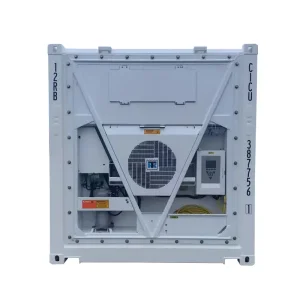
Explore our certified volumetric cargo fleet—designed for extreme environments, bulk chemical stability, and demanding intermodal transport.
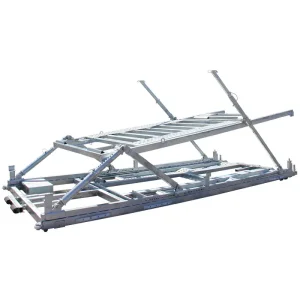
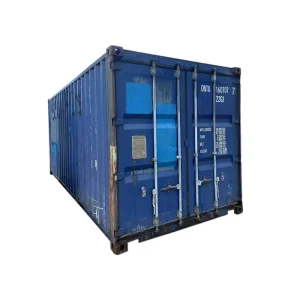
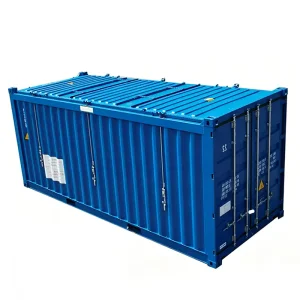
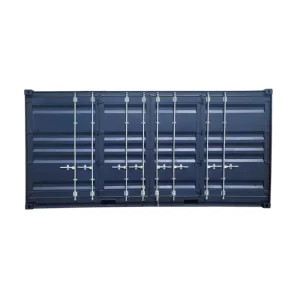
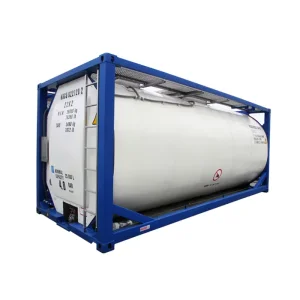
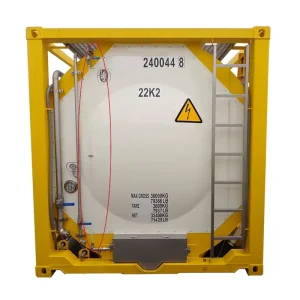
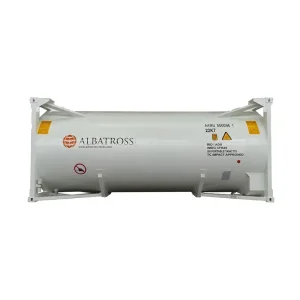
Re-engineering internal cubic displacement to maximize payload densities across global marine, rail, and heavy highway transport corridors.
In global supply chains, cubic capacity directly governs the landed cost per freight unit. Standard ISO configurations often leave volumetric inefficiencies when carrying palletized, modular, or irregular breakbulk payloads. Our ODM cubic foot configurations expand internal cubic tolerances by thinning profile extrusions using SPA-H Corten structural steel without sacrificing tare weight thresholds or lateral sheer resistance under ISO 1496-1 stacking stress profiles.
Utilizing high-tensile metallurgical profiles, every container undergoes rigorous dynamic computational modeling. FEA simulations reveal high-stress junctions along corner castings, floor longitudinal crossmembers, and end frames. Corten steel with high copper, chromium, and nickel content provides passive surface oxide layer protection, guaranteeing 15+ years of operational durability in severe ISO 12944 C5-M marine environments.
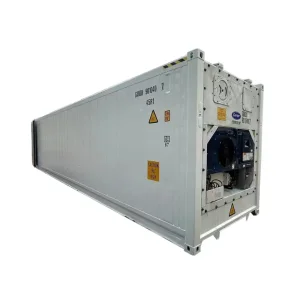
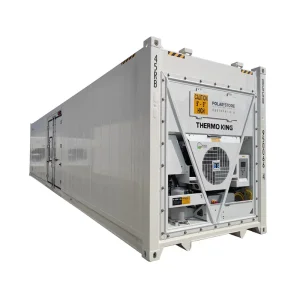
For reefer and insulated variants, volumetric management requires balancing boundary insulation against cubic loss. Our vacuum-injected high-density polyisocyanurate (PIR) formulation achieves a thermal conductivity rating (λ) below 0.019 W/(m·K). This minimizes wall thickness by 18mm per side, recovering up to 64 cubic feet of operational cargo volume without increasing heat transmission leakage.
How our Tianjin and Suzhou production clusters leverage robotic automation, upstream integration, and port-side facilities to deliver unmatched economies of scale.
Our Tianjin plant operates multi-axis automated submerged-arc and gas metal arc welding (GMAW) lines. Standardized robotic jigs construct side panels, end frames, and understructures with positional tolerances within ±0.5mm, eliminating structural stress variations common in manual fabrication yards.
Positioned along the Bohai Economic Rim, our supply chain has immediate access to domestic premium hot-rolled Corten coil suppliers, CNC-machined corner castings, and internationally certified fluoropolymer paint formulations. This cluster integration insulates lead times against global raw material disruptions.
Located ~100 km from the deep-water container terminals of Tianjin Port, our logistics operations bypass inland transshipment bottlenecks. Units move directly from automated shot-blasting and multi-coat baking ovens directly onto waiting container carriers, optimizing export customs clearance times.
Engineered cubic architectures adapted to specialized cargo profiles across energy, chemicals, and industrial logistics.
| Containment Profile | Target Volumetric Capacity | Structural Metallurgy / Lining | Compliance Standards | Primary Industrial Sector |
|---|---|---|---|---|
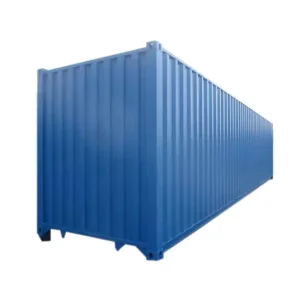
| 20ft ISO Heavy-Duty Dry | 1,172 cu ft (33.2 m³) | SPA-H Corten Steel / 28mm Plywood | ISO 1496-1, CSC, UIC, TIR | High-Density Mineral & Dry Industrial Freight |
| 40ft High Cube Intermodal | 2,694 cu ft (76.2 m³) | SPA-H / Anti-Corrosive Eco-Coatings | ISO 668, Bureau Veritas (BV), ABS | Global E-Commerce, Consumer Goods Logistics |
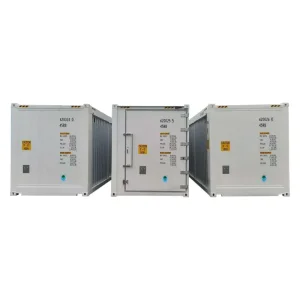
| 40ft High Cube Cold Chain | 2,380 cu ft (67.4 m³) | SUS304 Food-Grade Stainless / Vacuum PIR | ATP, ISO 1496-2, Daikin/Carrier/Thermo King | Pharmaceuticals, Perishable Agribusiness |
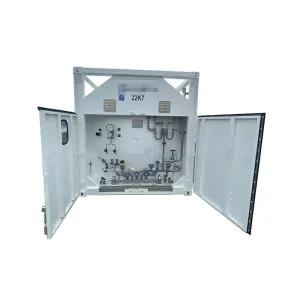
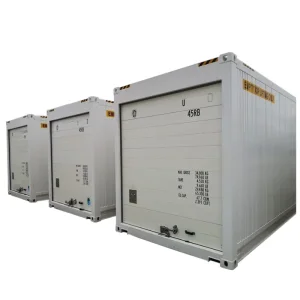
| 20ft T75 Cryogenic / Gas Tank | 22,000 – 25,000 Liters | SA-240 304/304L / Multilayer Vacuum Perlite | ASME VIII Div. 1, IMDG T75, ADR/RID | LNG, Liquid Ethylene, Industrial Specialty Gas |
| Offshore DNV Heavy Lift | Variable Volumetric Builds | Low-Alloy Quenched Plate / Pad Eyes | DNV GL 2.7-1, EN 12079, ISO 10855 | Deep-Sea Drilling, Energy Subsea Logistics |
Addressing the critical risk factors, capital allocation variables, and engineering validation requirements of Tier-1 supply chain executives.
Procurement teams evaluate capital allocation beyond the initial EXW unit invoice. Volumetric container integrity over a 15-year duty cycle reduces structural re-welding, paint maintenance, and door seal failure, minimizing lifetime operating expense per cubic mile.
Global logistics operators require strict oversight before equipment deployment. Every batch produced under our ODM agreements includes pre-shipment inspections from classification societies like Bureau Veritas (BV), ABS, or DNV, covering non-destructive testing (NDT) of critical load welds.
We work with enterprise buyers via structured Letter of Credit (L/C), escrow-backed stage payments, and long-term procurement frameworks. This simplifies balance sheet workflows for large-scale intermodal fleet renewals across the Americas, EMEA, and Asia-Pacific.
For custom ODM modifications (e.g., custom side access, internal mezzanine floor rails, or modular utility installations), our dedicated prototyping shop produces working sample units within 21 days for physical field and payload testing before full-line series manufacturing.
The transformation of cubic shipping containment into intelligent, self-monitoring nodes within automated global logistics pipelines.
Next-generation containers are evolving beyond passive steel envelopes into data-enabled operational nodes. Our development pathway incorporates factory-recessed satellite and cellular IoT modules directly into non-structural corrugations. These monitor internal cubic humidity, ambient temperature variations, 3-axis shock impacts, and unauthorized door access in real time.
Our materials laboratory is testing basalt-fiber hybrid roof trusses and floor sections that replace conventional high-density tropical hardwoods. These composite floors eliminate fumigation requirements, meet food safety regulations, decrease container tare weight by up to 12%, and lower lifecycle carbon emissions during overland transport.
To support AI-managed port terminals in Rotterdam, Singapore, and Qingdao, our structural frames incorporate high-precision corner castings and optical alignment targets. These allow automated guided vehicles (AGVs) and optical crane spreaders to safely handle stacking at higher cycle speeds.
Ensuring cross-border compliance through accredited certifications, regional technical assistance, and structured warranty protection.
Every unit leaving our facilities is fitted with an approved CSC (International Convention for Safe Containers) safety plate and tested in full accordance with ISO 1496 protocols. Reefer and specialized units carry ATP food transport certification, and offshore builds comply with DNV GL 2.7-1 / EN 12079 structural lift criteria.
Clear technical alignment prevents manufacturing delays. Our export engineering team communicates directly in English, French, and Spanish, handling 2D CAD layouts, 3D SolidWorks revisions, finite element reports, and customs documentation without language barriers.
For cold-chain containment, our partnerships with Carrier Transicold, Daikin, and Thermo King give customers access to certified warranty service and authentic replacement parts at major ports in North America, Europe, Latin America, and Africa.
Key technical, production, and certification answers directly from our factory engineering team.
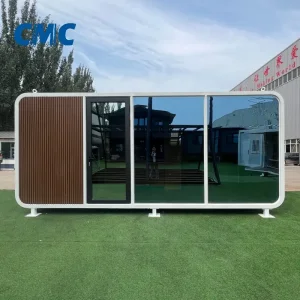
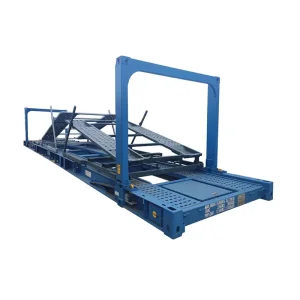
Explore high-cube reefer conversions, cryogenic pressure vessels, car-carrier modules, and prefabricated living units.