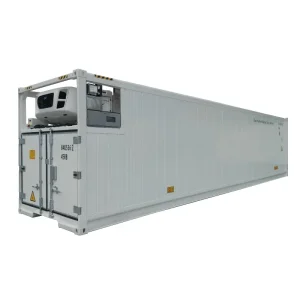
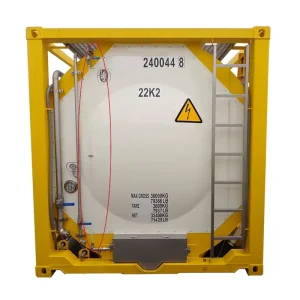
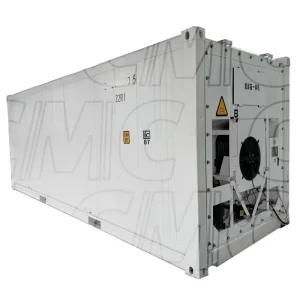
Explore custom-manufactured cold-chain units and offshore containers engineered in our certified facilities to withstand rigorous intermodal rail, highway, and deep-sea maritime environments.
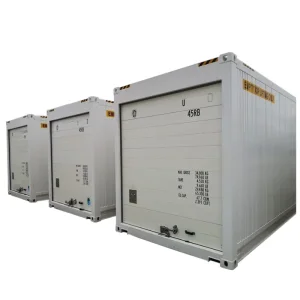
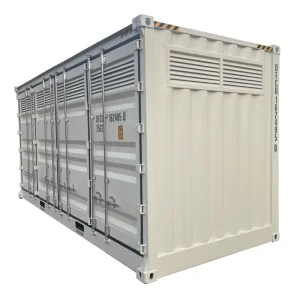
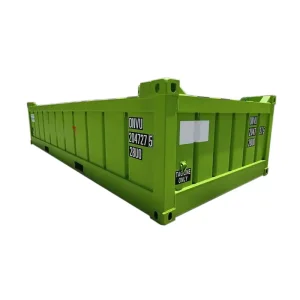
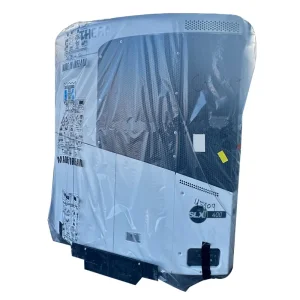
Transitioning from static thermal containers to intelligent, aerodynamically optimized, high-cube cold chain systems designed for multi-commodity perishables and sensitive pharmaceuticals.
The 9ft 6in (2,896 mm) High Cube architecture unlocks a functional internal payload volume of over 67.5 m³ to 76.3 m³, delivering an estimated 12% to 15% increase in usable stowage compared to standard 8ft 6in profiles.
Using 100% ozone-depleting-substance-free cyclopentane-blown polyisocyanurate (PIR) insulation, our factory guarantees an overall heat transfer coefficient (K-value) below 0.33 W/(m²·K).
For fresh produce preservation during intercontinental voyages exceeding 30 days, integrated Controlled Atmosphere (CA) actively manages oxygen (O2) and carbon dioxide (CO2) concentrations.
Enterprise procurement requires evaluating capital expenditure against lifecycle operating cost, power consumption per nautical mile, and downtime reduction through modular maintenance.
"In commercial cold chain operations, energy consumption during 15-year deployments accounts for up to 68% of total life-cycle expenditures. Precision engineering in thermal envelope integrity yields immediate dividends in compressor duty-cycle reduction."
| Evaluation Parameter | Standard 40ft HC Reefer Asset | ODM Engineered High Cube Asset | Operational ROI Impact |
|---|---|---|---|
| Insulation Formulation | Standard PU Foaming (40-42 kg/m³) | High-Density PIR + Aerogel Inserts (48-52 kg/m³) | 14.8% reduction in compressor cycling frequency |
| Airflow Duct Velocity | 1.8 m/s static T-Bar delivery | Aerodynamic Venturi T-Floor (2.6 m/s optimized) | Elimination of cold-spots; cargo decay under 0.05% |
| Chassis Interface Strength | Standard Corten-A Structural Tube | Hot-Dip Galvanized Subframe + C5-M Coating | Extends coastal and offshore lifespans past 18 years |
| Refrigerant Compatibility | R-134a / R-404A Legacy blends | R-513A / Low-GWP Ready / Transcritical CO2 (R-744) | Future-proof against escalating F-Gas regulatory levies |
| Structural Stacking Capacity | Standard 192,000 kg baseline | 216,000 kg Heavy-Duty Offshore Grade | Enables safe 9-tier vessel stacking in adverse weather |
Solving complex shipping logistics through dedicated manufacturing lines that configure reefer boxes for maritime lanes, high-impact rail corridors, and remote offshore operational hubs.
Engineered for high G-force ocean transits, corner castings are forged from SCW480 cast steel, heat-treated to resist low-temperature brittle fractures (-40°C design temperature).
Addressing continuous shock and vibration along extended rail routes such as the Belt & Road trans-continental corridor, our rail containers feature reinforced subframes.
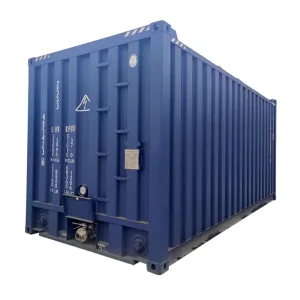
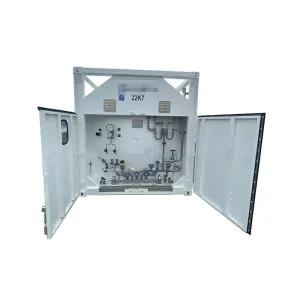
For chemical and offshore support, we manufacture certified offshore refrigerated and hazardous storage containers tested to extreme impact and dynamic marine hoist stresses.
Every reefer module leaving our facilities undergoes multi-stage destructive and non-destructive evaluations, validating compliance across premier global certification boards.
All containers carry an approved CSC (Convention for Safe Containers) safety plate and undergo full structural load verification, including transverse racking, longitudinal end-wall, and floor payload deflection testing.
Our insulated boxes meet the stringent Agreement on the International Carriage of Perishable Foodstuffs (ATP), securing Heavy Insulated (Class C) certifications suitable for transport under ambient extremes up to +40°C.
Factory fabrication processes are audited by third-party surveyors including Bureau Veritas (BV), ABS, and DNV, covering welder WPS/PQR certification, automated seam ultrasound, and pressure decay vacuum verification.
Anticipating next-generation efficiency and low-carbon mandates with modular advancements in self-generating refrigeration and smart, connected telemetry.
Thin-film semi-flexible monocrystalline solar modules embedded directly into the corrugated roof profile deliver supplementary DC power to inverter variable-speed drives, cutting operational fuel burn during transit yard queuing.
Moving beyond synthetic blends, our factories are tooling specialized high-pressure lines for natural CO2 (R-744) units with a Global Warming Potential (GWP) of 1, operating safely up to 130 bar design pressures.
Direct integration of low-orbit satellite IoT sensors monitors real-time compressor motor amperage, refrigerant discharge temperatures, and evaporator frosting curves, predicting mechanical anomalies prior to cargo impairment.
Essential technical clarifications for shipping lines, procurement directors, cold-storage developers, and intermodal freight operators.
An active High Cube Reefer integrates a powered mechanical cooling unit (Daikin, Carrier, or Thermo King) capable of dynamically maintaining set points between -30°C and +30°C. An insulated container is passive, relying solely on polyurethane or PIR foam boundaries without an active compressor. It is limited to short haulage where stable interior thermal mass suffices.
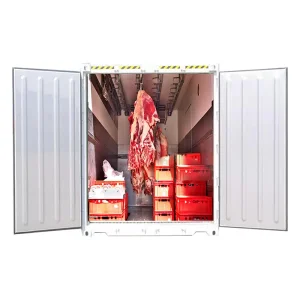
Yes. Our Tianjin and regional manufacturing centers customize floor duct layouts, roll-up architectural doors, side-opening full access walls, internal multi-temperature movable bulkheads, hanging meat rail systems, and hazardous goods ventilation ports, all validated by class society design reappraisal.
Standard ISO 20ft and 40ft catalog models maintain constant line availability with release times within 7-14 days. Custom ODM runs requiring structural tooling, roll-up retrofits, or hazardous-goods certification typically require 4 to 6 weeks from technical drawing sign-off to full factory acceptance testing (FAT).
While docked at port terminals or aboard cargo ships, reefers tap 380V/440V 3-phase 50/60Hz shore utility supplies. During road and rail transits, power is supplied by clip-on or belly-mount diesel gensets (such as TK SLXi or Carrier units) that integrate directly with the structural front-wall bolster.
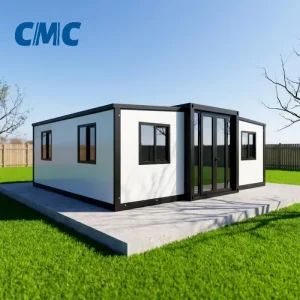
Engineered for complex intermodal logistics: Cryogenic ISO tanks, modular dwelling systems, offshore certified refrigerated modules, and solar-hybrid cold storage solutions.