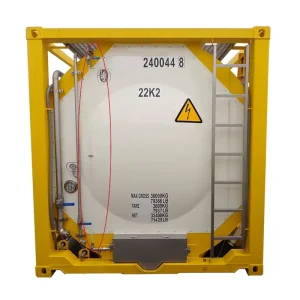
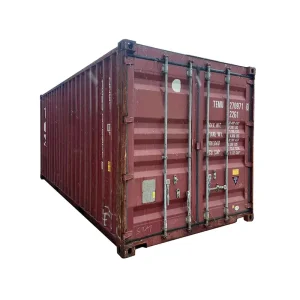
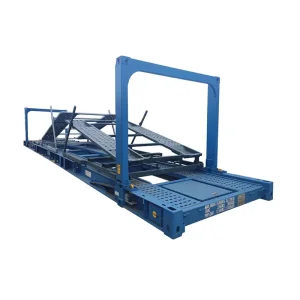
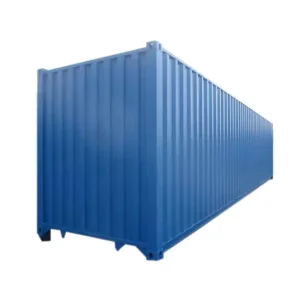
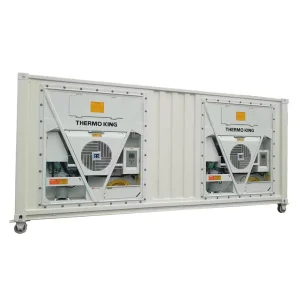
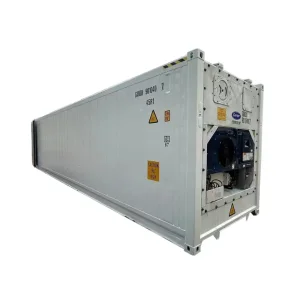
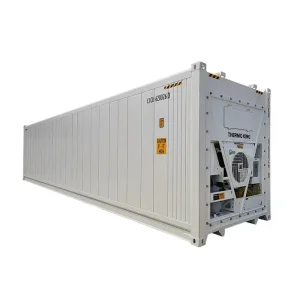
Direct factory production models certified to ISO, BV, and DNV maritime standards, engineered for rapid thermal stabilization and cross-continental freight integrity.
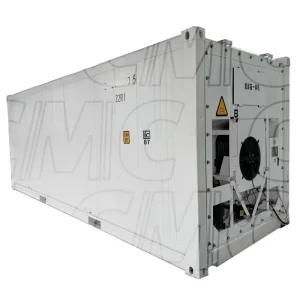
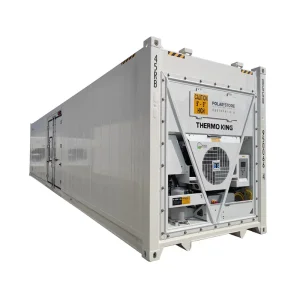
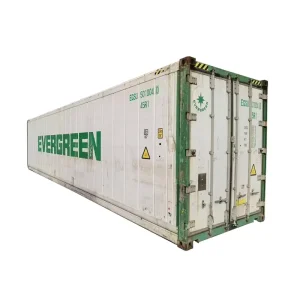
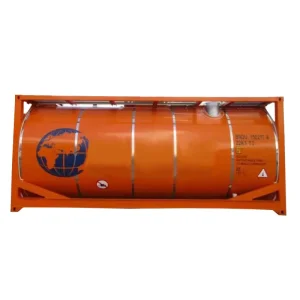
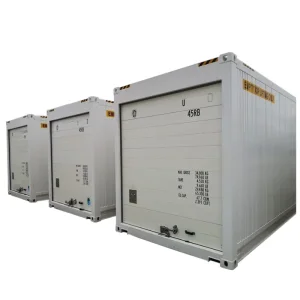
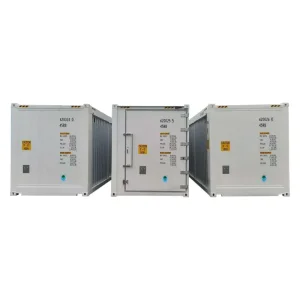
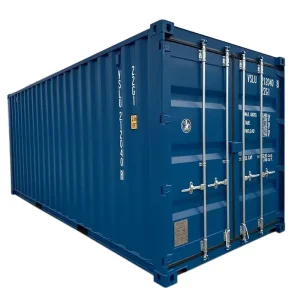
Addressing the structural transformation from traditional stationary blast rooms to modular, intermodal-ready blast freezer shipping containers across food processing and pharmaceutical sectors.
In modern high-throughput cold-chain operations, standard marine reefer containers often fall short when processing freshly harvested biomass or warm processed goods. While an ordinary refrigerated container is designed strictly to maintain holding temperatures (-18°C to -25°C), an industrial Blast Freezer Container must deliver massive latent heat extraction capability. Its mission is to drive core cargo temperatures from +20°C downward through the maximum ice-crystal formation zone (-1°C to -5°C) down to an ultra-deep -40°C or -60°C within brief, strictly monitored cycles. This rapid thermodynamic drop prevents large, jagged macro-crystals from piercing cellular membranes, preventing drip loss, enzymatic decay, and textural degradation.
Historically, global fisheries, poultry abattoirs, and biomedical labs depended on permanent, brick-and-mortar blast tunnel freezers. However, massive capital expenditures, regulatory delays in environmental zoning, and fixed geographic vulnerability have pushed corporate procurement officers toward modular containerized blast freezing stations. These portable, plug-and-play ISO blast freezers integrate dual-stage cascade semi-hermetic compressors, micro-channel high-velocity evaporator coil arrays, and cyclopentane-blown high-density polyurethane wall insulation into a mobile Corten steel envelope certified under CSC, ISO, BV, and DNV parameters.
How our advanced manufacturing plants in Tianjin and Suzhou leverage industrial clustering, advanced metallurgical forming, and port-side infrastructure to deliver superior total cost of ownership (TCO).
Direct sourcing partnerships with tier-one steel foundries (SPA-H Corten atmospheric corrosion-resistant alloy) and global compressor OEMs (Bitzer, Carrier, Daikin, Thermo King) allow CIMIC to compress build schedules by 35% compared to Western assembly plants.
Situated in the Tianjin Pilot Free Trade Zone and Suzhou industrial sectors, our facilities eliminate long-haul inland transshipment expenses, guaranteeing minimal drayage rates, immediate container stuffing, and direct vessel loading onto trans-oceanic routes.
Every customized OEM/ODM blast unit undergoes nitrogen pressure integrity tracking, vacuum testing, thermal infrared imaging for boundary insulation void checks, and full multi-stage pull-down trials under 45°C ambient stress conditions prior to CSC certification.
Engineered adaptations engineered for offshore rigs, coastal aquaculture harbors, remote agricultural hubs, and biopharma handling.
Direct installation on deck or processing mother-ships for instant flash freezing of tuna, cephalopods, and shrimp. Equipped with anti-corrosion copper-fin condenser coils and DNV 2.7-1 lift sling certification for open sea stability.
Mobile modular deployment adjacent to high-value seasonal berry fields, tropical fruit plantations, and mushroom cultivators. Stops enzymatic spoilage within 90 minutes of field picking without building permanent warehouses.
Ultra-low temperature -60°C container architectures configured for biological material storage, blood plasma cryo-preservation, and active pharmaceutical ingredient (API) stabilization with double-redundant electrical circuits.
Heavy-duty internal stainless steel (SUS304/SUS316) liners, scuff plates, food-grade antimicrobial silicone coatings, and ceiling-hung conveyor track systems that enable direct quartered carcass loading and rapid chilling cycles.
Where thermodynamic performance, ecological refrigerant legislation, and artificial intelligence converge to define the next era of industrial chilling.
Global regulatory frameworks (EU F-gas regulations, US AIM Act) require rapid replacement of R404A/R507. Modern OEM engineering concentrates on low-GWP transitions, including R452A, CO2 (R744) trans-critical setups, and hydrocarbon systems engineered for safe high-velocity heat exchange.
Integrated cloud-linked microprocessors send real-time alerts on core container delta-T, suction pressures, and dynamic defrost requirements. Machine-learning algorithms eliminate needless defrost intervals, preventing latent cargo temperature bounce-back and slashing power consumption by up to 22%.
By blending next-generation VIP (Vacuum Insulation Panels) and silica aerogels into standard cyclopentane polyurethane walls, modern builds drop heat transfer rates (U-values) beneath 0.28 W/(m²·K), holding frozen temps longer during unexpected field power outages.
Critical engineering criteria international procurement directors and engineers must specify when ordering custom ODM/OEM blast freezers.
Clarify terminal three-phase power availability (380V/440V/460V at 50Hz/60Hz). Specify expected peak ambient field temperatures (+40°C to +52°C) so engineers can calculate proper condenser fan sizing and compressor displacement margins.
Detail incoming product core entry temperature, target terminal core exit temperature, product density, batch weights (e.g., 5,000 kg/cycle), and allowable time duration (e.g., within 4 to 8 hours) to ensure sufficient cooling capacity sizing.
Select specialized aluminum T-bar extrusion floors or anti-skid flat checker plates designed with perimeter drains. Ensure stainless steel (304 vs 316) interior walls are selected for acidic, saline, or aggressive clean-in-place sanitization protocols.
Comprehensive engineering guidance to assist procurement managers, shipping fleet operators, and industrial logistics consultants.
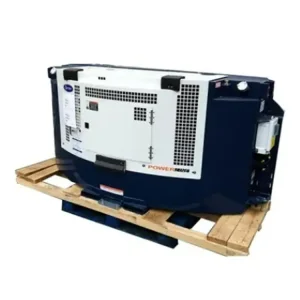
Explore our full logistics product line, from ISO certified liquid food tankers to certified classification blast freezers and auxiliary generator power sets.