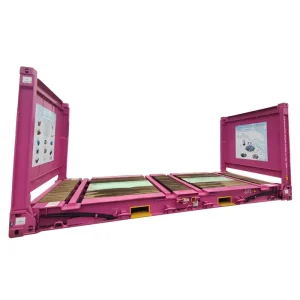
Factory-direct OEM dry freight, reefer machinery, DNV certified offshore, and multi-modal railway lengths engineered for intercontinental operations.
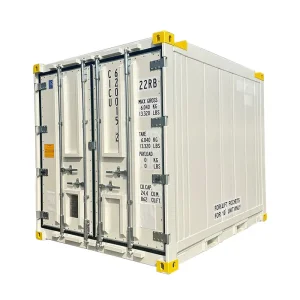
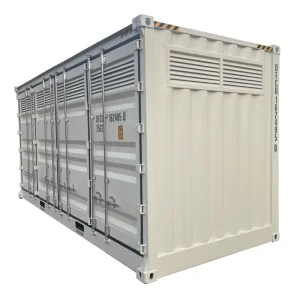
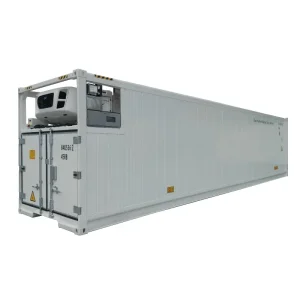
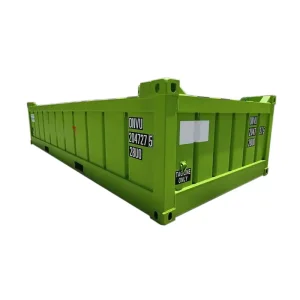
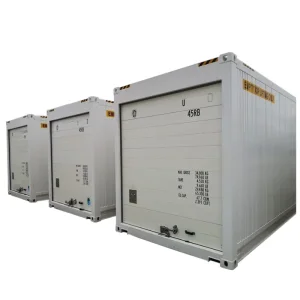
Choosing container dimensions involves precise technical alignment between volumetric efficiency, highway weight thresholds, shipboard cell guides, and rail clearance profiles.
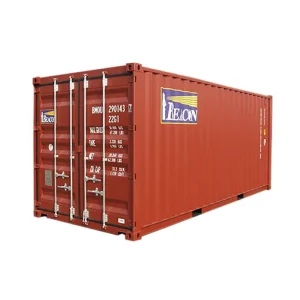
Global maritime operations rely strictly on ISO 668 Series 1 standards. The 20-foot (1 TEU) and 40-foot (2 TEU) nominal lengths dictate corner casting geometry, deck slot configurations, twistlock centers, and spreader engagement tolerances. Misalignments in container length can halt automated dockside gantry cranes and invalidate CSC safety approvals.
While a 40ft High Cube doubles internal cargo volume (approx. 76.2 m³) compared to a standard 20ft container (33.2 m³), the structural payload capacity does not scale linearly. Heavy dry minerals, concentrates, and dense liquids risk exceeding road axle weight limits before maxing out volume, making 10ft and 20ft lengths structurally superior for payload density.
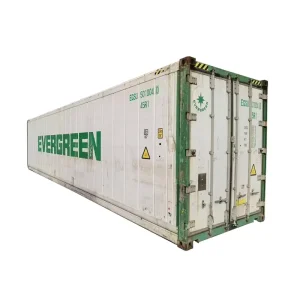
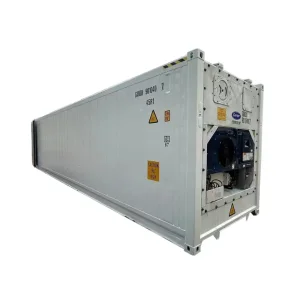
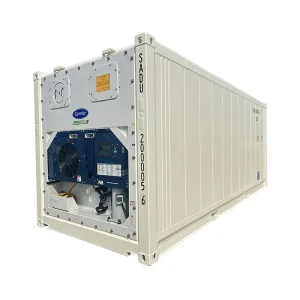
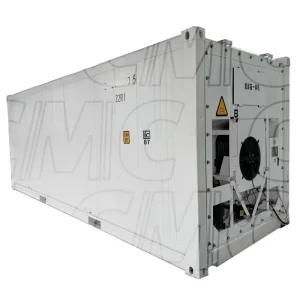
Container length directly impacts the surface area exposed to ambient solar heat gain. A 40ft HC reefer requires precision airflow ducting with specialized T-bar floor profiles to maintain temperature stability within ±0.25°C from door to bulkhead, whereas compact 10ft units require high-efficiency micro-compressors engineered for deep blast freezing.
Factory-direct reference parameters based on Corten-A atmospheric corrosion-resistant steel construction, valid for FOB Tianjin, Qingdao, and Shanghai ports.
| Nominal Length | External Dimensions (L × W × H) | Internal Volume | Tare Weight | Max Payload | Certification | Benchmark Price Range (USD) |
|---|---|---|---|---|---|---|
| 10ft Standard | 2,991 × 2,438 × 2,591 mm | 15.95 m³ | 1,300 kg | 8,860 kg | ISO / CSC / DNV | $1,850 – $2,600 |
| 20ft Standard (1 TEU) | 6,058 × 2,438 × 2,591 mm | 33.20 m³ | 2,230 kg | 28,250 kg | ISO 668 / BV / CCS | $2,100 – $3,150 |
| 20ft High Cube (HC) | 6,058 × 2,438 × 2,896 mm | 37.40 m³ | 2,380 kg | 28,100 kg | ISO / CSC / ABS | $2,450 – $3,500 |
| 40ft Standard | 12,192 × 2,438 × 2,591 mm | 67.70 m³ | 3,740 kg | 26,740 kg | ISO 668 / BV / LR | $3,350 – $4,600 |
| 40ft High Cube (HC) | 12,192 × 2,438 × 2,896 mm | 76.40 m³ | 3,900 kg | 28,600 kg | ISO / BV / CSC | $3,650 – $5,100 |
| 45ft High Cube Pallet-Wide | 13,716 × 2,438 × 2,896 mm | 86.50 m³ | 4,820 kg | 27,680 kg | ISO / Intermodal | $5,200 – $6,900 |
| 53ft Domestic Intermodal | 16,154 × 2,591 × 2,896 mm | 110.0 m³ | 5,450 kg | 25,000 kg | AAR / ISO Compliant | $8,500 – $11,800 |
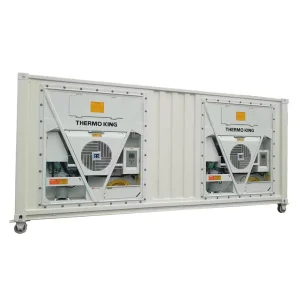
*Note: Quoted rates represent bare dry freight models. Precision refrigerated equipment fitted with Daikin, Carrier, or Thermo King machinery, side open configurations, explosive safety vents, and offshore DNV 2.7-1 skid lifting packages require application-specific cost engineering.
How global mining conglomerates, shipping lines, agricultural exporters, and modular engineering firms select exact lengths to balance operational efficiency and compliance.
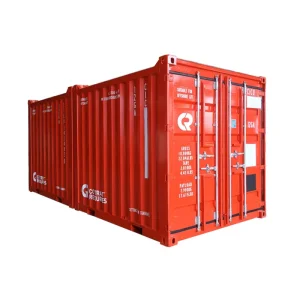
Offshore exploration platforms operating in the North Sea, Gulf of Guinea, and Australasia demand 10ft dry boxes and half-height ore containers certified to DNV 2.7-1 / EN 12079. Compact footprint allows high structural rigidity under dynamic crane hoisting in open sea states, eliminating resonant frame deformation and resisting extreme offshore fatigue.
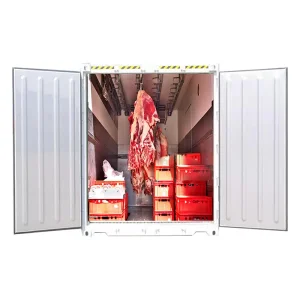
Exporters transporting high-value perishable proteins, seafood, and horticultural produce prefer 40-foot High Cube refrigerated structures. The 2,896 mm external height accommodates internal evaporator ducts while preserving maximum pallet stacking height, optimizing cost per cubic meter over deep-sea maritime transit routes.
Along the Eurasian "Belt and Road" railway network, 45ft pallet-wide containers dominate. Unlike conventional ocean ISO models, the specialized 2,438 mm to 2,500 mm internal width allows two 1,200 mm × 800 mm Euro pallets side-by-side without lost volume, yielding a 33-pallet payload capacity that slashes logistics expenditure per unit by up to 18%.
From metallurgical breakthroughs to integrated IoT micro-telemetry, container length engineering is rapidly evolving into connected, carbon-neutral intermodal assets.
Replacing traditional 1.6mm corrugation panels with micro-alloyed, cold-rolled Corten-B allows wall thickness reductions down to 1.2mm without sacrificing stacking resistance (rated up to 216,000 kg for 9-high stacks), cutting tare weight by 14% on 40ft units.
Next-generation refrigerated container shells integrate high-density polyurethane cores surrounded by micro-porous vacuum barrier films, lowering overall thermal conductivity (K-value) below 0.32 W/m²K and reducing refrigeration compressor power draw by 28%.
Embedded micro-strain gauges inside corner posts and structural crossmembers track dynamic twist, shear load, and impact shock in real-time, relaying live telematics via low-earth orbit (LEO) satellite constellations directly to enterprise fleet management systems.
Replacing solvent-based primers with multi-stage automated zinc-epoxy and polyurethane waterborne coating lines drastically cuts volatile organic compound emissions, while delivering superior salt-spray resistance exceeding 1,500 hours under ASTM B117 standards.
Every manufactured unit undergoes stringent physical destructive testing, robotic weld seam non-destructive evaluation (NDE), and classification society witness inspections.
All dry and reefer containers destined for international multimodal interchange carry valid stainless steel CSC (International Convention for Safe Containers) safety approval plates. Documentation verifies design approval, allowable stacking load (typically 192,000 kg to 216,000 kg), racking test values (150 kN), and timber floor treatment quarantine compliance.
Our Tianjin & Suzhou manufacturing facilities execute systematic hydrostatic leak testing, weather-tightness light tests (zero light intrusion along door gaskets), and floor load testing exceeding 7,260 kg front axle wheelbarrow passes as required by ISO 1496-1.
Located ~100 km from Tianjin Xingang and with direct rail access to Shanghai and Qingdao ports, our logistics division coordinates custom Shipper Owned Container (SOC) bookings, Bureau Veritas (BV) on-dock survey certs, and container clearance manifests for accelerated maritime departure.
Common technical questions asked by institutional buyers, fleet managers, and project engineers before placing bulk and custom orders.
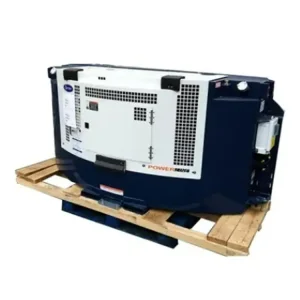
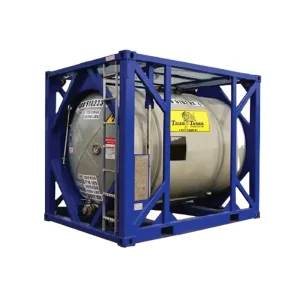
Engineered cold-storage boxes, offshore tank solutions, solar-driven mobile reefer machinery, and heavy industrial power systems.
Consult directly with CIMIC senior container structural engineers for dimensional optimization, volume calculations, DNV / CSC classification certificates, and project pricing.