
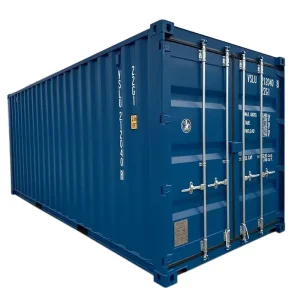
Engineered for high-frequency intermodal turnaround, heavy payload density, and rigorous international maritime certification standards.
The strategic convergence of high-volume ISO intermodal transportation, specialized asset leasing, and resilient OEM manufacturing clusters.
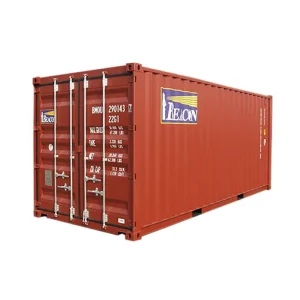
In modern multimodal freight transit, the standardized shipping container is fundamentally more than a structural steel box; it serves as the essential mechanical unit sustaining cross-continental trade flows. Standardized under strict dimensional and load-bearing parameters set forth by ISO 668 and ISO 1496-1, these transport units undergo staggering dynamic loads across oceanic passages, deep-well railway flatcars, and regional heavy-haul road trailers. As international supply chains migrate toward higher efficiency and automated container handling yards, international shipping lines, freight leasing conglomerates, and governmental infrastructure operators demand extreme dimensional repeatability, corrosion resistance, and verified payload capacity from their manufacturing partners.
Global commerce currently processes upwards of 800 million TEU (Twenty-Foot Equivalent Unit) port handlings per annum. Within this hyper-demanding intermodal ecosystem, minor dimensional variances, structural fatigue under dynamic racking conditions, or substandard paint passivation can trigger catastrophic downtime, terminal clearance rejections, and accelerated capital depreciation. Consequently, the commercial selection of an OEM standardized shipping container manufacturer is no longer a localized transactional procurement decision; it is a critical operational investment in asset lifecycle management, total cost of ownership (TCO) optimization, and supply line resilience.
Dissecting the metallurgical specifications, robotics fabrication tolerances, and multi-tier surface barrier protection that distinguish our container builds.
Constructed utilizing certified Japanese/Chinese standard SPA-H atmospheric corrosion-resistant steel. Upon atmospheric exposure, SPA-H develops an adherent, dense oxide passivation layer ("patina") that retards corrosion penetration by 400% compared to standard carbon steels.
Automated gas metal arc welding (GMAW/MIG) delivers complete joint penetration across corrugated side panels, roof sheets, and heavy-gauge corner post assemblies. Zero-porosity seam welding eliminates microscopic salt water ingression in blue-water maritime transport.
Heat-treated, normalized low-alloy cast steel corner fittings precisely machined to ISO 1161 tolerances. Engineered to resist 86,400 kg compression forces per corner post during 9-high maximum stacked cell guide container vessel storage configurations.
Equipped with 28mm-thick multi-ply keruing/apitong hardwood or composite bamboo-faced panels treated according to Australian quarantine (DAWE) regulations. Resists 7,260 kg axle loads from industrial forklift transitions without floor deflection.
Automated Sa 2.5 shot-blasting surface preparation followed immediately by a 30μm zinc-rich epoxy primer, 40μm high-build epoxy intermediate coat, and 40μm waterborne or polyurethane topcoat (total dry film thickness ≥ 110μm) for long-term C5-M marine exposure.
Double-lip extruded ethylene propylene diene monomer (EPDM) door gaskets installed with stainless steel mechanical retainers maintain elastic recovery from -40°C to +80°C, securing verified watertight integrity under rigorous high-pressure water hose tests.
| Dimensional & Mechanical Param | 20ft General Purpose (GP) | 40ft General Purpose (GP) | 40ft High Cube (HC) | Testing & Compliance Ref |
|---|---|---|---|---|
| External Dimensions (L × W × H) | 6,058 × 2,438 × 2,591 mm | 12,192 × 2,438 × 2,591 mm | 12,192 × 2,438 × 2,896 mm | ISO 668:2020 Standard |
| Internal Clear Volume | 33.2 m³ (1,172 cu ft) | 67.7 m³ (2,390 cu ft) | 76.4 m³ (2,698 cu ft) | Volumetric Calibration |
| Max Gross Mass (MGM / R) | 30,480 kg (67,200 lbs) | 32,500 kg (71,650 lbs) | 32,500 kg (71,650 lbs) | CSC Safety Certification |
| Tare Weight (±2%) | 2,180 kg (4,806 lbs) | 3,640 kg (8,024 lbs) | 3,820 kg (8,421 lbs) | Calibrated Load Cell Scale |
| Net Maximum Payload (P) | 28,300 kg (62,394 lbs) | 28,860 kg (63,626 lbs) | 28,680 kg (63,229 lbs) | ISO 1496-1 Stacking Test |
| Corner Post Stacking Resistance | 86,400 kg / Post (9-High) | 86,400 kg / Post (9-High) | 86,400 kg / Post (9-High) | Static Compressive Testing |
How our deep-seated industrial infrastructure in Tianjin and Suzhou delivers unbeatable production lead times, superior quality consistency, and streamlined ocean dispatch.
The manufacturing dominance of Chinese shipping containers is not merely a matter of labor scale—it is driven by an unmatchable geographic concentration of metallurgical raw material refining, continuous automated stamping facilities, and deep-water container terminal integrations. Operating manufacturing hubs in both Tianjin and Suzhou, our production lines are positioned within approximately 100 kilometers of major sea terminals. This geographic proximity dramatically reduces inland repositioning overhead, prevents intermediate transit handling damage, and eliminates dispatch latency when high-volume vessel slots open.
Upstream, our direct factory partnerships with prime domestic steel mills guarantee immediate access to hot-rolled SPA-H Corten coils with tight thickness tolerances (±0.05mm). By vertically synchronizing raw steel decoiling, robotic cold-forming corrugation press lines, shot blasting, and robotic jig assembly within a continuous closed-loop campus, our industrial facility produces a certified standard ISO unit every few minutes under peak operational cycles. This level of supply chain resilience safeguards international buyers against the volatile commodity swings and shipping container shortages that frequently cripple fragmented offshore production regions.
Direct proximity to Tianjin and Shanghai/Taicang maritime berths allows SOC (Shipper Owned Container) units to be placed alongside deep-sea vessels within 24–48 hours of final QC inspection approval.
Automated dual-track production bays enable both high-throughput standardized mass runs (hundreds of standard dry boxes per week) and agile custom engineering modifications simultaneously.
Every structural beam, side panel heat number, batch lot of zinc paint, and corner casting is logged with digital Mill Test Certificates (MTC) ensuring total traceability under BV and ISO oversight.
Demonstrating how standardized dimensions adapt seamlessly into highly customized mission-critical environments globally.
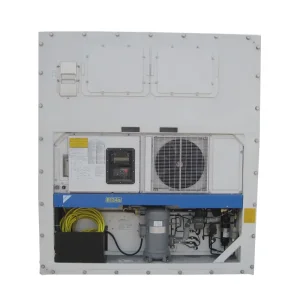
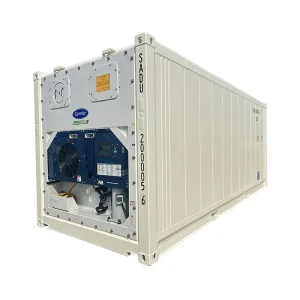
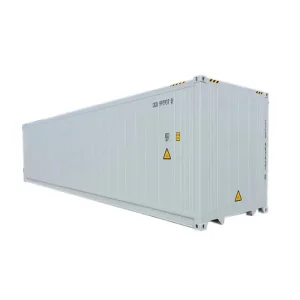
Equipped with industry-leading Carrier Transicold, Daikin, or Thermo King cooling units and 75mm high-density cyclopentane-blown polyurethane foam insulation. Maintains internal cargo stability across delicate pharmaceutical APIs and deep-frozen food from -35°C to +30°C even under +50°C ambient desert routes.
For North Sea and Gulf of Mexico oilfield operations, our containers are reinforced with internal structural crash frames, pad eyes engineered for offshore sling sets, and low-temperature impact testing down to -20°C, meeting the rigorous dynamic lifting demands of DNV 2.7-1 / EN 12079 standards.
Standardized 20ft and 40ft High Cube frames modified as turnkey Battery Energy Storage System (BESS) enclosures. Featuring structural floor floor-load reinforcement (up to 40 tons), integrated fire-suppression manifolds, HVAC cutouts, and pre-machined cable transit plates for global solar/wind integration.
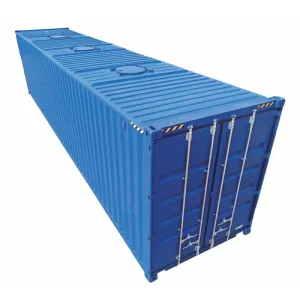
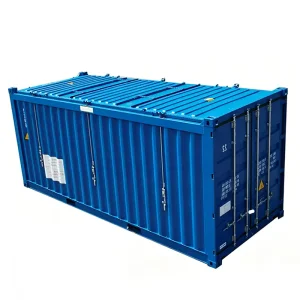
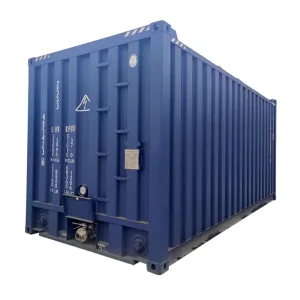
Half-height open-top containers and reinforced bulk dry carriers configured specifically for copper concentrates, lithium ore, and iron tailings. Built with abrasion-resistant Hardox/weldox floor liners and integrated tipping rings for rotatable container tipplers at terminal berths.
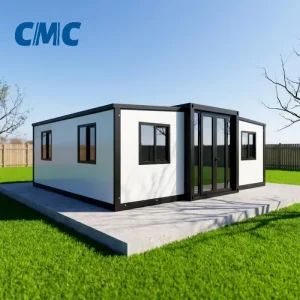
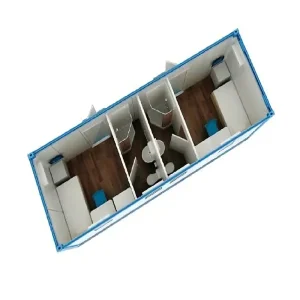
Precision-dimensioned Corten shells engineered with acoustic insulation, fire-rated sandwich wall systems, standardized door cutouts, and electrical routing conduits. Serves remote telecommunications shelters, field military command centers, and rapid-deployment disaster relief facilities.
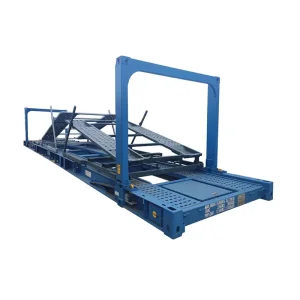
Specialized car-carrier configurations equipped with internal movable structural racking cassettes. Enables secure, enclosed intermodal transit of four electric vehicles or luxury sedans per 40ft HC, shielding vehicles from exterior salt spray, dust, and handling scratches.
Pioneering smart telematics, green circular metallurgy, and digital twins in container lifecycle monitoring.
The intermodal container manufacturing landscape is undergoing its most profound evolutionary transformation since the commercial ratification of the ISO standard in the late 1960s. At the heart of this shift are two defining engineering vectors: asset intelligence telemetry and lifecycle decarbonization. Our technical engineering division is actively deploying next-generation innovations across all prototype lines:
Embedded autonomous wireless sensor pods inside corrugated side channels. Transmits real-time GPS coordinates, acceleration/shock impacts (3-axis g-force), interior humidity, and door-opening optical events via satellite and 5G low-power wide-area networks (NB-IoT).
Transitioning toward Electric Arc Furnace (EAF) green scrap steel reducing embodied carbon footprint by over 60%. Full deployment of ultra-low VOC waterborne polyurethanes and solvent-free thermal spray powder systems completely eliminating volatile emissions.
Developing lightweight carbon-hybrid sandwich side panels that trim tare weight by 18%, substantially lowering heavy-duty road vehicle fuel consumption while augmenting net cargo payload thresholds for bulk shippers under strict regional highway limits.
Every standardized container manufactured carries verified classification approvals that protect buyers against maritime detentions and border clearance disputes.
Deploying shipping containers across international borders demands stringent compliance with multilateral treaties and maritime safety codes. Operating as an established OEM container manufacturer, every production series manufactured at our facility is surveyed, audited, and approved by premier international classification societies, including Bureau Veritas (BV), ABS, and DNV-GL.
Issued under the authority of the International Convention for Safe Containers (1972). Validates that structural design parameters, racking limits, maximum gross weight, and allowable stacking forces meet rigorous IMO criteria.
Certified in compliance with the Customs Convention on Containers. Assures that design features (such as door hinge pin welding, seal retainers, and customs cable points) prevent illicit cargo access without visible break-in marks.
Prototypes undergo intense destructive and non-destructive load tests: 86.4-ton corner post compression, 15-ton end-wall load test, 2-bar high-pressure water tightness spray tests, and 150 kN transverse racking verification.
Specialized modular architecture, reefer refrigeration support, vehicle carriers, and certified heavy-lift units.
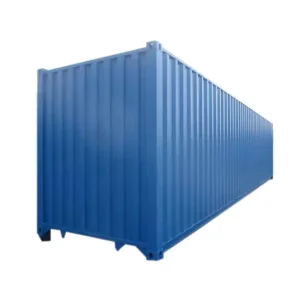
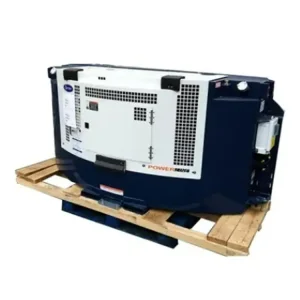
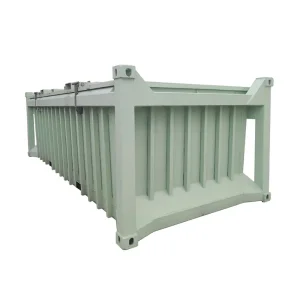
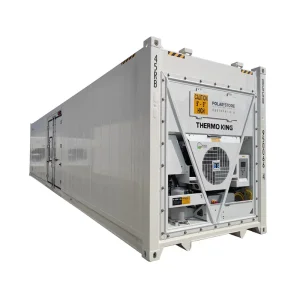
Expert insights addressing structural certification, material specifications, custom modifications, and freight logistics.
SPA-H incorporates controlled alloying additions of copper, chromium, and nickel. When scratched or exposed to harsh oceanic marine atmospheres, it reacts chemically to produce a dense, impermeable protective barrier that seals the underlying metal against corrosive salts, providing a 15-to-25-year operational service life under continuous maritime conditions.
Any structural deviation (such as side-opening access doors, heavy cable penetrations, or equipment mounting cutouts) undergoes finite element analysis (FEA) computer modeling, followed by real-world physical load testing witnessed by Bureau Veritas (BV) or DNV surveyors to issue renewed CSC validation data plates.
Shipments include an authentic CSC Certificate of Safety Approval, Factory Acceptance Test (FAT) records, Classification Society Survey Certificates (BV/ABS/DNV), Mill Test Certificates (MTC) for all steel coils, and timber quarantine treatment declarations meeting Australian DAWE standards.
Yes. We execute turn-key private-label branding, applying custom corporate RAL paint codes in our climate-controlled spray booths along with high-grade 7-year cast vinyl decals, including BIC code serialization (ISO 6346 owner code allocation) applied prior to dispatch.
Standard 20ft and 40ft dry containers typically dispatch within 14–21 business days due to continuous coil reserves at our Tianjin and Suzhou plants. Highly customized units (such as explosion-proof BESS containers or side-open reefers) require 30–45 days depending on component sourcing.
Because all our units feature valid CSC approval plates, they can be shipped "one-way with cargo" via major commercial container vessel lines (Maersk, MSC, COSCO, CMA CGM), virtually eliminating repositioning ocean freight charges for the purchaser.
From standardized 20ft/40ft fleet orders to specialized industrial enclosures, our engineering department provides rapid CAD layouts, structural FEA modeling, and transparent volume quotations within 24 hours.