
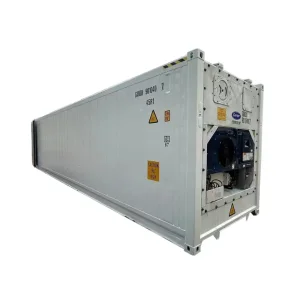
Engineered for extreme maritime payloads, cryogenic gas, heavy-duty mining, and modular architecture. Directly quoted from tier-1 Chinese factories.
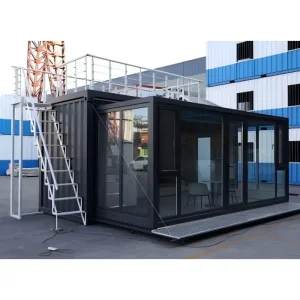
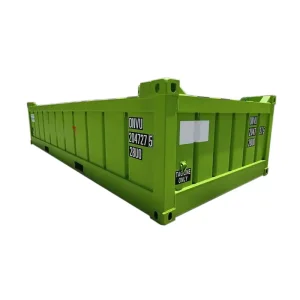
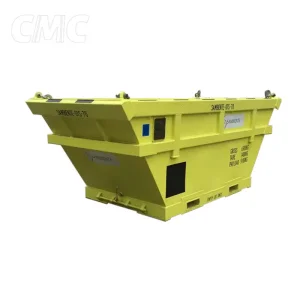
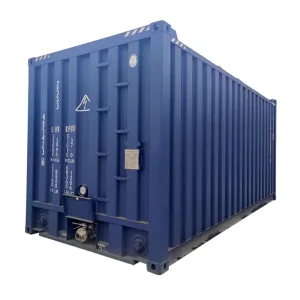
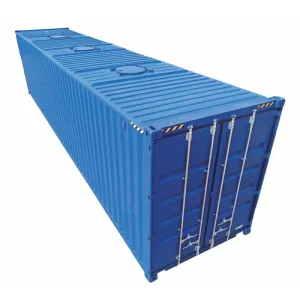
China produces more than 90% of the world's standard and specialized intermodal containers. Strategic proximity to major metallurgical clusters and automated port nodes provides unmatched scale economies.
Direct partnerships with premier steel mills (such as Baosteel and Ansteel) grant Chinese manufacturers unfettered access to SPA-H atmospheric corrosion-resistant Corten steel. This metallurgical mastery delivers tensile strengths exceeding 490 MPa, extending equipment service life beyond 20 years in corrosive maritime atmospheres.
Manufacturing plants based in Tianjin, Suzhou, and Qingdao operate within 100 km of deep-water port gates. This proximity eradicates inland repositioning deadheads, accelerates vessel bookings, lowers FOB charges, and ensures swift CSC document stamping alongside Bureau Veritas (BV) or DNV certification directly prior to sailing.
Robotic MIG welding stations coupled with high-speed automated shot-blasting systems achieve an SA 2.5 cleanliness profile. Combined with water-based, ultra-low VOC zinc-rich epoxy paint systems, Chinese fabricators fulfill international environmental mandates while enhancing panel weatherability and reducing paint delamination risk.
Decades of logistical innovation translated into verified manufacturing volume and intermodal quality engineering.
How digital transformation, cold-chain biosecurity, and industrial modularization dictate procurement specifications across modern shipping lanes.
Modern high cube dry boxes and reefers increasingly feature embedded cellular/satellite IoT devices. Real-time logging of internal temperature, relative humidity, door openings, structural shock, and geographic coordinates satisfies stringent pharma GDP and high-value cargo underwriters globally.
Global environmental guidelines require phase-outs of legacy fluorinated compounds. Our refrigerated manufacturing lines incorporate R-452A and ultra-low GWP natural CO2 refrigerants, paired with zero-ODP non-HFC polyurethane foam panels to drop thermal leakage down to under 18 W/K on 40ft units.
The transition from simple shipping containers to structural Battery Energy Storage Systems (BESS) and mobile data centers demands rigorous fire containment. Heavy structural reinforcements with integrated thermal barrier rockwool fulfill NFPA 68 and 69 explosion-venting standards.
Deploying tailored container shells, tanks, and structural frames configured for unique regional requirements and regulatory challenges.
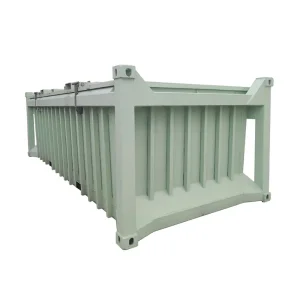
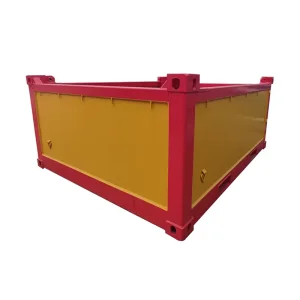
High-wave dynamic sea environments expose equipment to significant cyclic loads. DNV 2.7-1 and EN 12079 certified cargo carrying units (CCUs), silt baskets, and half-height ore bins use specialized pad-eyes, heavy weld fillets, and Charpy impact tested steel down to -20°C or -40°C.
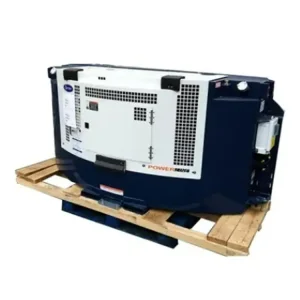
Equipped with Carrier Transicold, Daikin, or Thermo King machinery, high-cube cold containers maintain cargo conditions from -35°C to +30°C. Stainless steel (SUS304) interior lining and extruded T-bar aluminum flooring optimize multi-directional airflow across perishables.
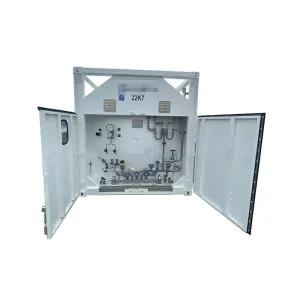
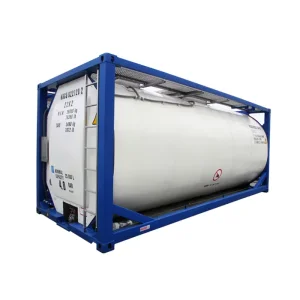
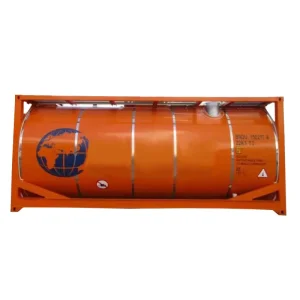
ASME "U" stamp, IMDG, and RID/ADR compliant ISO tank containers and T75 cryogenic units feature 316L stainless steel pressure vessels encased in high-tensile carbon steel outer frames. They safely transport bulk fuels, technical gases, potable water, and corrosives worldwide.
Verify mechanical specifications and request custom manufacturing timelines directly from our engineering team.
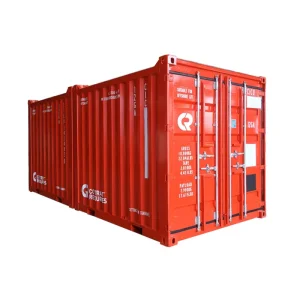
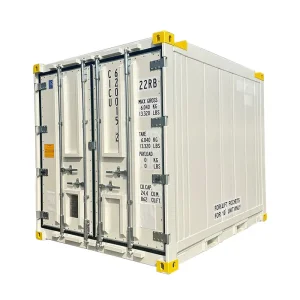
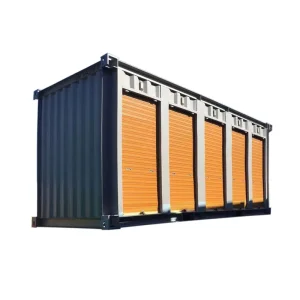
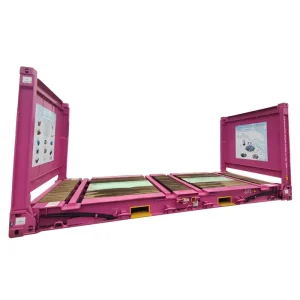
Key quality assurance benchmarks international leasing conglomerates and project developers review during factory pre-qualification.
Every ISO container bound for commercial shipping must bear an officially certified CSC (International Convention for Safe Containers) safety approval plate. This plate certifies structural verification under rigorous transverse racking, longitudinal end-wall/side-wall pressure, floor strength tests, and vertical roof load tests under multi-tier vessel stacking conditions.
In DNV 2.7-1 and hazardous materials packaging, structural failure is not an option. Our factories enforce strict Non-Destructive Testing (NDT), including Magnetic Particle Inspection (MPI) and Ultrasonic Testing (UT), across lifting pad-eyes and main perimeter frame members, backed by Bureau Veritas (BV) inspection seals.
Container flooring must comply with strict Australian Quarantine and Inspection Service (AQIS) requirements. Our birch, apitong, and bamboo plywood floors undergo verified preservation treatment against insects and decay, with complete verification recorded on the data plate.
Direct technical clarifications from CIMIC container engineers regarding specifications, custom orders, lead times, and shipping regulations.
Share your required container type, technical payload, destination port, and delivery schedule. Our technical team will return a formal CAD/specification review and FOB/CIF quotation within one business day.