
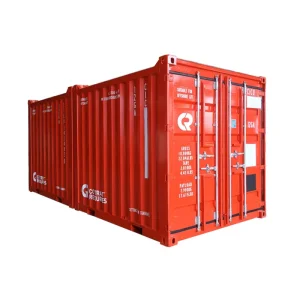
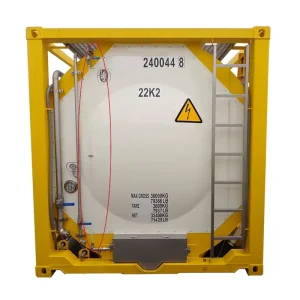
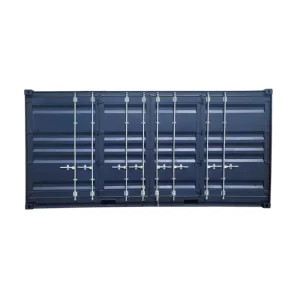
Immediate allocation of factory-certified intermodal units, hazardous fluid tanks, specialized side-access cargo containers, and dynamic offshore transport baskets.
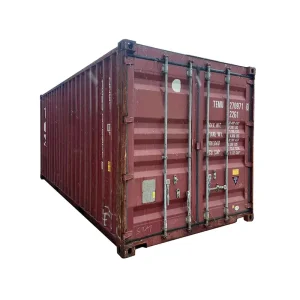
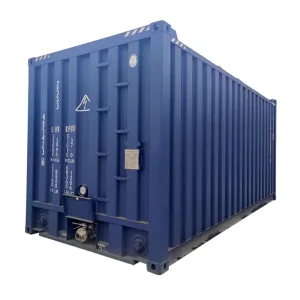
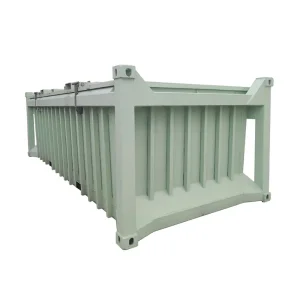
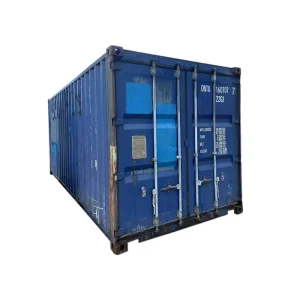
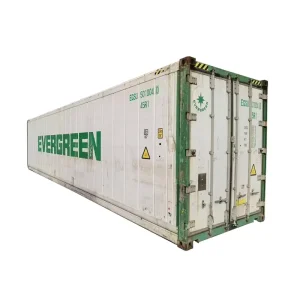
Evaluating the financial and logistical leverage of standard 8'6" General Purpose (GP) versus 9'6" High Cube (HC) modular units across complex supply networks.
The transition from a standard 8'6" profile to a 9'6" High Cube introduces 305 mm of vertical clearance, expanding cubic capacity from 67.7 m³ to 76.4 m³ in a standard 40-foot footprint. This volumetric yield enables double-tier pallet stacking for light-density automotive components, FMCG, and oversized electronics, lowering ocean spot freight cost per cubic meter by up to 11.4%.
Global multi-modal carriers face severe transshipment fees when deploying non-standard platforms. High Cube OEM enclosures engineered to ISO 668 maintain identical corner casting coordinates to standard containers, ensuring native compatibility with ISO twistlocks, ship-to-shore gantry spreaders, reach stackers, and automated port straddle carriers without demurrage penalties.
The extra vertical headroom serves as the foundational envelope for Battery Energy Storage Systems (BESS), mobile microgrids, and data center modules. The 9'6" height accommodates overhead structural cable trays, ducted fire suppression manifolds (NFPA 855 compliance), fluid cooling thermal chillers, and raised subflooring while maintaining complete ISO intermodal compliance.
Technical specifications governing structural yield strength, submerged arc welding, marine atmospheric coating (ISO 12944 C5-M), and floor payload capacities.
Fabricated exclusively from cold-rolled SPA-H atmospheric corrosion-resistant steel. The steel alloy chemistry (0.12% C, 0.25-0.75% Si, 0.20-0.50% Mn, 0.07-0.15% P, and 0.25-0.55% Cu) develops a self-passivating protective copper-phosphate patina. Corner posts feature a minimum yield strength of 345 MPa (50,000 psi), engineered to absorb dynamic 9-high stacking loads exceeding 192,000 kg per corner pillar.
Surface preparation strictly adheres to SA 2.5 near-white metal shot blasting to achieve an angular 40–75 µm surface profile. The robotic electrostatic three-coat application features a Zinc-Rich Ethyl Silicate primer (30–40 µm dry film thickness), an intermediate epoxy barrier coat (40–50 µm), and a high-solid Chlorinated Polyurethane topcoat (40–50 µm), delivering over 15 years of operational resistance to salt fog and UV radiation.
Standard installations utilize 28 mm marine-grade Apitong/Keruing or compressed multi-layer bamboo composite flooring panels, certified to exceed the ISO 1496-1 axle test load of 7,260 kg (16,000 lbs) per wheel contact area. Timber substrates undergo comprehensive dry preservative impregnation in compliance with Australian Department of Agriculture, Fisheries and Forestry (DAFF) quarantine standards.
| Dimensional Metric | 20ft High Cube ISO Container | 40ft High Cube ISO Container | DNV 2.7-1 Offshore High Cube |
|---|---|---|---|
| External Dimensions (L × W × H) | 6,058 × 2,438 × 2,896 mm (20' × 8' × 9'6") | 12,192 × 2,438 × 2,896 mm (40' × 8' × 9'6") | Custom / 2,991 × 2,438 × 2,896 mm |
| Internal Dimensions (L × W × H) | 5,898 × 2,352 × 2,698 mm | 12,032 × 2,352 × 2,698 mm | 2,831 × 2,278 × 2,560 mm |
| Door Opening Aperture (W × H) | 2,340 × 2,585 mm | 2,340 × 2,585 mm | 2,220 × 2,400 mm (Sealed Cam-Lock) |
| Tare Weight (Unladen) | 2,380 kg (5,247 lbs) | 3,900 kg (8,598 lbs) | 4,100 kg (Reinforced Skid Pad) |
| Maximum Gross Weight (MGW) | 30,480 kg (67,200 lbs) | 32,500 kg (71,650 lbs) | 10,000 – 25,000 kg Dynamic Rating |
| Usable Internal Volume | 37.4 m³ (1,320 cu ft) | 76.4 m³ (2,698 cu ft) | 16.5 m³ – 32.0 m³ |
| Primary Structural Steel | SPA-H Corten Steel | SPA-H Corten Steel | EN 10025-2 S355ML / Corten |
| Compliance Accreditation | ISO 668, ISO 1496-1, CSC, TIR | ISO 668, ISO 1496-1, CSC, TIR | DNVGL-ST-E271, EN 12079, ISO 10855 |
CIMIC OEM solutions transform marine transport envelopes into heavy industrial infrastructure, specialized energy assets, and temperature-controlled logistics channels.
OEM engineering modifications convert standard High Cube bodies into utility-scale BESS enclosures. Reinforced sub-chassis withstand localized battery rack floor loadings up to 4,500 kg/m². Thermal engineering features fire-rated insulated mineral wool partitions (Class A-60), custom air intake louvers with motor-actuated fire dampers, and explosion-relief roof panels tuned to NFPA 68 structural rupture pressures.
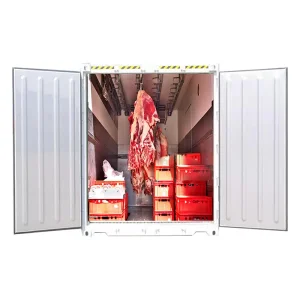
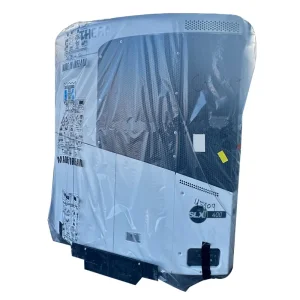
Integrated with high-efficiency Carrier Transicold, Daikin, or Thermo King refrigeration machinery. High-density CFC-free polyurethane vacuum foam insulation (thermal conductivity λ ≤ 0.022 W/m·K) paired with stainless-steel interior cladding and aluminum T-bar flooring maintains precise setpoints between -35°C and +30°C. High Cube architecture optimizes forced-air circulation across deep pallets.
Engineered for hostile open-ocean dynamic wave environments. Featuring Charpy V-notch tested steel profiles capable of absorbing high dynamic impact loads at -20°C. Equipped with certified 4-point pad-eyes welded directly to the heavy tubular framing, proof-tested at 2.5 times the Gross Design Mass, guaranteeing absolute structural integrity for vessel-to-rig crane transfers.
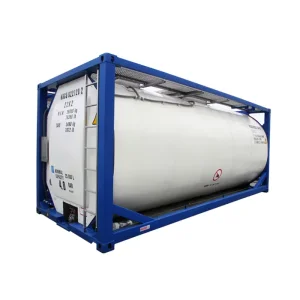
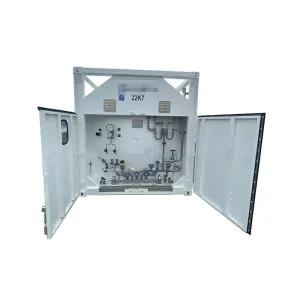
T75 cryogenic and versatile chemical ISO tank containers built inside heavy-duty 20ft and 40ft perimeter high-cube structural frames. Fabricated from 316L austenitic stainless steel or specialized carbon steel pressure vessels with full ASME VIII, IMDG, RID, and ADR compliance for hazardous fluids, food-grade spirits, and liquefied cryogenic industrial gases.
Standard rear-loading configurations cause severe bottlenecking for oversized machinery, long pipes, and rapid cross-dock distribution. Custom OEM full side-opening containers incorporate heavy-duty hinges, reinforced upper header beams, and secondary seals that yield a completely unobstructed loading aperture across the entire 20ft or 40ft length without bowing under payload stress.
Engineered structural frames pre-fitted with thermal break channels, factory window/door cutouts, reinforced framing headers, and acoustic rockwool linings. Serving remote mining camps, telecommunication switching shelters, and hyperscale edge-compute pods capable of operating continuously in ambient conditions ranging from -40°C to +55°C.
Every OEM production line is audited by independent classification societies to verify dynamic load limits, weather-tightness, and metallurgical traceability.
Structural line testing includes the 30-minute high-pressure water tightness test (100 kPa nozzle pressure), floor deflection verification under hydraulic test rigs, and tensile shear evaluation of all corner castings in strict accordance with the International Convention for Safe Containers (CSC 1972).
Offshore baskets, half-height ore carriers, and dry containers undergo 100% magnetic particle inspection (MPI) and ultrasonic non-destructive testing (NDT) across high-stress primary structural welds, accompanied by 2-point and 4-point dynamic lift testing verified by certified third-party marine surveyors.
Strategically situated approximately 100 km from Tianjin and regional seaport terminals. Rapid container dispatch minimizes dead-haul inland transit times, lowers container repositioning fees, and expedites roll-on/roll-off (Ro-Ro) or breakbulk ship loading across primary trade corridors.
The intermodal industry is pivoting toward digitized condition monitoring, zero-carbon metallurgical processing, and intelligent thermal management.
Integration of low-power satellite-linked IoT sensor arrays embedded directly within container header channels. Real-time telemetry tracks 3-axis dynamic impact forces (±16G shock sensors), ambient humidity, hatch tamper detection, and reefer cold chain setpoint deviations, enabling autonomous insurance claim validation and predictive maintenance schedules.
Research programs targeting high-strength micro-alloyed steels and carbon-fiber composite sandwich wall panels. Reducing tare weights by up to 650 kg per 40ft High Cube unit increases allowable payload thresholds under strict European and North American highway road axle limits, significantly mitigating highway transport fuel burn.
Transitioning beyond solvent-borne systems toward 100% waterborne epoxy and bio-based polyurethane coatings. These cutting-edge chemical treatments reduce Volatile Organic Compound (VOC) emissions by over 80% during factory application while enhancing electrochemical corrosion resistance against salt deposition in tropical shipping lanes.
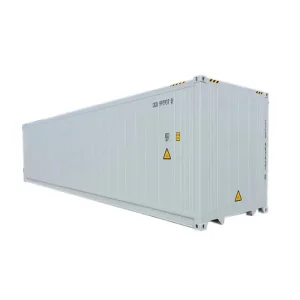
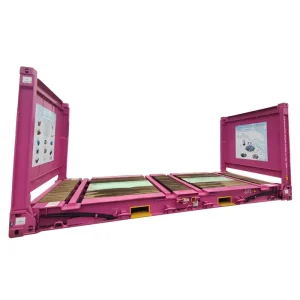
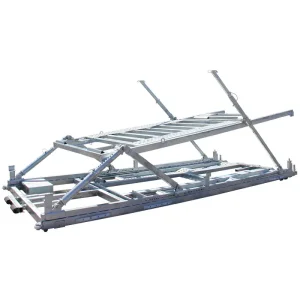
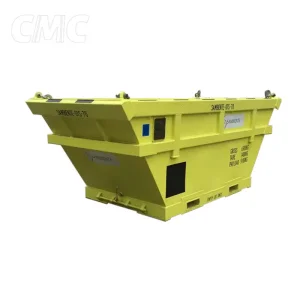
Engineered configurations: meat hanging reefers, cryogenic liquid systems, vehicle transport chassis, and offshore silt containment platforms.
Direct technical resolutions addressing dimensional tolerances, certification processes, metallurgy, and custom OEM manufacturing.
Contact our technical engineering team in Tianjin for structural feasibility evaluations, 3D CAD modeling, classification society audits, and high-volume OEM pricing.